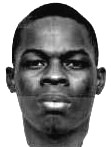
Emerson Rudd
Murderer Brian Kevin Rosenfeld
Murderer · USA · 1985
Brian Kevin Rosenfeld Brian Kevin Rosenfeld was sentenced to three concurrent l…
23 victims
Brian Kevin Rosenfeld
Murderer · USA · 1985
Brian Kevin Rosenfeld Brian Kevin Rosenfeld was sentenced to three concurrent l…
23 victims
 Yahweh ben Yahweh
Murderer · USA · 1980
Yahweh ben Yahweh was born and legally named Hulon Mitchell Jr. (October 27, 19…
23 victims
Yahweh ben Yahweh
Murderer · USA · 1980
Yahweh ben Yahweh was born and legally named Hulon Mitchell Jr. (October 27, 19…
23 victims
 Russell Ellwood
Murderer · USA · 1991
Russell Ellwood was a former taxi driver. Authorities suspected him of killing…
20 victims
Russell Ellwood
Murderer · USA · 1991
Russell Ellwood was a former taxi driver. Authorities suspected him of killing…
20 victims
 Robert Martines Perez
Murderer · USA · 1994
Name: Robert Martines Perez · Other name used in proceedings: Robert Martinez P…
15 victims
Robert Martines Perez
Murderer · USA · 1994
Name: Robert Martines Perez · Other name used in proceedings: Robert Martinez P…
15 victims
 Paul Rougeau
Murderer · USA · 1978
Paul Rougeau was executed by lethal injection in Texas on May 3, 1994. He was c…
1 victim
Paul Rougeau
Murderer · USA · 1978
Paul Rougeau was executed by lethal injection in Texas on May 3, 1994. He was c…
1 victim
 Johnny Joe Martinez
Murderer · USA · 1993
Johnny Joe Martinez was convicted of capital murder for the robbery and murder…
1 victim
Johnny Joe Martinez
Murderer · USA · 1993
Johnny Joe Martinez was convicted of capital murder for the robbery and murder…
1 victim
 Mark Wesley Bailey
Murderer · USA · 1998
Mark Wesley Bailey was convicted in Virginia for the capital murder of his two-…
2 victims
Mark Wesley Bailey
Murderer · USA · 1998
Mark Wesley Bailey was convicted in Virginia for the capital murder of his two-…
2 victims
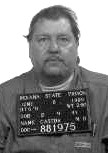 Marvin Castor
Murderer · USA · 1986
Marvin D. Castor was convicted of murder and sentenced to death. On direct appe…
1 victim
Marvin Castor
Murderer · USA · 1986
Marvin D. Castor was convicted of murder and sentenced to death. On direct appe…
1 victim
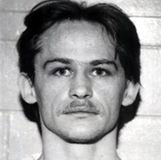 Andrew Six
Murderer · USA · 1984
Andrew Six Andrew Wessel Six was executed by lethal injection in Missouri on Au…
4 victims
Andrew Six
Murderer · USA · 1984
Andrew Six Andrew Wessel Six was executed by lethal injection in Missouri on Au…
4 victims
- Gender
- male
- Country
- USA
- Location
- Dallas County, Texas, USA
- Date of birth
- August 9, 1970
- Age at first offence
- 18
- Characteristics
- robbery
- Victim profile
- Steve Morgan, 23 ( restaurant manager )
- Method of murder
- Shooting
- Date(s) of murder
- September 2, 1988
- Years active
- 1988
- Date of arrest
- 2 days after
- Status
-
Executed
Executed by lethal injection in Texas on November 15, 2001
Other details
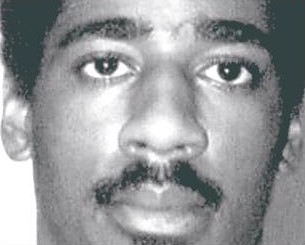
Emerson Rudd was executed by lethal injection in Texas on November 15, 2001.
Background
The victim was Steve Morgan, 23, a restaurant manager who was married with a young child.
Emerson Edward Rudd was 18 when he committed the offence and was later 31 at the time of his execution. The procedural materials described him as a Texas death row inmate.
Amnesty International and other materials described Emerson Rudd as black.
The offence
On September 2, 1988, Emerson Edward Rudd intentionally shot Steve Morgan during a robbery at a Captain D's restaurant in Dallas County, Texas.
Four young men entered a Captain D's Seafood restaurant in Dallas and demanded money at gunpoint. Restaurant manager Steve Morgan told the lead robber that the restaurant did not have large amounts of money. When the victim told Rudd that Captain D's did not have large amounts of money, Rudd leveled his weapon and shot him in the abdomen at close range.
While the conscious victim lay wounded on the floor, Rudd threatened a 4-month-old child unless the mother, who worked at the restaurant, cooperated in finding money. Rudd later threatened another employee of the restaurant.
Rudd and his companions eventually left the Captain D's and committed aggravated robbery at another restaurant.
Later that evening, Rudd bragged to his friends about having shot Morgan at Captain D's, saying, "(the victim) tried to be a hero, so (Rudd) made him a zero." Rudd also told others that he had to shoot the "whore" (Morgan) when he said Captain D's did not have a lot of money.
Steve Morgan died a few hours later at a hospital, and he died the next morning after being taken to the hospital.
Rudd and three others robbed a Captain D's restaurant in Dallas, Texas, on the evening of September 2, 1988.
During the course of the robbery, Rudd intentionally shot one of the restaurant's managers when that manager told Rudd that Captain D's had no large amounts of money. The manager died later that night at a local hospital.
After robbing the Captain D's, Rudd and his cohorts committed another aggravated robbery at another restaurant.
Investigation
Two days after the robbery, police stopped a car matching witnesses' descriptions of the getaway car. Four young men were inside. An employee who witnessed the shooting of Steve Morgan positively identified one of them, Emerson Rudd, then 18, as the killer.
The other robbers were identified as Frenchitt Collins, 18, Darron Price, 17, and Kendrick Smart, 17.
Arrest
Rudd and his co-defendants were stopped in a car matching witnesses' descriptions of the getaway car.
Trial
Rudd was indicted on September 20, 1988, for capital murder for causing the death of Steve Morgan during the course of committing and attempting to commit the offense of robbery.
The jury found Rudd guilty of capital murder on March 10, 1989.
After a separate hearing on punishment, the jury affirmatively answered both special issues required to assess the death penalty. In accordance with state law, the trial court sentenced Rudd to death by lethal injection.
On March 10, 1989, after deliberating for 12 minutes, a jury convicted Rudd of capital murder and sentenced him to death.
Sentencing
Rudd was sentenced to death by lethal injection.
The other robbers were each convicted of murder and aggravated robbery and were given sentences of 10, 20, and 15 years, respectively:
- Frenchitt Collins, 18
- Darron Price, 17
- Kendrick Smart, 17
Appeals
The Texas Court of Criminal Appeals affirmed Rudd's conviction on direct appeal on September 22, 1993.
On June 30, 1994, the Supreme Court denied certiorari review.
Rudd sought state collateral relief. The trial court recommended that relief be denied, and upon review by the Texas Court of Criminal Appeals, relief was denied on October 29, 1997.
Rudd filed his federal application for habeas corpus on May 1, 1998.
On September 8, 2000, the district court entered its order adopting the magistrate's findings and recommendations and denied relief.
Rudd filed an application for a certificate of appealability with the Fifth Circuit Court of Appeals on January 3, 2001. His application was denied on June 28, 2001.
On August 27, 2001, Rudd filed a petition for writ of certiorari to the United States Supreme Court. The Supreme Court denied his petition on October 29, 2001.
Outcome
After deliberating for 12 minutes, a jury convicted Rudd in March 1989 of capital murder and sentenced him to death. The Texas Court of Criminal Appeals affirmed his conviction in September 1993. All his other appeals in state and federal courts were denied.
The application for a certificate of appealability was denied by the United States Court of Appeals for the Fifth Circuit. The court described its disposition as: "For the reasons set forth below, we deny Rudd's application for a COA."
Aftermath
Execution information and conduct
Rudd was executed by lethal injection in Huntsville, Texas on 15 November. The materials stated that he was pronounced dead at 6:26 p.m.
When officers transported him from death row in Livingston to the execution chamber in Huntsville, Rudd did in fact resist. Officers used pepper gas to control him, and he gave no further trouble. He kept his promise to refuse his last meal.
Statements by Rudd at execution
At his execution, Rudd told Morgan's parents: "I'm sorry for shooting your son down at that particular robbery." He continued: "Politicians say that this brings closure, but I beg to differ because my death doesn't bring your son back -- it doesn't bring closure. I wish that I could do more, but I can't. I hope this brings you peace." He then expressed thanks and encouragement to his friends.
Statements by the victim's family
After Rudd's execution, the victim's brother, Ronald Morgan, told reporters that the family accepted Rudd's apology. He added, "Even though he didn't think it would bring closure, I think for many of us, it did."
Criminal history (youth and related conduct as described)
During the punishment phase of trial, the State presented evidence that Rudd was placed on probation as a juvenile for offences of aggravated robbery, two aggravated assaults and theft.
Rudd violated his probation and was placed in juvenile detention, where he continued to commit acts of violence by fighting and stealing.
After being released from juvenile detention, the State presented evidence that Rudd robbed five fast food establishments between August 13, 1988, and August 25, 1988, in the weeks immediately preceding the robbery and murder of Steve Morgan.
The State presented evidence that Rudd robbed a Mr. Jim's Pizza later that same evening of the Captain D's robbery and a Pizza Inn two days later.
Proceedings before the Fifth Circuit (certificate of appealability)
The Fifth Circuit described Emerson Edward Rudd as the petitioner-appellant, and Gary L. Johnson, Director, Texas Department of Criminal Justice, Institutional Division, as the respondent-appellee.
The Fifth Circuit panel consisted of DAVIS, JONES, and DeMOSS, Circuit Judges, and the decision was issued on June 28, 2001.
Rudd's petition for habeas corpus relief and request for a Certificate of Appealability were denied by the federal district court, and the court then denied his application for a COA.
The Fifth Circuit stated that Rudd filed his federal petition for writ of habeas corpus on May 1, 1998, referred the matter to a magistrate judge, and that on September 8, 2000, the district court adopted the magistrate judge's report and recommendation.
The materials described Rudd filing his notice of appeal and motion for a COA on October 12, 2000, the district court denying the COA request on November 13, 2000, and Rudd filing the instant application for a COA on January 3, 2001.
Rudd presented three issues for which he sought a COA:
- whether he was denied due process when he was not permitted access to the State's file;
- whether he was denied his constitutional rights by the trial court's jury instructions at the punishment phase;
- whether he was denied the effective assistance of counsel by his trial counsel's alleged failure to elicit crucial mitigating testimony from two witnesses at the punishment stage of trial.
Jury instruction arguments described
Rudd argued the jury instructions violated:
- the Eighth Amendment doctrine of heightened reliability because they did not provide the jury with any guidance about the meaning of a life sentence, allowing the jury to speculate about the length of such a sentence;
- his due process rights because the jury instructions induced the jury to speculate about his parole eligibility.
Rudd relied on Simmons v. South Carolina, 114 S. Ct. 2187 (1994), and the materials described arguments about parole eligibility and future dangerousness.
The Fifth Circuit concluded that it saw no substantial showing of the denial of a constitutional right based on the trial court's jury instructions at the punishment phase and denied the request for a COA on the second issue.
Ineffective assistance of counsel arguments described
Rudd argued his counsel failed to elicit crucial mitigating testimony from two witnesses at the punishment stage: his cousin Tamekka Whitmore and his sister Olivia Rudd.
The materials described Rudd's claim that counsel failed to elicit testimony about his father's improprieties, including raping and abusing his mother, stealing from the family, and being found in bed with another woman.
The materials described that Whitmore and Olivia Rudd testified on behalf of Rudd at the punishment phase, recounting physical abuse from his father and how Rudd came from a disadvantaged background. It also described testimony indicating Rudd grew up in an environment full of drugs, prostitution, and violence.
The Fifth Circuit concluded that Rudd had not made out a substantial showing that his Sixth Amendment right to counsel was violated and denied a COA on the third and final issue.
Statements attributed to Rudd on death row (interview)
Rudd said that he didn't intend to kill Steve Morgan: "I'm definitely sorry this took place," he said. "There's nothing an individual can say. I can only say it happened and I wish it didn't happen."
Rudd questioned the fairness of his sentence: "I'm not somebody trying to set bombs and kill hundreds of people," "I got involved with a robbery, and an individual got shot and he died."
Rudd said he would resist prison officials on the day of his execution. He said he would refuse his last meal, calling the tradition "pretty much an insult".
Spotted an error, or have more information about this case?