George Mackay
Murderer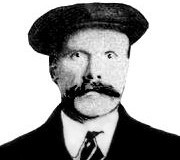 Albert Burrows
Murderer · United Kingdom · 1920
Albert Burrows (also named Albert Edward Burrows): married farm labourer who to…
4 victims
Albert Burrows
Murderer · United Kingdom · 1920
Albert Burrows (also named Albert Edward Burrows): married farm labourer who to…
4 victims
 Kelli Murphy
Murderer · USA · 2011
Kelli Lynn Murphy was a Castle Rock, Colorado mother. She filed for divorce aga…
2 victims
Kelli Murphy
Murderer · USA · 2011
Kelli Lynn Murphy was a Castle Rock, Colorado mother. She filed for divorce aga…
2 victims
 Luigi Chiatti
Murderer · Italy · 1992
Luigi Chiatti was an Italian serial killer. He was born Antonio Rossi to a 24-y…
2 victims
Luigi Chiatti
Murderer · Italy · 1992
Luigi Chiatti was an Italian serial killer. He was born Antonio Rossi to a 24-y…
2 victims
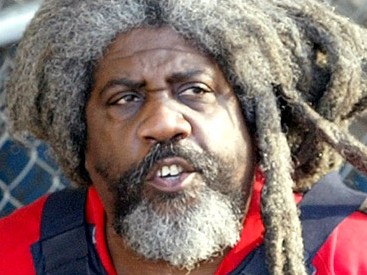 Marcus Wesson
Mass murderer · USA · 2004
Marcus Delon Wesson was born August 22, 1946. He was an American man convicted…
9 victims
Marcus Wesson
Mass murderer · USA · 2004
Marcus Delon Wesson was born August 22, 1946. He was an American man convicted…
9 victims
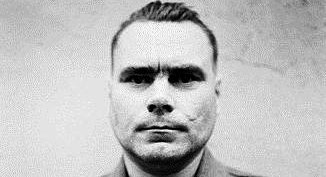 Josef Kramer
Homicide · Germany · 1944
Josef Kramer (November 10, 1906 – December 13, 1945) was the Commandant of the…
Josef Kramer
Homicide · Germany · 1944
Josef Kramer (November 10, 1906 – December 13, 1945) was the Commandant of the…
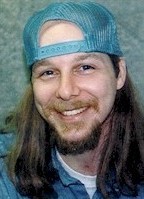 Sean Sellers
Homicide · USA · 1985
Sean Sellers was executed by lethal injection in Oklahoma on February 4, 1999.…
3 victims
Sean Sellers
Homicide · USA · 1985
Sean Sellers was executed by lethal injection in Oklahoma on February 4, 1999.…
3 victims
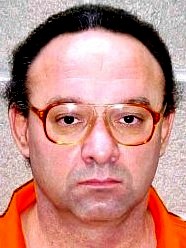 Joseph Wood
Murderer · USA · 1989
Joseph Wood was an Arizona state prisoner who was sentenced to death on July 2,…
2 victims
Joseph Wood
Murderer · USA · 1989
Joseph Wood was an Arizona state prisoner who was sentenced to death on July 2,…
2 victims
- Gender
- male
- Country
- United Kingdom
- Location
- Eastbourne, East Sussex, England, United Kingdom
- Date of birth
- 1883
- Age at first offence
- 29
- Characteristics
- to avoid arrest, burglary, rape, drug addict
- Victim profile
- Police inspector Arthur Walls
- Method of murder
- Shooting
- Date(s) of murder
- October 9, 1912
- Years active
- 1912
- Date of arrest
- —
- Status
-
Executed
Executed by hanging at Lewes on January 29, 1913
Case details
George Mackay was also known as John Williams.
Background
On the evening of October 9th 1912, the driver noticed a man hunched up on the canopy over the front door as Countess Sztaray was leaving her home on South Cliff Avenue, Eastbourne. The driver told the countess, and once they were out of sight of the house, she rang the police and told them she feared she was about to be burgled.
Countess Sztaray was known to possess large amounts of valuable jewellery and to be married to a rich Hungarian nobleman. A man was seen sitting with a heavily-pregnant young woman on a bench at one end of South Cliff Avenue earlier in the afternoon of the murder. The man was also seen wandering the street while the young woman sat on the bench alone, leading police to suspect the man was assessing the lay of the land.
The offence
Inspector Arthur Walls was sent to attend the incident. He arrived about ten minutes later and shouted to the man to come down. The only reply was the report of two shots being fired. Before the noise had died down the police fell to the ground dead.
On the night of the murder, John Williams was involved with Florence Seymour, who was described as pregnant. After the murder, Williams rejoined Seymour on the beach and told her what had happened. He buried the gun on the beach. Seymour later said that Williams had left her for half an hour near the Countess’s house on the night of the murder, returning without his trilby hat, and afterwards threw away a burglar’s rope with a hook on the end of it, with him burying a revolver on the beach he had broken in two.
Williams maintained his innocence. He said: “whoever did that did it to get to [Sztaray's] papers for political purposes. No doubt she is mixed up in some foreign political business. I would not commit a crime like that”.
Investigation
A former medical student named Edgar Power visited the police on the day after the murder. Power claimed that the murderer was one George McKay, living in Eastbourne under the name “John Williams” with his pregnant girlfriend, Florence Seymour. Power knew Williams through Williams’s brother, who was Power’s best friend. Williams’s brother had received a note that morning from Williams, which he passed on to Power. Power gave the note to the police. The note read: “If you would save my life come here at once to 4 Tideswell Road. Ask for Seymour. Bring some cash with you. Very Urgent”.
Power told the police that Williams had tried to burgle Sztaray’s house and killed Inspector Walls. Power said that Williams met with Seymour after the murder, and the two decided to bury the gun on the beach and send a letter to Williams’s brother asking for money to return to London, which was then given to Power. Power’s motive for coming to the police was that he was in love with Seymour.
Police had only two clues: some footprints in the garden and a hat found in a nearby gutter. The police took moulds of the footprints and endeavored to trace the hat, but with no success.
A police search of the area turned up a revolver that could have fired the fatal shots. An empty holster found by the police among Williams’s possessions showed evidence of a revolver recently being inside it.
An identity parade was organised, but all of the witnesses failed to pick out Williams as the man they had seen.
Arrest
Power and Seymour were found searching the beach and arrested. When questioned about what they were doing, Seymour said they were looking for the gun. She said that on the night of the murder Williams, a known burglar, had left her on the beach and had returned later without his hat. She said he had buried the gun on the beach the next day.
Police decided that Seymour should take the witness stand as soon as possible to avoid her going back on what she had told the police. Seymour was pregnant and in poor condition both physically and mentally; after a few hours of questioning, she wrote and signed a statement which incriminated Williams.
In order to trap Williams, Power asked Williams to meet him at Moorgate Street Station the following day. Police were lying in wait and arrested both Power and Williams at the Moorgate station. Police covered Williams’s head with an apron to prevent him from being photographed and thus possibly influencing witnesses.
Power was immediately released. Upon his release, Power went to Seymour and told her the police knew what had happened and that the only way to save Williams was to dig up the gun and move it somewhere safer. Seymour and Power retrieved the gun on 15 October, several police officers were lying in wait and immediately arrested both Seymour and Power. Power was released a few hours later, Seymour was retained for questioning.
Trial
Williams’s trial took place at Lewes Assizes in December 1912. The trial began on 12 December 1912 at the Lewes Assizes, with Arthur Channell sitting as a judge. Williams had found a solicitor who had arranged for Patrick Hastings and C. F. Baker to represent him in court. The Crown was represented by Sir Frederick Low and Cecil Whiteley.
A local newspaper described the trial as: “the most sensational murder trial ... within living history”.
Florence Seymour was the first person called to the witness box. She said her statement was false and that she had only made it because Edgar Power had told her that she would be charged with murder if she did not. Frederick Low had made it clear in his opening statement that their case rested primarily on Seymour’s testimony. Low received permission from the judge to treat Seymour as a hostile witness. Despite this, Seymour refused to say anything that would incriminate Williams.
Hastings did not cross-examine her, only asking if what she had said in court was true; she said it was and then burst into tears. Seymour was physically exhausted and fainted four times in the witness box. The initial hearing took four days, before the case was referred to the Assizes for trial.
After calling minor witnesses (including the cab driver and the owner of the building Williams and Seymour lived in), the prosecution called Edgar Power. Power testified that Williams had bragged about shooting Walls in response to Power’s chaffing him about being a poor shot. Power said Williams responded to the chaff by saying: “Well, that was a good shot anyhow,” referring to the shot that had killed Walls.
Williams’s barrister Hastings later described Power as: “[the most] utterly contemptible human being I have ever met”.
Williams was called next. He claimed that the package containing the rope and the gun had been given to him by a fellow thief called “Freddy Mike”, who asked him to keep the package until Mike came to collect it. He said that after the murder he was scared he would be suspected since he had a gun and had been arrested previously for burglary.
After the testimony of Seymour, Power, and Williams, the jury could not convict Williams based on witness testimony alone. Circumstantial evidence included an empty holster found by the police among Williams’s possessions showing evidence of a revolver recently being inside it.
The police enlisted the aid of expert Robert Churchill in ballistics. Churchill proved by firing the gun that the bullet that killed the police officer had been fired from a revolver of the same make and calibre as the gun reported to be Williams’. At the suggestion of Chief Inspector Bower, photographers attempted to photograph the inside of the gun barrel to prove the bullet had been fired from that particular revolver, but the attempts were unsuccessful. Churchill made a cast of the inside of the gun from dental wax. The method had been called “far from satisfactory,” but it was sufficient to convict Williams.
In his summing up, judge Arthur Channell commented that the acts of the defendant in hiding the gun and fleeing Eastbourne “were acts which a guilty man would be very likely to do”. He also told the jury that while there was no direct evidence linking Williams to the murder, many cases had resulted in a conviction with even less evidence.
After around fifteen minutes of deliberations, the jury returned a verdict of guilty. Channell sentenced Williams to death.
Appeals
Immediately after the verdict was read, Williams’s solicitor announced that he would appeal the verdict. The Court met on 13 January 1913, and consisted of Lord Alverstone, Mr Justice Phillimore, and Mr Justice Ridley.
Hastings argued that Arthur Channell had misdirected the jury in the initial case and therefore the decision was void. Lord Alverstone dismissed the appeal without hearing the other side of the argument, saying he could find no evidence of misdirection.
Hastings wrote: “from the outset of the hearing it was apparent that he was satisfied with the prisoner's guilt, and no legal argument seemed to make the least impression on him”.
Williams received a letter from “Freddy Mike” shortly after the appeal was dismissed. The letter stated that not only did Freddy Mike know the real murderer, but that the murderer was his twin brother who had killed the police inspector before fleeing to France. Williams showed the letter to his solicitor, who contacted Scotland Yard. Chief Inspector Bower accompanied Williams’s solicitor when they visited Freddy Mike, who told the same story. A copy of the letter was sent to the Home Secretary, along with a statement by Seymour in which she claimed her confession had been given after threats by the police.
Outcome
Williams was executed on 30 January 1913. He was described as having been hanged at Lewes Prison. The case’s status also stated he was “Executed by hanging at Lewes on January 29, 1913” and that he was hanged on 29 January 1913 by John Ellis.
Williams applied to the Home Secretary, Reginald McKenna, for permission to marry Florence Seymour; McKenna denied the request. Williams petitioned a second time, and McKenna denied it again.
The Home Secretary refused to grant a pardon after receiving petitions, including a petition containing 35,000 signatures requesting a reprieve. McKenna said: “The house will understand that there is no part of the Home Secretary's duty which throws greater responsibility upon him or is indeed more painful, then that which has to be exercised in connection with the prerogative of mercy. Of course, any man would be only too glad to find a scintilla of evidence or reason, or I might say to invent a reason, which would enable him to save a human life. But my duty, as I understand it, is to act in accordance with the law and the traditions of my office. I have investigated [the story of Freddy Mike] to its very foundation. I have traced the family history of the man who calls himself Freddy Mike, and I find beyond question, and I may say even on his own admission, that there is not a shred or shadow of foundation for his story from beginning to end. He said that he had a twin brother. He had no twin brother. He said that the twin brother or a friend of the twin brother was in Eastbourne that night. There were no such people, and the whole story is an invention because, having known John Williams in the past, he did not like to think of his being hanged.”
McKenna concluded by saying that the law must take its course and refused to grant a pardon.
Aftermath
Florence Seymour took their new-born child to see Williams while he awaited execution. Williams was reported to have pressed “a scrap of bread” into the baby’s hand, saying: “Now nobody can say your father never gave you anything.”
Members of Parliament directly questioned the Home Secretary on the matter. Robert Munro, the Member of Parliament for Wick Burghs, made a speech asking the Home Secretary to take into account conflicting accounts, lack of any direct evidence, and the way the judge had directed the jury and pardon Williams; Will Crooks, Marquess of Tullibardine, and Ian Macpherson supported him.
The case was described as one of the first investigations in Britain to use the emerging science of ballistics. The case was also referred to as “the Case of the Hooded Man and the Eastbourne Murder”, named after the hood Williams wore when travelling to and from court.
Other details
Williams appeared at the Magistrates Court in Eastbourne for an initial hearing. He was not represented by either a solicitor or a barrister and pled not guilty. On his way to and from the court his head was covered with an apron to prevent him from being photographed, and the press dubbed him “the hooded man.”
Power and Williams were arrested at Moorgate station. Power’s arrest was released immediately after the station arrest, and later Power was released a few hours after the 15 October arrest, while Seymour was retained for questioning.
Spotted an error, or have more information about this case?