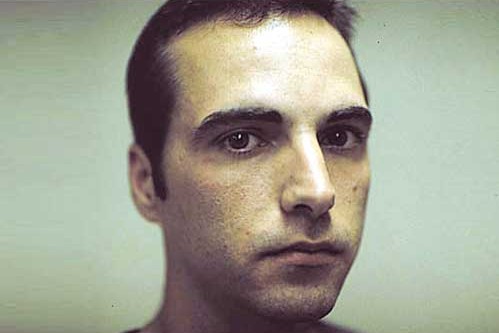
Jeremy Sheets
Murderer? Richard Allen Williams
Murderer? · USA · 1992
Boone County Prosecutor Kevin Crane dismissed the charges in August 2003 after…
10 victims
Richard Allen Williams
Murderer? · USA · 1992
Boone County Prosecutor Kevin Crane dismissed the charges in August 2003 after…
10 victims
 Andre Minnitt
Murderer? · USA · 1992
Andre Minnitt was convicted of crimes connected to the El Grande Market slaying…
3 victims
Andre Minnitt
Murderer? · USA · 1992
Andre Minnitt was convicted of crimes connected to the El Grande Market slaying…
3 victims
 Floyd Tapson
Murderer? · USA · 1987
Floyd Tapson was convicted by a jury in the Thirteenth Judicial District Court,…
3 victims
Floyd Tapson
Murderer? · USA · 1987
Floyd Tapson was convicted by a jury in the Thirteenth Judicial District Court,…
3 victims
 Michael Roy Toney
Murderer? · USA · 1985
Michael Roy Toney (December 29, 1965 – October 3, 2009) · Name as recorded: Mic…
3 victims
Michael Roy Toney
Murderer? · USA · 1985
Michael Roy Toney (December 29, 1965 – October 3, 2009) · Name as recorded: Mic…
3 victims
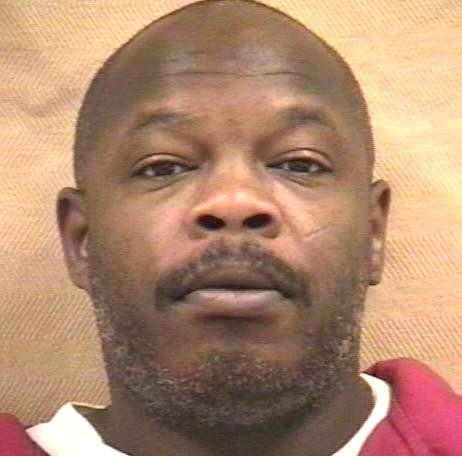 Glen Edward Chapman
Murderer? · USA · 1992
Defendant: Glen Edward Chapman Legal case references: In the Supreme Court of N…
2 victims
Glen Edward Chapman
Murderer? · USA · 1992
Defendant: Glen Edward Chapman Legal case references: In the Supreme Court of N…
2 victims
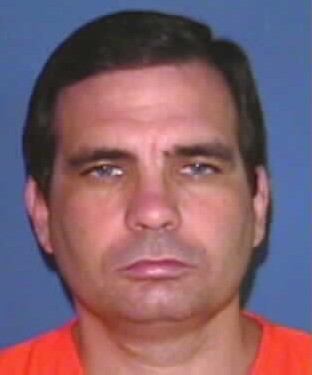 William Van Poyck
Murderer · USA · 1987
William Van Poyck (DC #034071; DOB: 07/04/54) was convicted in the Fifteenth Ju…
1 victim
William Van Poyck
Murderer · USA · 1987
William Van Poyck (DC #034071; DOB: 07/04/54) was convicted in the Fifteenth Ju…
1 victim
 Evelyn Dick
Murderer · Canada · 1944
Evelyn Dick was born to Donald MacLean and Alexandra MacLean on October 13, 192…
2 victims
Evelyn Dick
Murderer · Canada · 1944
Evelyn Dick was born to Donald MacLean and Alexandra MacLean on October 13, 192…
2 victims
 William MacDonald
Serial killer · Australia · 1961
William MacDonald was an Australian serial murderer who was dubbed the “Sydney…
5 victims
William MacDonald
Serial killer · Australia · 1961
William MacDonald was an Australian serial murderer who was dubbed the “Sydney…
5 victims
 Cornelius Alan Goss
Murderer · USA · 1987
Name: Cornelius Alan Goss · May 20, 1987 — 66-year-old Carl Leevy, a sporting g…
1 victim
Cornelius Alan Goss
Murderer · USA · 1987
Name: Cornelius Alan Goss · May 20, 1987 — 66-year-old Carl Leevy, a sporting g…
1 victim
- Gender
- male
- Country
- USA
- Location
- Douglas County, Nebraska, USA
- Date of birth
- May 8, 1974
- Age at first offence
- 18
- Characteristics
- kidnapping, rape
- Victim profile
- Kenyatta Bush, 17
- Method of murder
- St abbing with knife
- Date(s) of murder
- September 23, 1992
- Years active
- 1992
- Date of arrest
- September 27, 1996
- Status
-
Released
Sentence to death on September 26, 1997; conviction overturned in 2000; released on June 13, 2001
Overview
Jeremy Sheets was sentenced to death on September 26, 1997. His conviction was overturned in 2000. He was released on June 13, 2001.
People
- Jeremy Sheets — defendant; sentenced to death and later released after his conviction was overturned.
- Adam Barnett — key witness against Sheets; Barnett was Sheets’s best friend, gave a taped confession, and committed suicide in jail.
- Kenyatta Bush — victim; a 17-year-old black high-school student who was kidnapped, raped, and murdered.
Timeline
- September 23, 1992 — Kenyatta Bush was kidnapped outside Omaha North High School on her way to class; her throat was slashed and her body was dumped in a wooded area north of Omaha.
- September 26, 1997 — Jeremy Sheets was sentenced to death.
- 2000 — The Nebraska Supreme Court unanimously ruled that a tape recording made by an alleged accomplice who committed suicide prior to trial was “highly suspect,” “inherently unreliable,” and inadmissible without the opportunity for Sheets to cross-examine.
- May 14, 2001 — The U.S. Supreme Court declined to hear an appeal of the state court’s decision.
- June 13, 2001 — Jeremy Sheets was released after prosecutors decided not to retry his case.
Background
Adam Barnett told police that he and Jeremy Sheets, both white men, had been angry about white women dating black men. Barnett said that to get even, they kidnapped and raped a black high-school student. Barnett also told police that Sheets stabbed her to death. Barnett committed suicide in jail.
In Sheets’s 1997 trial, Sheets testified and denied that he hated blacks or had any involvement in the 1992 killing of Kenyatta Bush. He said:
“I've never killed anybody,” he said.
The Nebraska Supreme Court reversed Sheets’s conviction because Sheets’s lawyer had not been able to cross-examine the dead Barnett. Without the taped statement, prosecutors said they did not have enough other evidence to proceed with another trial.
The offence
Kenyatta Bush was kidnapped outside Omaha North High School on her way to class on September 23, 1992. Her throat was slashed, and her body was dumped in a wooded area north of Omaha. Barnett told police that he and Sheets, after “dropping acid,” decided to rape a black woman to get revenge on black men who date white women. Barnett said Sheets stabbed Bush after she lost consciousness.
Investigation
Barnett gave police statements that implicated Jeremy Sheets. Barnett’s taped statement was the key evidence used against Sheets at trial. The taped statement was connected to a plea bargain in which Barnett:
- avoided a charge of first degree murder,
- did not have an additional weapons charge filed, and
- received a commitment for his safety while incarcerated.
The state prosecutor argued that Barnett’s statement to police was given voluntarily and in the presence of his attorney. The prosecutor also said Barnett knew details of Bush’s death that only the killers would know, including the condition and location of Bush’s body and the exact cause of death.
Arrest
No arrest details were provided in the source.
Trial
Jeremy Sheets was sentenced to death on the basis of Barnett’s taped confession and Sheets’s own testimony, which the jury found unbelievable.
In 1997, Sheets took the witness stand and denied involvement in the killing of Kenyatta Bush and denied hatred of blacks.
Sentencing
Appeals
The Nebraska Supreme Court reversed Sheets’s conviction in 2000. The court ruled that a tape recording made by an alleged accomplice who committed suicide prior to trial was inadmissible without the opportunity for Sheets to cross-examine. The court described the taped evidence as “highly suspect,” “inherently unreliable,” and hence inadmissible.
The U.S. Supreme Court declined to review the case, meaning the state decision overturning Sheets’s conviction stood. On May 14, 2001, the U.S. Supreme Court declined to hear an appeal.
Outcome
After the U.S. Supreme Court declined to hear an appeal, prosecutors dropped the charges against Jeremy Sheets. Prosecutors then decided not to retry his case.
Aftermath
On June 13, 2001, Jeremy Sheets was released from prison. He became the first person released from Nebraska’s death row in 88 years. His release came after the Nebraska Supreme Court threw out a taped statement used to convict Sheets in the murder of 17-year-old Kenyatta Bush, and after the U.S. Supreme Court refused to hear the state’s appeal.
Douglas County Attorney Jim Jansen, who prosecuted the case against Sheets, said:
“It's painful to have to do this. I'm convinced we tried and convicted the appropriate person,”
Prison and court records did not indicate what happened to Sheets after his release. Sheets previously told news reporters that he planned to spend some time with his parents in Colorado.
During his three years on death row, Sheets appeared on billboards and in magazines worldwide as part of an advertising campaign against the death penalty by Italian fashion company Benetton.
Sheets’s release left 10 people on Nebraska’s death row.
Spotted an error, or have more information about this case?