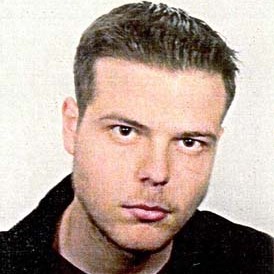
Mijailo Mijailovic
Murderer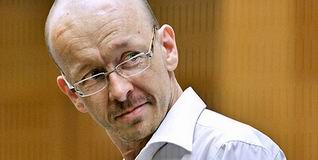 Peter Mangs
Murderer · Sweden · 2003
Peter Mangs was sentenced to life in prison for murder and attempted murder con…
3 victims
Peter Mangs
Murderer · Sweden · 2003
Peter Mangs was sentenced to life in prison for murder and attempted murder con…
3 victims
 Anders Eklund
Murderer · Sweden · 2000
Anders Eklund (born August 6, 1965) was a Swedish murderer and rapist. He was c…
2 victims
Anders Eklund
Murderer · Sweden · 2000
Anders Eklund (born August 6, 1965) was a Swedish murderer and rapist. He was c…
2 victims
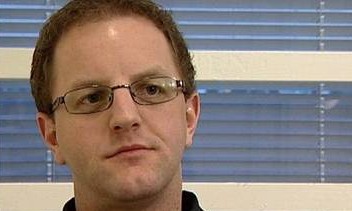 Helge Fossmo
Murderer · Sweden · 1999
Helge Arnold Fossmo (1971-) was a Pentecostal pastor. He was involved in the Kn…
2 victims
Helge Fossmo
Murderer · Sweden · 1999
Helge Arnold Fossmo (1971-) was a Pentecostal pastor. He was involved in the Kn…
2 victims
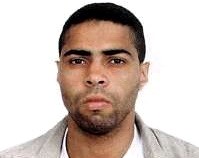 Jackie Arklöv
Murderer · Sweden · 1999
Jackie Arklöv was sentenced to life imprisonment. Jackie Arklöv (born June 6, 1…
2 victims
Jackie Arklöv
Murderer · Sweden · 1999
Jackie Arklöv was sentenced to life imprisonment. Jackie Arklöv (born June 6, 1…
2 victims
 Hampus Hellekant
Murderer · Sweden · 1999
Karl Helge Hampus Hellekant was later known as Karl Svensson. He was born Janua…
1 victim
Hampus Hellekant
Murderer · Sweden · 1999
Karl Helge Hampus Hellekant was later known as Karl Svensson. He was born Janua…
1 victim
 Jon Nödtveidt
Murderer · Sweden · 1997
Jon Andreas Nödtveidt (June 28, 1974 – August 16, 2006) was a lead guitarist an…
1 victim
Jon Nödtveidt
Murderer · Sweden · 1997
Jon Andreas Nödtveidt (June 28, 1974 – August 16, 2006) was a lead guitarist an…
1 victim
 Leonarda Cianciulli
Serial killer · Italy · 1939
Leonarda Cianciulli (November 14, 1893, Montella, Province of Avellino – Octobe…
3 victims
Leonarda Cianciulli
Serial killer · Italy · 1939
Leonarda Cianciulli (November 14, 1893, Montella, Province of Avellino – Octobe…
3 victims
 Gerald Tigner
Murderer · USA · 1992
Gerald Wayne Tigner was convicted of the capital murders of Michael Watkins and…
3 victims
Gerald Tigner
Murderer · USA · 1992
Gerald Wayne Tigner was convicted of the capital murders of Michael Watkins and…
3 victims
 Patrick Henry Sherrill
Mass murderer · USA · 1986
Patrick Henry Sherrill Patrick Henry Sherrill committed suicide by shooting him…
14 victims
Patrick Henry Sherrill
Mass murderer · USA · 1986
Patrick Henry Sherrill Patrick Henry Sherrill committed suicide by shooting him…
14 victims
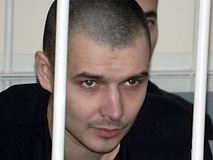 Yevgeny Krasnoshchok
Murderer · Ukraine · 2012
Oksana Makar (Oksana Serhiyivna Makar) was born on 11 June 1993 and died on 29…
1 victim
Yevgeny Krasnoshchok
Murderer · Ukraine · 2012
Oksana Makar (Oksana Serhiyivna Makar) was born on 11 June 1993 and died on 29…
1 victim
 Joshua David Nelson
Murderer · USA · 1995
Joshua David Nelson was convicted in Lee County, Florida, for offenses connecte…
1 victim
Joshua David Nelson
Murderer · USA · 1995
Joshua David Nelson was convicted in Lee County, Florida, for offenses connecte…
1 victim
 Gregory Despres
Homicide · Canada · 2005
July 1982 — Gregory Allan Despres was born in Minto, New Brunswick, Canada. · A…
2 victims
Gregory Despres
Homicide · Canada · 2005
July 1982 — Gregory Allan Despres was born in Minto, New Brunswick, Canada. · A…
2 victims
- Gender
- male
- Country
- Sweden
- Location
- Stockholm, Sweden
- Date of birth
- December 6, 1978
- Age at first offence
- 25
- Characteristics
- mentally ill
- Victim profile
- Anna Lindh, 46 (Swedish Minister for Foreign Affairs)
- Method of murder
- Stabbing with knife
- Date(s) of murder
- September 10, 2003
- Years active
- 2003
- Date of arrest
- 6 days after
- Status
-
Life imprisonment
Sentenced to life imprisonment on December 2, 2004
Case record: Mijailo Mijailović
Status
Mijailo Mijailović was sentenced to life imprisonment on December 2, 2004.
Background
Mijailo Mijailović (Serbian Cyrillic: Мијаило Мијаиловић) was born December 6, 1978 in Stockholm, Sweden to Serbian immigrant parents.
His family was believed to have come from the village of Przutiovac. His grandfather emigrated to Sweden in 1970 to work in a factory, although he later returned. Mijailo Mijailović spent a few years at school in Serbia before returning to Sweden, where he attended high school before dropping out.
His youth appeared to have been marked by family disputes. In 1997, he was convicted of assault for stabbing his father repeatedly in the back and behind the ear with a kitchen knife. Mijailo Mijailović told the court he wanted to stop an argument between his parents, but could not recall the actual attack on his father, who survived. He was subsequently sentenced to probation. A psychiatric evaluation in connection with the 1997 trial found Mijailo Mijailović “in great need of psychiatric and psychotherapeutic efforts”.
Other court documents showed that he had convictions for illegal gun possession and making threatening phone calls to two women.
Psychiatric tests carried out after the end of the trial declared that he was sane at the time of the killing, despite his claim to have been directed by “voices in his head”.
Swedish newspapers suggested that he had been released from a mental institution just five days before the killing of Anna Lindh, that he had serious mental problems, and that he had previously been convicted of violent crimes.
He was said to have been greatly angered by Anna Lindh’s staunch support for the U.S.-led military campaign against Serbia during 1999.
The offence
Anna Lindh, the Swedish Minister for Foreign Affairs, was assassinated on September 10, 2003.
Anna Lindh died in the early morning of September 11, 2003, after a knife attack in Stockholm on the afternoon of September 10.
Just after 4 p.m., she was attacked while shopping in the ladies’ department at the Nordiska Kompaniet department store. She was stabbed in the chest, stomach and arms.
Following the assault, she was rushed to Karolinska Hospital where she underwent surgery for over nine hours, receiving blood transfusions continually during the operation. She reportedly suffered copious internal bleeding, her liver was seriously damaged, and her medical situation remained grave even though she appeared to have improved after surgery. One hour after concluding the initial nine-hour surgery, complications forced resumption of surgery. At 5:29 a.m. local time all means to save her life had been exhausted and Anna Lindh was pronounced dead.
Investigation
After the crime, the assassin was able to escape. His actions appeared deliberate and systematic based on eyewitness accounts.
A phone number was set up for anyone who might know anything about the crime, and a massive manhunt was launched in Sweden, centering on Stockholm.
After two days, an image of a man believed to be the assassin was released by police. The image was taken by a camera on a floor above the scene of the murder.
A few items, pieces of clothing and a knife, believed to be connected with the murder, were found outside the department store, in the vicinity of a Stockholm Metro station.
At the scene of the crime, police secured a handprint believed to be connected to the killer.
Images from the department store’s surveillance system, showing the suspect, were published on September 13 and September 14.
A man was apprehended on September 16 and detained as suspect to the murder on justifiable grounds, the lowest degree of suspicion.
On September 24, police announced that a new suspect, Mijailo Mijailović, born in Sweden to Serb parents, had been apprehended and arrested, at the higher level of suspicion, probable cause. It was stated that the previous suspect had been released.
On September 25, it was announced that the DNA-profile of Mijailović matched that of hairs found on the baseball cap left at or near the scene of the crime. He also resembled the man filmed in the store where Lindh was attacked.
Arrest and detention
Mijailo Mijailović was apprehended and arrested on September 24 at the higher level of suspicion, probable cause.
Confession and police questioning
After previously having denied all involvement, on January 6, 2004, Mijailović admitted to the crime and gave a full account of the events on September 10, in an extra session of police questioning requested by Peter Althin, his counsel.
On January 6, 2004, after being presented with the evidence against him, he confessed to the police that he killed Anna Lindh.
Trial
The court trial against Mijailović took place January 14–17, 2004.
He was cross-examined in court on Wednesday afternoon, January 14, by Prosecutor Khrister Petersson after the lunch interval.
He gave brief answers and became irritated when pressed by the prosecutor. He talked about what he did on 10 September, how he traveled into Stockholm, visited various shops and ended up in the NK department store. He said he had no exact recollection of what he did there and how. He said he “was feeling very poorly”.
Defense solicitor Peter Althin asked Mijailović about the tablets he takes and he replied that he had been given tablets. He said he takes 10 tablets a day in custody, primarily anti-depressants:
“It is in order to sleep better and not hear voices.
The tablets are better than the ones I used to take,”
Mijailović said in court:
“I felt unhappy and depressed. I was carrying a knife and wearing a bullet-proof vest when I went into town on 10th.”
He said:
“No, I didn't.”
“Yes, I was. I was just walking around there. I could not withstand the voice - it said 'attack, attack'.”
When asked about how many times he stabbed, he said:
“No, I can't remember.”
When asked why he threw away the knife, he said:
“I panicked.”
When asked whether he talked to relatives and friends about what he did, he said:
“Yes, I have.”
Asked about talking about it and destroying evidence, he said:
“Yes, I don't know how I work.”
When asked what he thought about while watching television all night, he said:
“I hoped that she would live.”
When asked what he felt now, he said:
“I feel regret.”
When asked what happened when he went to seek medical assistance after the incident, he said:
“I was given tablets and then they threw me out.”
When asked about living at home before the police took him into custody, he said:
“Yes, I was living at home at that time.”
When asked about accusations that he saw her on level one, he said:
“No, I haven't.”
When asked “Why her exactly?”, he said:
“I don't know.”
When asked about whether it was an event that happened at random, he said:
“Yes it is.”
When asked if he wished to raise or say anything, he said:
“No, there is nothing I want to say.”
When asked if he could live with what he said, he said:
“Yes.”
On the court’s question about the voices, he said:
“For several years.”
On what should have happened, he said:
“It should not have happened like this,”
The accused also said:
He said:
He also said:
The court record also included that he had heard voices telling him to attack Lindh.
The court found that he was completely indifferent to whether Anna Lindh would die of her stab wounds and therefore had intent to kill, and it rejected the lesser charge sought by his defense.
He was found guilty of murder rather than manslaughter. His defense had sought the lesser charge of manslaughter, arguing Mijailo Mijailović had not intended to kill the politician.
During the trial, his lawyer Peter Althin told the court that Mijailo Mijailović had heard voices telling him to attack Anna Lindh, but that they said nothing about killing her. Mr Althin said the killing was an “impulsive act” and added that it was a “coincidence” that his victim was Anna Lindh.
The court stated:
“It has been proven that Mijailo Mijailovic was completely indifferent as to whether Anna Lindh would die of her stab wounds and he therefore had intent to kill.”
Sentencing
A psychiatric evaluation ordered by the court postponed sentencing after the January trial. A report concluded on March 9 that Mijailo Mijailović was not considered to be criminally insane at the time of the assassination.
On March 23, 2004, he was sentenced to life imprisonment.
However, an appeals court overturned that sentence on July 8 after tests had concluded that he was suffering from a mental illness at the time of the killing. After the appeals court decision, Mijailo Mijailović was taken from prison to a closed psychiatric ward.
On December 2, 2004, he was sentenced by the Supreme Court of Sweden to life imprisonment for the killing of Anna Lindh, overruling the appeals court judgement.
Appeals
An appeals court overturned the life prison sentence on July 8, after tests concluded that he was suffering from a mental illness at the time of the killing.
The defence had sought a manslaughter verdict, and it also sought to challenge the psychiatrists’ findings that he was sane, including a request for a review of the tests; the court rejected a review of the tests. The defence had three weeks if it wanted to file an appeal, and his lawyer Peter Althin said he would have to consult his client before deciding whether to do so.
The Supreme Court of Sweden overruled the appeals court judgement on December 2, 2004.
Other details
Statements and legal positions quoted in the record
Mijailo Mijailović had denied murder, insisting he carried out the attack because of “voices in his head”.
His lawyer Peter Althin said:
“I am an optimist,” he said. “So when the experts were of the opinion that there was a serious mental disturbance, I would have been somewhat surprised if the appeals court hadn't agreed that he needed psychiatric care.”
Chief Prosecutor Agneta Blidberg was quoted as saying she accepted the verdict but did not say whether she would appeal to the Supreme Court.
A law professor in Stockholm was quoted with regard to the possibility of being released:
“In practice there are no rules. Since no explanations are required for pardons or rejected pardons, every case gets a different treatment,” Josef Zila told the French news agency AFP.
In relation to what the court said about intent, the court stated:
“He used a life-threatening weapon. He held the knife with both hands when he delivered the blows... the force was powerful,” the court said in a statement. “The location and the size of the stab wounds indicates that the intention was to kill.
It is beyond reasonable doubt that Mijailo Mijailovic intended to kill Anna Lindh.”
Citizenship and administrative actions
Mijailo Mijailović was for some time a citizen of both Serbia and Montenegro and of Sweden.
After the crime, he applied to have his Swedish citizenship revoked. His application was granted by the Swedish National Migration Board on September 20, 2004, and it was stated that this did not have any effect on the judicial process.
Pre-offence profile and alleged motives/obsessions
The killing was not thought to have been politically motivated in the usual sense, but Mijailo Mijailović was believed to have been obsessed by several famous people.
He was alleged to have hated Anna Lindh for backing the Nato air strikes against Belgrade during the 1999 Kosovo war.
According to one psychiatric evaluation, Mijailo Mijailović said he was interested in “injustices in the world” but was unable to elaborate on these.
Notes about psychiatric assessments described in the record
An initial psychiatric assessment after his arrest concluded he was not mentally ill when he killed Lindh.
The appeals court said Mijailo Mijailović needed psychiatric care because he was a “traumatised person with significant psychiatric problems”.

Spotted an error, or have more information about this case?