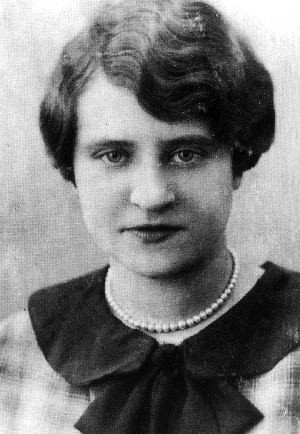
James Joseph Power
Murderer Albert Burrows
Murderer · United Kingdom · 1920
Albert Burrows (also named Albert Edward Burrows): married farm labourer who to…
4 victims
Albert Burrows
Murderer · United Kingdom · 1920
Albert Burrows (also named Albert Edward Burrows): married farm labourer who to…
4 victims
 Lock Ah Tam
Murderer · United Kingdom · 1925
Lock Ah Tam was 54 when he killed his wife and two daughters. He had been a suc…
3 victims
Lock Ah Tam
Murderer · United Kingdom · 1925
Lock Ah Tam was 54 when he killed his wife and two daughters. He had been a suc…
3 victims
 Buck Ruxton
Murderer · United Kingdom · 1935
Buck Ruxton (21 March 1899, Bombay – 12 May 1936, Manchester) was also known as…
2 victims
Buck Ruxton
Murderer · United Kingdom · 1935
Buck Ruxton (21 March 1899, Bombay – 12 May 1936, Manchester) was also known as…
2 victims
 Walter Graham Rowland
Murderer · United Kingdom · 1934
Defendant: Walter Graham Rowland Age: 39 (labourer) Residence/Origin: from Mell…
2 victims
Walter Graham Rowland
Murderer · United Kingdom · 1934
Defendant: Walter Graham Rowland Age: 39 (labourer) Residence/Origin: from Mell…
2 victims
 Charles Rice
Murderer · USA · 2000
Charles Rice was sentenced to death on January 14, 2002. He was convicted of fi…
1 victim
Charles Rice
Murderer · USA · 2000
Charles Rice was sentenced to death on January 14, 2002. He was convicted of fi…
1 victim
 Hélène Jégado
Serial killer · France · 1833
Hélène Jégado (1803–1852) was a French domestic servant and poisoner. She was e…
23 victims
Hélène Jégado
Serial killer · France · 1833
Hélène Jégado (1803–1852) was a French domestic servant and poisoner. She was e…
23 victims
 Daniel Remeta
Spree killer · USA · 1985
Daniel Remeta Remeta was executed by electrocution in Florida on March 31, 1998…
5 victims
Daniel Remeta
Spree killer · USA · 1985
Daniel Remeta Remeta was executed by electrocution in Florida on March 31, 1998…
5 victims
- Gender
- male
- Country
- United Kingdom
- Location
- Birmingham, West Middlands, England, United Kingdom
- Date of birth
- 1891
- Age at first offence
- 36
- Characteristics
- rape
- Victim profile
- Olive Turner (female, 21)
- Method of murder
- Drowning
- Date(s) of murder
- July 2, 1927
- Years active
- 1927
- Date of arrest
- —
- Status
-
Executed
Executed by hanging at Birmingham on January 31, 1928
Case summary
James Joseph Power was sentenced to death at Birmingham Assizes by Mr Justice Swift on 9th December, 1927, for the murder of Olive Turner, a young factory worker.
One night in autumn 1927, twenty one year old Miss Turner and her boyfriend Charles Bromhead were strolling beside a canal at Winson Green, in the shadows of Birmingham prison. They were stopped by Power, who pretended to be a plain clothes policeman. He asked them for proof of identity. When they could not prove who they were, Power told them he was taking them into custody on suspicion of committing some crime.
As they headed towards the station, Power suggested he was open to a bribe by saying they could “square up with him.” Bromhead offered him fourpence. Power replied, “Fourpence is no good to me.” At that moment, Bromhead, rightly suspecting that Power was an imposter, told Olive to make a run for it. Power gave chase and struck Bromhead a blow to face, rendering him senseless for a short time. When he came to, the others had disappeared.
Further down the path, a courting couple spoke to Power who was dragging the distressed girl by the waist. Power told them he was a policeman taking her into custody. It was 11.30pm. Five minutes later, another couple heard sounds of a struggle followed by a splash. Olive’s body was later discovered in the canal. She had been raped and had died as a result of drowning.
Thirty six year old Power was identified by several people as the man on the river bank claiming to be a police officer.
Investigation and identification
Police immediately appealed for witnesses. Doris Emery had also been to the cinema with her boyfriend, Edgar Willock, and they too were on the towpath at the time of the attack. They had seen the three people together and had been close to the woman when she was caught by the man she was trying to run away from. Willock tried to interfere, but the man identified himself as a police officer. Willock allowed him to go on his way, and he swore he would know the man again.
Another important witness was John Godfree. He had seen the man standing on a bridge, watching couples pass by, and had seen him go up to Charles and Olive. The descriptions and information these people gave allowed police to decide that the man they wanted was James Power, who lived in Heath Green Road. He had been a policeman but had now left the force and he had come to their attention in the past for representing himself as still being a serving officer.
Power was taken in for questioning. He was identified by Charles Broomhead, Doris Emery, Edgar Willock and John Godfree. Power replied that they were all mistaken and that he had not been anywhere near the canal on the day in question. That defence convinced no-one.
Trial
Power was sentenced to death. As the sentence of death was passed, Power shouted at the judge that he did not want any sympathy but announced that he planned to appeal. The appeal failed, and he was hanged at Winson Green prison, a stone’s throw from where he had committed the murder, by Thomas Pierrepoint and Robert Wilson on 31st January 1928.
Appellate history
The appeal tried two different approaches. They tried to discredit the testimony of the witnesses. Charles Broomhead was said to have been interested in anyone being arrested. It was said that he had been the first suspect and that the police had questioned him very closely when he first reported the matter, and that his evidence seemed to improve in quality as time went on.
It was also said that John Godfrey had only had a quick sideways glance at the man. Doris Emery and Edgar Willock had described the man they had seen as wearing a white daisy in his buttonhole, while Power had been wearing a red rose.
The appeal also argued that even if Power had carried off Olive, there was no proof that he was responsible for her death. It was suggested that she might have wandered off in the dark and fallen into the canal accidentally. The strength of this point was reduced when evidence was given that there was no water in Olive’s stomach, meaning that she was unconscious when she entered the water.
The appeal was dismissed.
Timeline
- 9th December, 1927 — Mr Justice Swift sentenced James Joseph Power to death at Birmingham Assizes for the murder of Olive Turner.
- 31st January 1928 — James Joseph Power was hanged at Winson Green prison by Thomas Pierrepoint and Robert Wilson.
- January 31, 1928 — James Joseph Power was executed by hanging at Birmingham.
Other details
Charles Broomhead had enjoyed his night out with Olive Turner, the girl he loved. They had gone to the cinema and then decided to have a quiet walk down the canal towpath.
Charles Bromhead respected authority and said that they would go with the man without offering any resistance. Charles began to grow suspicious during the walk and noticed other couples on the towpath. Charles demanded to know why they were not also being arrested, and the police officer replied that he had two and that was enough for him.
Charles told Olive to run home. Olive began to run off and was followed by the stranger. Charles followed and soon caught the stranger who then turned suddenly and struck Charles, knocking him down and dazing him. Charles saw the man catch Olive and, throwing his arm around her waist, carry her off into the distance. Olive would not be seen again until her body was found in the canal the following morning.
Olive’s watch, which was still on her body, had stopped, pin-pointing the time she was thrown into the water as eleven forty one.
Spotted an error, or have more information about this case?