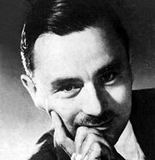
John George Haigh
Serial killer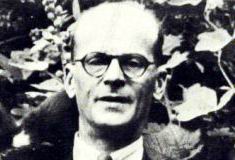 John Reginald Christie
Serial killer · United Kingdom · 1943
John Reginald Halliday Christie (April 8, 1899–July 15, 1953) was an English se…
8 victims
John Reginald Christie
Serial killer · United Kingdom · 1943
John Reginald Halliday Christie (April 8, 1899–July 15, 1953) was an English se…
8 victims
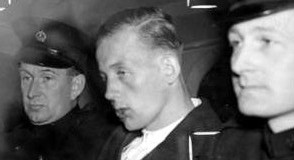 John Thomas Straffen
Serial killer · United Kingdom · 1951
John Thomas Straffen was sentenced to death on July 25, 1952. Home Secretary Si…
3 victims
John Thomas Straffen
Serial killer · United Kingdom · 1951
John Thomas Straffen was sentenced to death on July 25, 1952. Home Secretary Si…
3 victims
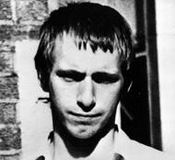 Bruce Lee
Serial killer · United Kingdom · 1973
Bruce Lee was born Peter George Dinsdale in 1960. He later changed his name to…
26 victims
Bruce Lee
Serial killer · United Kingdom · 1973
Bruce Lee was born Peter George Dinsdale in 1960. He later changed his name to…
26 victims
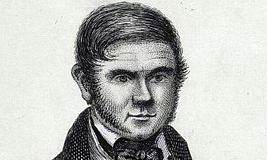 William Burke
Serial killer · United Kingdom · 1827
William Burke (1792 – 28 January 1829) was born in Urney, near Strabane, in the…
17 victims
William Burke
Serial killer · United Kingdom · 1827
William Burke (1792 – 28 January 1829) was born in Urney, near Strabane, in the…
17 victims
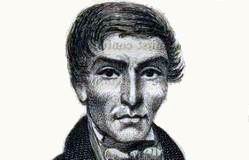 William Hare
Serial killer · United Kingdom · 1827
William Hare and Brendan “Dynes” Burke committed serial murders in Edinburgh, S…
17 victims
William Hare
Serial killer · United Kingdom · 1827
William Hare and Brendan “Dynes” Burke committed serial murders in Edinburgh, S…
17 victims
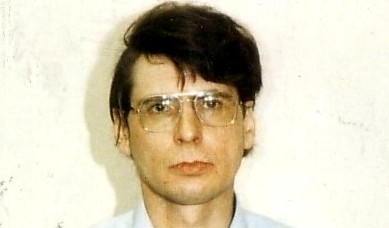 Dennis Nilsen
Serial killer · United Kingdom · 1978
Dennis Andrew Nilsen was born on November 23, 1945. He lived in London. He was…
16 victims
Dennis Nilsen
Serial killer · United Kingdom · 1978
Dennis Andrew Nilsen was born on November 23, 1945. He lived in London. He was…
16 victims
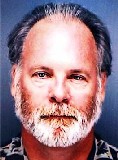 John Hogan
Mass murderer · USA · 2002
John P. Hogan was a retired Santa Clara County sheriff's deputy and a private i…
4 victims
John Hogan
Mass murderer · USA · 2002
John P. Hogan was a retired Santa Clara County sheriff's deputy and a private i…
4 victims
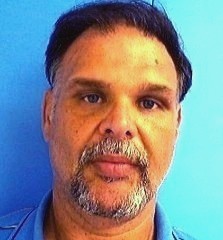 Patrick Burris
Spree killer · USA · 2009
Patrick Tracy Burris (August 8, 1967 – July 6, 2009) was an American spree kill…
5 victims
Patrick Burris
Spree killer · USA · 2009
Patrick Tracy Burris (August 8, 1967 – July 6, 2009) was an American spree kill…
5 victims
 John Joseph Romano
Murderer · USA · 1985
John Joseph Romano was convicted of killing jeweler Roger Joel Sarfaty during t…
2 victims
John Joseph Romano
Murderer · USA · 1985
John Joseph Romano was convicted of killing jeweler Roger Joel Sarfaty during t…
2 victims
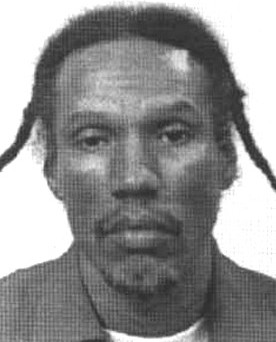 Gregory Resnover
Murderer · USA · 1980
Gregory Resnover was convicted of conspiracy to commit murder and murder in Ind…
1 victim
Gregory Resnover
Murderer · USA · 1980
Gregory Resnover was convicted of conspiracy to commit murder and murder in Ind…
1 victim
- Gender
- male
- Country
- United Kingdom
- Location
- London, England, United Kingdom
- Date of birth
- J uly 24, 1909
- Age at first offence
- 35
- Characteristics
- poisoner, dismemberment, torture
- Victim profile
- William Donald McSwan / Donald and Amy McSwan / Dr. Archibald Henderson, 52, and his wife Rosalie, 41 / Olive Henrietta Robarts Durand-Deacon, 69
- Method of murder
- Beating with a blunt instrument / Shooting
- Date(s) of murder
- 1944 - 1949
- Years active
- 1944–1949
- Date of arrest
- February 26, 1949
- Status
-
Executed
Executed by hanging at Wandsworth prison on August 10, 1949
Case overview
John George Haigh was an English serial killer during the 1940s. He was commonly known as the "Acid Bath Murderer". He was convicted of the murders of six people, although he claimed to have killed a total of nine.
Timeline
- 9 September 1944 — William McSwan was murdered in a basement flat in Gloucester Road, Chelsea.
- 14 February 1945 — Mrs Olive Henrietta Olivia Robarts Durand-Deacon showed Haigh some false fingernails she had designed and asked Haigh if he could improve the idea to a product that would be marketable.
- 18 February 1949 — Haigh invited Olive Henrietta Robarts Durand-Deacon (69) to his Crawley workshop; she was shot in the back of the head, stripped of valuables, and put into acid.
- 20 February 1949 — A missing person report was made to the police in Chelsea concerning Olive Durand-Deacon.
- 26 February 1949 — Police visited the workshop at Crawley; the door to the workshop was forced and detectives noted a rubber apron, gas mask, and empty carboys.
- 28 February 1949 — At 4.15pm, Detective Inspector Albert Webb was waiting at Onslow Court when Haigh returned; Webb took Haigh back to Chelsea police station.
- 1 March 1949 — Home Office pathologist Dr Keith Simpson examined the Crawley workshop.
- 2 March 1949 — Haigh was charged with the murder of Mrs Durand-Deacon.
- 18 July 1949 — Trial at Lewes Assizes began; Mr Justice Humphries presided.
- 19 July 1949 — Trial finished the following afternoon; it took the jury seventeen minutes to find him guilty.
- 10 August 1949 — Haigh was led to the gallows by Chief Executioner Albert Pierrepoint and was hanged at Wandsworth Prison.
The offences
William McSwan
On 9 September 1944, William McSwan was murdered in a basement flat in Gloucester Road, Chelsea.
Haigh later admitted hitting McSwan over the head after luring him into a basement at 79 Gloucester Road, London SW7. He then put McSwan’s body into a drum and filled it with sulphuric acid. Two days later, Haigh returned and poured the resulting sludge down a manhole. He told McSwan’s parents, Donald and Amy, that their son had fled to Scotland to avoid being called up for military service.
Haigh stole McSwan’s pension cheques and sold their properties. He moved into the Onslow Court Hotel in Kensington.
The murders of Donald and Amy McSwan
Haigh told McSwan’s parents that their son had fled to Scotland to avoid military service. He then murdered Donald and Amy McSwan as well. He lured them to Gloucester Road and disposed of them on 2 July 1945.
Further victims and alleged killings
Archibald Henderson and Rose Henderson
By the summer of 1947, Haigh found another couple to kill and rob: Dr Archibald Henderson and his wife Rose, whom he met after purporting to show interest in a house they were selling.
Haigh rented a workshop at 2 Leopold Road, Crawley, West Sussex, and moved acid and drums there from Gloucester Road. He had also stayed at the The George Hotel, Crawley on several occasions.
On 12 February 1948, Haigh drove Henderson to Crawley, on the pretext of showing him an invention. When they arrived, Haigh shot Henderson in the head with a revolver he had earlier stolen from the doctor’s house. Haigh then lured Mrs Henderson to the workshop, claiming her husband had fallen ill, and shot her also.
After disposing of the Hendersons’ bodies in oil drums filled with acid, Haigh forged a letter from them and sold their possessions for £8,000, keeping their dog.
Olive Henrietta Robarts Durand-Deacon
Haigh’s next and final victim was Olive Henrietta Robarts Durand-Deacon, 69, a widow and fellow resident at the Onslow Court.
She mentioned to Haigh, by then calling himself an engineer, an idea she had for artificial fingernails. Haigh invited her down to the Crawley workshop on 18 February 1949. Once inside, he shot her in the back of the head, stripped her of her valuables including a Persian lamb coat, and put her into the acid bath.
Two days later, Durand-Deacon’s friend Constance Lane reported her missing.
Investigation
Missing person report and early suspicion
Constance Lane reported Durand-Deacon missing after she had not been seen at the hotel. A photo and description of the missing woman were issued to all police departments, the press and hotel personnel.
Sergeant Lambourne was suspicious of Haigh from the start. She queried the manager, who offered an uncomplimentary description of Haigh and a record of his debts to the hotel.
Discovery of Haigh’s workshop materials
Detectives checked Haigh’s place of business in Crawley, Hurstlea Products. Haigh claimed to be the director, which was soon proven to be a fabrication.
The police forced their way into the building. They found:
- tools, trays, wires
- a sheet of red cellophane paper and a wad of cotton near a bench
- three carboys packed in straw (one empty and another half empty)
- a new stirrup-pump with a part removed
- a rubber apron stained by chemicals
- a pair of rubber boots and rubber gloves
- a gas mask in an army bag
- a man’s hatbox and an attaché case bearing the initials, J. G. H.
Inside the hatbox lay a .38 Enfield revolver and eight rounds of ammunition, described as having been fired recently. The police also found a cleaner’s receipt for a Persian lamb coat traced back to a coat belonging to Mrs Durand-Deacon. They later found a workbasket in her room with scraps matching patches on the Persian lamb coat; the scraps were sent to the police laboratory.
Jewelry was brought into a jewelry shop to be pawned the day after the woman had been reported missing. Jewelry collected from the jeweler was identified as belonging to Mrs Durand-Deacon. The person who had sold it had signed his name “J. McLean” and had used an address at “32 St. George's Drove, S.W.” The jeweler’s assistant recognized Haigh as “McLean.” Haigh was arrested.
Haigh’s custody, statements, and discovery from Scotland Yard
Haigh was arrested after the pawned jewelry identification. When Detective-Inspector Webb approached Haigh and asked him to come along to the police station, he reportedly said: “Certainly. I will do anything to help you, as you know.”
Scotland Yard’s Record Office was contacted and Haigh’s criminal record came to light after Haigh had driven to Crawley and emptied sludge outside the workshop and had had Durand-Deacon’s jewellery valued.
Haigh gave statements reiterating his story about a missed appointment.
Thursday, police returned for another statement from Haigh; it was largely the same as his first statement with a few extra details.
Saturday 26 February and police visited the workshop at Crawley. Detectives noted the rubber apron, gas mask and empty carboys, and also found a recently fired .38 Enfield revolver and a dry-cleaning receipt for a black Persian lamb coat.
Confession and forensic examination
Statement at Chelsea police station
Haigh was brought into Chelsea police station. He smoked, read a newspaper, and fell asleep. It took almost three hours for police to prepare to question him.
After being asked about his chances of release from Broadmoor, he said: “If I told you the truth,” he said, “you would not believe me; it sounds too fantastic for belief.”
He then said: “I will tell you about it. Mrs. Durand-Deacon no longer exists. She has disappeared completely and no trace of her can ever be found again. I have destroyed her with acid. You will find the sludge, which remains at Leopold Road. Every trace has gone.”
He added: “How can you prove murder without a body?”
Confession involving claimed drinking blood
He later confessed to Webb saying: “I've destroyed her with acid. You'll find the sludge that remains at Leopold Road. Every trace has gone. How can you prove murder if there's no body?”
He went on to add the McSwanns and the Hendersons to his confession, claiming that he had killed them all so that he could drink their blood.
Examination by Dr Keith Simpson
On Tuesday 1 March, Home Office pathologist Dr Keith Simpson examined the Crawley workshop. He found bloodstains on the walls and a hat-pin at the bottom of the 45-gallon drum. After Dr Simpson had noticed a gall stone in the sludge in the yard, all residue was collected and taken to the police laboratory.
Forensic processing produced a list that included 28lb of animal fat, part of a foot, two more gall stones, and a full set of dentures. These, once identified by Mrs Durand-Deacon’s dentist, sealed Haigh’s fate.
Forensic evidence from the sludge and matched items
The yard outside the storehouse contained acid sludge described as three to four inches deep over an area of four to six feet, mixed with dirt and trash. Investigators found a gall bladder stone and specimens of human bone. The bone specimen was described as being from a left foot.
Technicians gathered evidence including:
- 28 pounds of human body fat
- three faceted gallstones
- part of a left foot, not quite eroded
- eighteen fragments of human bone
- intact upper and lower dentures
- the handle of a red plastic bag
- a lipstick container
Bloodstains were found on a Persian coat and on the cuff of one of Haigh’s shirtsleeves. The handbag strap was identified as belonging to a bag owned by Durand-Deacon; the rest of the bag was found in the yard and matched to the strap.
Investigators also found a bloodstained penknife in the cubbyhole of Haigh’s car.
Charges and custody
Haigh was kept in custody and remanded in Cell 2 of Horsham Police Station when it was in Barttelot Road.
He was charged with murder at the nearby courthouse known as the Old Town Hall.
Haigh was charged with the murder of Mrs Durand-Deacon on 2 March 1949 and removed to Lewes Prison.
Trial
Court and prosecution and defence counsel
The trial began at Lewes Assizes on 18 July 1949 and finished the following afternoon.
The prosecution was led by the Attorney-General Sir Hartley Shawcross, KC (later Lord Shawcross). Mr Justice Humphries presided.
The defence was led by Sir David Maxwell Fyfe, KC.
Jury verdict and sentencing
The jury took seventeen minutes to find Haigh guilty.
Mr Justice Humphries sentenced him to death.
Haigh’s recorded response when the judge asked if he had anything to say for himself was: “Nothing at all”.
Appeals
No appeals were described in the provided material.
Outcome
John George Haigh was executed by hanging at Wandsworth prison on August 10, 1949.
Additional details
Dates and personal details in the case
John George Haigh was born in Stamford, Lincolnshire, and grew up in Outwood, West Yorkshire.
John George Haigh’s lifespan in the record was given as (24 July 1909 – 10 August 1949).
Named people in the case
- William McSwan — victim; murdered 9 September 1944.
- Donald McSwan — named parent of William McSwan; reported as murdered on 2 July 1945.
- Amy McSwan — named parent of William McSwan; reported as murdered on 2 July 1945.
- Dr Archibald Henderson — victim; killed 12 February 1948.
- Rose Henderson — victim; killed 12 February 1948.
- Olive Henrietta Robarts Durand-Deacon — victim; 69; killed 18 February 1949.
- Constance Lane — reported Durand-Deacon missing.
- Mrs Lane — showed concern and intended going to the police.
- Sergeant Lambourne — policewoman assigned to take interviews at the hotel; was suspicious of Haigh.
- Detective Inspector Albert Webb — waited at Onslow Court and later questioned Haigh.
- Dr Keith Simpson — Home Office pathologist.
- Pierrepoint — described as Chief Executioner Albert Pierrepoint.
- Jack Morwood — jailer.
- Chief-Executioner Albert Pierrepoint — led Haigh to the gallows.
- EG Robey — opened the case for the prosecution before ten Sussex magistrates on 1 April 1949.
- Sir Hartley Shawcross, KC — led prosecution.
- Sir David Maxwell Fyfe, KC — defended Haigh.
- Mr Justice Humphries — presided at trial and sentenced Haigh.
Items and locations mentioned
- Onslow Court Hotel — South Kensington; Haigh lived there for four years.
- Crawley workshop — workshop associated with acid disposal.
- 2 Leopold Road, Crawley — workshop address.
- Hurstlea Products, Crawley — business location searched.
- Wandsworth Prison — place of execution.
- Old Town Hall — courthouse where Haigh was charged.
- Lewes Assizes — trial court.
- Chelsea police station — place where Haigh was brought for questioning.
- Leopold Road — described as where sludge would remain.
- Gloucester Road, London SW7 — described location for luring McSwan and later involvement.
Quotes preserved from the case
- “I've destroyed her with acid. Every trace has gone.
- “Tell me, frankly, what are the chances of anybody being released from Broadmoor?”
- “Well, if I told you the truth, you would not believe me. It sounds too fantastic to believe.”
- “If I told you the truth,” he said, “you would not believe me; it sounds too fantastic for belief.”
- “I will tell you about it. Mrs. Durand-Deacon no longer exists. Every trace has gone.”
- “How can you prove murder without a body?”
- “Nothing at all”.
Claimed victim count by Haigh
Haigh was convicted of six murders, while he claimed to have killed a total of nine.
Spotted an error, or have more information about this case?