
Lyndon Mosley
Homicide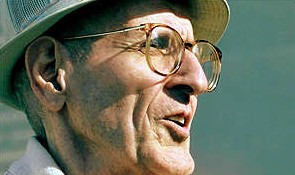 Jack Kevorkian
Homicide · USA · 1990
Jack Kevorkian (born May 26, 1928) was a controversial American pathologist. He…
130 victims
Jack Kevorkian
Homicide · USA · 1990
Jack Kevorkian (born May 26, 1928) was a controversial American pathologist. He…
130 victims
 David Koresh
Homicide · USA · 1993
David Koresh (born Vernon Wayne Howell; August 17, 1959 – April 19, 1993) led t…
79 victims
David Koresh
Homicide · USA · 1993
David Koresh (born Vernon Wayne Howell; August 17, 1959 – April 19, 1993) led t…
79 victims
 Todd Hall
Homicide · USA · 1996
Todd Hall was described by neighbors as "mentally slow" and was said to have su…
9 victims
Todd Hall
Homicide · USA · 1996
Todd Hall was described by neighbors as "mentally slow" and was said to have su…
9 victims
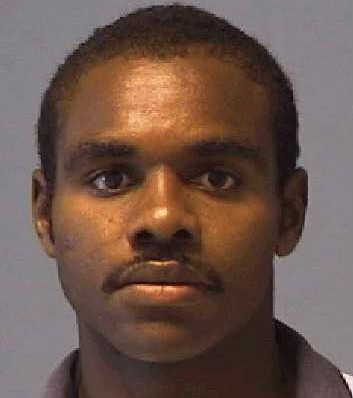 Clinton Bankston
Homicide · USA · 1987
15 August 1987 — Ann Morris (63), her sister Sally Nicholson (59), and Sally’s…
5 victims
Clinton Bankston
Homicide · USA · 1987
15 August 1987 — Ann Morris (63), her sister Sally Nicholson (59), and Sally’s…
5 victims
 Joshua Jenkins
Homicide · USA · 1996
Joshua Jenkins was a 15-year-old American killer who killed five members of his…
5 victims
Joshua Jenkins
Homicide · USA · 1996
Joshua Jenkins was a 15-year-old American killer who killed five members of his…
5 victims
 Kuno Hofmann
Murderer · Germany · 1972
Kuno Hofmann was a German labourer who was deaf mute. He was born in 1931. He h…
2 victims
Kuno Hofmann
Murderer · Germany · 1972
Kuno Hofmann was a German labourer who was deaf mute. He was born in 1931. He h…
2 victims
 Carol Ege
Murderer · USA · 1984
Carol Ege was imprisoned in Michigan for the 1984 slaying of Cindy Thompson. Eg…
1 victim
Carol Ege
Murderer · USA · 1984
Carol Ege was imprisoned in Michigan for the 1984 slaying of Cindy Thompson. Eg…
1 victim
 Santos Minjarez
Murderer · USA · 2001
Santos Minjarez was convicted of capital murder and sentenced to death on March…
1 victim
Santos Minjarez
Murderer · USA · 2001
Santos Minjarez was convicted of capital murder and sentenced to death on March…
1 victim
 Alvie James Hale
Murderer · USA · 1983
Alvie James Hale, Jr. was convicted in the District Court of Pottawatomie Count…
1 victim
Alvie James Hale
Murderer · USA · 1983
Alvie James Hale, Jr. was convicted in the District Court of Pottawatomie Count…
1 victim
 Steven Long
Murderer · USA · 2005
Steven Long was a male. He was White and had brown hair and brown eyes. He was…
1 victim
Steven Long
Murderer · USA · 2005
Steven Long was a male. He was White and had brown hair and brown eyes. He was…
1 victim
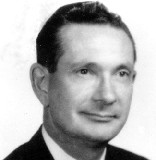 Byron de la Beckwith
Murderer · USA · 1963
Byron De La Beckwith (November 9, 1920 – January 21, 2001) was an American whit…
1 victim
Byron de la Beckwith
Murderer · USA · 1963
Byron De La Beckwith (November 9, 1920 – January 21, 2001) was an American whit…
1 victim
- Gender
- male
- Country
- USA
- Location
- Dekalb County, Georgia, USA
- Date of birth
- 1982
- Age at first offence
- 15
- Characteristics
- juvenile
- Victim profile
- Ronald Gaines, 16 (high school student)
- Method of murder
- Stabbing with knife
- Date(s) of murder
- September 18, 1997
- Years active
- 1997
- Date of arrest
- Same day (surrenders)
- Status
-
Life imprisonment
Sentenced to life in prison on January 6, 1998
Case identification
- Defendant: Lyndon Mosley (also identified as Lyndon Dechard Mosley)
- Case name: Georgia v. Lyndon Mosley
- Court citation (appeal): Mosley v. The State, 272 Ga. 881, 536 S.E.2d 150 (2000)
- Docket number: S00A1201
- Supreme Court of Georgia decision date: October 10, 2000
Timeline
- September 18, 1997 — Lyndon Mosley and Ronald Gaines exchanged words and then argued next to the athletic field behind Southwest DeKalb High School during the last period of school; Mosley stabbed Gaines once in the chest.
- October 16, 1997 — Mosley was indicted.
- April 17, 1998 — A jury found Mosley guilty.
- January 6, 1998 — Sentenced to life in prison.
- December 4, 1998 — The trial court sentenced Mosley.
- December 29, 1998 — Mosley filed a motion for a new trial.
- February 14, 2000 — A decision denying something in Ford v. State occurred (referenced as part of appellate discussion).
- February 15, 2000 — Mosley filed a notice of appeal.
- April 5, 2000 — The case was docketed.
- May 29, 2000 — The case was submitted for decision without oral arguments.
- October 10, 2000 — The Supreme Court of Georgia issued its decision.
Background
Lyndon Mosley, 15 (also described as 14-year-old student in the appellate summary), was charged as an adult after the stabbing death of 16-year-old Ronald Gaines at Southwest DeKalb High School in Georgia.
The dispute between Mosley and Gaines occurred after words and an argument that began on the steps leading to the football field at Southwest DeKalb High School. The two teenagers reportedly did not know each other before their argument in September 1997.
The offence
Events leading to the stabbing
During the last period of school, Mosley and Gaines exchanged words and argued for several minutes next to the athletic field behind the school during the last period of school. As the confrontation continued in front of a crowd of students, Mosley pulled a knife from his pants pocket and Gaines picked up a rock. Gaines threw the rock down and started to walk away, but someone challenged him to stay and fight. Gaines then turned around and went towards Mosley, swinging at him. Mosley stabbed Gaines once in the chest.
In the incident description, Gaines allegedly shouted at Mosley and his friend Jay Cannon:
- "Look at them p___y-ass n_ggers running like bitches!"
In response, Mosley said either:
- "F____ you!"
- or "Who you calling a bitch?"
Mosley’s friend Randy Parks tried to intervene and break up the confrontation, but Parks retreated when he was accidentally cut on the hand by a knife Mosley was holding. The description further states that Gaines considered picking up a large rock and using it as a weapon, but then began to walk away from Mosley. The narrative then describes that Mosley taunted Gaines and Gaines returned to the scene.
The appellate summary describes that during the verbal sparring and physical pushing between the two students, Gaines wanted Mosley to put down the knife so he could "fight fair" and picked up the rock in response to seeing the weapon.
The stabbing and aftermath at the scene
The appellate summary states that after Mosley stabbed Gaines once in the chest, he exchanged high fives with a friend before running from the scene. Saying he had been stabbed, Gaines was helped up a flight of steps before he collapsed next to a school building.
The pathologist testified that the knife had penetrated Gaines' heart and lungs, and Gaines bled to death within minutes of the stabbing.
In the incident narrative, Mosley left the scene with Cannon and went to a neighbor's yard to wash off the knife with a garden hose. Gaines attempted to leave the scene but collapsed and died after walking about 30 yards away from the football field.
Mosley turned himself in to police two hours after the stabbing. The knife that killed Gaines was never recovered.
Status offense and school suspension context
The narrative described that the day before the stabbing, Mosley was placed on in-school suspension for skipping classes. On the day of the incident, an assistant principal and a school detective caught Mosley wandering the school hallways and skipping classes again, and Mosley was described as belligerent and uncooperative when escorted to the principal's office. Mosley left the building before the principal could confront him about his latest actions.
The narrative also described that Gaines had been given an "off-campus" suspension for skipping classes, and on the day of the altercation Gaines and his mother attended a meeting with school officials regarding his suspension, with a decision that he would return to class the next day. After the meeting they went home, but he returned to school to socialize with friends. At the time of his fight with Mosley, Gaines was technically still suspended and not allowed on the school campus.
Investigation and prosecution theory
The narrative described that prosecutors believed that at the time of the altercation, Mosley was "trouble-making time bomb ready to explode."
Trial
Charges and counts
The narrative described that Mosley was charged as an adult and faced life in prison with the possibility of parole after 14 years if convicted.
The narrative also stated that in addition to murder, Mosley was charged with carrying a weapon on school property.
In the appellate summary, Mosley was convicted of voluntary manslaughter and felony murder and was charged with:
- Malice murder (count one),
- Felony murder with an underlying felony including carrying a weapon on school property and aggravated assault (count two),
- Felony murder with an underlying felony of possession of a weapon on school property (count three),
- Carrying a weapon on school property (count four).
The appellate summary also states that the trial court entered a judgment of conviction only on count three, and the verdicts on counts one, two, and four were vacated by operation of law.
Defence position
Mosley claimed that the stabbing was accidental and occurred in self-defense.
The defence argued that Mosley produced the knife only when he saw several of the victim's friends in the crowd of onlookers take off their shirts as if to join the fight, and that he feared being mauled by Gaines' friends and felt he needed a weapon to defend himself.
The defence also argued that the stabbing was a reflex action by Mosley: when Gaines swung at him, Mosley, who was holding the knife, was only reacting to Gaines' attempted punch.
Another defence argument stated that the victim never really attempted to walk away from the confrontation, describing that when Gaines turned away and appeared to be walking away, he was really asking the crowd if anyone had a knife he could use.
Mosley’s attorneys argued that Gaines, who was heavier and taller than Mosley, was the aggressor, and that Gaines was frustrated with a meeting he had had earlier that day concerning his own suspension.
Sentencing
The narrative states that Mosley was not sentenced after the verdict because defence lawyer Bruce Harvey requested a pre-sentencing investigation and was granted one by the judge.
The current case summary also states a life sentence: sentenced to life in prison on January 6, 1998.
The appellate “Notes” section states that the trial court sentenced Mosley on December 4, 1998.
Appeals
Issues on appeal
Mosley contended that possession of a weapon on school property under OCGA 16-11-127.1 was not inherently dangerous and therefore should not serve as the basis for his felony murder conviction and sentence. The Supreme Court of Georgia concluded that his possession of a weapon on school property was dangerous under the circumstances in this case and affirmed.
The appellate decision referenced Ford v. State (referenced as denied on February 14, 2000), in which the court reversed a felony murder conviction because the underlying felony was not inherently dangerous under the circumstances. The appellate decision explained that under Ford, the court defined “a felony” for felony-murder purposes as one that is “dangerous per se” or by its circumstances creates a foreseeable risk of death.
The appellate decision stated that since Ford, the court refused to apply the non-dangerous felony rule to other cases involving possession of a firearm by a convicted felon or misuse of a firearm while hunting. It concluded that possession of the weapon on school property under the circumstances here created a foreseeable risk of death.
The decision reasoned that Mosley told a friend before the initial confrontation that he had his knife at school that day; that possession may have influenced his decision to confront the taller and heavier Gaines; that Gaines wanted Mosley to put down the knife and picked up a rock; that when a student intervened and tried to break up the fight, he grabbed Mosley's hand and the knife cut him; and that this evidence showed Mosley’s possession played a critical role in escalating a typical schoolyard fight into a homicide.
Disputed evidentiary issue
The appellate decision stated that the trial court did not abuse its discretion in admitting evidence of a confrontation that Mosley had with school authorities immediately preceding his fight with Gaines.
Outcome
- The Supreme Court of Georgia affirmed Mosley’s felony murder-related conviction and held that possession of a weapon on school property was dangerous under the circumstances in this case.
Other details
Deliberations and verdict
The narrative states that after two hours and forty minutes of deliberations, Mosley was convicted of:
- voluntary manslaughter,
- two counts of felony murder,
- and carrying a weapon on school property.
The appellate summary further explains that the jury convicted Mosley of voluntary manslaughter on the malice murder charge, felony murder with underlying felony of aggravated assault, felony murder with underlying felony of possession of a weapon on school property, and possession of a weapon on school property; and that only count three resulted in a judgment of conviction, with other verdicts vacated by operation of law.
Participants and legal representatives named
- J. Tom Morgan, District Attorney (for appellee)
- Barbara B. Conroy, Assistant District Attorney (for appellee)
- Thurbert E. Baker, Attorney General (for appellee)
- Paula K. Smith, Senior Assistant Attorney General (for appellee)
- H. Maddox Kilgore, Assistant Attorney General (for appellee)
Key medical and physical details
- The knife penetrated Gaines' heart and lungs.
- Gaines bled to death within minutes of the stabbing.
- Gaines collapsed and died after walking about 30 yards away from the football field.
- The knife was never recovered.


Spotted an error, or have more information about this case?