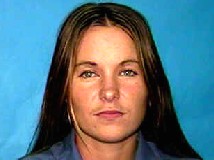
Jacquiline Reynolds
Homicide Andrea Yates
Homicide · USA · 2001
Andrea Pia Yates (born Andrea Pia Kennedy on July 2, 1964) was a former Houston…
5 victims
Andrea Yates
Homicide · USA · 2001
Andrea Pia Yates (born Andrea Pia Kennedy on July 2, 1964) was a former Houston…
5 victims
 Coleen Thompson
Homicide · USA · 2002
Coleen Thompson was a former intensive care nurse at Shady Grove Adventist Hosp…
5 victims
Coleen Thompson
Homicide · USA · 2002
Coleen Thompson was a former intensive care nurse at Shady Grove Adventist Hosp…
5 victims
 Christine Paolilla
Homicide · USA · 2003
Christine Marie Paolilla was an American woman born on Long Island, New York on…
4 victims
Christine Paolilla
Homicide · USA · 2003
Christine Marie Paolilla was an American woman born on Long Island, New York on…
4 victims
 Melissa Marvin
Homicide · USA · 1999
Melissa Lynn Marvin was a 29-year-old waitress and amateur surfer at the time o…
4 victims
Melissa Marvin
Homicide · USA · 1999
Melissa Lynn Marvin was a 29-year-old waitress and amateur surfer at the time o…
4 victims
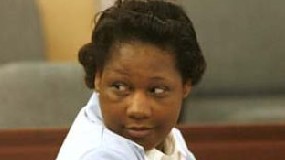 Lashaun Harris
Homicide · USA · 2005
Oct. 19, 2005 — A jury trial later concerned the drownings of three young sons…
3 victims
Lashaun Harris
Homicide · USA · 2005
Oct. 19, 2005 — A jury trial later concerned the drownings of three young sons…
3 victims
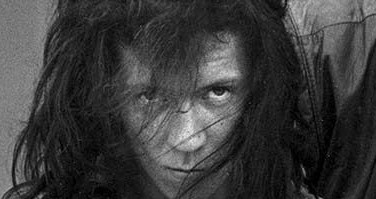 Juha Valjakkala
Murderer · Sweden · 1988
Juha Veikko Valjakkala (born June 13, 1965) was convicted of the murder of a fa…
3 victims
Juha Valjakkala
Murderer · Sweden · 1988
Juha Veikko Valjakkala (born June 13, 1965) was convicted of the murder of a fa…
3 victims
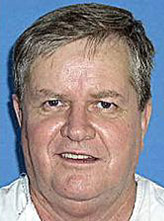 Melvin Wayne White
Murderer · USA · 1997
Melvin Wayne White (male, White) Melvin Wayne White was sentenced to death for…
1 victim
Melvin Wayne White
Murderer · USA · 1997
Melvin Wayne White (male, White) Melvin Wayne White was sentenced to death for…
1 victim
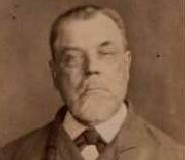 Per Palsson
Murderer · Sweden · 1868
Per Pålsson (also called Kitte-Pelle) (September 16, 1828 – February 4, 1914) w…
1 victim
Per Palsson
Murderer · Sweden · 1868
Per Pålsson (also called Kitte-Pelle) (September 16, 1828 – February 4, 1914) w…
1 victim
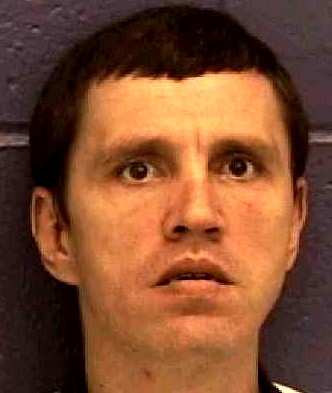 Earnest Morrison
Murderer · USA · 1987
Earnest Ulysses Morrison (also referred to as Earnest Morrison) was convicted i…
1 victim
Earnest Morrison
Murderer · USA · 1987
Earnest Ulysses Morrison (also referred to as Earnest Morrison) was convicted i…
1 victim
 Billi Jo Smallwood
Murderer · USA · 2007
Billi Jo Smallwood was sentenced to 25 years in prison on December 12, 2012, af…
2 victims
Billi Jo Smallwood
Murderer · USA · 2007
Billi Jo Smallwood was sentenced to 25 years in prison on December 12, 2012, af…
2 victims
 Georg Karl Grossmann
Serial killer · Germany · 1913
Georg Karl Grossmann, who commonly called himself just Karl Grossman (also give…
50 victims
Georg Karl Grossmann
Serial killer · Germany · 1913
Georg Karl Grossmann, who commonly called himself just Karl Grossman (also give…
50 victims
- Gender
- female
- Country
- USA
- Location
- Coral Springs, Broward County, Florida, USA
- Date of birth
- July 16, 1979
- Age at first offence
- 18
- Characteristics
- juvenile (17), mentally ill
- Victim profile
- Billie Jean Reynolds (her adoptive mother)
- Method of murder
- Stabbing with knife
- Date(s) of murder
- May 14, 1997
- Years active
- 1997
- Date of arrest
- Same day
- Status
-
Imprisoned
Resentenced to 21 years and eight months on April 4, 2001 after being sentenced to 34 years in prison on January 7, 2000
Parties and names
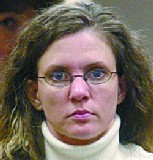
Jacquiline “Nikki” Reynolds was the defendant.
Billie Jean Reynolds was the adoptive mother.
Robert J. Reynolds was the adoptive father.
Carlos Infante was the boyfriend.
Katrina Ramos was Reynolds’ biological mother.
Wayne Corry was Reynolds’ attorney.
Deborah Zimet was the prosecutor.
Sheldon Schapiro was the Broward Circuit Judge.
Dr. William Vicary was a defense psychiatrist.
Ann Carnicella was one of Billie Jean Reynolds’ three sisters.
Background
Jacquiline “Nikki” Reynolds was adopted shortly after birth and lived with her adoptive parents, Robert J. Reynolds and Billie Jean Reynolds.
The family was deeply religious and heavily involved in the Coral Baptist Church in Coral Springs. Robert J. Reynolds served as a deacon, and Robert J. Reynolds and Billie Jean Reynolds sang in the choir.
Tensions built up in the year before the murder when Reynolds began to lie to her parents. Reynolds made a false allegation of rape and faked pregnancy in an effort to keep Carlos Infante after he broke up with her. Reynolds refused her parents’ offers of help and would not go for psychiatric treatment.
Reynolds was diagnosed with psychiatric and emotional problems, and a defense psychiatrist testified that she suffered from major depression and a borderline personality disorder that affected her impulse control and her relationships with people.
Reynolds told police that she had planned to kill her boyfriend, Carlos Infante, and that she had planned to kill both her adoptive parents. She said she stopped after murdering her mother because it was “too hard.”
Reynolds later had an insanity defense rejected by a jury and was found guilty of second-degree murder.
Katrina Ramos testified at Reynolds’ second trial. Ramos said she tried to abort Reynolds and gave Reynolds poor pre-natal care, and she said she was suffering deep depression during pregnancy.
The offence
On May 14, 1997, Reynolds called 911 from her home in Coral Springs and told the operator that she had just stabbed her mother to death.
Police found Billie Jean Reynolds dead due to multiple stab wounds in the family room.
Reynolds confessed to stabbing her mother. She said she was upset because she had broken up with her boyfriend, Carlos Infante. She stated she had planned to kill her boyfriend at school that day, but after finding out that her parents were not taking her back to school until she attended counseling sessions, she decided instead to kill her parents first so she could drive herself to school the following day and kill her boyfriend.
Reynolds approached her mother from behind as her mother worked at her computer and tried to slash her throat with a large butcher knife. Reynolds said she repeatedly stabbed her mother until her mother fell on the floor. Reynolds said she tried to wash the knife in the sink and then called the police.
In her confession, Reynolds described asking her mother if she was dying. She said her mother replied “Yes” and that Reynolds ultimately asked for forgiveness. Reynolds said her mother forgave her. Reynolds then thrust the knife into her mother’s chest, killing her.
Reynolds told police that she was upset and frightened that she could not live a normal life after what she had done.
Reynolds told the 911 dispatcher that she must be crazy and repeated that statement to arriving police officers. She said she told the dispatcher and officers that her address was at their home and that she needed them to hurry and arrest her.
Reynolds gave an interview statement that described a stabbing sequence involving a slash across her mother’s throat that did not deeply wound her, followed by continued stabbing. Reynolds said her mother begged her to stop and told Reynolds that she loved her. Reynolds said she kept stabbing her mother until she fell on the floor. Reynolds said she continued stabbing while her mother was trying to reach for a phone and while Reynolds attempted to find ways to get around her mother’s hands.
Reynolds said she thought about killing her father and Carlos Infante after the murder of her mother.
In the interview, Reynolds said she took four or five handfuls of aspirin before going to church. She said it was hours before the incident.
Reynolds stated she drank no alcohol that day and was not on any medication.
Investigation
After Reynolds stabbed her mother, she called 911 and confessed to the dispatcher and to arriving police officers.
Reynolds said she explained where the church phone directory was for the church so that officers could contact her father as soon as possible.
Reynolds said she washed the knife off in the sink after the stabbing.
A police officer recorded Reynolds’ incriminating statements without her knowledge.
Reynolds stated that she did not wish an attorney at that time and that she understood her rights as explained by police in the interview.
Reynolds said she was taken to a hospital after the interview because she had taken aspirin.
Reynolds’ statements were treated as a confession to detectives describing the events leading up to the stabbing.
Arrest
Reynolds was arrested after police arrived at her home and found Billie Jean Reynolds on the floor of the family room. Reynolds was taken to jail.
Trial
Reynolds was indicted for first-degree murder in the death of her adoptive mother.
A jury rejected Reynolds’ insanity defense.
The jury found Reynolds guilty of a lesser included offense, second-degree murder with a weapon.
Reynolds’ first jury trial ended in a mistrial when the jury was unable to reach a verdict. In the first trial, jurors were unable to reach a verdict.
Reynolds’ second trial resulted in a second-degree murder conviction.
Reynolds was charged with first-degree murder, but a jury found her guilty of second-degree murder after rejecting her insanity defense.
In support of her insanity defense, Reynolds called two expert witnesses who gave opinions that Reynolds suffered from mental disease and therefore did not know right from wrong at the time of the killing.
In a pre-trial ruling, the trial court prevented Reynolds’ experts from stating their ultimate opinions that Reynolds was insane. The trial court also precluded the state’s experts from testifying that Reynolds was sane.
The appellate decision discussed trial court restrictions on expert testimony regarding insanity. The appellate court concluded that the trial court erred in precluding the defense experts from stating their ultimate opinion that Reynolds was “insane,” but found that the error was harmless because experts were permitted to fully explore and render opinions on whether Reynolds met Florida’s test of insanity.
The appellate decision stated that Florida courts follow the M’Naughton Rule for insanity and that an accused is not criminally responsible if, due to mental disease or defect, the accused does not know the nature or consequences of the act or is unable to distinguish right from wrong.
The appellate decision described defense expert testimony that Reynolds was suffering from major depression and borderline personality disorder, and that the experts concluded Reynolds did not know right from wrong at the time of the crime.
The appellate decision noted Reynolds’ argument that the trial court prevented exploration whether a state expert understood the legal test for insanity, and it stated that following a sidebar conference defense counsel was allowed to continue line of questioning regarding discrepancies.
The appellate decision also addressed Reynolds’ complaint that the trial court interrupted and admonished defense counsel in a way that disparaged Reynolds’ insanity defense, and it held that because counsel did not object and because the issue was not fundamental, it did not constitute fundamental error.
Quotations from the trial court/parties (verbatim)
Reynolds said:
“I didn't mean to hurt her. I didn't mean to tear the family apart,” Reynolds told the victim's brothers and sisters.
Reynolds said:
“I know you're all confused, but I'm even more confused.”
Reynolds said:
“No, I love you. You just need help,” were Billie Jean's last words, according to Reynolds.
Reynolds said:
“The sad part is there is no understanding,” Reynolds said Friday.
Ann Carnicella said:
“Nikki is strong-willed, and her selfish and evil ways have caused immeasurable suffering,”
Ann Carnicella said:
“Let us not allow ourselves to be manipulated as Nikki has done in the past,” Carnicella said.
Quotations from the police interview (verbatim)
Detective Cyndy Klee asked:
“Knowing and, understanding your rights as I have explained them are you willing to answer questions without an attorney present?”
Jacquiline Nicole Reynolds answered:
“Yes”
Jacquiline Nicole Reynolds stated:
“I am willing to make a statement and answer questions. I do not wish an attorney at this time. No threats or promises have been made to me.”
On asking about her reason for the stabbing, Reynolds stated:
“Thinking that if he died, and no one else would have him, that I would be satisfied that no one else had him,”
Reynolds stated:
“but after I did this to my mom, I realized if I killed my father and Carlos there's no way, I'd just want to die .I want to die now but I'm not going to do anything to myself or to my family anymore but I don't feet I deserve to, well I deserve life in jail.”
Reynolds said:
“I don't mean I should plead insanity because no sane person would do something like this.”
Reynolds said:
“too hard.”
Reynolds said she asked her mother:
“Are you dying? Are you dying?”
Reynolds stated her mother replied:
Reynolds stated her mother said:
“You just need help,”
Reynolds stated:
“The charge right now is aggravated battery.”
Sentencing
On January 8, 2000, Broward Circuit Judge Sheldon Schapiro sentenced Jacquiline “Nikki” Reynolds to 34 years in prison for the May 14, 1997 murder of Billie Jean Reynolds.
Reynolds was 17 at the time of the murder.
The judge sentenced Reynolds after a jury rejected her insanity defense and found her guilty of second-degree murder.
Schapiro ordered the Department of Corrections to place Reynolds in a prison for youthful offenders for the first few years of her sentence.
Prosecutor Deborah Zimet asked the judge to consider ruling that the crime was so bad that Reynolds should still be imprisoned for up to 34 years after the resentencing hearing.
The judge rejected the request from Zimet.
In resentencing, the court set a sentence of 21 years and eight months.
On April 4, 2001, Reynolds was resentenced to 21 years and eight months. The appellate court had ruled that sentencing guidelines were unconstitutional and that Reynolds was entitled to be re-sentenced.
The resentencing sentence was described as the maximum under the 1994 guidelines that were reinstated when the 1995 ones were invalidated.
Appeals
Reynolds appealed her conviction.
The appellate case was titled District Court of Appeal of Florida Fourth District Reynolds v. State Jacquiline Nicole REYNOLDS, Appellant, v. STATE of Florida, Appellee, No. 4D00-468, with a decision date of December 26, 2002.
The appellate court affirmed Reynolds’ conviction and sentence.
The appellate decision stated that the trial court erred in precluding the defense experts from stating their ultimate opinion that Reynolds was “insane,” but held the error was harmless.
The appellate decision also addressed challenges concerning the trial court’s treatment of insanity-test expert testimony and interruptions of defense counsel, concluding there was no fundamental error.
Reynolds appealed her conviction and sentence, and the appellate court affirmed.
Outcome
The jury rejected Reynolds’ insanity defense and found her guilty of second-degree murder with a weapon after the jury’s determination.
Reynolds’ sentence was reduced on resentencing after a ruling that the sentencing guidelines were unconstitutional.
Aftermath and further details
Reynolds was described as having served about four years of her sentence at the time of the April 5, 2001 resentencing report and as likely to complete about 85 percent of the prison term before release consideration.
Reynolds wore prison scrubs, smiled at her attorney Wayne Corry, and nodded her head when she heard the new sentence.
Reynolds told the judge she wanted to get help for her problems and had asked to serve time in a psychiatric center.
In court, Reynolds told the judge she was not sure how the judge would decide and that she wanted a lesser sentence.
At the sentencing hearing, Reynolds told the judge about her adoptive father not visiting her in jail since June 1997, while he continued to send her a card every week.
Reynolds’ biological mother, Katrina Ramos, was reunited with Reynolds 15 months before the second trial when Reynolds’ attorney Wayne Corry tracked down Ramos.
Ramos testified that when Reynolds was convicted of minor crimes, a judge forced Ramos to get help.
A defense psychiatrist testified that Reynolds had major depression and borderline personality disorder affecting impulse control and relationships.
Reynolds told police she had taken aspirin before going to church.
During the police interview, Reynolds gave an address and phone number:
- 3700 Northwest 114th Avenue, Coral Springs, Florida 33065
- 753-9034
In the police interview, Reynolds stated the Coral Springs Police case number was 97-5293 and the time was 9:06 p.m., and that today was May 14th 1997.
Reynolds stated she went to:
- Marjorie Stoneman Douglas
- eleventh grade
Reynolds stated her legal name was Jacquiline Nicole Reynolds and that she was called Nikki.

Spotted an error, or have more information about this case?