
Nevada-Tan
Homicide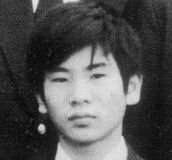 Seito Sakakibara
Homicide · Japan · 1997
Seito Sakakibara (酒鬼薔薇 聖斗, Sakakibara Seito) was the alias of a then-14-year-ol…
2 victims
Seito Sakakibara
Homicide · Japan · 1997
Seito Sakakibara (酒鬼薔薇 聖斗, Sakakibara Seito) was the alias of a then-14-year-ol…
2 victims
 Timea Faludi
Homicide · Hungary · 2000
Timea Faludi was a Hungarian nurse dubbed the “Black Angel”. She was sentenced…
30 victims
Timea Faludi
Homicide · Hungary · 2000
Timea Faludi was a Hungarian nurse dubbed the “Black Angel”. She was sentenced…
30 victims
 Andrea Yates
Homicide · USA · 2001
Andrea Pia Yates (born Andrea Pia Kennedy on July 2, 1964) was a former Houston…
5 victims
Andrea Yates
Homicide · USA · 2001
Andrea Pia Yates (born Andrea Pia Kennedy on July 2, 1964) was a former Houston…
5 victims
 Coleen Thompson
Homicide · USA · 2002
Coleen Thompson was a former intensive care nurse at Shady Grove Adventist Hosp…
5 victims
Coleen Thompson
Homicide · USA · 2002
Coleen Thompson was a former intensive care nurse at Shady Grove Adventist Hosp…
5 victims
 Christine Paolilla
Homicide · USA · 2003
Christine Marie Paolilla was an American woman born on Long Island, New York on…
4 victims
Christine Paolilla
Homicide · USA · 2003
Christine Marie Paolilla was an American woman born on Long Island, New York on…
4 victims
 Melissa Marvin
Homicide · USA · 1999
Melissa Lynn Marvin was a 29-year-old waitress and amateur surfer at the time o…
4 victims
Melissa Marvin
Homicide · USA · 1999
Melissa Lynn Marvin was a 29-year-old waitress and amateur surfer at the time o…
4 victims
 Metod Trobec
Serial killer · former Yugoslavia · 1978
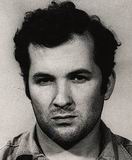
Metod Trobec (born July 6, 1948; died May 30, 2006) was a serial killer in Slov…
6 victims
Metod Trobec
Serial killer · former Yugoslavia · 1978
Metod Trobec (born July 6, 1948; died May 30, 2006) was a serial killer in Slov…
6 victims
 Christian Brando
Homicide · USA · 1990
Christian Brando pled guilty to manslaughter. Christian Brando (May 11, 1958 –…
1 victim
Christian Brando
Homicide · USA · 1990
Christian Brando pled guilty to manslaughter. Christian Brando (May 11, 1958 –…
1 victim
 James Dyral Briley
Serial killer · USA · 1979
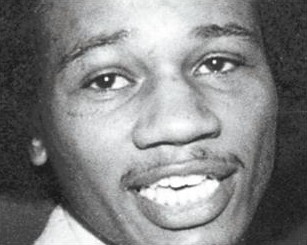
Name: James Dyral Briley James Dyral Briley was sentenced to death for capital…
11 victims
James Dyral Briley
Serial killer · USA · 1979
Name: James Dyral Briley James Dyral Briley was sentenced to death for capital…
11 victims
 Robert Healey
Murderer · United Kingdom · 1986
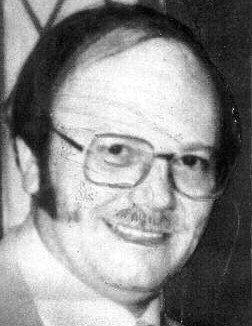
Robert Healey Sentenced to life in prison on April 1, 1987 · 30 March 1987 — Ro…
2 victims
Robert Healey
Murderer · United Kingdom · 1986
Robert Healey Sentenced to life in prison on April 1, 1987 · 30 March 1987 — Ro…
2 victims
 Jose Manuel Torres Yake
Murderer · Japan · 2005
Jose Manuel Torres Yake was born in February 1972. He assumed the false name Ju…
1 victim
Jose Manuel Torres Yake
Murderer · Japan · 2005
Jose Manuel Torres Yake was born in February 1972. He assumed the false name Ju…
1 victim
 Howard Hughes
Murderer · United Kingdom · 1995
Howard Hughes (born 1965 in Llandudno, Wales) was the youngest of four children…
1 victim
Howard Hughes
Murderer · United Kingdom · 1995
Howard Hughes (born 1965 in Llandudno, Wales) was the youngest of four children…
1 victim
- Gender
- female
- Country
- Japan
- Location
- Sasebo, Nagasaki Prefecture, Japan
- Date of birth
- 1992
- Age at first offence
- 12
- Characteristics
- juvenile
- Victim profile
- Satomi Mitarai, 12 (her classmate)
- Method of murder
- Slitting her throat and arms with a box cutter
- Date(s) of murder
- June 1, 2004
- Years active
- 2004
- Date of arrest
- Same day
- Status
-
Sentenced to two years of involuntary commitment and sent to a reformatory on September 15, 2004; sentenced to an additional two years of involuntary commitment in September 2006; on May 29, 2008 local authorities announced that they did not seek her additional sentence.
Background
Nevada-tan was a name commonly used to describe an 11-year-old Japanese schoolgirl who was charged with murdering her classmate Satomi Mitarai. The un-named killer became an Internet meme cartoon character. The cartoon began to appear on the Internet shortly after images of the suspected murderer were published showing her wearing a pullover hooded sweatshirt with the word "NEVADA" emblazoned across the chest. The "-tan" suffix was described as a variation on "-chan", a children's honorific. The sweatshirt was described as commonly worn by fans of the University of Nevada and its sports teams.
The real name of the killer had not been released to the press, as per Japanese legal procedures prohibiting the identification of juvenile offenders. She was officially referred to as "Girl A" in Japanese legal documentation. Members of the Japanese internet community 2channel made public her real name on June 18, 2004 based on analysis of a picture broadcast on Japanese television; the broadcaster, Fuji Television, may have inadvertently done this as well.
The "Sasebo Slashing" referred to the murder of a 12-year-old Japanese schoolgirl, Satomi Mitarai, by an 11-year-old female classmate. The murder occurred on June 1, 2004 at an elementary school in Sasebo. It involved the slitting of Mitarai's throat and arms with a box cutter, and was also described as involving slitting of Mitarai's throat and arms with a utility knife.
Japanese police referred to the killer as "Girl A". The Nagasaki District Legal Affairs Bureau cautioned internet community members against their revealing her photos.
The offence
On June 1, 2004, the 11-year-old schoolgirl murdered her 12-year-old classmate, Satomi Mitarai, in an otherwise empty classroom during the lunch hour at Okubo Elementary School in Sasebo. The girls' teacher noticed that both were missing and found the body, then called the police.
The killer left Mitarai's body at the murder scene and returned to her own classroom, with her clothes covered in blood.
Investigation
After being taken into custody, she was reported as confessing to the crime. She told police:
"I have done a bad thing"
"I am sorry, I am sorry"
She spent the night at the police station, often crying at times, and refused to eat anything. She was offered snacks but refused to eat them. Eventually, she ate bread and drank juice.
She initially mentioned no motive. Shortly afterward, she confessed to police that she and Mitarai had fallen out as a result of messages left on the Internet. She said that Mitarai slandered her by commenting on her weight and calling her a "goody-goody."
A police psychologist stated that "Girl A" was not mentally ill and said she had a history of violent incidents, including punching and kicking other classmates. The psychologist also stated there was an issue with a knife the month before the murder.
Some public speculation was that "Girl A" may have been suffering from hikikomori syndrome, but as of the present, no medical examiners had declared such.
She showed signs of withdrawing from social life, including quitting clubs, although she continued to play physical sports, particularly basketball, until shortly before the incident.
She was described as heavily influenced by visceral aspects of Internet culture. An analysis described her as "was a girl fascinated with urban legend, internet subculture, even going as far as guro." It also described that from her site she had linked shock flash movies and bizarre ASCII movies that would unnerve even the most hardened internet warriors.
Her website showcased her interests, including fanfiction about her favourite film, Battle Royale, and strange "recipes" with names like "Curse of the Purple Skull" and "Demonic Art". A particularly strong influence was the "Red Room" horror flash video, around which she based the site's design.
Arrest
The record described the killer as being taken into custody and confessing to police after custody.
Trial
On September 15, 2004, a Japanese Family Court ruled to institutionalize her, putting aside her young age because of the severity of the crime.
She was reported as being sent to a reformatory in Tochigi prefecture. It was noted that six months before, the same reformatory had released the (at the time) teenage killer known as Sakakibara.
A Nagasaki family court in 2004 originally sentenced her to two years of involuntary commitment, and it sentenced her to an additional two years of involuntary commitment in September 2006.
Sentencing
On September 15, 2004, she was sentenced to two years of involuntary commitment and was sent to a reformatory in Tochigi prefecture.
In September 2006, she was sentenced to an additional two years of involuntary commitment.
On May 29, 2008, local authorities announced that they did not seek her additional sentence.
Appeals
No appeals were described in the material.
Outcome
The material described that the court institutionalized the killer on September 15, 2004 and that she received an additional involuntary commitment in September 2006, with local authorities not seeking an additional sentence on May 29, 2008.
Aftermath
The murder sparked an ongoing debate in Japan about whether the age of criminal responsibility, shifted from 16 to 14 in 2000 due to the 1997 Sakakibara murders in Kobe, needed to be shifted again.
It raised questions regarding the exposure of young children to the Internet and the effect of the Internet and hikikomori subculture on youth in Japan.
Members of the Japanese Diet were reported to have come under heavy criticism for comments made in the wake of the killing. Kiichi Inoue was criticized for referring to Girl A as genki (vigorous, lively). Sadakazu Tanigaki was criticized for referring to the method of killing, slitting of the throat, as a "manly" crime. The material also mentioned then-Finance Minister Sadakazu Tanigaki claiming that the throat cutting was a "manly" crime.
Akio Mori cited the case in support of his controversial "game brain" theory, which was described as criticized as "superstition". The killer was reported to be a fan of the death-themed flash animation "Red Room", an assertion used in support of the theory.
At the March 18, 2005 Okubo Elementary graduation, students were given a graduation album with a blank page on which they could place pictures of Mitarai, the killer, or class pictures containing both in honor of Mitarai's death. Mitarai was posthumously awarded a graduation certificate, which her father accepted on her behalf.
The killer was also awarded a certificate that was described as required in Japan in order to enter junior high, and the school believed it would assist in her "reintegration into society".
The school announced that photos would be made available upon request and that photos were taken securely to the school and destroyed after prints were made. There was some speculation that this was due to Girl A's Internet fame as Nevada.
Other details
The murder in the material was also referenced as:
- "Sasebo shōroku joji dōkyūsei satsugai jiken" (佐世保小6女児同級生殺害事件)
- The victims name as "御手洗 怜美" (Mitarai Satomi)
A Battle Royale fansite Battleroyalefilm.net reported that the creators of the sequel postponed the release of the DVD, originally scheduled for June 9, 2004, to later that year due to "current events."
For reasons not fully determined, Japanese web communities, primarily Futaba Channel and 2channel, fixated on the story and adopted the girl. Her personal website's popularity reportedly rocketed, and when it was taken down, mirrors were established. Copies of her artwork circulated around the web, and other artists created variations on the originals. Fan songs such as "Cutie NeVaDa" appeared.
In June 2005, the online store that sold the University of Nevada hooded sweatshirt reported it to be their best-selling item in the site's online statistics. A few weeks later, the University temporarily removed the sweatshirt from their catalog.
Cosplayers created Girl A costumes. Artists on 2channel turned Girl A into a cute "chibified" character dubbed "Nevada-tan". The Nevada-tan character was often depicted with short brown hair, the pullover, and a crazed, murderous smile. She was rarely seen without a box cutter or other sharp implement nearby. The material also described Nevada-tan as often being represented as ASCII art similar to Giko and Mona, and as slashing posters on 2channel boards. The material described that this spilled over into 4chan and then to other English language imageboards, introducing Nevada-tan to the United States and the rest of the world.
The material described that it did not appear that the existence of Nevada-tan or other aspects of the subculture surrounding Girl A's incident was intended to condone or lend support to the real girl's actions, and characterized it as another meme with a basis in real life.


Spotted an error, or have more information about this case?