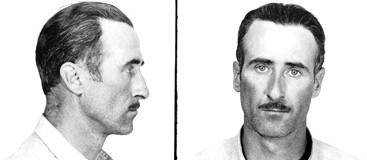
Albert Johnson Walker
Murderer Russell Ellwood
Murderer · USA · 1991
Russell Ellwood was a former taxi driver. Authorities suspected him of killing…
20 victims
Russell Ellwood
Murderer · USA · 1991
Russell Ellwood was a former taxi driver. Authorities suspected him of killing…
20 victims
 Robert Martines Perez
Murderer · USA · 1994
Name: Robert Martines Perez · Other name used in proceedings: Robert Martinez P…
15 victims
Robert Martines Perez
Murderer · USA · 1994
Name: Robert Martines Perez · Other name used in proceedings: Robert Martinez P…
15 victims
 Billy Frank Vickers
Murderer · USA · 1993
Billy Frank Vickers Vickers was executed by lethal injection in Texas on Januar…
14 victims
Billy Frank Vickers
Murderer · USA · 1993
Billy Frank Vickers Vickers was executed by lethal injection in Texas on Januar…
14 victims
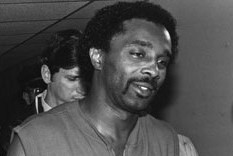 Carlton Gary
Serial killer · USA · 1975
Carlton Gary was an American serial killer convicted for the murders of elderly…
8 victims
Carlton Gary
Serial killer · USA · 1975
Carlton Gary was an American serial killer convicted for the murders of elderly…
8 victims
 Joe Angel Cordova
Murderer · USA · 1982
Feb. 27, 1982 — Cordova, his 16-year-old nephew, and two other teens abducted M…
1 victim
Joe Angel Cordova
Murderer · USA · 1982
Feb. 27, 1982 — Cordova, his 16-year-old nephew, and two other teens abducted M…
1 victim
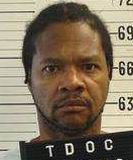 Larry McKay
Murderer · USA · 1981
Larry McKay was convicted of two counts of felony murder each for the shooting…
2 victims
Larry McKay
Murderer · USA · 1981
Larry McKay was convicted of two counts of felony murder each for the shooting…
2 victims
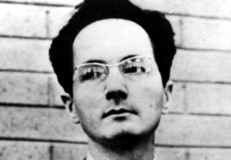 Geza De Kaplany
Murderer · USA · 1962
Geza De Kaplany was a Hungarian-born physician who worked at a hospital in San…
1 victim
Geza De Kaplany
Murderer · USA · 1962
Geza De Kaplany was a Hungarian-born physician who worked at a hospital in San…
1 victim
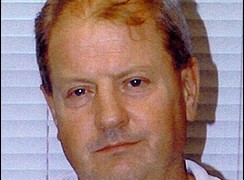 Steven Wright
Serial killer · United Kingdom · 2006
Steven Gerald James Wright was a British serial murderer, also known as the Suf…
5 victims
Steven Wright
Serial killer · United Kingdom · 2006
Steven Gerald James Wright was a British serial murderer, also known as the Suf…
5 victims
- Gender
- male
- Country
- USA
- Location
- Exeter, England, United Kingdom, USA
- Date of birth
- 1946
- Age at first offence
- 50
- Characteristics
- —
- Victim profile
- Ronald Joseph Platt, 51 (his business partner)
- Method of murder
- Drowning
- Date(s) of murder
- July 20, 1996
- Years active
- 1996
- Date of arrest
- October 31, 1997
- Status
-
Life imprisonment
Sentenced to life imprisonment on July 6, 1998
Case record: Albert Johnson Walker
Background
Albert Johnson Walker was a Canadian criminal. He was from Paris, Ontario, and he was a high school drop-out. He worked at numerous odd jobs, including being hired as a bank teller for a trust company.
Walker started filing other people’s income tax returns. He later quit his job at the trust company to establish his own freelance bookkeeping business. Over time, his operation grew into a six-branch operation with about thirty employees.
In 1986, a stock deal that Walker had invested collapsed. Walker then defrauded about 70 Canadian clients of $3.2 million. As a mortgage broker and financier, he committed fraud and money-laundering offences tied to his clients.
Walker fled to Europe in 1990 with the second of his three daughters, Sheena. In 1993, Walker was charged in Canada with 18 counts of fraud, theft and money laundering. He became Canada’s most wanted criminal and the second most wanted by Interpol.
While in England, Walker eventually made his way to Harrogate in North Yorkshire. He lived with his daughter, Sheena, who was posing as his wife. During this time, Sheena had two children, and the paternity of the children had not been revealed.
Walker changed his name to David Davis and began a business career with television repairman Ronald Joseph Platt. Platt, who was raised in Canada, wanted to return to his home country. Walker bankrolled this trip, but he claimed he needed Platt’s driver’s license, signature stamp and birth certificate for the business.
When Platt left for Canada in 1992 with the intent of permanently settling there, Walker assumed Platt’s identity.
The offence
Walker murdered Ronald Joseph Platt on a fishing trip on 20 July 1996. He weighed down Platt with an anchor and dumped his body in the sea.
Walker had taken Platt out on the trip from Essex, where he was living under Platt’s name. Ronald Platt later returned to England in 1995, creating a problem for Walker. Walker invited Platt to Devon with Sheena and their daughters, and he took Platt on a trip on his yacht (described as the Lady Jane in one account).
Once aboard, Walker knocked Platt unconscious, tied a 4.5-kg anchor to Platt’s belt, and tossed him overboard into the English Channel.
The real Platt, described as a shy television repairman, left England for Canada in February 1993 with Elaine Boyes, with a venture conceived and financed by Walker.
Walker had kept in contact with the real Platt and spoke to Elaine occasionally. Elaine eventually left Ronald in Canada. After Walker was arrested, the biography details that Walker was living under the names of Ronald and Noelle during this period and they had two young daughters whose biological father was stated as unknown.
Investigation
After Platt’s disappearance, his absence was not noticed for six weeks in one account. Police later initially thought the victim had accidentally drowned.
On 28 July 1996, John Copik pulled up a body tangled in the nets of his fishing trawler off the coast of south Devon. There was an injury to the back of the man’s head, and everything initially indicated that the man had accidentally drowned.
The police later described an expensive Rolex Oyster Perpetual wristwatch being worn by the victim. The police contacted Rolex about purchase and repair records. They discovered that Ronald Platt had that particular watch repaired in 1986.
British police traced service records by using the Rolex movement’s serial number, noting special markings made each time it was serviced. They traced service records and identified Ronald Platt as the owner of the watch and the victim of the murder.
Police were also able to determine the date of death by examining the date on the watch calendar. The Rolex movement had a reserve of two to three days of operation when inactive and was fully waterproof, which allowed police to determine the time of death within a small margin of error.
Police found Walker’s mobile phone number on a reference letter Ronald Platt had given to a letting agent company. When contacted, Walker was described as being more than helpful and voluntarily entering the police station. Walker told police that Ronald had gone to France.
Devon police launched a murder investigation after establishing Platt’s identity through the Rolex watch and discovering that someone else was living under Platt’s name.
The case against Walker was described as being entirely circumstantial in one account. It was described as having no witnesses and nobody having seen the two men together for at least 10 days prior to the murder. The prosecution later called or entered written evidence from 36 witnesses, including 22-year-old Sheena Walker, who travelled from her mother’s home in Paris, Ontario, to testify.
A global positioning system later pinpointed Walker’s yacht to the area at the time Ronald died. One of Ronald’s fingerprints was also described as being found on a plastic bag on the boat.
Arrest
Walker was apprehended shortly after the body was discovered and Platt was identified using the Rolex watch.
In one account, Walker was arrested on suspicion of the murder of Ronald Joseph Platt on 31 October 1997. That same arrest included finding Sheena stuffing gold bars into a diaper bag. In the previous month Walker had bought over £67,000 in gold bullion.
In another narrative, Essex police contacted Walker to clear up a few matters. He was still using the name of David Davis, but when Essex police went to his house, he was not there. A neighbour informed them that Ronald Platt lived next door and that Ronald had a yacht in Devon.
In one account, police initially contacted Walker, and he voluntarily went into the police station while using the name he had changed to.
Trial
In 1998, Walker’s preliminary hearing was held in the village courtroom in Teignmouth, England.
On 27 April 1998, Walker pleaded not guilty in his murder trial in the English city of Exeter.
Walker was found guilty in 1998 and received an automatic life sentence for murder. One account stated that on 6 July 1998 he received his life sentence; another account stated that on 15 years without parole he was sentenced.
The trial was described as taking place in Exeter. In one account, a jury took just two hours to convict Walker of Ronald’s murder and embezzlement.
The jury deliberated for two hours and reached a verdict. The jury foreman replied to a question from a clerk: “Guilty.”
The jury was described as eight women and four men.
Walker admitted during the murder trial that he stole from clients in Canada but he had never confessed to killing Ronald.
Justice Butterfield delivered sentencing remarks. He told Walker:
“The killing was carefully planned and cunningly executed with chilling efficiency”
“You are a plausible, intelligent and ruthless man who poses a serious threat to anyone who stands in your way.”
Prosecutor Charles Barton was mentioned as leading evidence, with evidence from 36 witnesses, including Sheena Walker.
Sheena testified against her father and described her behaviour by claiming she had been hypnotised by him.
A court in Exeter is described as having been where Walker’s preliminary hearing and trial took place, including the day the verdict was delivered.
Sentencing
Walker was sentenced to life imprisonment following his murder conviction. One account described an automatic life sentence for murder and that a life sentence was imposed.
In one account, Walker was sentenced to life in prison without parole for 15 years. In another account, Walker was sentenced to life imprisonment on 6 July 1998.
The life sentence was described as being an automatic life sentence for murder in England, with a recommendation to the home secretary based on the nature of the crime and the character of the defendant.
In Kingston, Ontario, Walker was sentenced on 23 July 2007 to four years for fraud and one year concurrent for violations of the Bankruptcy and Insolvency Act (Canada).
Earlier, one narrative described that he was returned to Canada after nearly seven years and would have faced additional charges of fraud, theft and money laundering.
Appeals
Walker’s lawyers sought an adjournment of legal proceedings to seize his assets on July 10 in the same building where he was convicted of murdering Ronald Platt. Defence lawyer Richard Ferguson announced that his client would seek leave to appeal.
Another member of Walker’s legal team said Walker was “quietly convinced he was wrongly convicted.”
Outcome
Murder conviction and identity of the victim
Ronald Joseph Platt was identified as the victim through the Rolex watch. The Rolex movement serial number and service records were used to identify Platt as the owner of the watch. Police determined the date and time of death by examining the watch calendar and using the movement’s reserve and waterproof properties.
Walker was convicted of murdering Platt in 1998 and received a life sentence.
Remaining fraud charges
The Canadian police stated they fully intended to proceed with the 37 outstanding fraud and theft charges against Walker.
There was also mention that Walker would be transferred to a Canadian prison to face additional fraud-related charges after the foreign imprisonment.
Aftermath
Asset recovery and legal proceedings
After Walker was convicted, bankruptcy trustees had recovered about £500,000 of embezzled money by 2000. Authorities were not sure how much he stole and how much he lost in failed business ventures.
In July 1998, assets were at issue in Exeter county court. Walker’s lawyers sought an adjournment to seize his assets. District Judge Andrew Moon ordered local police to turn over assets to KPMG Inc., an accounting firm administering bankrupt estates of Walker and his companies.
At stake were items Walker purchased with stolen funds and money left in 25 European bank accounts he controlled.
A lawyer in London, Ontario representing KPMG, Angelo D’Ascanio, acknowledged: “This is nothing more than a treasure hunt.” He also said: “We don’t know if there’s a significant amount of money left to recover.”
The assets included the sailboat on which Platt was murdered, oil paintings, gold bars and cash totalling about $290,000, all seized by police when they arrested Walker in October 1996.
Crown prosecutor Charles Barton received permission from Judge Neil Butterfield to sell the sailboat in order to reduce costs.
Walker’s bank accounts, many opened in the names of Platt and his former girlfriend Elaine Boyes, were believed to have been used for money-laundering transactions.
Eric Winter, who was described as a 75-year-old Brantford resident, said: “I don’t think I’ll get anything back.” He also said his “funny feeling” that pursuing the assets was a waste of time.
After losing the fight over the assets, Walker continued one last legal battle from jail and could wait months for higher court action. Under British law, a judge imposes a life sentence for murder and recommends a term to the home secretary in writing, based on the nature of the crime and the defendant’s character.
Release and transfer to Canada
Sheena and her children were allowed to return to Canada after the trial. Britain signed an agreement with Canadian authorities in June 2004 to transfer Walker back.
Walker was returned in February 2005 after nearly seven years in prison. On 22 February 2005, The Globe and Mail reported that Walker would be transferred to a Canadian prison, where he faced additional charges of fraud, theft and money laundering.
Parole eligibility
Walker was eligible for parole on 6 July 2013.
Family and personal details
The account stated that Walker’s wife was Barb (née MacDonald). She authored a book entitled “ Dancing Devil - My twenty years with Albert Walker ” in 2002, describing her life with Walker leading up to his departure from Canada.
Sheena had two daughters during the period she posed as Walker’s wife while on the lam with him. The paternity of the children had never been revealed.
Media coverage and cultural works
In 1998, a book detailing Walker’s story, “A hand in the water: The many lies of Albert Walker,” by award-winning Toronto Star journalist Bill Schiller, was published by HarperCollins.
In 1998, a second book detailing Walker’s story, “Nothing Sacred: The many lives and betrayals of Albert Walker,” by award-winning Toronto Sun journalist Alan Cairns, was published by McClelland-Bantam, Inc.
A made-for-TV movie titled “AKA Albert Walker” documenting Walker’s crimes and eventual arrest was released in 2002.
A documentary titled “Interpol Investigates - Body Double” was made by National Geographic.
A Forensic Files episode titled “Time Will Tell” detailed Walker’s murder investigation.
A theatrical play by Peter Colley titled “Stolen Lives, The Albert Walker Story” was performed at the Blyth Festival in Blyth Ontario in 20.
Spotted an error, or have more information about this case?