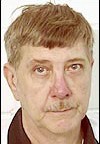
Larry Eugene Moon
Murderer Brian Kevin Rosenfeld
Murderer · USA · 1985
Brian Kevin Rosenfeld Brian Kevin Rosenfeld was sentenced to three concurrent l…
23 victims
Brian Kevin Rosenfeld
Murderer · USA · 1985
Brian Kevin Rosenfeld Brian Kevin Rosenfeld was sentenced to three concurrent l…
23 victims
 Marvin Gray
Murderer · USA · 1975
Marvin Gray was convicted killer who claimed responsibility for 23 slayings and…
23 victims
Marvin Gray
Murderer · USA · 1975
Marvin Gray was convicted killer who claimed responsibility for 23 slayings and…
23 victims
 Yahweh ben Yahweh
Murderer · USA · 1980
Yahweh ben Yahweh was born and legally named Hulon Mitchell Jr. (October 27, 19…
23 victims
Yahweh ben Yahweh
Murderer · USA · 1980
Yahweh ben Yahweh was born and legally named Hulon Mitchell Jr. (October 27, 19…
23 victims
 Russell Ellwood
Murderer · USA · 1991
Russell Ellwood was a former taxi driver. Authorities suspected him of killing…
20 victims
Russell Ellwood
Murderer · USA · 1991
Russell Ellwood was a former taxi driver. Authorities suspected him of killing…
20 victims
 Rigoberto Sanchez-Velasco
Murderer · USA · 1986
Rigoberto Sanchez-Velasco was a Florida death row inmate convicted of the rape…
3 victims
Rigoberto Sanchez-Velasco
Murderer · USA · 1986
Rigoberto Sanchez-Velasco was a Florida death row inmate convicted of the rape…
3 victims
 John Makin
Murderer · Australia · 1892
John Makin (14 February 1845 – 15 August 1893) was an Australian baby farmer wh…
12 victims
John Makin
Murderer · Australia · 1892
John Makin (14 February 1845 – 15 August 1893) was an Australian baby farmer wh…
12 victims
 Robert Donald Atworth
Murderer · USA · 1995
Robert Donald Atworth was executed by lethal injection in Texas on December 14,…
1 victim
Robert Donald Atworth
Murderer · USA · 1995
Robert Donald Atworth was executed by lethal injection in Texas on December 14,…
1 victim
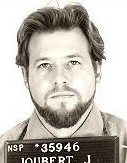 John Joubert
Serial killer · USA · 1982
John Joubert John Joubert entered guilty pleas to two counts of first-degree mu…
3 victims
John Joubert
Serial killer · USA · 1982
John Joubert John Joubert entered guilty pleas to two counts of first-degree mu…
3 victims
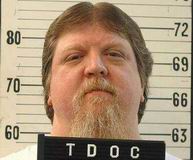 Jonathan Wesley Stephenson
Murderer · USA · 1989
Jonathan Wesley Stephenson was convicted of hiring a hit man to kill his wife,…
1 victim
Jonathan Wesley Stephenson
Murderer · USA · 1989
Jonathan Wesley Stephenson was convicted of hiring a hit man to kill his wife,…
1 victim
- Gender
- male
- Country
- USA
- Location
- Catoosa County, Georgia, USA
- Date of birth
- November 5, 1947
- Age at first offence
- 37
- Characteristics
- robbery
- Victim profile
- ??? / Thomas DeJose / Ricky Callahan, 34
- Method of murder
- Shooting (.22 caliber handgun)
- Date(s) of murder
- November-December 1984
- Years active
- 1984
- Date of arrest
- December 14, 1984
- Status
-
Executed
Executed by lethal injection in Georgia on March 25, 2003
Case details
Name: Larry Eugene Moon Gender: Male Race: White Date of birth: 11/05/1947 Age at execution: 57 Height: 6'03'' Weight: 200 Eye color: Green Hair color: Brown County: Catoosa County
The offence
Ricky Callahan was killed in Catoosa County near the Tennessee border in 1984 after leaving his wife late in the evening to buy headache medicine. Callahan was last seen around 10:30 p.m. when he left his home in a dark blue 1978 Ford LTD to “pick up some headache powders for his wife.”
His body was found in a rock pit (a chert pit) the next morning. He had been shot twice in the head with a .22 caliber handgun. The headache powders were found on the body, but his wallet, watch, and car were missing. The estimated time of death was between 11 p.m. and midnight.
The case involved the removal of money from Callahan’s wallet and the driving of the victim’s car after the killing. Moon removed approximately $60 from the victim’s wallet and discarded the wallet.
Authorities said Moon abducted Callahan at gunpoint outside a convenience store in Indian Springs in Catoosa County.
Moon was also convicted in connection with other criminal conduct presented at sentencing. The sentencing evidence included Moon’s activities before and after the Ricky Callahan homicide, including a shooting in Chattanooga, Tennessee, a gunpoint robbery at a bookstore, a kidnapping and sexual assault of a captive, additional robberies, and conduct in Tennessee and Georgia.
Investigation
An unidentified man found Callahan’s body near a chert pit just off Battlefield Parkway near I-75. The witness said he was at the chert pit to pick up aluminum cans and saw a large blood stain on the ground, then followed the “marks where something heavy dragged” to the victim’s body in some nearby weeds.
When Moon was arrested after a nationwide hunt, police found the murder weapon and some music tapes. No witnesses saw the crime.
Arrest
Moon was arrested in Oneida, Tennessee on Dec. 14, 1984. He was driving the car stolen from Callahan. Police found a number of weapons inside. Moon had been hiding in Georgia after committing a Tennessee murder.
A 1982 Buick LeSabre was stolen from a parking lot in Oneida, Tennessee. After a high-speed chase through the surrounding countryside, police apprehended the car and its driver, Larry Moon. One of the recovered guns was later identified as the murder weapon in this case.
Keys to the car were found on Moon when he was arrested. Inside this car were cassette tapes that had been inside Callahan’s Ford LTD before it was stolen.
Soon after Moon’s capture, police recovered from another parking lot in Oneida the 1980 Buick Riviera that had been stolen in Decatur, Alabama.
Trial
Moon was returned to Georgia from Tennessee and tried in Catoosa County. The crime was committed November 24, 1984. Moon fled the state.
Moon was returned to Georgia from Tennessee on September 3, 1987, and the case was tried January 11 through 21, 1988.
A motion for new trial was filed on February 3, 1988, and denied March 30, 1988. The case was docketed on April 18, 1988, and oral arguments were heard June 27, 1988.
The appellant, Larry Eugene Moon, was convicted by a jury in Catoosa County of murder and armed robbery. He was sentenced to death for the murder.
Moon left his motel room late in the evening of November 24, 1984, for the announced purpose of making a telephone call, returned later driving the victim’s car, removed approximately $60 from the victim’s wallet, and discarded the wallet. Moon and his companion then drove to Chattanooga, Tennessee, where she left him.
Sentencing
At the sentencing phase, the state introduced evidence of homicides and robberies in Tennessee and other crimes committed before and after Ricky Callahan was murdered.
A witness, Daryl Ehrlanger, testified that she and her boyfriend, Tommy DeJose, accepted a ride from Moon; she escaped after Moon stopped the car and shot DeJose in the head.
The state also introduced evidence that prior to killing Ricky Callahan in Georgia, Moon had shot and killed Jimmy Hutcheson in Tennessee.
The state presented evidence that Moon robbed Peeper’s Adult Bookstore at gunpoint and kidnaped Terry Elkins (described as a female impersonator). Moon drove back to Georgia on Interstate 75, left the interstate and drove fifteen miles into the country, stopped the car, and sodomized his captive by the side of the road, threatening to kill him if he refused to submit. Moon returned his captive to Chattanooga, and drove to Gatlinburg, Tennessee.
Shortly after midnight on December 2, 1984, Moon offered a ride to Darryl Ehrlanger and her fiance Thomas DeJosa. Moon took them almost to their home outside of Gatlinburg, stopped the car, and tried to drag Ehrlanger out of the car. When DeJosa attempted to rescue her, Moon shot him. DeJosa ordered her to run into the woods. When she did, Moon fired several shots at her, then shot DeJosa three more times and left. By the time Ehrlanger reached DeJosa, he was dead. A knife was found next to DeJosa’s body.
On December 7, 1984, Moon was back in Chattanooga, where he robbed at gunpoint a convenience store owned by Ray York, taking over $900 and the owner’s billfold and his .357 magnum pistol. The pistol was recovered from inside the car Moon was driving when he was arrested.
The sentencing evidence also included that on November 15, 1984, Moon shot and killed Jimmy Hutcheson at Brown’s Tavern in Chattanooga, Tennessee. Moon left Chattanooga and went to Catoosa County, Georgia, where the Callahan homicide occurred on November 24, 1984.
At 3:00 a.m. on December 1, 1984, Moon robbed at gunpoint Peeper’s Adult Bookstore in Chattanooga.
Appeals
Moon pursued direct review and state habeas proceedings. The appeals included claims related to prosecutorial and counsel conduct during the sentencing phase.
Direct appeal (Georgia)
In the direct appeal record, it was stated that the court did not deliver one of Moon’s requested charges on circumstantial evidence, but that “the principles of the requested charge were covered in substance” by the charge delivered by the trial court. It was stated that the refusal to give the exact language of Moon’s request was not error. The record also stated that Moon was not misled to his detriment by the trial court’s somewhat ambiguous indication that the requested instruction would be given.
The direct appeal record also described the period from Moon’s arrest until shortly before trial, noting that Moon remained in Tennessee while some of the criminal charges pending there were disposed of. It described a transfer to Brushy Mountain State Penitentiary in Petros, Tennessee in February of 1987 to begin serving a life sentence, and filings made in that context, including detainers and a “Request for Temporary Custody” under the Interstate Agreement on Detainers (IAD). It described an executive agreement signed by the governors of Tennessee and Georgia providing for Moon’s return and providing that if Moon did not receive a death sentence, Moon should be returned to Tennessee after the conclusion of the Georgia proceedings. It stated that Moon contested his extradition until August of 1987.
State habeas (Georgia)
In the habeas proceedings, the habeas court noted that Moon’s new counsel uncovered substantial evidence that Ehrlanger had lied and that Moon killed DeJose in self-defense, characterizing Ehrlanger’s testimony as “by all accounts, the most damaging testimony against petitioner.” The habeas court ruled that counsel’s conduct was unprofessional and violated Moon’s constitutional rights, and that Petitioner alleged ineffective assistance of trial counsel for failing to counter the state’s case in aggravation and failing to adequately investigate the DeJose incident.
The appellate court reversed the habeas court’s order. The appellate court found that Moon failed to show that there was a reasonable probability that, but for trial counsel’s unprofessional errors, the jury would have reached a different result.
The appellate court stated that, during the sentencing phase, the state called David Davenport of the Tennessee Bureau of Investigation, and that Davenport failed to reveal several items: that the TBI had run a criminal background check on DeJose which revealed that DeJose had served 29 months in prison for an armed robbery conviction; that DeJose was a fugitive from the state of New York and that Ehrlanger was aiding DeJose in his escape from imprisonment; that DeJose’s blood alcohol level was .17 at the time of his death and that the autopsy revealed signs of recent drug use; and that Davenport failed to reveal that Ehrlanger had failed a TBI lie detector test.
The appellate court described why it concluded the missing information did not change the result: it stated that Ehrlanger’s testimony was not the only evidence submitted in aggravation, that the jury already found Moon guilty of murdering Ricky Callahan in the commission of an armed robbery, and that the state introduced evidence of Moon’s prior shooting and killing of Jimmy Hutcheson, evidence that Moon robbed Peeper’s Adult Bookstore at gunpoint and kidnaped Terry Elkins and sodomized him while threatening to kill him if he refused to submit, and that the jury had been presented with prior convictions including an assault with a razor, assault with a pistol, four burglaries, and an escape after being convicted for assault with intent to murder. It stated that the evidence at the habeas hearing did not support Moon’s burden and it reversed the habeas court.
Outcome
Moon was executed by lethal injection in Georgia on March 25, 2003. He was pronounced dead at 7:23 p.m.
Moon always maintained his innocence. He attributed the crime to a friend, Mickey Lee Davis.
Other details
Names and ages of key people mentioned
- Victim: Ricky Callahan, described as 34-year-old.
- Defendant: Larry Eugene Moon, 57 at execution.
- Other individuals mentioned in proceedings and events:
- Mickey Lee Davis (also referred to as a friend; associated with allegations and confessions described in the narratives)
- Jimmy Hutcheson
- Daryl Ehrlanger
- Thomas DeJosa / DeJose
- Terry Lee Elkins
- James Espy (execution witness)
- Peggy Chapman (state Department of Corrections spokeswoman)
- Norman S. Fletcher (Chief Justice; dissented in connection with a motion for a stay of execution)
- Maureen Gallagher
- Charles Surasky
- Brian Mendelsohn
- Russ Willard
- Thurbert Baker (state Attorney General referenced)
- Harold Groover (Catoosa County Sheriff’s Department investigator referenced)
- Frederick Head (warden referenced)
Final statement and final meal
Moon’s final statement included the following quote:
“I'm innocent, and I did not kill Ricky, I'll add.”
Moon’s last meal was steak, pork chops, potatoes, okra, corn, green beans, dinner rolls, walnut ice cream and iced tea.
Moon declined to take a sedative before his execution. He requested a last meal of steak, pork chops, potatoes, okra, corn, green beans, dinner rolls, walnut ice cream and iced tea.
Execution and witness statements
Two medical examiners declared Moon dead moments after his execution by lethal injection.
James Espy, an execution witness, said:
“He was very scared today. He was very nervous and agitated,”
(As attributed in the narrative to Peggy Chapman, spokeswoman for the state Department of Corrections.)
Execution was described as “uneventful, and everything went smoothly as planned.”
Juror selection and other trial-related allegations
The narrative included allegations about jury selection and use of peremptory strikes, including a peremptory strike removing a black prospective juror, Ms. Florence Harris, and a Batson claim. It also included discussion of prosecutorial reasons for striking the juror and references to Batson v. Kentucky (1986) and Congdon v. State (1993).
Additional quotations included
The record included the following quoted remark attributed to Moon:
“I am innocent,”
“I did not kill Ricky Callahan.”
The record included a witness statement attributed to Mendelsohn:
“Being in possession of a stolen car and its contents is not a capital crime,”
“The capital crime was killing Ricky Callahan, and Mickey Davis admitted doing that.”
The record included the following quoted statement attributed to Russ Willard:
“The evidence against Moon is overwhelming,”
“He was arrested at the end of a 30-day crime spree that included three murders, two armed robberies, three kidnappings and one rape.”
The record included the following affidavit quote attributed to Jimmy Ray Farley:
“Mickey told me that Moon did not do that killing,”
“Mickey told me he shot and killed the man. . . . .”
The record included the following quoted statements attributed to the narrative around the investigation of the body location:
“marks where something heavy dragged”
References and procedural citations mentioned
The record listed the following citations:
- Zant v. Moon, 440 S.E.2d 657 (Ga. 1994). (State Habeas)
- Moon v. State, 375 S.E.2d 442 (Ga. 1988). (Direct Appeal)
Car and weapons details mentioned
- The victim’s car was a 1978 Ford LTD.
- Moon was driving the stolen LTD at arrest.
- A .22 caliber handgun was identified as the murder weapon.
- A 1980 Buick Riviera was stolen and later recovered abandoned three miles west of Decatur, Alabama.
- Moon’s arrest included recovery of multiple guns, including one later identified as the murder weapon.
- The .357 Magnum pistol was taken from Ray York during a gunpoint robbery and was recovered from inside the car Moon was driving when he was arrested.
Other crime-related details mentioned in narratives
The narrative stated that Moon was convicted on burglary, assault, escape, robbery, and kidnapping charges in addition to murder and armed robbery, and that he was not tried for two other killings referenced in the narratives. It also stated that Moon had an extensive criminal history and had been accused of two other killings, admitting to one and claiming self-defense, but that he was not convicted of either one. It also stated that Moon was accused of two other killings, but he wasn’t tried for either.
Spotted an error, or have more information about this case?