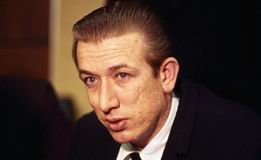
Richard Speck
Mass murderer Francisco Paula Gonzales
Mass murderer · USA · 1964
Francisco Paula Gonzales was a passenger on Pacific Air Lines Flight 773. Gonza…
44 victims
Francisco Paula Gonzales
Mass murderer · USA · 1964
Francisco Paula Gonzales was a passenger on Pacific Air Lines Flight 773. Gonza…
44 victims
 Thomas Doty
Mass murderer · USA · 1962
Thomas G. Doty was a passenger on Continental Airlines Flight 11. He was a marr…
44 victims
Thomas Doty
Mass murderer · USA · 1962
Thomas G. Doty was a passenger on Continental Airlines Flight 11. He was a marr…
44 victims
 Julian Andrew Frank
Mass murderer · USA · 1960
6 January 1960 — National Airlines Flight 2511 exploded and crashed 1-1/2 miles…
33 victims
Julian Andrew Frank
Mass murderer · USA · 1960
6 January 1960 — National Airlines Flight 2511 exploded and crashed 1-1/2 miles…
33 victims
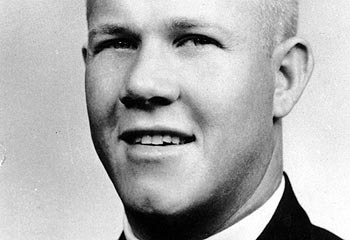 Charles Whitman
Mass murderer · USA · 1966
Charles Joseph Whitman (June 24, 1941 – August 1, 1966) shot and killed 14 peop…
15 victims
Charles Whitman
Mass murderer · USA · 1966
Charles Joseph Whitman (June 24, 1941 – August 1, 1966) shot and killed 14 peop…
15 victims
 James Edward Pough
Mass murderer · USA · 1971
James Edward Pough (1948 – 18 June 1990) was an American mass murderer. On 18 J…
12 victims
James Edward Pough
Mass murderer · USA · 1971
James Edward Pough (1948 – 18 June 1990) was an American mass murderer. On 18 J…
12 victims
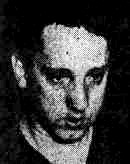 James Ruppert
Mass murderer · USA · 1975
James Ruppert killed his mother, brother, sister-in-law, and eight nieces and n…
11 victims
James Ruppert
Mass murderer · USA · 1975
James Ruppert killed his mother, brother, sister-in-law, and eight nieces and n…
11 victims
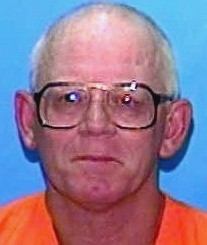 Floyd William Damren
Murderer · USA · 1994
Floyd William Damren entered the grounds of R.G.C. Mineral Sands and stole equi…
1 victim
Floyd William Damren
Murderer · USA · 1994
Floyd William Damren entered the grounds of R.G.C. Mineral Sands and stole equi…
1 victim
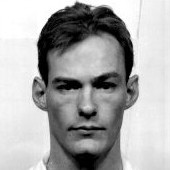 Richard Drinkard
Murderer · USA · 1985
Richard Gerry Drinkard was convicted in Texas of capital murder in the deaths o…
3 victims
Richard Drinkard
Murderer · USA · 1985
Richard Gerry Drinkard was convicted in Texas of capital murder in the deaths o…
3 victims
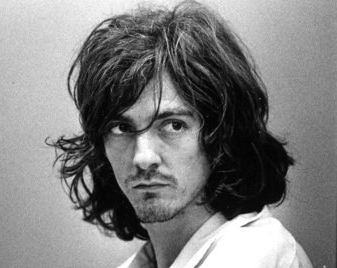 David Lee Powell
Murderer · USA · 1978
David Lee Powell was executed by lethal injection in Texas on June 15, 2010. He…
1 victim
David Lee Powell
Murderer · USA · 1978
David Lee Powell was executed by lethal injection in Texas on June 15, 2010. He…
1 victim
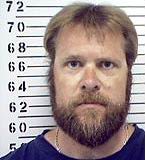 Jason Wayne Rose
Murderer · USA · 1988
Jason Wayne Rose was a state prisoner who appealed the denial of his 28 U.S.C.…
1 victim
Jason Wayne Rose
Murderer · USA · 1988
Jason Wayne Rose was a state prisoner who appealed the denial of his 28 U.S.C.…
1 victim
 Debra Gindorf
Murderer · USA · 1985
Debra Lynn Gindorf was charged by indictment with six counts of murder for inte…
2 victims
Debra Gindorf
Murderer · USA · 1985
Debra Lynn Gindorf was charged by indictment with six counts of murder for inte…
2 victims
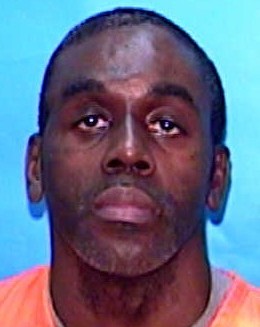 Victor Tony Jones
Murderer · USA · 1990
Name: Victor Tony Jones · Date of birth: 05/01/61 · Court: Eleventh Judicial Ci…
2 victims
Victor Tony Jones
Murderer · USA · 1990
Name: Victor Tony Jones · Date of birth: 05/01/61 · Court: Eleventh Judicial Ci…
2 victims
- Gender
- male
- Country
- USA
- Location
- Chicago, Illinois, USA
- Date of birth
- December 6, 1941
- Age at first offence
- 25
- Characteristics
- rape, serial rapist
- Victim profile
- Gloria Davy, 22 / Patricia Matusek, 20 / Nina Schmale, 24 / Pamela Wilkening, 20 / Suzanne Farris, 21 / Mary Ann Jordan, 20 / Merlita Gargullo, 22 / Valentina Pasion , 23 ( student nurses )
- Method of murder
- Strangulation / St abbing with knife
- Date(s) of murder
- July 14, 1966
- Years active
- 1966
- Date of arrest
- 4 days after
- Status
-
Imprisoned
Died in prison on December 5, 1991; Sentenced to death on June 5, 1967; Resentenced to 400 to 1,200 years in prison (8 consecutive sentences of 50 to 150 years) on November 21, 1972; Sentence reduced in 1973 to a new statuatory maximum of 300 years
Offender
Richard Speck (December 6, 1941–December 5, 1991) was a mass murderer who systematically killed eight student nurses from South Chicago Community Hospital on July 14, 1966.
Speck was born in Kirkwood, Illinois. He was the seventh of eight children and was raised in a religious family. His father died when he was six. Speck was frequently beaten by his drunken stepfather.
Speck suffered a head injury when he fell from a tree near White Rock Lake in Dallas, Texas. He spent much of his adolescent and teenage years in Dallas. Speck was a poor student and an incorrigible juvenile delinquent, beginning his life of crime at a young age.
Speck was briefly married, and the union was marked by abuse and spousal rape. Speck spent much of the marriage in and out of prison. He allegedly fathered a child.
In January 1966, six months before the nurse murders, his wife Shirley filed for divorce.
Prior to the nurse murders, Speck had been arrested for burglary and stabbing, and he got away with raping Virgil Harris (65) and beating Mary Kay Pierce to death; in both cases, he avoided in-depth interrogation.
The offence
Mass murder of student nurses (South Chicago Community Hospital)
On July 14, 1966, Speck broke into a South Chicago townhouse and took as hostages nurses Gloria Davy, Patricia Matusek, Nina Schmale, Pamela Wilkening, Suzanne Farris, Mary Ann Jordan, Merlita Gargullo, and Valentina Pasion.
He held the nurses hostage for hours, beating and raping them, before finally stabbing them to death.
Only one woman, Cora (Corazon) Amurau, escaped by hiding silently under a bed while her housemates were being killed. She emerged after Speck was out of the room with one of his victims and climbed out of her northeast bedroom window onto a ledge while screaming: “They're all dead! All my friends are dead!”
Speck may have originally planned to commit a routine burglary.
The trial facts recounted that Speck held the women in the house for hours, methodically leading them out of the room one by one, stabbing or strangling them to death, then finally raping and strangling his last victim, Gloria Davy.
Speck later claimed he was high on both alcohol and drugs.
There was a possibility Speck lost count, or that he knew there were eight women living in the townhouse but was unaware that a ninth student nurse was spending the night there.
Earlier offences mentioned in connection with the case
Before the nurse murders, Speck was known to have been arrested for burglary and stabbing. He also avoided in-depth interrogation after raping Virgil Harris (65) and beating Mary Kay Pierce to death.
Investigation
Lieutenant Emil G. Giese headed the Identification Section of the Chicago Police Department. He compared and identified a smudged fingerprint found at the murder scene to another provided by the FBI, which belonged to Richard Speck.
Sgt. Hugh Granahan assisted with the comparison. Senior Examiner Burton J. Buhrke found a better fingerprint on a door at the scene.
Two days after the murders, Speck was identified by a drifter named Claude Lunsford.
Arrest and pre-trial events
Speck attempted suicide and was taken to Cook County Hospital at 12:30 AM on July 17.
At the hospital, Speck was recognized by Dr. LeRoy Smith, a 25-year-old surgical resident physician, after Dr. Smith had read about Speck’s “Born To Raise Hell” tattoo in a newspaper story.
The police were called, and Speck was arrested.
There were concerns over a recent Miranda case that had vacated the convictions of a number of criminals, and Speck was not even questioned for three weeks after his arrest.
Judge Herbert J. Paschen appointed an impartial panel to report on Speck’s competence to stand trial and his sanity at the time of the crime. The panel comprised three physicians suggested by the defense and three physicians selected by the prosecution, consisting of five psychiatrists and one general surgeon.
The panel’s confidential report deemed Speck competent to stand trial and concluded that he had not been insane at the time of the murders.
While awaiting trial, Speck participated in twice-weekly sessions with part-time Cook County Jail psychiatrist, Dr. Marvin Ziporyn. These continued after Speck’s transfer from Cermak Memorial Hospital (inside Chicago’s House of Corrections) on July 29, 1966 until February 13, 1967, the day before Speck was transferred to Peoria to stand trial.
Ziporyn prepared a discharge summary listing depression, anxiety, guilt, and shame among Speck’s emotions, but also a deep love for his family. The summary also noted an obsessive-compulsive personality and a “Madonna-prostitute” attitude towards women.
Ziporyn maintained that Speck viewed women as saintly until he felt betrayed by them for some reason, after which hostility developed. Ziporyn also diagnosed organic brain syndrome, resulting from cerebral injuries suffered earlier in Speck’s life. Ziporyn stated that Speck was competent to stand trial but was insane at the time of the crime due to the effects of alcohol and drug use on his organic brain syndrome.
Ziporyn did not testify for the defense or the prosecution because both sides were troubled to learn before the trial that Ziporyn was writing a book about Speck for financial gain. Ziporyn’s biography of Speck was published in summer 1967.
Ziporyn earned the ire of Cook County Jail, which fired him as its part-time psychiatrist the week after Speck’s trial ended.
At some point during Speck’s interviews, Ziporyn had obtained a written three-sentence consent from Speck authorizing him to tell “what I am really like.”
Trial
Speck’s jury trial began April 3, 1967, in Peoria, Illinois, three hours southwest of Chicago, with a gag order on the press.
Cora Amurao also testified at the trial. During the trial, when she was asked if she could identify the killer of her fellow students, she rose from her seat in the witness box, walked directly in front of Speck, and pointed her finger at him.
At trial, Amurao was asked if she could identify the killer of her fellow students. She said, “This is the man.”
Lieutenant Emil Giese testified regarding the fingerprints matched. The scientific evidence and Amurao’s testimony placed evidence against Speck beyond a reasonable doubt.
On April 15, after 49 minutes of deliberation, the jury found Speck guilty and recommended the death penalty.
On June 5, 1967, Judge Herbert J. Paschen sentenced Speck to die in the electric chair. The judge granted an immediate stay pending automatic appeal to the Illinois Supreme Court.
The Illinois Supreme Court upheld Speck’s conviction and death sentence on November 22, 1968.
Sentencing and appeals
United States Supreme Court review of death sentence
On June 28, 1971, the United States Supreme Court upheld Speck’s conviction, but reversed his death sentence. The reversal cited that objectors to capital punishment had been systematically excluded from his jury, referencing the Court’s April 24, 1968 decision in Witherspoon v. Illinois.
The case was remanded for resentencing.
Furman v. Georgia and resentencing in Illinois
In 1972, following Furman v. Georgia, the United States Supreme Court declared the death penalty unconstitutional because its arbitrary and inconsistent imposition constituted cruel and unusual punishment. The Illinois Supreme Court ordered Speck resentenced to prison by the original Cook County court.
On November 21, 1972, in Peoria, Judge Richard Fitzgerald resentenced Speck to 400 to 1,200 years in prison, consisting of 8 consecutive sentences of 50 to 150 years.
In 1973, the sentence was reduced to a new statuatory maximum of 300 years, making him eligible for parole in 1977.
Parole denials
Speck was denied parole in 7 minutes at his first parole hearing on September 15, 1976.
He was also denied parole at six subsequent parole hearings in 1977, 1978, 1981, 1984, 1987, and 1990.
Outcome
Speck died in prison on December 5, 1991, from a heart attack. On autopsy, he was found to have an enlarged heart and occluded arteries.
His body was not claimed and he was cremated.
Other details
Psychiatric interview and remarks
A leading psychiatrist who interviewed Speck remarked that Speck experienced the madonna-whore complex, and that Gloria Davy reminded Speck of his ex-wife.
Ziporyn diagnosed organic brain syndrome and also described Speck’s attitudes toward women as reflected in the “Madonna-prostitute” attitude.
Confessions
Speck later claimed he had no recollection of the murders, but he had confessed to Dr. LeRoy Smith at the Cook County Hospital. Smith did not testify because the confession was made while Speck was sedated.
Illinois Supreme Court Justice John J. Stamos, Cook County’s state attorney when Speck was tried, knew of the hospital confession and said, “…we didn’t need it. We had an eyewitness.”
Speck confessed to the murders for the first time in public when he spoke to Chicago Tribune columnist Bob Greene in 1978.
In a film inmates made at the Stateville Correctional Center in 1988, Speck recounted the deed.
Fingerprint identification and witness identification
Lieutenant Emil G. Giese compared and identified a smudged fingerprint at the murder scene to another provided by the FBI, belonging to Richard Speck. Sgt. Hugh Granahan assisted, and Senior Examiner Burton J.
Notable prison nickname and prison conduct
While incarcerated at Stateville Prison, Speck was given the nickname “birdman” after the film Birdman of Alcatraz, when he kept a pair of sparrows that flew into his cell.
He was described as being a loner, keeping a stamp collection, listening to music, and carrying out his work details painting the bars and walls throughout the prison.
His usual contact with the warden included requests for new shirts or a radio or other mundane items. The warden described him as “a big nothing doing time.”
Speck was often caught with drugs or distilled moonshine. Punishment for such infractions never stopped him.
Speck said: “How am I going to get in trouble? I'm here for 1,200 years!”
Video tapes and statements attributed in connection with legislative discussion
In May 1996, television news anchor Bill Kurtis received video tapes made at Stateville Prison sometime before the end of 1991. The video showed prisoners passing money and drugs around without fear of being caught, engaging in sexual acts, and included Speck ingesting cocaine, parading around in silk panties, sporting female-like breasts grown from smuggled hormone treatments, and boasting: “If they only knew how much fun I was having, they'd turn me loose!”
From behind the camera a prisoner asked Speck why he killed the nurses. Speck shrugged and jokingly said: “It just wasn't their night.”
The tapes were later broadcast on the A&E Network’s Investigative Reports and were used to argue for the death penalty.
John Schmale, the brother of one of the slain nurses, said: “It was a very painful experience watching him tell about how he killed my sister,” in response to a scene in which Speck described what needs to be done when strangling a victim.
Background: early life and family details
Richard Benjamin Speck was born in the village of Kirkwood, six miles southwest of Monmouth in west-central Illinois. He was the seventh of eight children of Benjamin Franklin Speck and Mary Margaret Carbaugh Speck. The family moved to Monmouth shortly after Speck’s birth.
Speck and his younger sister Carolyn, born in 1943, were much younger than their four older sisters and two older brothers. Speck’s oldest brother, Robert, died at the age of 23 in an automobile accident in 1952.
Speck’s father worked as a packer at Western Stoneware in Monmouth and had previously worked as a farmer and logger.
Speck was close to his father, who died in 1947 from a heart attack at the age of 53 when Speck was six years old.
A couple of years later, Speck’s religious, teetotaling mother met and fell in love with a traveling insurance salesman from Texas, Carl August Rudolph Lindberg, whom she met on a train trip to Chicago.
Lindberg was hard-drinking, peg-legged, and had a 25-year criminal record starting with forgery and including several arrests for drunk driving. Speck’s mother married Lindberg on May 10, 1950 in Palo Pinto, Texas.
Speck and his younger sister Carolyn stayed with their married sister Sara Thornton in Monmouth for a few months so Speck could finish 2nd grade. They then joined their mother and Lindberg in rural Santo, Texas, 40 miles west of Fort Worth, Texas, where Speck attended 3rd grade.
After a year in Santo, Speck moved with his mother, stepfather, and sister Carolyn to the East Dallas section of Dallas, Texas, living at 10 addresses in poor neighborhoods over the next dozen years.
Speck loathed his often drunk and frequently absent stepfather, who psychologically abused him with insults and threats.
Speck needed glasses for reading but refused to wear them. He struggled through Dallas public schools from 4th through 8th grade. He repeated 8th grade at J. L. Long Jr. High School partly because he refused to recite in class due to a lifelong fear of people staring at him.
In autumn 1957, Speck started 9th grade at Crozier Technical High School but failed every subject. He did not return for the second semester in January 1958, dropping out just after his 16th birthday.
Speck began drinking alcohol at age 12 and by age 15 was getting drunk almost every day.
His first arrest in 1955, at age 13, was for trespassing. He was followed by dozens of other arrests for misdemeanors over the next eight years.
Speck worked as a laborer for the 7-Up bottling company of Dallas for almost three years, from August 24, 1960 to July 19, 1963.
Background: marriage and early criminal convictions described
In October 1961, Speck met 15-year-old Shirley Annette Malone at the Texas State Fair. She became pregnant after three weeks of dating him.
Shirley married Speck on January 19, 1962. They initially moved in with Speck, his mother, and his sister Carolyn and Carolyn’s husband.
Speck’s mother and stepfather had separated, and his stepfather moved to California.
Speck stopped using the name Richard Franklin Lindberg when he got married and began using the name Richard Franklin Speck.
When Speck’s daughter, Robbie Lynn, was born on July 5, 1962, his wife did not know where Speck was because he was serving a 22-day jail sentence for disturbing the peace in McKinney, Texas after a drunken melee.
In July 1963, Speck was caught forging and cashing a co-worker’s $44 paycheck and burglarizing a grocery store, stealing cigarettes, beer, and $3 in cash. He was convicted of forgery and burglary and sentenced to three years in prison.
He was paroled after serving 16 months, from September 16, 1963 to January 2, 1965, in the Texas State Penitentiary in Huntsville, Texas.
One week after parole, at 2:20 a.m. on January 9, 1965, Speck, wielding a 17-inch carving knife, attacked a woman in the parking lot of her apartment building. The woman screamed, the police arrived within minutes, and police apprehended Speck a few blocks away shortly thereafter.
Speck was convicted of aggravated assault and given a 16-month sentence to run concurrently with a parole violation sentence. He returned to prison in Huntsville but, due to an error, was released from prison six months later on completion of his parole violation sentence on July 2, 1965.
After release, Speck worked for three months as a driver for the Patterson Meat Company and had six accidents with his truck before he was fired for failing to show up for work.
Background: further offences and movements leading to July 1966
In December 1965, on the recommendation of his mother, Speck moved in with a 29-year-old divorced woman who was an ex-professional wrestler and a bartender at his favorite bar, Ginny’s Lounge, and needed someone to babysit her three children.
In January 1966, Speck’s wife filed for divorce.
That same month, Speck stabbed another man in a knife fight at Ginny’s Lounge and was charged with aggravated assault. A defense attorney hired by his mother reduced the charge to disturbing the peace.
Speck was fined $10 and jailed for three days when he failed to pay the fine. This was described as the last time Speck was in police custody in Dallas.
On March 5, 1966, Speck bought a 12-year-old car.
The following evening, he burglarized a grocery store, stole 70 cartons of cigarettes, sold them out of the trunk of his car in the grocery store’s parking lot, and then abandoned his car.
Police traced the car to Speck and issued a warrant for his arrest for burglary on March 8.
Speck’s arrest was described as his 42nd in Dallas. On March 9, 1966, his sister Carolyn drove him to the Dallas bus depot, where he caught a bus to Chicago, Illinois.
In Chicago, Speck stayed with his sister Martha Thornton and her family in the Old Irving Park neighborhood, then returned to his boyhood hometown of Monmouth, Illinois. In Monmouth, Speck initially stayed with some old family friends. His brother Howard was a carpenter in Monmouth and found a job for him sanding plasterboard for another Monmouth carpenter.
Speck became angry when he learned that his ex-wife remarried two days after she was granted a divorce on March 16, 1966.
Speck moved to the Christy Hotel in downtown Monmouth on March 25 and spent most of his time in downtown taverns.
At the end of March, Speck and some Monmouth acquaintances on a bar-hopping trip to Gulf Port, Illinois were detained overnight by police there after Speck reportedly threatened a man in a tavern restroom with his knife.
On April 3, Mrs. Virgil Harris, a 65-year-old Monmouth divorcée, returned home at 1:00 a.m. to find a burglar in her house brandishing a knife. She was described as a man who was “very polite” and spoke “very softly with a Southern drawl.” The man blindfolded her, tied her up, raped her, ransacked her house, and stole $2.50 she had earned babysitting that evening.
A week later, Mary Kay Pierce, a 32-year-old barmaid who worked at her brother-in-law’s tavern, Frank’s Place, was last seen leaving the tavern at 12:45 a.m. on April 9.
She was reported missing on April 13, and her body was found that day in an empty hog house behind the tavern, having died from a blow to her abdomen that ruptured her liver.
Speck had frequented Frank’s Place, and the empty hog house was one of several he had helped build in the preceding month. Monmouth police briefly questioned him about Pierce’s death when he showed up to collect his final carpentry paycheck on April 15 and asked him to stay in town for further questioning.
When police showed up at the Christy Hotel on April 19 to continue their questioning of Speck, they found that he had left the hotel a few hours earlier carrying his suitcases and saying he was just going to the laundromat, but had instead left town.
A search of his room turned up a radio and costume jewelry that Mrs. Virgil Harris had reported missing from her house, as well as items reported missing in two other local burglaries in the past month.
Background: Chicago lodging, maritime employment, and final pre-murder events
On April 19, 1966, Speck returned to stay at his sister Martha’s 2nd-floor apartment at 3966 N. Avondale Ave. in the Old Irving Park neighborhood on the Northwest side of Chicago. Martha lived with her husband Gene Thornton and their two teenage daughters.
Martha had worked as a registered nurse in pediatrics before she was married. Gene worked nights as a railroad switchman.
Speck told them a story about having to leave Monmouth after refusing to sell narcotics for a “crime syndicate” there.
Gene Thornton, who had served in the U.S. Navy, thought the U.S. Merchant Marine might provide a suitable occupation for Speck. Gene took Speck on April 25 to the U.S. Coast Guard office to apply for a letter of authority to work as an apprentice seaman, which required fingerprinting, photographs, and a physical examination by a physician.
Speck found work after obtaining a letter of authority, joining the 33-member crew of Inland Steel’s Clarence B. Randall, an L6-S-B1 class bulk ore lake freighter, on April 30.
Speck’s first voyage on the Clarence B. Randall was brief because he was stricken with appendicitis on May 3. He was evacuated by U.S. Coast Guard helicopter to St. Joseph’s Hospital in Hancock, Michigan, on the Keweenaw Peninsula of Michigan’s Upper Peninsula, where he had an emergency appendectomy.
After discharge, Speck returned to stay with his sister Martha and her family in Chicago to recuperate.
On May 20, Speck rejoined the crew of the Clarence B. Randall until June 14. He then got drunk and quarreled with one of the boat’s officers and was put ashore on June 15.
For the following week, Speck stayed at the St. Elmo, an East Side Chicago flophouse at E. 99th St. & S. Ewing Ave.
Speck traveled by train to Houghton, Michigan, to visit Judy Laakaniemi, a 28-year-old nurse’s aide going through a divorce whom he had befriended at St. Joseph’s Hospital.
On June 27, after Judy gave him $80 to help him until he found work, Speck left to stay again with his sister Martha and her family in Chicago for the next two weeks.
On June 30, Gene drove Speck to the National Maritime Union hiring hall at 2335 E. 100th St. in the Jeffery Manor neighborhood of South Deering, Chicago to file paperwork for a seaman’s card.
The NMU hiring hall was one block east of six attached two-story brick townhouses, three of which were occupied by South Chicago Community Hospital senior student nurses and Filipino exchange registered nurses. Eight of them lived in the easternmost townhouse at 2319 E. 100th St., just 150 feet from the NMU hiring hall.
On Friday, July 8, 1966, Gene drove Speck to the NMU hiring hall to pick up his seaman’s card and register for a berth on a ship. Speck lost out that day due to a seaman with more seniority getting the berth on the SS Flying Spray, a C1-A cargo ship bound for South Vietnam. Speck returned to Martha’s apartment for the weekend.
By Monday, July 11, Speck had outstayed his welcome with Martha’s family. After Gene drove him again to the NMU hiring hall, Speck stayed that evening at Pauline’s rooming house at 3028 E. 96th St. in the Vets Park neighborhood of South Deering, Chicago.
On Tuesday, July 12, Speck returned to the NMU hiring hall and in mid-afternoon received an assignment on Sinclair Oil’s tanker SS Sinclair Great Lakes, a thirty-minute drive away in East Chicago, Indiana. When he arrived, his spot had already been taken, and Speck was driven back to the closed NMU hiring hall.
Speck did not have enough money for a rooming house. He dropped off his bags six blocks east at the Manor Shell filling station at 9954 S. Torrence Ave. and slept in an unfinished house just off E. 103rd St.
On Wednesday, July 13, after picking up his bags and checking in at the NMU hiring hall, Speck talked for thirty minutes with Martha and Gene, who drove down to visit him at 9 a.m. They parked on E. 100th St. next to Luella Elementary School across the street from the townhouses where the nurses lived.
At 10:30 a.m., Speck left and walked a mile and a half east on E. 100th St. to check in at the Shipyard Inn at E. 101st St. & S. Avenue N. Speck spent the rest of the day drinking at nearby taverns.
Speck accosted Ella Mae Hooper, a 53-year-old woman who had spent the day drinking at the same taverns as Speck. He took her to his room at the Shipyard Inn, raped her, and stole her black .22 caliber Röhm revolver, described as a $16 mail-order Saturday night special.
After dinner at Kay’s Pilot House, Speck returned to drink at the Shipyard Inn’s tavern until 10:20 p.m., when he left dressed entirely in black, armed with a pocketknife, a hunting knife, and Ella Mae Hooper’s revolver, and walked a mile and a half west on E. 100th St. to the nurses’ townhouse at 2319 E. 100th St.
False reports about Speck’s chromosomes
In December 1965 and March 1966, Nature and The Lancet published preliminary reports by British cytogeneticist Patricia Jacobs and colleagues of a chromosome survey of Scotland’s only security hospital for the developmentally disabled. The reports found nine patients averaging almost 6 ft. in height (range: 5'7" to 6'2") had a 47,XYY karyotype and mischaracterized them as aggressive and violent criminals.
In August 1966, Eric Engel, a Swiss endocrinologist and geneticist at Vanderbilt University in Nashville, Tennessee, wrote to Speck’s attorney, Cook County Public Defender Gerald W. Getty. Engel proposed confidentially karotyping Speck, who was reported as being 6 ft. 1 in. tall. Getty agreed and a chromosome analysis was performed.
The results showed Speck had a normal 46,XY karyotype. The results were reported to Getty in a September 26, 1966 letter, one month before a court-appointed panel of six physicians concluded that Speck was mentally competent to stand trial.
In January 1968 and March 1968, The Lancet and Science published the first U.S. reports of institutionalized XYY males by Mary Telfer, a biochemist at the Elwyn Institute. Telfer found five tall, developmentally disabled XYY boys and men in hospitals and penal institutions in Pennsylvania. Since four of five had at least moderate facial acne, she jumped to the erroneous conclusion that acne was a defining characteristic of XYY males.
In January 1968, Getty contacted Telfer.
Trivia
In 2002, a movie called “Speck” was made about that case.
The Simon and Garfunkel song “7 O'Clock News” was comprised of several radio broadcasts read against the soothing Silent Night, and contained the verse “In Chicago, Richard Speck, accused murderer of nine student nurses, was brought before a Grand Jury today for indictment. The nurses were found stabbed and strangled in their Chicago apartment.”
The Cheap Trick song “The Ballad of T.V. Violence” was about Speck. The lyrics were sung from the murderer’s point of view.
The song was originally titled “The Ballad of Richard Speck,” but the band changed it out of concern for the families of Speck’s victims.
Their song “Born to Raise Hell,” which appeared in the animated film Rock & Rule, may have been a reference to Speck’s tattoo, although this remained unconfirmed.
Macabre made a song on Speck called “What The Heck, Richard Speck (8 Nurses You Wrecked),” which appeared on Sinister Slaughter, 1993.
Portraits of the eight nurses Speck murdered were made into a painting series by German artist Gerhardt Richter, titled “Eight Student Nurses” (1966).
Former Marilyn Manson member Zsa Zsa Speck formed the name from Zsa Zsa Gabor’s first name and Richard Speck’s last name.
The film “Ten to Midnight” starring Charles Bronson paralleled the Speck murders. The film’s plot involved a man entering the home of several student nurses and systematically killing them while one, who was hiding under a bed, escaped.
Spotted an error, or have more information about this case?