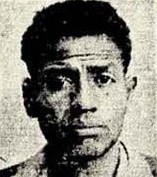
Jorge Villanueva Torres
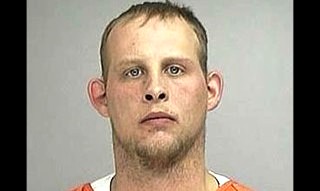 Michael Zabawa
Murderer
Michael Zabawa was a Minnesota man who lived in Matawan, and he worked at a hog…
2007 victims
Michael Zabawa
Murderer
Michael Zabawa was a Minnesota man who lived in Matawan, and he worked at a hog…
2007 victims
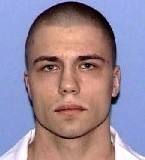 Clinton Lee Young
Murderer · USA
Clinton Lee Young (born July 19, 1983) was convicted of murdering two men in No…
2001 victims
Clinton Lee Young
Murderer · USA
Clinton Lee Young (born July 19, 1983) was convicted of murdering two men in No…
2001 victims
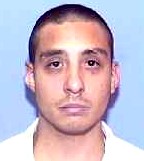 Ivan Abner Cantu
Murderer · USA
Name: Ivan Abner Cantu · TDCJ number: 999399 · Date of birth: 06/14/1973 · Age…
2000 victims
Ivan Abner Cantu
Murderer · USA
Name: Ivan Abner Cantu · TDCJ number: 999399 · Date of birth: 06/14/1973 · Age…
2000 victims
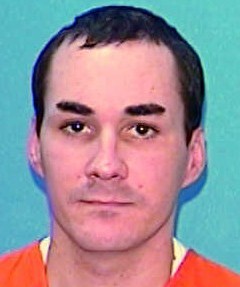 John Chamberlain
Murderer
John Chamberlain was sentenced in Florida in connection with a triple murder at…
1998 victims
John Chamberlain
Murderer
John Chamberlain was sentenced in Florida in connection with a triple murder at…
1998 victims
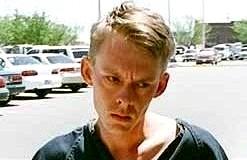 Michael John Yowell
Murderer · USA
Name: Michael John Yowell · TDCJ number: 999334 · Date of birth: 01/25/1970 · P…
1998 victims
Michael John Yowell
Murderer · USA
Name: Michael John Yowell · TDCJ number: 999334 · Date of birth: 01/25/1970 · P…
1998 victims
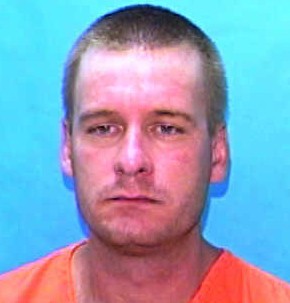 Michael Duane Zack
Murderer · USA
Michael Duane Zack was convicted and sentenced to death for the 06/13/96 murder…
1996 victims
Michael Duane Zack
Murderer · USA
Michael Duane Zack was convicted and sentenced to death for the 06/13/96 murder…
1996 victims
 Sharon Carr
Homicide · United Kingdom · 1992
Sharon Louis Carr was born 21 December 1979. She was twelve years old when she…
1 victim
Sharon Carr
Homicide · United Kingdom · 1992
Sharon Louis Carr was born 21 December 1979. She was twelve years old when she…
1 victim
 John Frank Hickey
Serial killer · USA · 1883
John Frank Hickey, “The Postcard Killer,” was one of the first known and captur…
3 victims
John Frank Hickey
Serial killer · USA · 1883
John Frank Hickey, “The Postcard Killer,” was one of the first known and captur…
3 victims
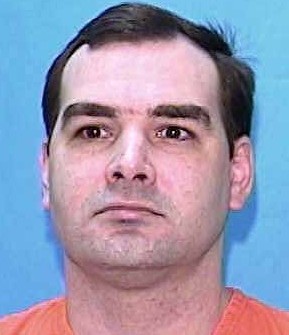 Jeffrey Allen Muehleman
Murderer · USA · 1983
Name: Jeffrey Allen Muehleman · Date of birth: 10/31/64 · Sixth Judicial Circui…
1 victim
Jeffrey Allen Muehleman
Murderer · USA · 1983
Name: Jeffrey Allen Muehleman · Date of birth: 10/31/64 · Sixth Judicial Circui…
1 victim
 James Paul Collier
Murderer · USA · 1995
James Paul Collier was executed by lethal injection in Texas on December 11, 20…
2 victims
James Paul Collier
Murderer · USA · 1995
James Paul Collier was executed by lethal injection in Texas on December 11, 20…
2 victims
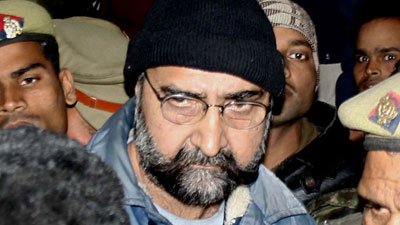 Moninder Singh Pandher
Serial killer ? · India · 2005
Moninder Singh Pandher was a Punjabi businessman arrested in connection with th…
18 victims
Moninder Singh Pandher
Serial killer ? · India · 2005
Moninder Singh Pandher was a Punjabi businessman arrested in connection with th…
18 victims
- Gender
- male
- Country
- —
- Location
- —
- Date of birth
- —
- Characteristics
- rape
- Victim profile
- —
- Method of murder
- —
- Date(s) of murder
- —
- Years active
- —
- Date of arrest
- —
- Status
-
Ejecutado fusilamiento 12 diciembre 1957
Case record: Jorge Villanueva Torres
Background
Jorge Villanueva Torres was known as el 'Negro Torpedo' and as el 'Monstruo de Armendáriz' by the press. He had been 35 years old. He had previously been known as a vago and a ladrón de poca monta, and he had already been to prison.
The story described his earlier life as “pájaro frutero” in his childhood, and as a “ladronzuelo” who worked in tranvías filled with people, where he committed thefts. It was also said that he had “pisado la cárcel” and was known in police stations.
The offence
A child, Julio Hidalgo Zavaleta (also written as Julio Hidalgo Zavala / Julio Hidalgo Zavala in parts of the case record), aged three years (also described as “3 años y medio”), was found dead in a covacha in the quebrada de Armendáriz, in Barranco, a zone that was described as being limítrofe between Miraflores and Barranco.
The body was found in position decúbito ventral (boca abajo). The case description said the victim had “huellas de haber sido golpeado en la cabeza.” The case narrative also addressed allegations that a sexual assault had occurred:
- A contemporaneous protocol of autopsy was described as stating that “no había signos de violación.”
- Despite that, the press narrative began to build a story about an “anormal” who had allegedly violated the child.
Investigation
On the morning of 8 de setiembre, two young students walking in the quebrada de Armendáriz discovered the body of a three-year-old child in a covacha. The horror spread quickly, and the area became filled with police, journalists, and onlookers.
Abraham Hidalgo, described as an albañil of medium height and thin build with “bigotes ralos,” was seen near the site. From the previous night he had been looking for his little son Julio Hidalgo Zavaleta. His shout of pain drew the attention of reporters and detectives when he realized the child was his.
The narrative said that numerous police guards moved through the streets of Barranco looking for a lead, including searches and raids in bars, billiards, and cantinas.
A public description from a witness was included:
- A turronero named Ulderico Salazar said: “Era un sujeto negro y alto... me compró 20 centavos de turrón para el niño. yo lo puedo reconocer”.
Later, the case described a turrones vendedor named Ulderico Salazar Bermúdez becoming the principal witness. He asserted to agents that he had seen a person of “raza negra” take the child along the quebrada de Armendáriz.
The narrative said that many individuals without jobs were arrested. Ulderico Salazar pointed to Jorge Villanueva Torres, a 35-year-old vago, as the person he had seen. It said Jorge Villanueva Torres became associated with the case name el 'Monstruo de Armendáriz'.
Ulderico Salazar later explained the identification:
- “Logré identificarlo porque tenía un dedo torcido, como el hombre que me compró el dulce para Julito”.
Arrest and detention
Días después de las indagaciones and arrests, Jorge Villanueva Torres was arrested and became the main suspect after the witness identification.
The case narrative said that on the afternoon of 14 de setiembre, a group of detectives informed their superiors that Jorge Villanueva had admitted being the author of the crime. He was then confined in the Penitenciaría Central, described as a prison at the time located on Paseo de la República.
Trial
The trial was covered widely by Lima newspapers and radios. Curiosities gathered each morning at the foot of the Tercer Tribunal Correccional.
The case narrative stated that a defense was handled at the final stage by Carlos Enrique Melgar, described as a young San Marcos lawyer, who tried to demonstrate that his client was not guilty.
The case record described that the turronero’s testimony was “demoledor” and that he swore that Villanueva was the man who took the child to the quebrada.
Jorge Villanueva defended himself by claiming police had forced him to “autoculparse.” The narrative described him as rebellious, disruptive, contentious, and argumentative during the hearing.
During the trial, the defense counsel Carlos Enrique Melgar made an argument tied to the evidence and legal standard:
- “Con indicios no se condena a muerte. No hay convicción, miente el turronero. En caso de duda hay que estar a lo favorable al reo, ¡In dubio pro reo!”
The narrative also said:
- Transcurrieron casi tres años de juicio.
- A pedido de Jorge Villanueva, Carlos Enrique Melgar took the defense and achieved that the charge of rape was removed in “solo un mes y medio.”
- Despite that, the magistrates, under popular pressure, convicted him of homicide.
On 7 de octubre de 1956, he was taken for the last time to the Palacio de Justicia.
After two years of trial, the Tercer Tribunal Correccional issued its verdict imposing the death penalty.
Sentencing
The death sentence was imposed by the Tercer Tribunal Correccional after about two years of trial.
When the verdict was delivered, windows in the courtroom were reportedly broken by a blow. Jorge Villanueva reacted in anger:
- he “estalló en ira”
- he “trató de agredir a los magistrados”
- he was restrained and maniatado
- with a “voz quebrada,” he insisted on his innocence.
Leonidas Velarde Álvarez, fiscal de la Corte Suprema, was quoted:
- “La ley es dura, pero es la ley”.
A Supreme Court review began in December 1957 when the Segunda Sala de la Corte Suprema initiated revision of the condemnation. The Supreme Court vocales decided to ratify the penalty.
The case record preserved the wording of the ruling:
- “Con inequívoca certeza de que es agente responsable de excepcional peligrosidad y conducta inmodificable se reclama la más severa sanción”.
Guillermo Babilón, capellán de la Penitenciaría Central, was quoted:
- “Yo creo que el final es la hora de la verdad”.
Appeals
In December 1957, the Segunda Sala de la Corte Suprema reviewed the condemnation. The vocales decided to ratify the death penalty.
Outcome
At dawn on 12 de diciembre de 1957, the execution took place.
Miles of people gathered at the Penitenciaría Central. At 5 y 25 de la mañana, five vigilantes dragged Villanueva to the firing squad. He was tied to a post three meters high. Eight guards waited with their rifles.
The narrative said that while the officer gave marching orders, the condemned exclaimed:
- “¡Soy inocente!”
At 5:36 de la mañana, a firing squad discharge killed him.
After the execution, some women cried, and men began to ask whether Villanueva truly was the feared “Monstruo de Armendáriz.”
When reporters asked the capellán whether a man could lie one step from death, he responded:
Aftermath
Days after, in an interview with Ulderico Salazar, the case narrative said the witness stated:
- “Espero que la sociedad me dé un trabajo estable para mantener a mis tres hijos”.
The case narrative added that the newspaper La Prensa reported that Salazar had contradicted himself more than 30 times during the process.
The record described ongoing doubts around Villanueva’s guilt and suggested a “sabor a remordimiento” about the death penalty.
Other details
The case narrative included commentary about the autopsy protocol and whether there were signs of rape:
- “El protocolo de la autopsia estableció que no había signos de violación; ahora, la incógnita es despejar si en realidad se trata de un crimen”. This quote was attributed in the narrative to “Capitán comisario de la Guardia Civil/ El Comercio, 12 de setiembre de 1954.”
The record also included a quote attributed to Manuel Jesús Orbegoso, described as a journalist who followed the case:
- It said Villanueva had been judged more for being “negro, vago y ladrón” than for assassinating a child.
The narrative included an execution comparison through another case: el “monstruo de Cajamarca,” Udilberto Vásquez Bautista, described as executed in 1970 for “violar y asesinar a una pastora,” and said he became a “santo popular.”
Victor Maúrtua, described as a médico legista during the case, presented a theory in his book “La pena de muerte y los delitos de violación” and discussed the “monstruitis” phenomenon. The narrative said he advised that Villanueva was a victim of “monstruitis,” a phenomenon spread through the media that created sinister beings and led society to demand a radical therapy: the death penalty.
The narrative included details about autopsy evidence and the absence of proof:
- “Me llamó la atención que hasta el último momento insistiera en su inocencia. Pedí el expediente del caso y me dijeron que estaba perdido. Pero logré conseguir el protocolo de autopsia y no hay evidencias que prueben el crimen”.
The record described a physical artifact from the execution: Maúrtua said he placed “la escarapela,” a piece of cardboard with a black cloth covering the heart area as a guide for the executioners. The cardboard reportedly still had the orifices of two bullets.
The record included later information about his remains:
- In 1996, a journalist searched for his grave in el cementerio Presbítero Maestro in the district of El Agustino.
- It said his remains had to be incinerated in 1964 for lack of payment.
The narrative ended with additional claims about a confrontation and suicide attempt:
- “Jorge Villanueva es doblegado por dos policías después de que intentara quitarse la vida.”
It also contained repeated and disorganized fragments at the end, including “home last updates contact,” which were not treated as case facts.
Timeline
- 8 de setiembre — Two young students found the dead body of a child in a covacha in the quebrada de Armendáriz.
- 9 de setiembre de 1954 — Newspapers opened with the report of the discovery of the corpse of Julio Hidalgo Zavala, described as a child aged 3 years and half; the record associated the case with allegations of rape.
- 14 de setiembre — Detectives informed their superiors that Jorge Villanueva had admitted being the author of the crime.
- 7 de octubre de 1956 — Jorge Villanueva was taken for the last time to the Palacio de Justicia.
- Diciembre de 1957 — The Segunda Sala de la Corte Suprema began review of the condemnation.
- 12 de diciembre de 1957 — At 5:25 a.m. he was taken to the firing squad; at 5:36 a.m. the firing squad discharged; he was executed by firing.
Explore related records
Spotted an error, or have more information about this case?