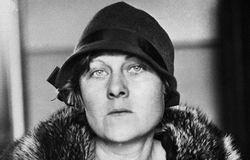
Ruth Snyder
Murderer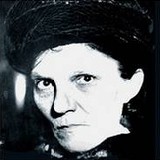 Martha Wise
Murderer · USA · 1924
Martha Wise (born 1885; died June 28, 1971), also known as “the Borgia of Ameri…
3 victims
Martha Wise
Murderer · USA · 1924
Martha Wise (born 1885; died June 28, 1971), also known as “the Borgia of Ameri…
3 victims
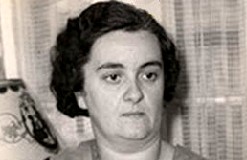 Mary Frances Creighton
Murderer · USA · 1923
Mary Frances Creighton (c. 1898 - July 16, 1936) was a housewife and was execut…
3 victims
Mary Frances Creighton
Murderer · USA · 1923
Mary Frances Creighton (c. 1898 - July 16, 1936) was a housewife and was execut…
3 victims
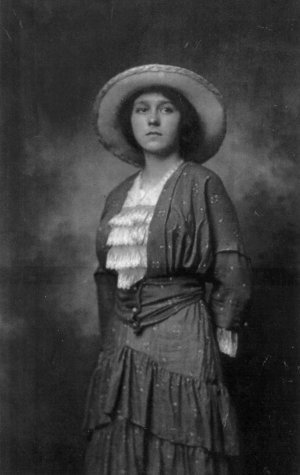 Inez Palmer
Murderer · USA · 1926
Inez Palmer — defendant; lived at the Stout farmhouse and pleaded guilty to a f…
2 victims
Inez Palmer
Murderer · USA · 1926
Inez Palmer — defendant; lived at the Stout farmhouse and pleaded guilty to a f…
2 victims
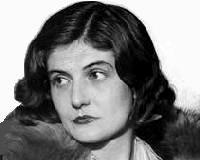 Winnie Ruth Judd
Murderer · USA · 1931
Winnie Ruth Judd (January 29, 1905 – October 23, 1998) was a Phoenix, Arizona m…
2 victims
Winnie Ruth Judd
Murderer · USA · 1931
Winnie Ruth Judd (January 29, 1905 – October 23, 1998) was a Phoenix, Arizona m…
2 victims
 Jasen Shane Busby
Murderer · USA · 1995
Name: Jasen Shane Busby Status: Executed by lethal injection in Texas on August…
2 victims
Jasen Shane Busby
Murderer · USA · 1995
Name: Jasen Shane Busby Status: Executed by lethal injection in Texas on August…
2 victims
 Mustafa Raheem
Murderer · USA · 1999
Mustafa Raheem was sentenced to death for the 1999 murders of a mother and her…
2 victims
Mustafa Raheem
Murderer · USA · 1999
Mustafa Raheem was sentenced to death for the 1999 murders of a mother and her…
2 victims
 Nathan Dunlap
Mass murderer · USA · 1993
Nathan Jerard Dunlap was convicted and sentenced to death in 1996 for the murde…
4 victims
Nathan Dunlap
Mass murderer · USA · 1993
Nathan Jerard Dunlap was convicted and sentenced to death in 1996 for the murde…
4 victims
 Marcus Wellons
Murderer · USA · 1989
Marcus A. Wellons was convicted of the malice murder and rape of 15-year-old In…
1 victim
Marcus Wellons
Murderer · USA · 1989
Marcus A. Wellons was convicted of the malice murder and rape of 15-year-old In…
1 victim
 Michael Tenneson
Murderer · USA · 1987
Michael Tenneson was born in 1960 and was a native of Holmen, Wisconsin. He was…
5 victims
Michael Tenneson
Murderer · USA · 1987
Michael Tenneson was born in 1960 and was a native of Holmen, Wisconsin. He was…
5 victims
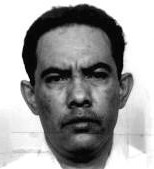 Robert Moreno Ramos
Murderer · USA · 1992
Robert Moreno Ramos Robert Moreno Ramos was convicted of capital murder of his…
3 victims
Robert Moreno Ramos
Murderer · USA · 1992
Robert Moreno Ramos Robert Moreno Ramos was convicted of capital murder of his…
3 victims
- Gender
- female
- Country
- USA
- Location
- Queens, New York City, New York, USA
- Date of birth
- 1895
- Age at first offence
- 32
- Characteristics
- attempt to collect insurance money, murder-for-hire
- Victim profile
- Albert Snyder, 44 (her husband)
- Method of murder
- Beating with a dumb-bell - Strangulation with a wire
- Date(s) of murder
- March 20, 1927
- Years active
- 1927
- Date of arrest
- Same day
- Status
-
Executed
Executed by electrocution in New York on January 12, 1928
Case overview
Ruth Snyder was an American murderess who was executed by electrocution in New York on January 12, 1928.
The offence
Albert Snyder, the art editor of Motor Boating, was killed in the bedroom where he slept with the blankets up over his head. Ruth Snyder and Henry Judd Gray had planned to fake a robbery after the killing.
Ruth Snyder and Judd Gray obtained tools for the murder, including a window sash weight, rubber gloves, and chloroform. The family returned around 2:00 am after being away at a party. Ruth opened the bedroom door a crack and then returned wearing only a slip. Ruth and Judd Gray had sex with her husband asleep just down the hallway. After about an hour, Judd Gray grabbed the window sash weight and Ruth led him to the master bedroom, where Albert Snyder slept.
Jud Gray raised the sash weight and brought it down clumsily onto Snyder’s head, producing a weak blow that merely glanced off Snyder’s skull. Albert Snyder was stunned and let out a roar and tried to seize his attacker. Judd Gray became terrified and screamed: "Momsie, Momsie, for God's sake, help!" Ruth Snyder then grabbed the weight from Judd’s hands and crashed it down on her husband’s skull, killing him.
After the killing, Ruth and Judd Gray went downstairs, had drinks, and chatted about the rest of their plan. They later faked a robbery by knocking over some chairs and loosely tying Ruth’s hands and feet. When Gray left, Ruth began banging on Lorraine’s door, and Lorraine ran to a neighbor’s house where the police were called.
Investigators described the staged robbery as far from convincing; they found the items Ruth claimed had been taken hidden in the house.
Investigation and evidence
Stolen property started turning up in the house. The missing jewelry Ruth claimed had been stolen was found hidden under Ruth’s mattress. A bloody pillowcase was found as well as the bloodstained sash weight.
Police found a $200 check in Ruth’s desk made out to H. Judd Gray and a tie clip with his initials on the bedroom floor. They found Judd Gray’s name in Ruth’s address book along with 28 other men. Later a $90,000 life insurance policy on Albert Snyder, including double indemnity clauses, turned up in a safe deposit box registered in her maiden name.
A scrap of Italian newspaper was found in the bedroom and was treated as a false clue intended to pin the crime on immigrants. Police also found picture wire tied tightly around Albert Snyder’s neck, and the body was found in the bedroom tied hand and foot. Albert Snyder had been chloroformed and his head had been bashed in.
Detectives questioned Ruth after finding the “stolen” items hidden in the house. Ruth confessed and blamed Judd Gray. Judd Gray was found hours later, hiding in his Syracuse hotel room. He shrieked his innocence and insisted that he was not in New York. When confronted with the train ticket stub he had tossed in the trash can of the hotel room, he broke down and confessed and blamed his accomplice.
Arrest
Ruth Snyder and Judd Gray were arrested for first-degree murder.
Trial
The trial at the Long Island City Courthouse was covered by figures including Peggy Hopkins Joyce, Mary Roberts Rinehart, D. W. Griffith, Damon Runyon, and Nora Bayes. Damon Runyon dismissed the value of the crime and nicknamed it "the dumb-bell murder case" because "it was so dumb!"
The case was described as a “cut-throat” case in which Snyder and Gray’s defense was that the other was responsible for killing Albert. By the time of trial, both defendants blamed the other for the deadly deed.
The jury deliberated and returned a verdict of "guilty" after 98 minutes. Both defendants were stunned when they learned the sentence was death.
Sentencing
Both Ruth Snyder and Judd Gray were sentenced to death.
A judge sentenced both on May 13, 1927. Separate events in the narrative also indicated that the jury verdict occurred on May 9, 1927.
Execution and outcome
Both were executed by electrocution.
Judd Gray was executed first on January 12, 1928. Ruth Snyder followed minutes after her lover as the electric chair was signaled to switch. Reporters remembered that Ruth Snyder had said days before that God had forgiven her and that she hoped the world would.
A photographer smuggled a camera into the death chamber by strapping it to his ankle. He snapped a photograph at the moment the current entered Ruth’s body. The photograph ran in the next day’s edition of a newspaper.
Ruth Snyder’s death occurred by electrocution after the executioner Robert G. Elliott threw the switch and, after two minutes, the current was turned off to allow the prison doctor to announce that Ruth Snyder was dead.
Other details
Names, relationships, and family
- Ruth Snyder was described as a Long Island housewife.
- Albert Snyder was described as the art editor of Motor Boating and was Ruth Snyder’s husband.
- Ruth Snyder and Albert Snyder had a daughter, Lorraine.
- Lorraine was born in 1918.
Insurance and alleged motive
Ruth Snyder and Judd Gray’s plan included an insurance element. Ruth Snyder was associated with taking out life insurance on Albert Snyder with a double indemnity clause. Judd Gray’s attorney asserted that Judd Gray had set up a $50,000 double indemnity insurance policy on Albert Snyder, while other parts of the narrative described a $48,000 life insurance policy with a double indemnity clause and later also described a $90,000 life insurance policy with double indemnity clauses.
Confessions and courtroom conduct
Ruth Snyder’s testimony and Judd Gray’s testimony included mutual blame during the trial. After a description of who struck the death blow, Ruth began to sob loudly in the courtroom and even the judge glanced in her direction.
Quotes
Ruth Snyder asked for help during the crime narrative using the phrase: "Momsie, Momsie, for God's sake, help!"
- The phrase appears as Judd Gray’s scream: "Momsie, Momsie, for God's sake, help!" Ruth Snyder was remembered as saying: "Jesus, have mercy on me, for I have sinned," and: "Jesus, have mercy."
Death-row conversion and prison interactions
Ruth Snyder underwent a Death Row conversion to Catholicism. When a prison matron asked if she was serious on that point, Ruth Snyder told her: "Go to hell."

Spotted an error, or have more information about this case?