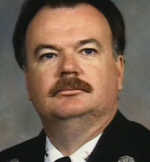
John Leonard Orr
Mass murderer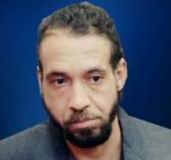 Julio Gonzalez
Mass murderer · USA · 1990
Julio Gonzalez was sentenced to 174 twenty-five-year sentences (a total of 4,35…
87 victims
Julio Gonzalez
Mass murderer · USA · 1990
Julio Gonzalez was sentenced to 174 twenty-five-year sentences (a total of 4,35…
87 victims
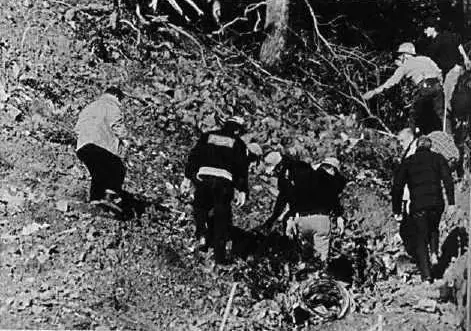 David Burke
Mass murderer · USA · 1987
David Augustus Burke (May 18, 1952–December 7, 1987) was an employee of USAir,…
43 victims
David Burke
Mass murderer · USA · 1987
David Augustus Burke (May 18, 1952–December 7, 1987) was an employee of USAir,…
43 victims
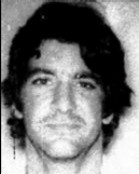 George Jo Hennard
Mass murderer · USA · 1991
George Jo Hennard carried out a mass killing at a Luby’s Cafeteria in Killeen,…
23 victims
George Jo Hennard
Mass murderer · USA · 1991
George Jo Hennard carried out a mass killing at a Luby’s Cafeteria in Killeen,…
23 victims
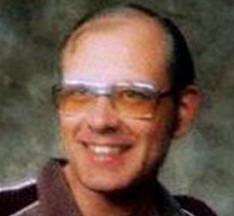 James Huberty
Mass murderer · USA · 1984
James Oliver Huberty was a 41-year-old unemployed security guard. He was born i…
21 victims
James Huberty
Mass murderer · USA · 1984
James Oliver Huberty was a 41-year-old unemployed security guard. He was born i…
21 victims
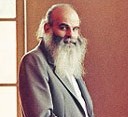 Ronald Gene Simmons
Mass murderer · USA · 1987
Ronald Gene Simmons was a retired United States Air Force sergeant. Over the Ch…
16 victims
Ronald Gene Simmons
Mass murderer · USA · 1987
Ronald Gene Simmons was a retired United States Air Force sergeant. Over the Ch…
16 victims
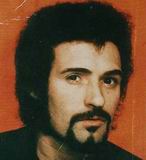 Peter Sutcliffe
Serial killer · United Kingdom · 1975
Peter William Sutcliffe (born 2 June 1946) was an English serial killer dubbed…
13 victims
Peter Sutcliffe
Serial killer · United Kingdom · 1975
Peter William Sutcliffe (born 2 June 1946) was an English serial killer dubbed…
13 victims
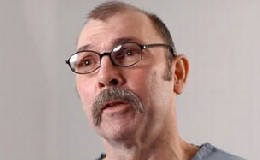 Michael Selsor
Murderer · USA · 1975
Michael Bascum Selsor was held as an Oklahoma death row inmate with inmate ID O…
1 victim
Michael Selsor
Murderer · USA · 1975
Michael Bascum Selsor was held as an Oklahoma death row inmate with inmate ID O…
1 victim
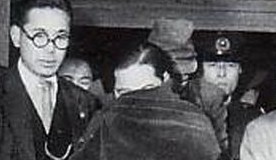 Miyuki Ishikawa
Murderer · Japan · 1944
Miyuki Ishikawa (石川 ミユキ, Ishikawa Miyuki; born 1897; date of death unknown) was…
169 victims
Miyuki Ishikawa
Murderer · Japan · 1944
Miyuki Ishikawa (石川 ミユキ, Ishikawa Miyuki; born 1897; date of death unknown) was…
169 victims
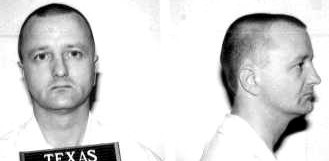 Troy Clark
Murderer · USA · 1998
Troy Clark was a defendant in a capital murder case in the United States Distri…
1 victim
Troy Clark
Murderer · USA · 1998
Troy Clark was a defendant in a capital murder case in the United States Distri…
1 victim
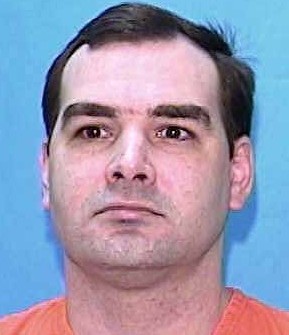 Jeffrey Allen Muehleman
Murderer · USA · 1983
Name: Jeffrey Allen Muehleman · Date of birth: 10/31/64 · Sixth Judicial Circui…
1 victim
Jeffrey Allen Muehleman
Murderer · USA · 1983
Name: Jeffrey Allen Muehleman · Date of birth: 10/31/64 · Sixth Judicial Circui…
1 victim
 Jerald Harjo
Murderer · USA · 1988
Jerald Wayne Harjo was convicted of first degree murder in Seminole County, Okl…
1 victim
Jerald Harjo
Murderer · USA · 1988
Jerald Wayne Harjo was convicted of first degree murder in Seminole County, Okl…
1 victim
- Gender
- male
- Country
- USA
- Location
- South Pasadena, California, USA
- Date of birth
- April 26, 1949
- Age at first offence
- 35
- Characteristics
- arson, former mental patient, mentally ill
- Victim profile
- Ada Deal, 50, her 2-year-old grandson, Matthew Troidl, and hardware store employees Carolyn Kraus, 26, and Jimmy Cetina, 17
- Method of murder
- Fire
- Date(s) of murder
- October 10, 1984
- Years active
- 1984
- Date of arrest
- December 4, 1991
- Status
-
Life imprisonment
Sentenced to life plus 20 years in prison without the possibility of parole on September 17, 1998
Case record: John Leonard Orr
Background
John Leonard Orr was born April 26, 1949. He was a former fire captain and arson investigator for the Glendale Fire Department in Southern California. Orr had originally wanted to be a police officer, but failed his entrance exam and instead became a fire investigator and career fire officer.
During the 1980s and 1990s, Los Angeles was plagued by a series of fires that cost millions of dollars in damages and claimed four lives. Orr was found to be the cause of most of those fires. During his arson spree, Orr was given the nickname the Pillow Pyro by arson investigators.
Orr insisted that he was innocent with regard to the 1984 hardware store fire.
The offence
Orr used incendiary timing devices to set fires. His modus operandi involved setting fires using an incendiary timing-device, usually a cigarette with a rubber band wrapped around the end wedged into a matchbook. He set fires in stores while they were open and populated. He set small fires often in grassy hills to draw firefighters, leaving fires set in more congested areas unattended.
In 1984 South Pasadena, California, a major fire broke out at an Ole's Home Center hardware store located in a shopping plaza. The store was completely destroyed and four people died in the blaze, including a two year old child.
During a later period of arson, Orr set brush fires in the foothill areas that drew attention, while fires in more congested areas were left unattended.
Orr was accused in the state trial of causing deaths in the Ole’s Home Center fire and of setting additional arson fires.
Investigation
In January 1987, a convention for arson investigators from California was held in the city of Fresno. During and after the convention, several suspicious fires were set in the area and south of Fresno in Bakersfield. Captain Marvin G. Casey of the Bakersfield Fire Department suspected that an arson investigator from the Los Angeles area was responsible for these arsons. Casey based his suspicion on several factors, including the recovery of a single unmatched fingerprint left on a piece of notebook paper as part of a time-delay incendiary device.
In March 1989, another series of arsons were committed along the California coast in close conjunction with a conference of arson investigators in Pacific Grove, California. Captain Casey compared the list of attendees from the Fresno conference with the list of attendees at the Pacific Grove conference, enabling him to create a short list of ten suspects. Orr was on Casey’s short list, but the other individuals on the list were cleared of suspicion when their fingerprints were compared with the fingerprint recovered from the notebook paper found at one of the arson crime scenes.
In late 1990 and early 1991, another series of arson fires broke out in southern California in and around the Los Angeles metropolitan area. A large task force, nicknamed the Pillow Pyro Task Force, was formed to apprehend the arsonist.
On March 29, 1991, Tom Campuzanno of the Los Angeles Arson Task Force circulated a flier at a meeting of the Fire Investigators Regional Strike Team (FIRST). Scott Baker of the California State Fire Marshal’s Office was at that meeting and told Campuzanno about the series of arsons investigated by Captain Casey and about Casey’s suspicions that the perpetrator was an arson investigator from the Los Angeles area. Campuzanno and two of his colleagues then met with Casey, obtained a copy of the fingerprint recovered from the notebook paper, and matched it to John Leonard Orr on April 17, 1991. Orr then became a serious arson suspect and the subject of investigation and surveillance for several months.
Orr was alerted to the surveillance effort on May 3, 1991, when he discovered and removed a tracking device hidden under the bumper of the vehicle he was driving. A Teletrac tracking device was later installed behind his dashboard when he brought his city vehicle for service on November 22, 1991.
A federal grand jury handed down an indictment. Orr was present at the scene of a suspicious fire shortly thereafter, leading investigators to end surveillance, obtain an arrest warrant, and arrest Orr.
Orr was arrested on December 4, 1991.
Arson investigators believed that Orr set nearly 2,000 fires between 1984 and 1991. After Orr was arrested, the number of brush fires in nearby foothill areas decreased by over ninety percent.
Arrest
Trial
Federal trial (arson)
On July 31, 1992, a jury in a federal court convicted Orr of three counts of arson in a five count indictment. The judge sentenced Orr to three consecutive terms of ten years in prison.
Orr maintained his innocence. The narrative also states that Orr later pleaded guilty on March 24, 1993 to three more counts of arson pursuant to a plea bargain agreement for an eight count indictment.
California state trial (murder and arson)
On June 25, 1998, a jury in a California state court convicted Orr of four counts of first-degree murder from the 1984 hardware store fire with special circumstances in a twenty-five count indictment. The jury deadlocked on only one of the twenty-five counts, and that count was subsequently dismissed at the request of the prosecution.
The jury deadlocked eight to four when asked to sentence Orr to the death penalty. The same state court judge sentenced Orr to life plus 20 years in prison without the possibility of parole.
A sentencing hearing included references to Orr’s age and background, and the judge’s sentencing remarks.
“The enormity of the defendant’s crimes should not be understated,” the judge said in handing down the maximum sentence. “He embarked on a campaign of setting arson fires that is remarkable in the number of fires he set and in the expert way he set them.”
The proceedings also included comments about Orr’s courtroom behavior and criticism from relatives of victims.
Orr’s silence prompted outrage from the brother of a victim, who called Orr “a coward” who “showed no remorse throughout his trial.”
“He’s a shell. He fails to be human,” Luis Cetina said of Orr. “He’s sentenced our families to a life of pain and grief.”
After the trial, Orr was serving time in California state prison to serve the remainder of his life sentence.
Some arson investigators and an FBI criminal profiler deemed Orr possibly one of the worst American serial arsonists of the 20th century.
Orr was convicted in the state trial of more than two dozen crimes, including the Oct. 10, 1984, fire that killed Jimmy Cetina, 17, fellow employee Carolyn Kraus, 26, Ada Deal, 50, and her 2-year-old grandson, Matthew Troidl.
The state trial also referenced a conviction for 20 arsons, including a firestorm that damaged or destroyed 67 homes in the College Hills section of Glendale in June 1990.
Evidence, arguments, and related proceedings
In the state trial, defense attorneys argued that faulty wiring, not arson, was to blame for the fire that killed four people in South Pasadena. Defense counsel Ed Rucker told jurors that the blaze began in the store’s ceiling as a smoldering electrical fire before exploding into the aisles below.
“He has admitted he set fires,” said Rucker, referring to San Joaquin Valley blazes Orr set while attending a 1987 arson investigator’s convention in Fresno.
“Mr. Orr is not responsible for this [Ole’s] fire… . Nobody is responsible for this fire, because it’s not an arson.”
Prosecutors presented evidence that Orr ignited the Ole’s fire and other fires at a nearby Vons and Albertson’s grocery stores to create a diversion.
Deputy Dist. Atty. Sandra Flannery told the jurors that Orr arrived at the scene with a 35mm camera, telling a fire official he was “just passing by.”
“John Orr claimed the Ole’s fire was arson … that he knew the identity of the arsonist,” Flannery said. “He was speaking from first-hand knowledge.”
Deputy Dist. Atty. Michael Cabral summarized three other fires Orr was accused of setting, including a Nov. 22, 1991, blaze in the Warner Bros. back lot in Burbank and the 1991 brush fire that engulfed 67 homes in the College Hills area of Glendale. Cabral also described Orr theorizing that an arsonist ignited the Glendale brush fire with a lighter, and that no one in any position of authority saw the device Orr said he found at the point of origin.
The prosecution used as an exhibit the manuscript of a novel Orr wrote about a firefighter turned arsonist. The manuscript described a Pasadena hardware store ablaze (“Cal’s”) where a woman and her young grandson died. Orr’s manuscript also included passages quoted in the pretrial coverage. The narrative included that the deaths were described with imagery of heat, and that the protagonist loved media attention and disliked being unrecognized.
“The investigating agency termed the fire arson, but no correlation was made to the Cal’s fire. Aaron wanted the Cal’s fire to be called arson. He loved the inadvertent attention he derived from the newspaper coverage and hated it when he wasn’t properly ‘recognized.’ ”
“Aaron wanted the Cal’s fire to be called arson. He loved the inadvertent attention he derived from the newspaper coverage and hated it when he wasn’t properly ‘recognized,’ ” Orr wrote in the manuscript. “The deaths were blotted out of his mind. It wasn’t his fault. Just stupid people acting as stupid people do.”
The narrative further included a quoted passage from the manuscript describing events at the store annex.
“The last thing she heard was a tremendous roar as the fire burned through the roof and vented to the outside,” reads a passage from the text. “The smoke momentarily lifted but was then replaced by solid fire as the entire contents of the annex exploded into flames. Their last breaths were of 800-degree heat that seared their throats closed … ”
Defense attorney Peter Giannini argued that Orr had access to information in the book because he was an investigator, and that access did not mean he set the fires.
“There’s no question John Orr had access to information contained in the book. He was the investigator,” Giannini said. “The fact the information is in the book does not mean he set [the fires].”
Giannini also argued about comparison evidence, stating that a firefighter also wrote the story that became the movie “Backdraft,” but that this did not mean he set fires.
“A firefighter also wrote the story that became the movie ‘Backdraft,’ the lawyer said, but that ‘doesn’t mean he set the fires any more than John Orr would.’”
Giannini attacked the prosecutors’ contention that Orr used a signature device consisting of a cigarette, matches, and a rubber band.
“There’s nothing particularly unusual about it,” he said. Such a device was not found at any of the fires specified in the charges, Giannini said. “Not a single one.”
The narrative included a UCLA forensic psychiatrist’s testimony being characterized as saying Orr was driven to torch buildings by a compulsion he was powerless to control.
“He had no choice in the matter,” the lawyer said.
Pretrial litigation included an interlocutory appeal in the federal system about excluding the manuscript and related letters.
Appeals
Orr brought an interlocutory appeal to the United States Court of Appeals for the Ninth Circuit regarding an order excluding evidence of a manuscript authored by John Orr.
The appeal was titled:
- “United States of America, Plaintiff-appellant, v. John Leonard Orr, Defendant-appellee”
The memorandum stated that the appellate court reviewed an interlocutory appeal from a district court order excluding evidence of a manuscript authored by John Orr. The memorandum described the district court granting a motion in limine to exclude the manuscript and references to it because of prejudicial effect under Fed.R.Evid. 403. The memorandum quoted the district court’s finding that the points of origin and methods of starting the arson fires described in the manuscript did not appear to be so unique as to justify the conclusion that the defendant must have had first-hand knowledge of the facts and circumstances underlying the arson fires charged against him.
The memorandum also included the district court’s quoted conclusion that claimed similarities between manuscript events and actual events were not sufficiently probative to substantially outweigh the tremendous prejudice to defendant.
The Ninth Circuit “held that the district court abused its discretion in excluding this evidence” and concluded that the manuscript and letters were highly probative of modus operandi and identity. The memorandum listed “some of the many key similarities” between the protagonist in the manuscript and the actual arsonist.
The memorandum stated:
REVERSED.
A dissent by Circuit Judge Reinhardt was included in the narrative. The dissent argued that the court should not reach the merits, and it would have ordered a limited remand for reconsideration of the evidentiary ruling in light of subsequent developments.
The dissent included criticism of the majority’s Rule 403 reasoning, including discussion of possible jury over-reliance and a “bootstrapping” concern regarding Fresno and Tulare fires not charged in the action.
The dissent suggested that the district court might have changed its view of the over-reliance and bootstrapping concerns once Orr had been found guilty of setting fires in the San Joaquin Valley.
Outcome
Orr was sentenced to life plus 20 years in prison without the possibility of parole on September 17, 1998. The state sentencing followed the June 25, 1998 conviction of four counts of first-degree murder with special circumstances in the 1984 hardware store fire.
Aftermath
The narrative stated that Orr was serving time in California state prison to serve the remainder of his life sentence.
The story of John Orr was chronicled by bestselling true crime author Joseph Wambaugh in a book entitled Fire Lover. A film entitled Point of Origin starring Ray Liotta as John Orr was released by the HBO network in the year 2002. Orr also wrote a novel titled Points of Origin about a serial arsonist who happened to be a fireman.
Arson investigators believed Orr chronicled the arson fires he set in the novel, and they believed some of the fires in the novel bore many similarities with fires they believed Orr set.
Orr stated that the novel was a work of fiction and had no relation to any actual events.
In an interview defending his manuscript, Orr stated:
“The character of Aaron Styles was a composite of arsonists I arrested.”
In addition, the narrative included a quote attributed to Deputy Dist. Atty. Michael Cabral on lessons from the case.
“The lesson that this case teaches us is that no one should be above suspicion when it comes to criminal activity,” Cabral said. “There were many instances where other investigators felt that something wasn’t right, and for a long period of time overlooked it because of his position in fire service.”
Timeline
- Oct. 10, 1984 — Fire occurred at Ole’s Home Center hardware store in South Pasadena, killing four people including a two-year-old child.
- January 1987 — Arson investigator convention held in Fresno; suspicious fires were set in the area and south of Fresno in Bakersfield.
- March 1989 — Arsons committed along the California coast in close conjunction with a conference in Pacific Grove.
- June 1990 — Firestorm damaged or destroyed 67 homes in the College Hills section of Glendale.
- Late 1990 / early 1991 — Arson fires broke out in and around the Los Angeles metropolitan area.
- March 29, 1991 — Tom Campuzanno circulated a flier at a FIRST meeting describing the modus operandi of the suspected serial arsonist.
- April 17, 1991 — Orr was matched to the fingerprint recovered from notebook paper.
- May 3, 1991 — Orr discovered and removed a tracking device hidden under the bumper of the vehicle he was driving.
- Nov. 22, 1991 — A Teletrac tracking device was installed behind Orr’s dashboard when he brought his city vehicle for service.
- December 4, 1991 — Orr was arrested.
- July 31, 1992 — Jury in federal court convicted Orr of three counts of arson.
- March 24, 1993 — Orr pleaded guilty to three more counts of arson pursuant to a plea bargain agreement.
- June 25, 1998 — Jury in California state court convicted Orr of four counts of first-degree murder.
- September 17, 1998 — Orr was sentenced to life plus 20 years in prison without the possibility of parole.
Other details
Orr was described as a 17-year firefighting veteran. The sentencing hearing narrative referred to him as a “balding grandfather and Air Force veteran,” and also stated he was 49 at the time of “last June” found guilty of more than two dozen crimes.
The state trial narrative listed the victims by name and age:
- Ada Deal, 50
- her grandson, Matthew Troidl, 2
- employee Carolyn Kraus, 26
- employee Jimmy Cetina, 17
The narrative also referred to a Glendale brush fire that engulfed 67 homes in the College Hills area of Glendale in June 1990, and other fires included a Nov. back lot in Burbank that destroyed the set of the television show “The Waltons.”
The narrative included that prosecutors presented “Points of Origin,” a manuscript Orr wrote detailing activities of a firefighter-turned-arsonist who used knowledge to outwit authorities.
Defense attorneys Edward Rucker and Peter Giannini were named as arguing at trial. Deputy Dist. Atty. Sandra Flannery and Deputy Dist. Atty. Michael Cabral were named as presenting evidence. Superior Court Judge Robert J. Perry was named as the judge who sentenced Orr. Luis Cetina was quoted criticizing Orr.
A flier and investigative meetings were described as involving Fire Investigators Regional Strike Team (FIRST), and Orr’s surveillance involved the Bureau of Alcohol, Tobacco, and Firearms (ATF).
The Ninth Circuit memorandum included dates for the appeal:
- Argued and submitted Aug. 21, 1992
- Decided Oct. 14, 1992
The Ninth Circuit panel members named in the memorandum were:
- WILLIAM A. NORRIS
- REINHARDT
- TROTT
Spotted an error, or have more information about this case?