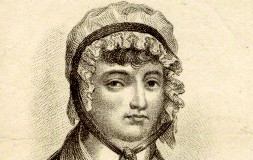
Catherine Hayes
Murderer Sarah Malcolm
Murderer · United Kingdom · 1733
Sarah Malcolm was a powerfully built 22-year-old Irish laundress employed in th…
3 victims
Sarah Malcolm
Murderer · United Kingdom · 1733
Sarah Malcolm was a powerfully built 22-year-old Irish laundress employed in th…
3 victims
 Margaret Dickson
Murderer · United Kingdom · 1724
Margaret Dickson was executed by hanging at Edinburgh on September 2, 1724. She…
1 victim
Margaret Dickson
Murderer · United Kingdom · 1724
Margaret Dickson was executed by hanging at Edinburgh on September 2, 1724. She…
1 victim
 Margaret Waters
Murderer · United Kingdom · 1866
Margaret Waters was an English murderess who was hanged by executioner William…
19 victims
Margaret Waters
Murderer · United Kingdom · 1866
Margaret Waters was an English murderess who was hanged by executioner William…
19 victims
 Catherine Wilson
Murderer · United Kingdom · 1854
Catherine Wilson was a British nurse who poisoned victims after befriending the…
7 victims
Catherine Wilson
Murderer · United Kingdom · 1854
Catherine Wilson was a British nurse who poisoned victims after befriending the…
7 victims
 Florence Ransom
Murderer · United Kingdom · 1940
Florence Ransom was a middle-aged woman who was described as physically beautif…
3 victims
Florence Ransom
Murderer · United Kingdom · 1940
Florence Ransom was a middle-aged woman who was described as physically beautif…
3 victims
 Melanie Smith
Mass murderer · United Kingdom · 2012
Melanie Smith was convicted of murdering five members of a family after she set…
5 victims
Melanie Smith
Mass murderer · United Kingdom · 2012
Melanie Smith was convicted of murdering five members of a family after she set…
5 victims
 Barbara Stager
Murderer · USA · 1988
Barbara Stager (born October 30, 1948) was an American woman convicted in 1989…
2 victims
Barbara Stager
Murderer · USA · 1988
Barbara Stager (born October 30, 1948) was an American woman convicted in 1989…
2 victims
 Andrea Curry-Demus
Murderer · USA · 2008
Andrea Curry-Demus was convicted of second-degree murder in the killing of Kia…
1 victim
Andrea Curry-Demus
Murderer · USA · 2008
Andrea Curry-Demus was convicted of second-degree murder in the killing of Kia…
1 victim
 Billy Ray Fox
Murderer · USA · 1985
Billy Ray Fox was convicted in Oklahoma County District Court of three counts o…
3 victims
Billy Ray Fox
Murderer · USA · 1985
Billy Ray Fox was convicted in Oklahoma County District Court of three counts o…
3 victims
 Robert Lee Walden
Murderer · USA · 1991
Robert Lee Walden was a Caucasian defendant. The victim was Hispanic. On June 1…
1 victim
Robert Lee Walden
Murderer · USA · 1991
Robert Lee Walden was a Caucasian defendant. The victim was Hispanic. On June 1…
1 victim
 Robert Leslie Roberson
Murderer · USA · 2002
Robert Leslie Roberson III was a white male. His hair color was brown, his heig…
1 victim
Robert Leslie Roberson
Murderer · USA · 2002
Robert Leslie Roberson III was a white male. His hair color was brown, his heig…
1 victim
- Gender
- female
- Country
- United Kingdom
- Location
- London, England, United Kingdom
- Date of birth
- 1690
- Characteristics
- abduction, dismemberment, domestic violence, murder for hire
- Victim profile
- John Hayes (her husband)
- Method of murder
- Beating with an axe
- Date(s) of murder
- March 2, 1726
- Years active
- 1726
- Date of arrest
- March 28, 1726
- Status
-
Executed
Executed by strangulation and burnt at the stake on May 9, 1726
Case identification
Catherine Hayes (also spelled Catharine Hayes) was an English murderess.
Background
Catherine Hall was born near Birmingham in 1690. She was sometimes described as the daughter of a poor man named Hall, who lived at Birmingham. At the age of fifteen, she ran away from home and, in order to feed herself, resorted to prostitution and became a camp whore for a group of officers at Great Ombersley in Worcestershire. After the officers tired of her, she worked as a prostitute and later became a domestic servant. She secured a position as a housemaid to a local gentleman farmer named Hayes.
At the age of 23, Catherine Hayes married John Hayes in secret in 1713. John Hayes was described as a carpenter and as the older son of the gentleman farmer. It was stated that a local gentleman farmer named Hayes had two sons and that Catherine seduced the older son, John, who became a carpenter and married her. Catherine Hayes was described as having previously given birth to a son named Thomas. It was also stated that Thomas followed a relationship with a local tanner.
The couple moved and lived in a cottage on his father's farm, and then later they moved to London. John Hayes set up a business in London as a coal-merchant, pawnbroker and money-lender. They rented lodgings and opened a shop in Oxford Road, Tyburn, while renting lodgings. Catherine Hayes and John Hayes lived with two lodgers, Thomas Wood and Thomas Billings.
It was stated that Catherine Hayes did not have any children, although later sources reported that she did, as she accused her husband of having killed them. The narrative described that it was likely that Billings was her son, and that Wood and Billings were lovers with her.
A dispute between Catherine Hayes and John Hayes was described as occurring over allowances and quarrels among neighbours. It was also stated that fights broke out over the marriage and that the marriage deteriorated rapidly by 1725. It was further stated that Catherine Hayes had told a woman that she should think it no more sin to murder her husband than to kill a dog, and another account stated she encouraged quarrels among her neighbours, alternating between speaking tenderly of her husband and representing him to her female associates in contemptible terms.
The offence
Catherine Hayes and the lodgers, Thomas Wood and Thomas Billings, plotted the murder for Hayes’ money. On 1 March 1726 they got John Hayes drunk and then killed him. The accounts described that they cut up the body, with the head separated from the torso, and they flung body parts into a pond at Marylebone Fields. The head was cast into the Thames and was found the next day.
In one account, the plan involved getting John Hayes drunk while bets were made on who could drink the most and remain sober. In that account, Thomas Billings hit John Hayes with an axe and the injured Hayes screamed, which was heard by Mrs. Springate who rented the rooms above. When asked, Catherine Hayes told her they were having a party. Thomas Wood then helped finish off John Hayes with the axe. The group decided to prevent identification by removing the head, wrapping it in cloth, placing it in a bucket, and throwing it into the Thames. The torso was dismembered, with the pieces thrown into a pond in Marylebone Fields.
Investigation
The next day after the head was found, it was displayed in the churchyard of St Margaret’s, Westminster, for several days. This resulted in John Hayes being identified. It was described that the head was examined and placed on a wooden spike for public viewing because there was no photography at the time.
It was reported that at least three men identified the head as John Hayes. A business friend named Mr Ashby did not accept alternative explanations and reported his suspicions to the authorities after being due to meet John Hayes.
On March 24 the trunk and limbs were discovered, and Catherine Hayes and Billings had meanwhile been arrested on a warrant. Wood was captured shortly afterwards and confessed. Billings then admitted his complicity, but Catherine Hayes denied all knowledge of the murder.
An inquest was opened to investigate John Hayes’ death and returned a verdict of wilful murder, naming Catherine, Wood and Billings as the prime suspects.
A coroner’s inquest opened on 16 April 1726 to investigate John Hayes’ death and brought in a verdict of wilful murder, naming Catherine, Wood and Billings as the prime suspects.
Arrest
Catherine Hayes and Billings were arrested on a warrant. Wood was arrested shortly afterwards after he was captured. Billings admitted complicity, while Catherine Hayes denied all knowledge of the murder.
In one narrative account, Mrs Springate was initially arrested but it was soon realised that she had no part in the crime and she was released.
It was also stated that Catherine Hayes unsuccessfully tried to poison herself before her execution.
Trial
Catherine Hayes was tried alongside Billings and Wood at the April Sessions of the Old Bailey held between Wednesday the 20th and Saturday the 23rd of that month, before the Lord Mayor the Recorder and several other judges.
The indictment against Catherine Hayes read:
Katherine Hays (note the different spelling used) is indicted for Petty Treason, in being Traitorously present, comforting and maintaining the said Thomas Billings in the Murder of the said John Hayes, her Husband".
Billings and Wood were charged with murder. Catherine Hayes maintained that she had not taken any part in the actual killing but had held a candle while the men dismembered John. She also continued to maintain that the crime was the work of the Devil through them.
The jury of twelve returned guilty verdicts against all three defendants.
Catherine Hayes pleaded “not guilty” but was convicted of petty treason and sentenced to be burnt alive. In the same trial, Wood and Billings were sentenced to be hanged at Tyburn and afterwards be hanged in chains (gibbeted).
The case excited much popular attention, and many noblemen and gentlemen attended the trial.
Sentencing
Catherine Hayes was sentenced to be drawn to Tyburn on a hurdle and there burned alive at the stake. Before May 9, the day fixed for the execution, Wood died in Newgate Prison.
In one narrative, at the end of the Sessions, a total of fifteen defendants were sentenced to death, and some death sentences were commuted to transportation, including Mary Schuffman and Jane Vanvick, as well as George Reger and Joseph Treen.
Catherine Hayes and her fellow condemned were lodged in the Condemned Hold at Newgate, where she reaffirmed her confession but protested the severity of her sentence. It was stated that she was greatly distressed by her sentence.
Timeline
1 March 1726 — John Hayes was killed after being made drunk; the body was dismembered and the head separated and removed. next day after the head was found — John Hayes’ head was displayed in the churchyard of St Margaret’s, Westminster, for several days. March 24 (year not separately stated beyond the 1726 context) — The trunk and limbs were discovered. 16 April 1726 — An inquest opened and returned a verdict of wilful murder, naming Catherine, Wood and Billings. 9 May 1726 — Catherine Hayes was executed by strangulation and burnt at the stake.
Execution and outcome
The executions were set for Monday, the 9th of May 1726 and drew a huge crowd, particularly as a woman was to be burnt. Catherine Hayes was tied to a stake at Tyburn with a halter round her neck.
In one early report, it was stated:
"the executioner was foiled in an endeavour to strangle her by the burning of the rope, and the woman was finally killed by a piece of wood which was thrown at her head and dashed out her brains".
Later it was stated that Catherine Hayes was “the last woman in England to be burnt alive for petty treason (though the burning of women's bodies after execution continued until 1790)”. Another correction in the provided material stated that this was not true and that the last woman to be burned in England was Miss Bowman in 1789.
Contemporary claims described Catherine Hayes trying to push away burning faggots with her free hands, and she was engulfed by the fire. It was stated that an executioner named Richard Arnet attempted to strangle her by pulling a cord, but the flames burned his hands so he had to let go.
A detail about the executioner’s actions was given in another passage:
Contemporary reports claimed that Arnet, seeing her plight, threw a large piece of wood at her head which "broke her skull, when her brains came plentifully out."
It was also stated that her body was reduced to ashes after more than an hour.
Billings’ body was later hanged in chains in Marylebone Fields, in pursuance of his sentence.
Other details
Catherine Hayes’ co-defendant Thomas Wood died in prison of goal fever before his sentence could be carried out.
Billings was hanged in chains near Tyburn on the road to Paddington in pursuance of his sentence.
Ballads were written about Catherine Hayes’ crime. A correspondent of the “London Journal” compared the murder of John Hayes with the play Arden of Feversham. William Makepeace Thackeray based his story of “Catherine,” which first appeared in Fraser’s Magazine in 1839-40, on the career of Catherine Hayes.
A ballad was reproduced as follows:
A BALLAD ON THE MURDER OF MR HAYES BY HIS WIFE
In Ty-burn road a man there lived
A just and honest life,
And there he might have lived still,
If so had pleased his wife.
Full twice a day to church he went,
And so devout would be,
Sure never was a saint on earth,
If that no saint was he!
This vext his wife unto the heart,
She was of wrath so full,
That finding no hole in his coat,
She picked one in his scull.
But then heart began to relent,
And griev’d she was so sore,
That quarter to him for to give,
She cut him into four.
All in the dark and dead of night,
These quarters she conveyed,
And in a ditch in Marybone,
His marrow-bones she laid.
His head at Westminster she threw,
All in the Thames so wide,
Says she, ‘My dear, the wind sets fair,
And you may have the tide.’
But Heav’n, whose pow’r no limit knows,
On earth or on the main,
Soon caus’d this head for to be thrown
Upon the land again.
The head being found, the justices,
Their heads together laid;
And all agreed there must have been
Some body to this head.
But since no body could be found,
High mounted on a shelf,
They e’en set up the head to be,
A witness for itself.
Next, that it no self-murder was,
The case itself explains,
For no man could cut off his head,
And throw it in the Thames.
Ere many days had gone and passed,
The deed at length was known.
And Cath’rine, she confess’d at last,
The fact to be her own.
God prosper long our noble King,
Our lives and safeties all,
And grant that we may warning take,
By Cath’rine Hayes’s fall.
An advertisement was reproduced:
Mrs De St Raymond, Dentist, takes the liberty to recommend to the Nobility and Gentry, her well-known skill in the performance of chirurgical operations for the various disorders of the mouth, especially the lightness of her hand in removing all tartarous concretations, so destructive to the teeth, and her dexterity in extracting stumps, splints and fangs of teeth. She also draws, fills up, fastens and preserves teeth, corrects their deformities, transplants them from one mouth to another, grafts on, and sets in human teeth; likewise makes and fixes in artificial teeth, from one to an entire set, and executes her own newly invented masks for the teeth and obturators for the loss of the palate.
The lady also made an even more attractive offer, if possible, to those with vacant areas of gum space, by stating that she had the necessary expertise ‘to transplant teeth from the jaws of poor lads into the head of any lady or gentleman.’

Spotted an error, or have more information about this case?