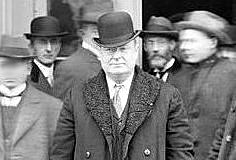
Albert Patrick
Murderer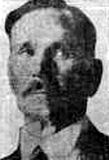 John S. Williams
Murderer · USA · 1910
John S. Williams was convicted of murder and sentenced to life imprisonment on…
18 victims
John S. Williams
Murderer · USA · 1910
John S. Williams was convicted of murder and sentenced to life imprisonment on…
18 victims
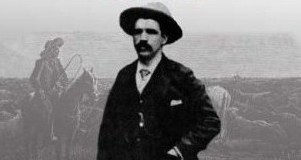 Jackson Lee Davis
Murderer · USA · 1896
Jackson Lee Davis, also known as Diamondfield Jack, was an inmate. · June 4, 18…
2 victims
Jackson Lee Davis
Murderer · USA · 1896
Jackson Lee Davis, also known as Diamondfield Jack, was an inmate. · June 4, 18…
2 victims
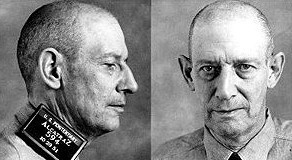 Robert Stroud
Murderer · USA · 1909
Robert Stroud, known to the public as the “Birdman of Alcatraz,” was a federal…
2 victims
Robert Stroud
Murderer · USA · 1909
Robert Stroud, known to the public as the “Birdman of Alcatraz,” was a federal…
2 victims
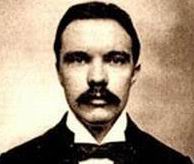 Theodore Durrant
Murderer · USA · 1895
Theodore Henry Durrant was born 1871 in Toronto, Canada. He was the son of Will…
2 victims
Theodore Durrant
Murderer · USA · 1895
Theodore Henry Durrant was born 1871 in Toronto, Canada. He was the son of Will…
2 victims
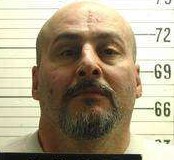 Michael Wayne Howell
Murderer · USA · 1987
Michael Wayne Howell was convicted of killing Memphis convenience store clerk A…
2 victims
Michael Wayne Howell
Murderer · USA · 1987
Michael Wayne Howell was convicted of killing Memphis convenience store clerk A…
2 victims
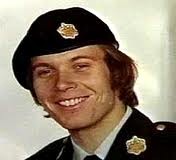 Flemming Nielsen
Murderer · Denmark · 1994
Flemming Nielsen had been a student at the university since 1986. On Tuesday, 5…
2 victims
Flemming Nielsen
Murderer · Denmark · 1994
Flemming Nielsen had been a student at the university since 1986. On Tuesday, 5…
2 victims
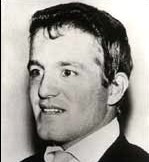 James Hanratty
Murderer · United Kingdom · 1961
James Hanratty was convicted of murder and rape and was executed by hanging at…
1 victim
James Hanratty
Murderer · United Kingdom · 1961
James Hanratty was convicted of murder and rape and was executed by hanging at…
1 victim
 Charles Neale
Murderer · USA · 1997
Charles Anthony Nealy was convicted of capital murder and sentenced to death fo…
2 victims
Charles Neale
Murderer · USA · 1997
Charles Anthony Nealy was convicted of capital murder and sentenced to death fo…
2 victims
 Michael McCrea
Murderer · Singapore · 2002
Michael McCrea was sentenced to 24 years imprisonment on June 29, 2006. · 2 Jan…
2 victims
Michael McCrea
Murderer · Singapore · 2002
Michael McCrea was sentenced to 24 years imprisonment on June 29, 2006. · 2 Jan…
2 victims
- Gender
- male
- Country
- USA
- Location
- New York City, New York, USA
- Date of birth
- 1865
- Age at first offence
- 35
- Characteristics
- murder for hire
- Victim profile
- William Marsh Rice, 84 (multimillionaire and philanthropist)
- Method of murder
- Poisoning (chloroform)
- Date(s) of murder
- September 23, 1900
- Years active
- 1900
- Date of arrest
- 2 days after
- Status
-
Sentenced to death
Sentenced to death, later commuted to life imprisonment; pardoned by the governor of New York on November 28, 1912; died 1940
Overview
Albert Patrick was convicted in New York, New York for the murder of William M. Rice. Patrick received a death sentence by electrocution, which the governor of New York later commuted to life imprisonment. On November 28, 1912, the governor of New York pardoned Patrick. Patrick died in 1940.
Background
Albert T. Patrick was a New York lawyer.
- He was a native of Texas, where he went to law school and practiced law for several years.
- In 1892 he moved to New York to escape disbarment proceedings initiated by a federal judge who was outraged by Patrick’s conduct in a particular case.
- After moving to New York, Patrick continued his “shady ways.”
Patrick was involved in litigation connected to Orren Holt, executor of Elizabeth Rice’s estate, and to William Marsh Rice’s estate matters.
People
Defendant
- Albert T. Patrick — defendant; lawyer; chief defense lawyer in the trial.
Victim
- William M. Rice (eighty-four years of age) — victim; a multimillionaire and philanthropist; died at the Berkshire Apartments at 500 Madison Avenue, New York City.
Other named individuals
- William Travers Jerome — chief prosecutor (District Attorney).
- John William Goff — judge.
- Charles F. Jones — Rice’s personal valet and secretary; confessed and agreed to testify against Patrick in return for leniency.
- O.T. Holt (also referred to as Orren Holt) — executor of Elizabeth Rice’s last will.
- Captain Baker — Rice’s lawyer at times connected with the estate dispute and probate matters.
- Frank Higgins — governor of New York who commuted Patrick’s sentence in 1906.
- John A. Dix — governor of New York who pardoned Patrick on November 28, 1912.
- James W. Gerard — accompanied by a detective; interviewed Patrick at Patrick’s home.
- Inspector McClusky — inspector in an interview during which Patrick was permitted to go his way.
- Dr. Edward W. Lee — examined during trial questioning.
- Dr. Donlin — coroner’s physician who performed autopsy.
- Dr. Williams — coroner’s physician and witness at trial.
- Professor R.A. Witthaus — expert chemist who testified at trial.
- Dr. Curry — physician who was induced to become Rice’s attending physician.
- David L. Short — friend of both; involved as a false witness; also intrusted with presentation of a check.
- Morris Meyers — employed in Patrick’s office; false witness.
- Walter H. Wetherbee — a clerk at Swenson’s banking house; declined to join the conspiracy; later compared signatures.
- W.F. Harmon — clerk at Swenson’s banking house.
- James E. McAshan and Alfred S. Richardson — named among first board of trustees for the William M. Rice Institute.
- Emanuel Raphael and Cesar Lombardi — named in connection with the founding/early trustee group.
- Captain James Addison Baker — William’s brother; named among the first board of trustees.
- Potts — friend named who cashed one of the drafts.
- Maria Scott — the colored woman who worked in the apartment; told by Jones and Patrick to remain silent.
- N.A. Meldrum — Texan then in New York who was instructed to co-operate with Jones in preserving everything intact.
- Professor R.A. Witthaus — expert chemist at autopsy and trial testimony.
- James W. Gerard — posed as the lawyer’s clerk during interview with Patrick.
- Mr. House — Patrick’s lawyer who visited Patrick and Jones in the Tombs.
- Assistant District Attorney Osborne — interviewed Jones; told Jones he lied.
- Bellevue Hospital — where Jones remained after attempting suicide.
- Tombs — where House visited Patrick and Jones.
- Sing Sing — site referenced for the “Death House.”
- William M. Rice Institute for the Advancement of Literature, Science and Art — institute connected to estate provisions.
The offence
Patrick was convicted of murder. Patrick was also convicted of forgery. The conspiracy involved plans to murder Rice by using chloroform, to plunder Rice’s estate using forged checks, forged wills, and other forged documents, and to divert assets.
Scheme and forgery
Patrick and Charles F. Jones devised an ambitious scheme:
- to murder Rice,
- to plunder Rice’s estate by cashing forged checks on Rice’s New York bank accounts,
- and to gain the rest of Rice’s assets through a forged will naming Patrick and Jones as beneficiaries. Patrick drafted the fake will, inserting generous legacies to Rice’s relatives at the expense of the institute in the hope the relatives would not challenge the will.
Preparations involving documents and death cover
The forged will was dated June 30, 1900. Patrick used forged letters and documents after Rice’s death as part of the scheme. Patrick also prepared a “cremation letter” dated August 3, authorizing Patrick to cremate Rice’s body.
To cremate before an autopsy, a physician’s certificate of natural causes was needed. Jones was induced to send for Dr. Curry, a friend of Patrick, when Jones was ill. Jones cautioned Dr. Curry not to mention Patrick’s name to Rice. Dr. Curry became Rice’s attending physician.
Murder by chloroform
Rice died at the Berkshire Apartments at 500 Madison Avenue, New York City, on the evening of September 23, 1900, at “about half after seven o’clock.” Jones confessed that Rice was killed by chloroform:
- Rice was sleeping.
- Jones saturated a sponge with chloroform, constructed a cone out of a towel, placed the cone over Rice’s sleeping face, and waited.
- Jones then opened the windows, straightened the rooms, called for Dr. Curry, and telephoned Patrick that Rice was dead.
- Patrick then appeared with Dr. Curry and took charge, including orders for speedy cremation.
Investigation
Suspicion arose when Patrick tried to cash forged checks.
- The bank refused to honor a check because Patrick’s name was spelled incorrectly.
- When calling to verify the check with Rice, the bank learned Rice was dead.
- The bank contacted Rice’s Houston lawyer, Captain Baker.
Detective and police involvement began after notification from Swenson and attorneys:
- Swenson notified attorneys, who notified police and the District Attorney’s office.
- Around eleven o’clock, James W. Gerard, accompanied by a detective posing as the lawyer’s clerk, interviewed Patrick at Patrick’s home.
- Later, four Headquarters detectives visited the apartment.
Patrick destroyed paper at his office and later revoked a signed order for cremation. Detectives were then found guarding the body at the apartment to forestall removal.
Arrest
Patrick and Jones were arrested for Rice’s murder:
- They were arrested after failing and after the circumstances around the forgeries and death drew authorities’ attention.
- Jones confessed and agreed to testify against Patrick in return for leniency.
Patrick and Jones were held for the Grand Jury:
- Bail was fixed at ten thousand dollars each, but it was not forthcoming.
Trial
Trial dates and forum
The trial began on January 22, 1902 and ended on March 26, 1902.
- Prosecutor: William Travers Jerome
- Judge: John William Goff
- Place: New York, New York
Central issue
The central issue was proving the corpus delicti, specifically that a murder had occurred.
Medical evidence and contested uncertainty
Doctors who performed the autopsy generally agreed Rice had been killed by chloroform poisoning. There was scientific uncertainty based on Rice’s advanced age, which enabled Patrick to keep the trial stalled for over two months.
Patrick questioned Dr. Edward W. Lee during trial. The exchange included:
- Patrick: “Doctor, assuming that a patient is eighty-four years of age, that prior to death he had dropsy of the lower limbs for several months from the knees down, and that the post-mortem findings revealed … the lungs congested slightly … the kidneys firm [with] a number of small cysts, and that on the day preceding his death the patient was troubled with his urine, and had to urinate frequently, … what would you say would be the cause of death?”
- Lee: “Congestion of the lungs and diseased kidneys [which could be caused by chloroform or by tuberculosis, pneumonia or kidney disease]”
Verdict and sentencing
On March 26, 1902, the jury returned a guilty verdict against Patrick.
- Sentence: death by electrocution
- The case also involved a guilty verdict against Patrick for forgery.
Patrick’s appeals involved the role of medical evidence and the question of corroboration of Jones.
Sentencing
Judge John William Goff sentenced Patrick to death by electrocution.
Appeals
A wealthy man, John T. Milliken, was described as having financed a legal team to handle Patrick’s appeals. The appeals tied up the courts for years. For the next six years, Patrick and the Milliken-financed legal team pursued every avenue of appeal, including press accounts of “under-the-table payments to state legislators and officials.”
Outcome
On March 26, 1902, the jury found Patrick guilty. Patrick was sentenced to death by electrocution. In 1906, Governor Frank Higgins commuted Patrick’s sentence to life imprisonment. On November 28, 1912, Governor John A. Dix pardoned Patrick. The pardon statement attributed to Dix included:
“there has always been an air of mystery about the case.”
Patrick left New York and died in Tulsa, Oklahoma in 1940.
Other details
William M. Rice’s background and estate dispute
The materials describe William Marsh Rice’s life, business ventures, and the founding of the William M. Rice Institute for the Advancement of Literature, Science and Art.
- Rice was born in Springfield, Massachusetts on March 14, 1816.
- Rice moved to Texas in 1838.
- Rice’s first business partnership with Barnabas Haskill formed in 1840 and dissolved by 1842.
- In 1844 Rice became a commission and forwarding merchant in partnership with Ebenezer B. Nichols.
- On June 29, 1850, Rice married Margaret Bremond, whose father Paul was one of Rice’s business partners.
- In August 13, 1863, Margaret Rice died, “possibly from cholera or yellow fever.”
- Rice moved to Monterrey, Mexico and stayed there until August of 1865.
- Rice returned to Houston in 1866.
- On June 26, 1867, Rice married for a second time. His second wife was Julia Elizabeth Baldwin Brown, a widow and a daughter of Horace Baldwin.
- Rice and his second wife moved to New Jersey to live with Rice’s sister Charlotte and her family.
- Rice divided time between New York City and New Jersey, with occasional trips to Houston.
- Rice was approached by Cesar Maurice Lombardi regarding building a high school in Houston.
- Rice decided to fund an institute of higher learning in Houston.
- On May 19, 1891, the charter for the William M. Rice Institute was incorporated in Austin, Texas.
- In article two of the charter, the materials quoted:
“(t)he objects, intents, and purposes of this Institution are declared to be the establishment and maintenance, in the City of Houston, Texas, of a Public Library, and the maintenance of an Institution for the Advancement of Literature, Science, Art, Philosophy and Letters; the establishment and maintenance of a Polytechnic school; for procuring and maintaining scientific collections; collections of chemical and philosophical apparatus, mechanical and artistic models, drawings, pictures and statues; and for cultivating other means of instruction ...”
- The institute was endowed with a promissory note for $200,000 paid upon Rice’s death.
- Rice revised his will on September 26, 1896.
- Elizabeth Rice’s health began to fail in early 1896, and the Rices moved to Houston in April 1896.
- On June 1, 1896, Mrs. Rice drew up a new will naming Orren Holt as executor and claimed the Rices were residents of Texas.
- Rice moved Elizabeth to a hotel in Waukesha, Wisconsin shortly after the new will was signed.
- Elizabeth died on July 24, 1896 in Waukesha.
- In September 1896, Orren Holt filed to probate Elizabeth’s last will.
- A court battle began over the will and disputed the residency question in New York City.
Additional estate-related events and documents described
- The materials described contested wills and that a “long and sensational trial” exposed forgery and discovered the scheme to kill Rice.
- The materials stated that Jones was released despite being the one who actually committed the murder.
- The materials stated that Patrick showed Baker the cremation letter, provided a copy of the 1900 will and the original will of 1896, and surrendered two Swenson checks.
Trial and post-death logistics described
The materials also included extensive description of the immediate aftermath:
- Rice’s funeral was to be held early Tuesday morning with ashes conveyed by Jones to Milwaukee to be interred near Rice’s wife.
- Patrick attempted to secure possession of securities in the Safety Deposit Company and in the Fifth Avenue Trust Company by presenting forged instruments of transfer and related orders.
- Telegrams were described as having been sent in “extraordinary form”:
- “Mr. Rice died eight o'clock last night under care of physicians. Death certificate, "old age, weak heart, delirium." Left instructions to be interred in Milwaukee with wife. Funeral 10 A.M. tomorrow at 500 Madison Avenue.”
- Baker wired Jones to make no disposition of Rice’s remains until they arrived, leaving to-night and arriving New York Thursday morning.
- An autopsy was performed on Tuesday, forty-three hours after death occurred, by Dr. Donlin in the presence of Dr. Williams and Professor R.A. Witthaus.
Autopsy findings described
- The organs were described as normal except as affected by embalming fluid.
- Lungs were described as congested.
- Dr. Donlin stated the lungs were “congested all over”; Dr. Williams characterized it as “an intense congestion of the lungs--coextensive with them.”
- The physicians agreed that beyond the congestion there was a small patch of consolidated tissue about the size of a twenty-five cent piece.
- The materials stated that nothing except inhalation of a gaseous irritant could have produced the general congestion, and that the patch was insufficient to account for the amount of congestion.
- Professor Witthaus testified that his analysis revealed mercury as calomel, and that the embalming fluid contained no mercury and would have no effect upon the lungs beyond bleaching.
Quotes involving House and Jones
During a visit to the Tombs:
- The materials included an account of what Patrick said to Jones after House insisted on knowing whether a crime had been committed:
“House insisted on knowing definitely whether a crime had been committed and directed Jones to tell House that a murder had been committed, but that he (Patrick) was not concerned in it.”
- After House returned to Patrick and Jones, Jones “informed House” he had killed Rice by chloroform and gave the same story he told on the witness stand.
Corroboration and defense described
The materials described arguments about corroboration of Jones:
- The prosecution relied on the fact that Rice died at the alleged time, did not die from disease, and died from lung congestion that could have occurred only with an irritant such as chloroform.
- The materials also described Patrick’s defense based on alleged complete failure of corroboration of Jones’s testimony, including arguments about embalming fluid and timing of attribution to chloroform.
Additional life and death locations
- The materials stated that Patrick “left New York, never to return,” and died in Tulsa, Oklahoma, in 1940.

Spotted an error, or have more information about this case?