Thomas Piper
Child killer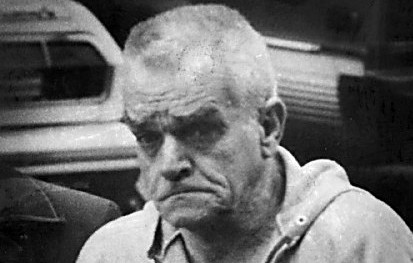 Charles Pierce
Child killer · USA · 1969
Charles E. Pierce was convicted of second-degree murder in the 1969 killing of…
3 victims
Charles Pierce
Child killer · USA · 1969
Charles E. Pierce was convicted of second-degree murder in the 1969 killing of…
3 victims
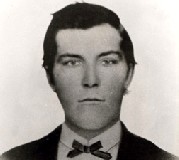 John Wesley Hardin
Murderer · USA · 1867
John Wesley (Wes) Hardin (1853-1895) was an American outlaw, gunfighter, and co…
42 victims
John Wesley Hardin
Murderer · USA · 1867
John Wesley (Wes) Hardin (1853-1895) was an American outlaw, gunfighter, and co…
42 victims
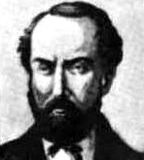 Henry Wirz
Murderer · USA · 1864
Henry Wirz (also known as Heinrich Hartmann Wirz) (November 25, 1823 – November…
11 victims
Henry Wirz
Murderer · USA · 1864
Henry Wirz (also known as Heinrich Hartmann Wirz) (November 25, 1823 – November…
11 victims
 The Bender family
Serial killers · USA · 1872
The Bender family was associated with serial killings in southeastern Kansas. T…
11 victims
The Bender family
Serial killers · USA · 1872
The Bender family was associated with serial killings in southeastern Kansas. T…
11 victims
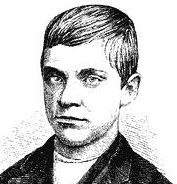 Jesse Pomeroy
Homicide · USA · 1874
Jesse Pomeroy was sentenced to death on two counts in 1876. His sentence was co…
10 victims
Jesse Pomeroy
Homicide · USA · 1874
Jesse Pomeroy was sentenced to death on two counts in 1876. His sentence was co…
10 victims
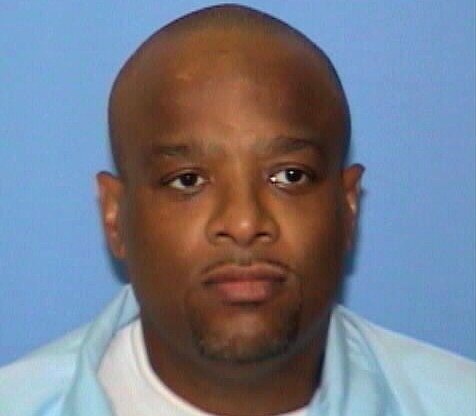 Ronald Macon
Serial killer · USA · 1999
Ronald Macon was convicted of three murders and one criminal sexual assault in…
3 victims
Ronald Macon
Serial killer · USA · 1999
Ronald Macon was convicted of three murders and one criminal sexual assault in…
3 victims
 Virginia Sims
Murderer · USA · 2011
Virginia Sims was a 47-year-old South Georgia woman who pleaded guilty in conne…
1 victim
Virginia Sims
Murderer · USA · 2011
Virginia Sims was a 47-year-old South Georgia woman who pleaded guilty in conne…
1 victim
 David Gore
Serial killer · USA · 1981
David Alan Gore (also known as DAVID A GORE, DAVID ALAN GORE, DAVID ALLAN GORE)…
6 victims
David Gore
Serial killer · USA · 1981
David Alan Gore (also known as DAVID A GORE, DAVID ALAN GORE, DAVID ALLAN GORE)…
6 victims
- Gender
- male
- Country
- USA
- Location
- Boston, Massachusetts, USA
- Date of birth
- 1849
- Age at first offence
- 24
- Characteristics
- rape
- Victim profile
- Young girls
- Method of murder
- Beating with a blunt object
- Date(s) of murder
- 1873 - 1875
- Years active
- 1873–1875
- Date of arrest
- —
- Status
-
Executed
Executed by hanging on May 26, 1876
Other details
Thomas Piper was a church sexton at the Warren Avenue Baptist Church. He was known for wearing a flowing black opera cloak and was associated with the designation "The Boston Belfry Murderer."
Timeline
- June 1875 — Thomas Piper was indicted for the murder of Mabel H. Young.
- December 1875 — Thomas Piper was tried for the offence; the jury disagreed.
- 31st January 1876 — Thomas Piper was again tried.
- May 23, 1874 — Five-year-old Mabel H. Young attended church Sabbath-school with her aunt; after the class she disappeared.
- May 26, 1876 — Thomas Piper was executed by hanging.
- May 26, 1874 — Mabel H. Young disappeared after attending Sabbath-school; later she was found in the church belfry.
- Summer of 1876 — Mabel H. Young was found dead in the church's belfry; Piper became the prime suspect.
- 1874 — A man fitting a description similar to Piper clubbed another young girl, Mary Sullivan, to death.
- 1875 — Mabel's murder-related trial events occurred; Mary Tynan was bludgeoned in her bed in 1875.
- 1876 — Piper confessed to multiple killings after his arrest and was convicted and sentenced to die.
- April 1876 — The case was published in full in several issues of the Boston Medical and Surgical Journal.
- June 1876 — The case was published in full in several issues of the Boston Medical and Surgical Journal.
Background
Mabel H. Young was five years old. She attended church Sabbath-school with her aunt on May 23, 1874, but after the class she disappeared.
Thomas Piper was described as friendly with the parishioners, and because of that no one suspected his involvement initially. He was identified as the sexton at the Warren Avenue Baptist Church.
The offence
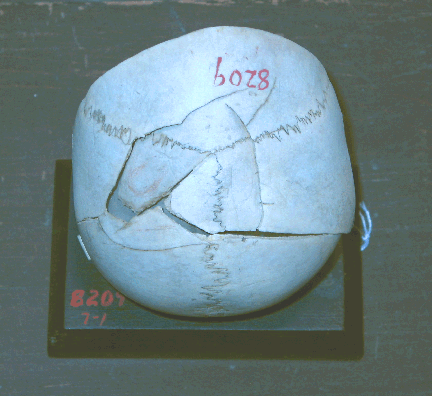
Mabel H. Young was found dead in the church's belfry. The narrative states that her skull was crushed with a wooden club. The text also describes forensic detail from the Warren Anatomical Museum Catalog Number 8209, stating it showed a depressed comminuted fracture of the cranial vault and a linear fracture through her parietal bone on both sides.
The narrative connects Piper to a sequence of killings:
- Bridget Landregan was found beaten and strangled to death.
- Mary Sullivan was clubbed to death in 1874.
- Mary Tynan was bludgeoned in her bed in 1875; she survived for a year after a severe attack but was never able to identify her attacker.
- Mabel H. Young was the four killings attributed to Piper, and she was described as having been badly beaten and found in the belfry.
Investigation
After Mabel H. Young disappeared following Sabbath-school, she was later found badly beaten in the church belfry.
The narrative states that the church sexton, Piper, was arrested and charged with the crime after the girl was found.
Piper became the prime suspect when Mabel was found dead in the church's belfry in the summer of 1876.
Arrest
Thomas Piper was arrested after being identified by several witnesses as taking the little girl to the tower in the Warren Avenue Baptist Church, where her body was found.
Piper, 26, was arrested and confessed to Mabel's murder as well as to three others and a number of rapes. The narrative also states that he confessed to the four killings after his arrest.
Since his conviction and sentencing, the narrative states that Piper retracted his confession and maintained that he was innocent.
Trial
Thomas Piper was indicted for the murder of Mabel H. Young in June 1875.
The text states that Piper was tried in December 1875, but that trial resulted in disagreement of the jury.
He was again tried on 31st January 1876.
During the trial, Piper's defense attorney claimed that Mabel had not been struck by a bat, but had been killed when the trap door leading to the church belfry fell on her head.
The prosecuting attorney brought Mabel's skull and a replica of the trap door into the courtroom to demonstrate that the fractures present on the skull could not be replicated with a single blow from a trap door.
The narrative states that based on this early use of forensic science, Piper was convicted and sentenced to die.
Sentencing
Piper was convicted and sentenced to die.
The narrative states that he was convicted of the murder of Mabel H. Young and sentenced to hang.
Appeals
No appeal information was included.
Outcome
The jury disagreed at the December 1875 trial, and Piper was tried again on 31st January 1876.
Piper was convicted and sentenced to death, and he was hanged in 1876.
The current status records that he was executed by hanging on May 26, 1876.
Aftermath
After his conviction and sentencing, Piper retracted his confession and maintained that he was innocent.
The narrative also states that on the day of the hanging arrived, Piper again admitted his guilt.
The case was published in full in several issues of the Boston Medical and Surgical Journal in April 1876 and June 1876.
Warren Anatomical Museum Catalog Number 8209 preserved portion of fractured skull from Mabel, showing specific fractures described as a depressed comminuted fracture of the cranial vault and a linear fracture through her parietal bone on both sides. The narrative states that the specimen was donated sometime after 1876 by Dr. B. E. Cotting.
People involved (as named)
- Thomas Piper — church sexton at the Warren Avenue Baptist Church; defendant.
- Mabel H. Young — five-year-old victim; found dead in the church belfry; skull crushed with a wooden club; murdered.
- Bridget Landregan — victim described as found beaten and strangled to death.
- Mary Sullivan — victim described as clubbed to death in 1874.
- Mary Tynan — victim described as bludgeoned in her bed in 1875; survived for a year after the severe attack but could not identify her attacker.
- Dr. B. E. Cotting — described as donating Warren Anatomical Museum specimen sometime after 1876.
- B. E. Cotting — same person named as Dr. B. E. Cotting.

Spotted an error, or have more information about this case?