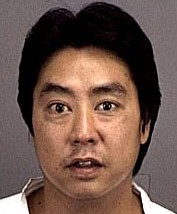
Byran Uyegusi
Mass murderer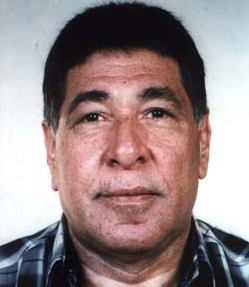 Gameel Al-Batouti
Mass murderer · USA · 1999
Gameel Al-Batouti (also rendered “Gamil ElBatouty” or “El Batouty” in U.S. offi…
216 victims
Gameel Al-Batouti
Mass murderer · USA · 1999
Gameel Al-Batouti (also rendered “Gamil ElBatouty” or “El Batouty” in U.S. offi…
216 victims
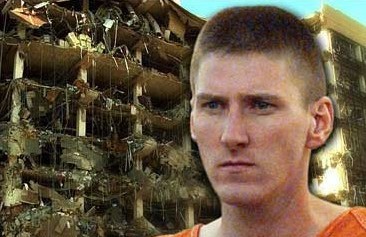 Timothy McVeigh
Mass murderer · USA · 1995
Timothy James McVeigh (April 23, 1968 – June 11, 2001) was a United States Army…
168 victims
Timothy McVeigh
Mass murderer · USA · 1995
Timothy James McVeigh (April 23, 1968 – June 11, 2001) was a United States Army…
168 victims
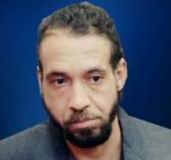 Julio Gonzalez
Mass murderer · USA · 1990
Julio Gonzalez was sentenced to 174 twenty-five-year sentences (a total of 4,35…
87 victims
Julio Gonzalez
Mass murderer · USA · 1990
Julio Gonzalez was sentenced to 174 twenty-five-year sentences (a total of 4,35…
87 victims
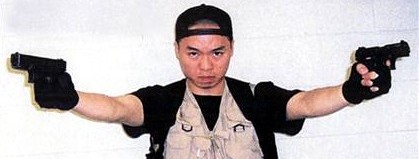 Seung-Hui Cho
Mass murderer · USA · 2007
Seung-Hui Cho was a mass murderer who shot and killed 32 people and wounded man…
32 victims
Seung-Hui Cho
Mass murderer · USA · 2007
Seung-Hui Cho was a mass murderer who shot and killed 32 people and wounded man…
32 victims
 George Jo Hennard
Mass murderer · USA · 1991
George Jo Hennard carried out a mass killing at a Luby’s Cafeteria in Killeen,…
23 victims
George Jo Hennard
Mass murderer · USA · 1991
George Jo Hennard carried out a mass killing at a Luby’s Cafeteria in Killeen,…
23 victims
 Eric Harris
Mass murderer · USA · 1999
Eric Harris committed suicide by gunshot to the roof of the mouth on April 20,…
13 victims
Eric Harris
Mass murderer · USA · 1999
Eric Harris committed suicide by gunshot to the roof of the mouth on April 20,…
13 victims
 David Smith
Spree killer · USA · 1980
David Smith was sentenced to death in 1983. Smith was angered because his girlf…
4 victims
David Smith
Spree killer · USA · 1980
David Smith was sentenced to death in 1983. Smith was angered because his girlf…
4 victims
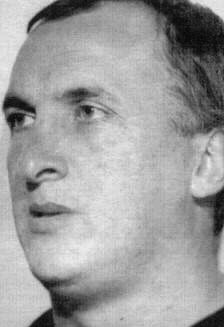 Colin Ireland
Serial killer · United Kingdom · 1993
Name: Colin Ireland · Also known as / tabloid name: London's "Gay Slayer" · Cri…
5 victims
Colin Ireland
Serial killer · United Kingdom · 1993
Name: Colin Ireland · Also known as / tabloid name: London's "Gay Slayer" · Cri…
5 victims
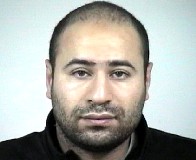 Nordine Amrani
Mass murderer · Belgium · 2011
13 December 2011 — Nordine Amrani carried out a murder–suicide attack in Saint-…
6 victims
Nordine Amrani
Mass murderer · Belgium · 2011
13 December 2011 — Nordine Amrani carried out a murder–suicide attack in Saint-…
6 victims
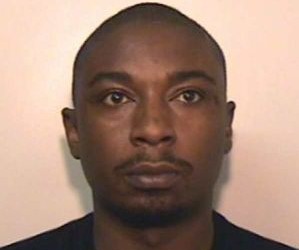 Pierre Williams
Murderer · United Kingdom · 2007
Pierre Williams was described by neighbours as the mother’s boyfriend and as a…
3 victims
Pierre Williams
Murderer · United Kingdom · 2007
Pierre Williams was described by neighbours as the mother’s boyfriend and as a…
3 victims
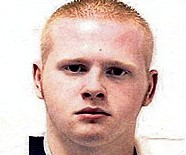 Bradley Mullins
Homicide · USA · 2005
Bradley Mullins was 19 during a trial in Tennessee for conduct involving drag r…
1 victim
Bradley Mullins
Homicide · USA · 2005
Bradley Mullins was 19 during a trial in Tennessee for conduct involving drag r…
1 victim
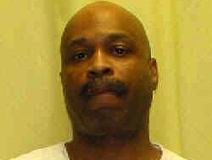 Clarence Carter
Murderer · USA · 1988
Defendant: Clarence Carter Sex: Male Race: Black Victim: Johnny Allen Victim ag…
2 victims
Clarence Carter
Murderer · USA · 1988
Defendant: Clarence Carter Sex: Male Race: Black Victim: Johnny Allen Victim ag…
2 victims
- Gender
- male
- Country
- USA
- Location
- Honolulu, Hawaii, USA
- Date of birth
- 1959
- Age at first offence
- 40
- Characteristics
- revenge, history of mental illness
- Victim profile
- Christopher Balatico, 33; Ford Kanehira, 41; Ronald Kataoka, 50; Ronald Kawamae, 54; Melvin Lee, 58; Peter Mark, 46, and John Sakamoto, 36 (co-workers)
- Method of murder
- Shooting ( 9mm Glock)
- Date(s) of murder
- November 2, 1999
- Years active
- 1999
- Date of arrest
- Same day
- Status
-
Life imprisonment
Sentenced to life in prison without parole on August 8, 2000
Background
Byran Koji Uyesugi killed seven of his co-workers on November 2, 1999 in Honolulu, Hawaii. The case was described as the worst mass murder in the history of Hawaii and as heightening awareness of workplace violence in Hawaii and elsewhere.
Uyesugi was born in Honolulu, Hawaii and lived in the Nuuanu neighborhood of Honolulu. While attending Roosevelt High School, he was a member of the school’s Army JROTC chapter and was a member of the school’s riflery team. Classmates remembered him as a quiet student who never got into trouble.
Uyesugi’s brother, Dennis, said Uyesugi crashed their father’s car and hit his head on the windshield shortly after graduating high school in 1977 coming home from a graduation party and was never the same. Uyesugi had been employed by Xerox as a technician since 1984. His hobbies included raising and breeding goldfish and koi, which he would sell to local pet stores. He had an extensive collection of firearms, and at the time of the murder he had as many as 25 guns registered in his name dating back to 1982. Police also recovered 11 handguns, 5 rifles and 2 shotguns from Uyesugi’s father. Co-workers described him as rarely missing work and arriving every day in an aloha shirt and slacks. Co-workers said he had a lot of knowledge about his job but no social skills. He was described as a recluse.
His father, Hiroyuki, said that Uyesugi was normal until he started working for Xerox in 1984. He said that when Uyesugi’s mother died in 1988, Uyesugi started to complain that he had a poking sensation in his head. Uyesugi’s troubles began soon after he was transferred to another workgroup. He began making unfounded accusations of harassment and product tampering against fellow repairmen, and the other members of his team had difficulty placating his anger. Former co-workers reported that the members of his team allegedly ostracized him, making him feel isolated and withdrawn. His anger was such that he reportedly made threats against other co-workers’ lives.
In 1993, Uyesugi was ordered to undergo psychiatric evaluation and anger management courses after he kicked in and damaged an elevator door for which he was arrested. He was arrested for third degree criminal property damage.
Co-workers told Dr. Michael Welner, a forensic psychiatrist who interviewed Uyesugi prior to trial, that as early as 1995, Uyesugi openly spoke of carrying out a mass shooting at the workplace were he ever to be fired. Dr. Michael Welner found that Uyesugi suffered from a delusional disorder and paranoia, but found him not to be dangerous.
Uyesugi reported experiencing auditory hallucinations and visual hallucinations. He alleged there was a conspiracy and that his home was bugged with listening devices. He felt that his co-workers were engaged in patterns of harassment, back stabbing behavior, and spreading of rumors. In 1993, he told his brother that a shadow pinned him down. The family had their house blessed by a Shingon priest in 1997 hoping to help him, but even the minister suspected Uyesugi had a mental illness. Uyesugi’s father suggested he see a psychiatrist later that year, and Uyesugi did not.
In the period leading up to the shooting, Xerox management increasingly committed to phasing out the copier that Uyesugi had been servicing. He resisted learning the new machine, fearing he could not keep up with its technical demands. After working around his refusal to train on the new machine, his manager insisted on November 1, 1999 that he would begin training the next day. In his interview with forensic psychiatrist Michael Welner, Uyesugi reasoned that because he would refuse to undertake the training, management would then fire him. As he told Dr. Michael Welner: “I decided to give them a reason to fire me.”
Police also identified that Uyesugi had been found guilty of driving under the influence in 1985, had his license suspended, and was sentenced to 72 hours community service and a $200 fine. Honolulu police said he was arrested at a Xerox facility in 1993 while he was an employee there but he was never charged. Police described an incident in which he was charged with 3rd degree criminal property damage for kicking a wall and an elevator door after a flare up at work. No other information was available on that incident.
Uyesugi was denied a gun permit in 1994 for unknown reasons but he was allowed to keep an extensive collection of handguns purchased and registered over a 10-year period leading up to 1992. He was denied a permit to buy an 18th gun in 1994 following his arrest for criminal property damage at the same Xerox building. Police described that incident as a “flare-up at the office.” No one was injured in that episode. In 1984, he was convicted of drunken driving. Co-workers said he was unmarried and had no children. In addition to guns, Uyesugi collected fish and cigars and even gave some of his fish to co-workers.
The offence
On the morning of November 2, 1999, Uyesugi reported to work at the Xerox building in Honolulu and opened fire with a 9mm Glock. He killed his supervisor and six co-workers. He fired in the direction of another co-worker who fled the building. After the shooting, Uyesugi fled in a company van.
Victims named in the case record were Christopher Balatico, 33; Ford Kanehira, 41; Ronald Kataoka, 50; Ronald Kawamae, 54; Melvin Lee, 58; Peter Mark, 46; and John Sakamoto, 36.
Investigation
Police closed down several streets in downtown Honolulu while they investigated the crime scene. By mid-morning, police had Uyesugi cornered in the mountains above downtown Honolulu. Investigators described a nearly five-hour standoff before Uyesugi surrendered to police shortly before 3 p.m.
Evidence discussed included 11 handguns, 5 rifles, and 2 shotguns recovered from Uyesugi’s father. Police evidence technicians found two 9mm ammunition shell casings at the scene. Another account described at least 28 bullet casings from a 9 mm semiautomatic handgun found at the scene.
Arrest
Uyesugi surrendered to police shortly before 3 p.m. after a nearly five-hour standoff.
Police identified Uyesugi as Byran Koji Uesugi, 40, in reporting about the shooting. The suspect was arrested after being cornered in the mountains above downtown Honolulu and after police negotiations. The man was described as being in a residential neighborhood northeast of the shooting scene.
Trial
Uyesugi’s month-long trial began on May 15, 2000. He pleaded not guilty by reason of insanity.
During the trial, Dr. Park Dietz and Dr. Daryl Matthews testified for the defense that he was insane. They cited delusions about how others were tampering with his fish. Dr. Michael Welner testified for the prosecution.
Prosecution testimony stated that Uyesugi was in Dr. Welner’s opinion a schizophrenic and that he carried out the shooting because he was angry that he would be fired for insubordination. Prosecution testimony also stated that Uyesugi’s account of concealment before the crime demonstrated that he knew what he had done was wrong.
The jury found Uyesugi sane and guilty of seven murders and one attempted murder. Jurors rejected the insanity defense. Hawaii does not have the death penalty.
The record described that the 12 jurors took less than two hours to deliberate. Defense counsel Jerel Fonseca sought an acquittal by reason of insanity and argued Uyesugi had delusions about co-workers conspiring to discredit him. Prosecutor Peter Carlisle acknowledged that Uyesugi suffered from a serious mental illness but contended that Uyesugi was aware his actions were wrong and killed out of anger. The prosecution contended that Uyesugi exercised self-control throughout the shootings, from planning to escaping, and that Uyesugi intentionally chose not to shoot one co-worker who was in the same general area as the seven victims.
A quote in the record attributed to Dr. Michael Welner’s testimony included an explanation of ability to make choices: “Individuals have ability to make choices,” and: “And even the most mentally disturbed individuals will usually have some understanding of what they are doing and why they are doing it.”
A quote attributed to Mee-Lee was: “Somewhat of a suspicious distrustful, what we might overall typically call paranoid types of feelings.”
A quote attributed to Mee-Lee in the record also included: “Individuals have ability to make choices,” and: “And even the most mentally disturbed individuals will usually have some understanding of what they are doing and why they are doing it.”
A quote attributed to Mee-Lee’s explanation during the record included: “A rational mind was not in control that day,” said defense attorney Jerel Fonseca during closing arguments, and: “When your rationality is limited, your choices are limited.”
A quote attributed to defense counsel Rodney Ching characterized the gunman as: “sick individual with a history of mental illness who was legally insane at the time of the shootings.”
The record included a quote attributed to defense counsel Crystal Rose: “privately and personally motivated acts of violence,” and: “Xerox didn’t hire Byran Uyesugi to murder his co-workers.”
The record included a quote attributed to Xerox spokesman Terry Dillman after the verdict: “No matter what you do, taking every precaution and taking every step, there will never be a guarantee that something like this won’t happen... We believe that Xerox acted as responsibly and reasonably as it possibly could have at each and every turn.”
The record included a quote attributed to Honolulu attorney Michael Green after the verdict: “This is called cover your ass,” and: “The corporate strategy is coming out now, and I would suggest that the families seek attorneys.”
The record included a quote attributed to Xerox’s public relations manager Terry Dillman that “It’s shattered seven families. And it’s forever changed, in a very profound way, a very special place in the world.”
The record included a quote attributed to Reid Kawamae: “This happened quite a while ago but it still feels like yesterday.”
The record included a quote attributed to Lorna Kanehira: “No matter what happens to him, it does not bring my husband back,” and: “I pray that he never knows the joy of freedom in his lifetime.”
A quote attributed to defense attorney Jerel Fonseca after the verdict was: “I think he still doesn’t fully understand what he’s done and when a person doesn’t understand what he’s done it’s hard for him to show remorse.”
Sentencing
Uyesugi received a sentence of life without chance of parole. Another portion of the record stated that he received a sentence of life in prison without parole.
Sentencing was set for August 8, 2000, and he was sentenced to life in prison without parole on August 8, 2000.
Appeals
Uyesugi appealed his conviction. In 2002, the State of Hawaii Supreme Court upheld Uyesugi’s conviction.
The record also described Uyesugi considering fighting his conviction based on Rule 40 due to inadequate representation by his lawyers in his first trial.
Outcome
Uyesugi was convicted of seven murders and one attempted murder. He was sentenced to life in prison without parole on August 8, 2000.
Aftermath
In 2005, Xerox and the hospital that examined Uyesugi settled a lawsuit brought by the families of the shooting victims who felt that both had ignored clear signs of Uyesugi’s mental instability. Uyesugi was being held in Tallahatchie County Correctional facility in Tutwiler, Mississippi due to overcrowding and inadequate facilities to house a prisoner in isolation at Halawa Correctional Facility.
After the shooting, Xerox vacated the premises at 1200 N. Nimitz Highway. The record described that Xerox stood idle until 2004, when the producers of the TV show Lost built a sound stage there to film indoor scenes.
The record also described an additional civil lawsuit filed on July 6, 2001. The widow of one of the seven men killed during the rampage filed suit against Uyesugi and three Xerox executives alleging the three knew or should have known that Uyesugi showed violent tendencies as far back as 1993. The suit sought general, special and punitive damages, with the amount to be determined at trial. The suit was filed by Honolulu attorneys Michael Green, David Gierlach and Debra Kagawa on behalf of Merry Lynn Balatico, whose husband Jason was gunned down by Uyesugi. The executives named were Glenn Sexton, vice president and general manager of Xerox Corp.; James Hughes, identified as Western region manager of investigations for Xerox; and Tom Trittipo, listed as Western region manager of human resources for Xerox.
Other details
Xerox employees said they organized technicians into work teams and that at least four victims were members of Uyesugi’s team. The record included an account of a prosecutor describing planned talk about Uyesugi’s lagging workload and that the gathering was not to be “just a meeting to pick on him.”
A psychiatrist who treated Uyesugi in 1993 was described as finding paranoid types of feelings. In 1993, Uyesugi spent five days in the psychiatric ward at Castle Hospital after he kicked in an elevator door at a customer’s building. Dr. Denis Mee-Lee evaluated him and found he suffered from a major mental illness.
A co-worker described a threat by stating: “I’ll take care of them. I’ll shoot all of them.”
In the record, a security guard said Xerox brought in a crisis management team about three years before the shootings because officials felt Uyesugi was “out of control.” The security guard said Uyesugi left threatening notes depicting a gunman shooting co-workers. The guard said Uyesugi admitted himself to a local hospital for mental health treatment on the advice of the crisis treatment. Another co-worker described that she did not think Uyesugi planned the shooting and that he “just snapped.”
The record included reporting that Uyesugi’s wife did not report to work on Tuesday and that police were concerned about her whereabouts.
A record of pre-trial proceedings described that Uyesugi pleaded innocent to multiple murder charges and was ordered held on $7 million bail pending a preliminary hearing. The record also described the bail being revoked and a trial date being set.
Another record section stated: “Hawaii Office Massacre Suspect Fit for Trial Man Charged With Killing Seven Co-Workers” and that Judge Michael Town ruled that Uyesugi was mentally competent for the case to proceed toward a May 15 trial date. The judge also granted a defense motion sealing parts of a report by a court-appointed panel of doctors who examined Uyesugi.
A quote in the record attributed to the police statement described: “He entered the building, proceeded to the second floor, and fired several shots in two separate rooms. Seven male employees were found dead at the scene,” and: “It may be a reload if its a 9mm 15 round cartridge then it would be a reload,” said police.
A quote attributed to Honolulu Mayor Jeremy Harris was: “It appears as though it was a disgruntled employee who snapped,” and: “This could have been much, much worse,” said the mayor.
A quote attributed to Richard Soo of the city fire department was: “grisly” as describing the scene.
A quote attributed to Deputy Police Chief Mike Carvalho was: “We are hopeful we’re going to be able to negotiate a peaceful settlement,” and: “We are hopeful we’re going to be able to negotiate a peaceful settlement,” and: “We are hopeful we’re going to be able to negotiate a peaceful settlement,” appearing as repeated text in the scraped narrative.
Spotted an error, or have more information about this case?