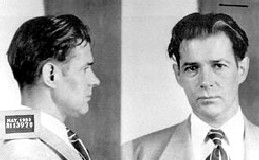
Gerhard Puff
Murderer Gary Duane Rardon
Murderer · USA · 1962
Gary Duane Rardon killed a man in 1962 and later served 4 years for manslaughte…
4 victims
Gary Duane Rardon
Murderer · USA · 1962
Gary Duane Rardon killed a man in 1962 and later served 4 years for manslaughte…
4 victims
 Frank Lee Smith
Murderer · USA · 1960
Frank Lee Smith died in prison on January 30, 2000. He was exonerated on Decemb…
3 victims
Frank Lee Smith
Murderer · USA · 1960
Frank Lee Smith died in prison on January 30, 2000. He was exonerated on Decemb…
3 victims
 George Sitts
Murderer · USA · 1945
George Sitts was executed by the State of South Dakota on April 8, 1947 for the…
3 victims
George Sitts
Murderer · USA · 1945
George Sitts was executed by the State of South Dakota on April 8, 1947 for the…
3 victims
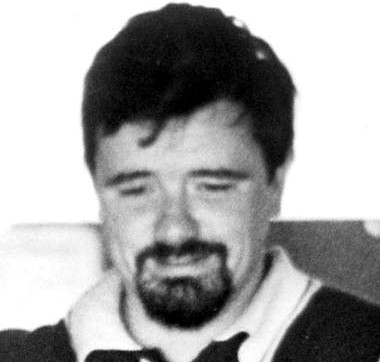 Erwin Mikolajczyk
Mass murderer · Germany · 1994
Erwin Mikolajczyk killed himself by detonating a homemade bomb the same day as…
6 victims
Erwin Mikolajczyk
Mass murderer · Germany · 1994
Erwin Mikolajczyk killed himself by detonating a homemade bomb the same day as…
6 victims
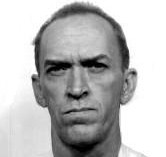 Ernest Orville Baldree
Murderer · USA · 1986
Ernest Orville Baldree was executed by lethal injection in Texas on April 29, 1…
2 victims
Ernest Orville Baldree
Murderer · USA · 1986
Ernest Orville Baldree was executed by lethal injection in Texas on April 29, 1…
2 victims
 Elmo Patrick Sonnier
Murderer · USA · 1977
Elmo Patrick Sonnier (February 21, 1951 - April 5, 1984) was executed by electr…
2 victims
Elmo Patrick Sonnier
Murderer · USA · 1977
Elmo Patrick Sonnier (February 21, 1951 - April 5, 1984) was executed by electr…
2 victims
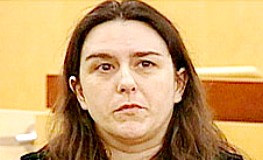 Jody Lynn Bowman
Homicide · USA · 2003
Jody Lynn Bowman was acquitted of a murder charge by a Florida jury in May 2004…
1 victim
Jody Lynn Bowman
Homicide · USA · 2003
Jody Lynn Bowman was acquitted of a murder charge by a Florida jury in May 2004…
1 victim
- Gender
- male
- Country
- USA
- Location
- Manhattan, New York, USA
- Date of birth
- 1914
- Age at first offence
- 38
- Characteristics
- bank robbery, to avoid arrest
- Victim profile
- FBI Special Agent Joseph J. Brock, 44
- Method of murder
- Shooting
- Date(s) of murder
- July 26, 1952
- Years active
- 1952
- Date of arrest
- Same day
- Status
-
Executed
Executed by electrocution by the federal authorities in New York on August 21, 1954
Case record: Gerhard Puff
Overview
Gerhard Arthur Puff (died August 21, 1954) was an American gangster. He was executed by the federal authorities in New York for killing a federal agent. By then, Puff’s résumé as a bank robber had earned him a spot on the FBI's Ten Most Wanted list. He traveled from Kansas City to Manhattan in 1952 with his 17-year-old wife, Annie Laurie. Shortly after he arrived at the Congress Hotel, FBI agents waited to arrest him, but before they captured him, he shot and fatally injured one of them. He was tried by the U.S. District Court for the Southern District of New York for the murder of a federal agent and was sentenced to death. At the time, people sentenced to death by the federal government were executed by the method authorized by the state where the crime took place, so Puff was put to death in the Sing-Sing electric chair.
Timeline
- June 21, 1934 — Puff was arrested in Milwaukee, Wisconsin, and convicted of disorderly conduct.
- August 22, 1935 — Puff was sentenced to serve three concurrent terms of one to five years each in the Wisconsin Penitentiary for stealing domesticated animals.
- February 1937 — Puff was sent back to the State Penitentiary at Green Bay, Wisconsin.
- May 24, 1939 — Puff was released after serving almost four years imprisonment.
- December 28, 1942 — Puff was sentenced for assault in the process of armed robbery, receiving one to nine years in the Wisconsin State Penitentiary.
- September 6, 1945 — Puff escaped.
- September 21, 1945 — Puff was apprehended in a stolen car and returned to prison.
- November 19, 1947 — Puff was discharged.
- June 1948 — Puff was found guilty of breaking into a Warehouse at Beaver Dam, Wisconsin; at the same time, he was charged with the 1945 prison escape.
- April 25, 1951 — Puff was released at age 36.
- May 2, 1951 — Puff was arrested by the Milwaukee Police in Wisconsin for armed robbery and lodged in the Milwaukee County Jail on a $3,000.00 bond.
- August 23, 1951 — George Arthur Heroux was released from jail.
- October 17, 1951 — An unknown party through a Chicago bondsman posted a cash bond to have Puff released.
- November 15, 1951 — Puff was to report for trial but did not appear.
- November 3, 1951 — A car used in a later bank robbery was stolen in Tulsa, Oklahoma.
- November 4, 1951 — License plates used in a later bank robbery were stolen in Hollister, Missouri.
- November 23, 1951 — Puff and George Heroux robbed the Johnson County National Bank and Trust Company of Prairie Village, Kansas.
- December 3, 1951 — A complaint was filed before a United States Commissioner at Topeka, Kansas, charging Gerhard Arthur Puff with participating in the robbery.
- July 25, 1952 — George Arthur Heroux was apprehended at Miami, Florida.
- July 25-26, 1952 — FBI agents set up surveillance at a hotel in New York City where Puff might attempt to contact Hanson.
- July 26, 1952 — Agents established that the individual in Room 904 was Puff and arranged to arrest him after he returned to the lobby.
- May 15, 1953 — In the U.S. District Court for the Southern District of New York, Puff was found guilty of murder in the first degree and sentenced to death in the electric chair.
- August 12, 1954 — Puff was executed by electrocution at Sing Sing Prison, Ossining, New York.
- August 21, 1954 — Puff died.
Background
Gerhard Puff was born in Dresden, Germany, and was brought to America by his parents at the age of 13, in May of 1934. He became a Naturalized American Citizen through the Naturalization of his father. They made their home in Milwaukee, Wisconsin. Puff started an early life of crime that led to murder and his ultimate execution in 1954, and he was eventually listed as the FBI's 10 Most Wanted.
The offence
Puff was convicted of the murder of Special Agent Joseph J. Brock. During the surveillance at the Congress Hotel, Puff shot and fatally injured Brock when the agents attempted to arrest him. Puff then made a gunfight in the hotel lobby and collapsed to the sidewalk after being shot. Brock was pronounced dead shortly after arrival at a hospital. Puff’s conviction was for murder in the first degree.
Investigation
The FBI became involved after George Heroux was captured in Miami, Florida and provided a lead. FBI agents set up a surveillance at a hotel in New York City during the night and morning of July 25-26, 1952. The room under observation, Room 904, was registered to “John Hanson.” Another room had been vacated that day by a man named “J. Burns.” Hotel employees identified Burns as Gerhard Arthur Puff. A note was found on the bed in Room 904 indicating that “Burns” desired to contact Hanson that night or the following morning.
Agents were strategically located in the lobby of the hotel, in rooms on the ninth floor, at the hotel entrance, and in the streets surrounding the hotel while FBI radio cars cruised in the vicinity. At approximately 9:00 a.m. on July 26, a new shift of special agents replaced the group on duty. Special Agent Joseph John Brock, 44, married and the father of three children, was placed in charge of this group and he and two other agents were stationed in the hotel lobby. Shortly before noon, two girls visited Room 904 and then left the hotel; special agents followed them to another hotel. At 1:20 p.m., the agents returned to the first hotel and again went to Room 904.
Within a few minutes, an individual resembling Puff entered the hotel. After making a telephone call to Room 904, he went up to the room in the elevator. The hotel clerk confirmed the fact that the individual was Puff, and agents were alerted. It was decided to wait for Puff to return to the lobby before arresting him. Brock took up a position at the foot of a small stairway.
Arrest and events leading to conviction
Puff returned to the first floor by the stairway where Agent Brock was stationed. Puff encountered Agent Brock, shot him twice in the chest, took his gun, then with a gun in each hand, Puff made a zig-zagging dash through the lobby, firing another shot at converging agents. Agents outside the hotel called to Puff to surrender. He answered with gunfire. Agents posted behind parked cars returned the fire and Puff collapsed to the sidewalk.
Puff was treated at a nearby hospital for treatment, then taken to the prison ward at Bellevue Prison, New York. Special Agent Brock was treated by a doctor who appeared on the scene and then rushed to a hospital where he was pronounced dead shortly after arrival.
Related bank robbery and fugitive history
On May 2, 1951, Puff was arrested by the Milwaukee Police in Wisconsin for armed robbery and lodged in the Milwaukee County Jail on a $3,000.00 bond. While in jail awaiting trial, he became acquainted with George Arthur Heroux. On October 17, 1951, an unknown party through a Chicago bondsman posted a cash bond to have Puff released. He was to report for trial on November 15, 1951, but did not appear.
Eight days later, Puff robbed the Johnson County National Bank and Trust Company of Prairie Village, Kansas, escaping with $62,000.00. He teamed up with George Heroux. The robbers gained entry at approximately 8:05 a.m. by forcing an employee to open the front door. One outlaw herded bank employees into a reception room near the front of the bank and stood guard over them with what was described as a M1-type carbine. The other bandit made the cashier open the vault. The loot was collected in a muslin bag resembling a pillowcase and bearing the printing of the Federal Reserve Bank of Kansas City, Missouri. The getaway was made at 8:42 a.m. in a cream-colored, late-model convertible automobile abandoned a few minutes later less than a half-mile from the bank. This car had been stolen on November 3, 1951, in the downtown business district of Tulsa, Oklahoma. At the time it was abandoned, it carried license plates stolen in Hollister, Missouri on November 4, 1951. Witnesses said both bandits wore white mechanic-type coveralls with narrow blue cuffs on the sleeves and light-colored hunting caps with upturned earmuffs.
A complaint was filed before a United States Commissioner at Topeka, Kansas, on December 3, 1951, charging Gerhard Arthur Puff with participating in the robbery. The other person charged with the stick-up was George Arthur Heroux. The names of the two were added to the FBI's Ten Most Wanted Fugitives list.
The search for the bandit pair during seven months was intense and relentless. Then, on July 25, 1952, George Arthur Heroux was apprehended at Miami, Florida.
Trial
On May 15, 1953, in the U.S. District Court for the Southern District of New York, Gerhard Arthur Puff was found guilty of murder in the first degree and sentenced to death in the electric chair. Puff’s attorney appealed the conviction but to no avail.
Sentencing and execution
Puff was sentenced to death for the murder of a federal agent. People sentenced to death by the federal government were executed by the method authorized by the state where the crime took place, so Puff was put to death in the Sing-Sing electric chair. At the time, Puff was one of the first people New York State Electrician Dow Hover was hired to execute.
Puff was either 39 or 40 years old at the time of his execution on August 12, 1954. On August 12, 1954, Puff was given his last meal. He was strapped in the electric chair at Sing Sing Prison in Ossining, New York. His final words were simply, “Good-Bye Marshall.” He was electrocuted, ending a lifelong crime spree.
The record also stated that the execution was the fifth federal execution since President Dwight D. Eisenhower took office on January 20, 1953. Puff died on August 21, 1954.
Earlier convictions and prison history
Puff was arrested and convicted of disorderly conduct in Milwaukee, Wisconsin on June 21, 1934, at age 20.
On August 22, 1935, at age 21, Puff was sentenced to serve three concurrent terms of 1-5 years each in the Wisconsin Penitentiary for stealing domesticated animals. Several months later, he was transferred to the State Reformatory at Green Bay, Wisconsin.
While at the Reformatory, Puff assaulted one of the guards and was sentenced to an additional 1-10 years, beginning when his other sentence expired. He was sent back to the State Penitentiary in February 1937 and was released on May 24, 1939 after serving almost 4 years imprisonment, when he was 25 years old.
On December 28, 1942, at age 28, he was sentenced for assault in the process of armed robbery, returning him to the State Penitentiary in Wisconsin for 1-9 years. On September 6, 1945, at age 31, he escaped. Fifteen days later, he was apprehended in a stolen car and returned to prison. He was discharged on November 19, 1947 at age 33.
In June 1948 at age 34, he was found guilty of breaking into a Warehouse at Beaver Dam, Wisconsin. At that time he was also charged with the 1945 prison escape. He received terms of 1-4 years and 12-17 months, respectively, and began serving his sentence in June 1948. He was released on April 25, 1951 at age 36.
Between prison sentences, Puff worked as a Truck Driver, Farm Hand, and Machinist Helper. He also had experience in the printing trade. He enjoyed expensive clothes, big cars, dancing, sports, and gambling.
Other details
Puff traveled from Kansas City to Manhattan with his 17-year-old wife, Annie Laurie, in 1952. Shortly after Puff and his wife arrived at the Congress Hotel on West 69th Street, FBI agents flooded the lobby. He snuck down the stairs instead of emerging from an elevator.
Hotel arrangements and names included “John Hanson” and “J. Burns” associated with Room 904, and “Burns” desired to contact “Hanson” that night or the following morning. The individual connected to the surveillance was identified by hotel employees as Gerhard Arthur Puff.
Two girls visited Room 904 and then left the hotel before agents followed them to another hotel. Agents then returned to the first hotel and again went to Room 904.
Dow B. Hover served as New York State Electrician. The Last Executioner Dow B. Hover was paid by the state to run its electric chair. The letters from Sing Sing’s warden, Wilfred L. Denno, notified Hover of every scheduled execution. Hover received payment for services at Sing Sing in the case of Gerhard A. Puff, including a letter and checks including “one in the amount of $150.00 and the other in the amount of $12.80 covering your services at this institution in the case of Gerhard A. Puff.”
Spotted an error, or have more information about this case?