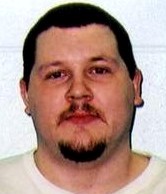
Elijah Page
Murderer Russell Ellwood
Murderer · USA · 1991
Russell Ellwood was a former taxi driver. Authorities suspected him of killing…
20 victims
Russell Ellwood
Murderer · USA · 1991
Russell Ellwood was a former taxi driver. Authorities suspected him of killing…
20 victims
 Robert Martines Perez
Murderer · USA · 1994
Name: Robert Martines Perez · Other name used in proceedings: Robert Martinez P…
15 victims
Robert Martines Perez
Murderer · USA · 1994
Name: Robert Martines Perez · Other name used in proceedings: Robert Martinez P…
15 victims
 Billy Frank Vickers
Murderer · USA · 1993
Billy Frank Vickers Vickers was executed by lethal injection in Texas on Januar…
14 victims
Billy Frank Vickers
Murderer · USA · 1993
Billy Frank Vickers Vickers was executed by lethal injection in Texas on Januar…
14 victims
 Mathias Kneibl
Murderer · Germany · 1900
Mathias Kneißl was known as Robber Kneißl (in German Räuber Kneißl , in Austro-…
2 victims
Mathias Kneibl
Murderer · Germany · 1900
Mathias Kneißl was known as Robber Kneißl (in German Räuber Kneißl , in Austro-…
2 victims
 Steven James Rollins
Murderer · USA · 2001
Steven James Rollins was thirty-seven years old when he killed John Bussell, an…
1 victim
Steven James Rollins
Murderer · USA · 2001
Steven James Rollins was thirty-seven years old when he killed John Bussell, an…
1 victim
 David Wayne Woodruff
Murderer · USA · 1985
David Wayne Woodruff. · July 19, 1986 — Woodruff and John Joseph Romano were ac…
2 victims
David Wayne Woodruff
Murderer · USA · 1985
David Wayne Woodruff. · July 19, 1986 — Woodruff and John Joseph Romano were ac…
2 victims
 Juanita Spinelli
Murderer · USA · 1940
Juanita Spinelli was known as "The Duchess". She was first woman to die in San…
1 victim
Juanita Spinelli
Murderer · USA · 1940
Juanita Spinelli was known as "The Duchess". She was first woman to die in San…
1 victim
 Mario José Redondo LLenas
Murderer · Dominican Republic · 1996
Mario José Redondo Llenas was convicted in connection with the murder of twelve…
1 victim
Mario José Redondo LLenas
Murderer · Dominican Republic · 1996
Mario José Redondo Llenas was convicted in connection with the murder of twelve…
1 victim
 Jane Andrews
Murderer · United Kingdom · 2000
Jane Andrews (born 1967) was a former Royal dresser for Sarah, the Duchess of Y…
1 victim
Jane Andrews
Murderer · United Kingdom · 2000
Jane Andrews (born 1967) was a former Royal dresser for Sarah, the Duchess of Y…
1 victim
- Gender
- male
- Country
- USA
- Location
- Lawrence County, South Dakota, USA
- Date of birth
- 1981
- Age at first offence
- 19
- Characteristics
- torture, robbery, abuse
- Victim profile
- Chester Poage (male, 19)
- Method of murder
- Beating and stabbing with knife
- Date(s) of murder
- March 12, 2000
- Years active
- 2000
- Date of arrest
- —
- Status
-
Executed
Executed by lethal injection in South Dakota on July 11, 2007
Case record: Elijah Page
Elijah Page was executed by lethal injection in South Dakota on July 11, 2007.
Parties and key people
- Elijah Page — defendant; convicted of killing Chester Allan Poage.
- Chester Allan Poage — victim; 19-year-old “friend”.
- Briley Piper — accomplice; age 19 when the crime occurred; pled guilty and was sentenced to death.
- Darrell Hoadley — accomplice; age 20 when the crime occurred; serving a sentence of life without parole.
- Warren G. Johnson — sentencing judge.
- Doug Weber — Director of Prison Operations and Warden of the South Dakota State Penitentiary (execution announcement and last-words inquiries).
- Michael Winder — SD Department of Corrections information manager / contact.
- Michael Winder — state Department of Corrections information manager (autopsy procedure discussion).
- Larry Long — Attorney General.
- John Fitzgerald — Lawrence County State’s Attorney; prosecuted the case and witnessed the execution.
- Richard Mowell — Lawrence County Sheriff; watched the execution.
- Brad Randall — Minnehaha County Coroner; certified death and discussed pronouncement rules.
- Carson Walker — Associated Press media witness.
- Bill Harlan — reporter for the Rapid City Journal; witnessed the execution.
Timeline
- March 12, 2000 — March 13, 2000 — Page, along with Piper and Hoadley, kidnapped and murdered Chester Allan Poage in Spearfish, South Dakota.
- April 22, 2000 — a woman discovered a partially submerged body in Higgins Gulch; the remains were identified as Poage.
- April 25, 2000 — law enforcement conducted an interview with Hoadley in which he gave a statement detailing his involvement.
- After warrants were issued — authorities located and arrested Page in Texas.
- Subsequently — Page voluntarily described the details of Poage’s murder; Page was extradited to South Dakota and jailed in Lawrence County.
- 2000 — Page entered guilty pleas to first-degree felony murder, kidnapping, first degree robbery, first degree burglary, and grand theft.
- March 14, 2001 — Page appealed his sentence to the Supreme Court of South Dakota.
- Early 2001 — Page and Piper were sentenced to death; Hoadley was sentenced to life in prison.
- 2006 — the Supreme Court of South Dakota addressed Page’s direct appeal (State v. Page, 709 N.W.2d 739 (S.D. 2006)).
- January 2006 — Page wrote a handwritten letter to the governor saying he wanted to drop his appeals and proceed with the death sentence.
- July 9, 2007 — a press release stated the execution date and time set for Wednesday, July 11, 2007 at approximately 10:00 p.m. CDT.
- July 11, 2007 — execution by lethal injection took place; Page was pronounced dead at 10:11 p.m. CDT.
- Thursday after the execution — an autopsy was planned for Page’s body.
Background
Elijah Page met up with Briley Piper, Darrell Hoadley, and Chester Allan Poage at Poage’s house to play video games. Poage’s mother and sister, who also lived at the house, were on vacation in Florida at this time.
The offence
Page, Piper, and Hoadley convinced Poage to leave the house. The four left in Poage’s Chevrolet Blazer and traveled to the house where Piper, Page, and Hoadley had been staying.
Once at the destination, Page exposed a .22 caliber pistol and ordered Poage to the floor. Page told the victim, “We are jacking you of all your stuff.”
Piper knocked Poage unconscious by kicking him in the head. Poage was tied up with a cord and sat upright in a chair when he regained consciousness and began to cry and plead with the group to let him go.
The group forced Poage to drink a concoction of crushed pills, beer, and hydrochloric acid. Page asked for the personal identification number for Poage’s ATM card, and Poage complied. Page and Piper openly discussed their plan to kill Poage, including slitting his throat, and continued the discussion directly in front of the victim. Page objected to the initial plan to slit Poage’s throat because it would get too much blood in the house.
The group escorted Poage into his own vehicle, with Piper driving. The group stopped at a gas station and then drove about seven miles to a remote, wooded area in the Black Hills known as Higgins Gulch.
At Higgins Gulch, Poage was forced out of the vehicle into about a foot of snow. Page, Piper, and Hoadley stripped Poage naked except for his undershirt, shoes, and socks in temperatures of about twenty-five degrees Fahrenheit. The men took Poage’s wallet.
They forced Poage downhill toward a small creek, ordered him to lie down in deep snow, and kicked snow all over Poage’s exposed body. When Poage attempted to escape, Page ran him down, recaptured him, and pushed him into the icy creek.
The group began beating Poage. Page repeatedly kicked Poage in the head. Page later admitted kicking Poage in the head so often with his boots that it “made his own foot sore.” During the beating, Poage cried out in pain and Page’s response included more kicks.
After beating Poage in the creek, the group decided it was time to finally kill the victim. Page was the first to stab Poage. Page took Poage’s head in his arms and, when Poage asked, “What are you doing?”, Page responded, “Just sit there.” Page plunged his knife all the way into the victim’s neck.
Piper proceeded to stab Poage in the head. Piper laughed and made jokes about the pain Poage was experiencing, and Page “chuckled.”
Bleeding badly, Poage asked to be allowed back into his vehicle to warm himself. Testimony indicated that Poage said he preferred to bleed to death in the warmth rather than in the cold. Piper told Poage he could warm up in the vehicle if he first washed the blood off himself. Poage rinsed himself off in the icy water, but as he crawled uphill toward the vehicle, Page told him they were lying and he would not be allowed into the vehicle. Page kicked Poage in the face once again.
Poage was dragged back into the creek. Approximately four hours after the ordeal began, and about three hours after the beatings started in the gulch, Page stated that Hoadley and he ended Poage’s life by dropping several heavy rocks on his head.
Afterwards, Piper, Page, and Hoadley drove away in Poage’s vehicle. They returned to Poage’s house and stole items. Page claimed a stereo system, clothes, and Poage’s vehicle as his share of Poage’s property.
Records also described forcing Poage to remove his clothing in an icy creek and attempting to drown him, alongside repeated kicking and beating and stabbing in the head and torso. Poage’s body was not found until almost a month later.
Investigation and arrest
- On April 25, 2000, law enforcement interviewed Hoadley and received a statement detailing his involvement in Poage’s murder.
- Based on that interview, warrants were issued for both Piper and Page.
- Three days later, authorities located and arrested Page in Texas.
- The next day, Page voluntarily described to law enforcement the details surrounding Poage’s murder.
- Page was then extradited from Texas and jailed in Lawrence County, South Dakota.
Trial and guilty pleas
Page pleaded guilty to first degree felony murder, kidnapping, first degree robbery, first degree burglary, and grand theft. The State did not offer a plea agreement to Page.
Page waived his rights to both a jury trial and sentencing by jury and requested sentencing by the circuit court.
A five-day sentencing hearing was held before the circuit court.
Sentencing
At sentencing, the circuit court sentenced Page to death by lethal injection on the murder charge.
The circuit court found that the State proved beyond a reasonable doubt the following aggravating factors:
- The defendant committed the offense for the benefit of the defendant or another for the purpose of receiving money or any other item of monetary value.
- The offense was outrageously or wantonly vile, horrible, or inhuman in that it involved torture, depravity of mind, and an aggravated battery to the victim.
- The offense was committed for the purpose of avoiding, interfering with, or preventing lawful arrest, or custody in a place of lawful confinement, of the defendant or another.
The same circuit judge presided over the Hoadley trial.
Appeals
Page appealed his sentence. After imposition of life without parole on co-defendant Hoadley, the Supreme Court remanded for proportionality review in light of co-defendant Hoadley’s sentence.
After conducting an intra-case proportionality review, the circuit court entered findings of fact and conclusions of law affirming Page’s death sentence.
Page’s direct appeal is cited as State v. Page , 709 N.W.2d 739 (S.D. 2006) (Direct Appeal).
Outcome
Elijah Page’s death sentence was affirmed on appeal.
Execution
The warden set the date and time for the execution. A press release stated the execution was set for Wednesday, July 11, 2007 at approximately 10:00 p.m. CDT.
Elijah Page was pronounced dead at 10:11 p.m. CDT following an injection of lethal chemicals.
When asked by Warden Doug Weber if he had any last words, Page replied: “No.”
Weber repeated the question and Page responded: “Yes, no last words.”
An execution procedure was described as involving intravenous lines inserted into each of his arms; the use of a series of drugs including sodium pentothal to render him unconscious, pancuronium bromide to stop his breathing, and potassium chloride to stop his heart.
Minnehaha County Coroner Dr. Brad Randall stated the official pronouncement of death was made by the prison EMT and that doctors such as himself were prohibited by American Medical Association ethics rules from actively participating in an execution. Randall certified the death.
After the execution, Page’s body was taken to Sanford USD Medical Center, where an autopsy was planned. State law required filing a certificate of Page’s death signed by all witnesses with the Lawrence County Clerk of Courts within ten days.
Final meal and last statements
Page’s final meal included:
- Steak with A-1 sauce
- Jalapeno poppers with cream sauce
- Onion rings
- A salad with cherry tomatoes, ham chunks, shredded cheese, bacon bits, and blue cheese and ranch dressing
Page wanted lemon iced tea and coffee to drink and ice cream for dessert.
When asked if he had any last words, Page replied: “No.”
When asked if he understood the question, Page responded: “Yes, no last words.”
Other details
Victim injuries and cause of death
A forensic pathologist determined that Poage died from “stab wounds and the blunt force injury to the head.” The body was discovered clad only in an undershirt, shoes, and socks, and it showed head injuries and stab wounds. The record described Poage’s ears being almost torn off from being kicked repeatedly and injuries including a stab wound nearly severing the jugular vein, another stab wound through the skull and into the brain, and a complex skull fracture.
Discovery of body
On April 22, 2000, a partially submerged body was discovered in Higgins Gulch.
Post-sentencing communications and disposition statements
After the Supreme Court upheld Page’s sentence in 2006, Page wrote a handwritten letter to the governor saying he wanted to drop his appeals and proceed with the death sentence. In the letter, Page attempted to take blame off Piper by claiming full responsibility for plotting the burglary and murder. Page wrote: “Piper really wanted nothing to do with it all, but if Darryl and I were in it, we weren’t going to let Piper be out of it,”
“I am writing this because I have decided to end my appeals and face execution. But before I could do this, I had to let people know. I have nothing to gain or lose from this,”
Additional quoted statement from sentencing hearing
During sentencing, the court remarked: “Most parents treated their pets better than your parents treated you.”
Further quotes at execution and statements by others
Dottie Poage, mother of victim Chester Allan Poage, said afterward: “Elijah Page had the ultimate penalty for the ultimate crime,”
and: “I never dreamt I’d be dealing with what I have dealt with these last seven years.”
John Fitzgerald said at the time of the execution: “Mr. Page has paid with his life for the crime he committed,”
and: “His debt to the state of South Dakota is now paid in full.”
Attorney General Larry Long witnessed the execution.
Lawrence County Sheriff Richard Mowell was quoted: “I can assure you that Elijah Page had a much quieter, quicker and apparently painless death,”
“But I can assure you he will never be able to do this again.”
Death penalty protest and public events (described reactions)
Protesters and supporters gathered outside the state penitentiary, with observers describing signs opposing and supporting capital punishment.
Susan Merritt’s sign read “End the Death Penalty.” Charlotte Gadsden was quoted in relation to a supporter’s distribution of pamphlets: “You got to read the Bible more often,”
and: “The word of God will set you free.”
Elgersma was quoted: “This is one of those issues that I don’t care about. It doesn’t directly affect me,”
and: “The guy says, ‘Go ahead, execute me’ — well, go ahead.”
Handwritten letter request for correspondence
An advertisement described Elijah Page as placing an ad looking for “just friends to correspond with,” giving details including “Everyone just calls me Eli,” and stating: “I am putting this ad out there in hopes that I can find someone to correspond with. Allow me to tell you a little about me.”
The advertisement also stated: “I am 23 years old,” “I am 6’1” tall,” “I weigh 215 lbs.,” “I have brown curly hair and blue eyes,” “I very much like tattoos and body piercings,” “Basically I am looking for someone that shares the same interests with me,” “What I hope to find is a woman who is between 18 and 35 who just wants to talk and get to know one another,” “I am not looking for love...just for someone to write to,” “Being in prison there is not a lot of opportunity to meet people,” “If you sound like someone who you would like to write and maybe get to know, well then I would love to get to know you.”
Page’s background and mitigation evidence as described in appeal proceedings
At sentencing, the circuit court referenced Page’s early years and background, including that “Your early years must have been a living hell,” and that “Most people treat their pets better than your parents treated their kids.”
The sentencing findings described Page’s history with court systems, foster homes, juvenile detention centers, runs away from facilities and programs, and psychologists and psychiatrists noting sociopathic traits. The circuit court also referenced Ozanam Boys Home in the State of Missouri and stated that Defendant Page made no progress while there and exhibited antisocial behavior without commitment to change.
Appellate rulings on mitigation
The Supreme Court described that the circuit court allowed Page to present mitigation evidence, including that the circuit court acknowledged Page called nineteen witnesses and that the court said it had considered Page’s young age and background. The Supreme Court affirmed that the record did not support a claim that Page was deprived of individualized sentencing.
Co-defendants’ dispositions
- Briley Piper pled guilty and was sentenced to death.
- Darrell Hoadley stood trial and was sentenced to life in prison, with subsequent status described as life without parole.
Spotted an error, or have more information about this case?