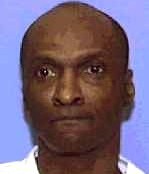
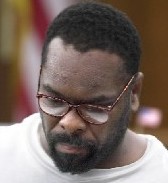
William Rayford
Murderer Brian Kevin Rosenfeld
Murderer · USA · 1985
Brian Kevin Rosenfeld Brian Kevin Rosenfeld was sentenced to three concurrent l…
23 victims
Brian Kevin Rosenfeld
Murderer · USA · 1985
Brian Kevin Rosenfeld Brian Kevin Rosenfeld was sentenced to three concurrent l…
23 victims
 Marvin Gray
Murderer · USA · 1975
Marvin Gray was convicted killer who claimed responsibility for 23 slayings and…
23 victims
Marvin Gray
Murderer · USA · 1975
Marvin Gray was convicted killer who claimed responsibility for 23 slayings and…
23 victims
 Yahweh ben Yahweh
Murderer · USA · 1980
Yahweh ben Yahweh was born and legally named Hulon Mitchell Jr. (October 27, 19…
23 victims
Yahweh ben Yahweh
Murderer · USA · 1980
Yahweh ben Yahweh was born and legally named Hulon Mitchell Jr. (October 27, 19…
23 victims
 Russell Ellwood
Murderer · USA · 1991
Russell Ellwood was a former taxi driver. Authorities suspected him of killing…
20 victims
Russell Ellwood
Murderer · USA · 1991
Russell Ellwood was a former taxi driver. Authorities suspected him of killing…
20 victims
 Sidney Cornwell
Murderer · USA · 1996
Sidney Cornwell was convicted in Ohio of killing a three-year-old child during…
1 victim
Sidney Cornwell
Murderer · USA · 1996
Sidney Cornwell was convicted in Ohio of killing a three-year-old child during…
1 victim
 Charles Lee Thornton
Mass murderer · USA · 2008
Charles Lee “Cookie” Thornton was killed during a shoot-out with the police the…
5 victims
Charles Lee Thornton
Mass murderer · USA · 2008
Charles Lee “Cookie” Thornton was killed during a shoot-out with the police the…
5 victims
 Matthew Cushing
Murderer · USA · 2008
Matthew Cushing was convicted for killing his mother, stepfather, and stepbroth…
3 victims
Matthew Cushing
Murderer · USA · 2008
Matthew Cushing was convicted for killing his mother, stepfather, and stepbroth…
3 victims
 Darbara Singh
Serial killer · India · 2004
Darbara Singh was sentenced to death on January 7, 2008. His death sentence was…
17 victims
Darbara Singh
Serial killer · India · 2004
Darbara Singh was sentenced to death on January 7, 2008. His death sentence was…
17 victims
 Rita Gluzman
Murderer · USA · 1996
Rita Gluzman was convicted of murdering her husband, Yakov Gluzman, and dismemb…
1 victim
Rita Gluzman
Murderer · USA · 1996
Rita Gluzman was convicted of murdering her husband, Yakov Gluzman, and dismemb…
1 victim
- Gender
- male
- Country
- USA
- Location
- Dallas County, Texas, USA
- Date of birth
- May 21, 1953
- Age at first offence
- 32
- Characteristics
- parricide
- Victim profile
- A woman (his wife) / Carol Hall, 42 (his former girlfriend)
- Method of murder
- St abbing with knife - Strangulation
- Date(s) of murder
- 1985 / 1999
- Years active
- 1985–1999
- Date of arrest
- —
- Status
-
Sentenced to death
Sentenced to death on January 4, 2001
Case information
Defendant: William Earl Rayford (TDCJ Number: 999371) Date of birth: 05/21/1953 Race/Gender: black male Height/Weight/Eye color/Hair color: 6 ft 4 in, 179, brown, black Education level (when received): 01/04/2001 (47) Prior occupation: Dallas Texas laborer Prior prison record: #437754 Native county/state: Dallas, Texas Age (when received): 47 Age at the offense: 46 County: Dallas Date received: 01/04/2001 Date of offense: 11/16/1999
Prior conviction and custody status
Rayford had a prior prison sentence of 23 years in prison from Dallas County for 1 count of murder with a deadly weapon. He was received in 1986 and was released on mandatory supervision to Dallas County on 12/5/1994.
The offence
On 11/16/1999 in Dallas, Rayford murdered Carol Hall’s 44 year old black female by strangulation, stabbing, and blunt force. After the murder, Rayford took the victim’s body and threw it into a nearby creek. The murder took place in the home of the victim and was witnessed by her 11 and 14 year old sons.
The victim was identified as Carol Hall. Rayford had been Carol Hall’s former boyfriend and had lived with Hall and her children for about three years. Hall asked Rayford to move out a couple of months before the offense, and Hall removed him from her home with the help of her uncle. Hall’s twelve-year-old son, Benjamin Thomas, testified that Hall was afraid of Rayford.
Investigation and evidence
Events before and during the offence
About 6:30 on the morning of the offense, Rayford entered Hall’s house with a key. Rayford and Hall argued about Rayford having a key to the house. The argument escalated, and Hall began screaming for Thomas. When Thomas woke up and came out of his room, Rayford stabbed him in the back with a knife. Hall fled the house and ran down the street toward her mother’s house. Rayford ran after her and caught her before she reached the next house. Hall was wearing her night clothes and was barefooted. Thomas saw Rayford pick up Hall and throw her over his shoulder.
Hall was screaming and beating on Rayford as he carried her toward a creek behind the house. Thomas ran to a neighbor’s house and called the police.
Witness testimony
Dwayne Johnson, a bus driver parked at the intersection by Hall’s house, saw a woman and a man run from Hall’s house. Johnson testified for the defense that when the man caught the woman he beat her severely in the head area to the point that she became “lifeless.” The man then dragged her behind the house where Johnson could no longer see them.
Police response and discovery of the body
Police arrived on the scene and began searching for Hall. About an hour later, Rayford appeared in Hall’s backyard. He was wet and shivering and complained of an injury to his knee, and he appeared to have grass and blood on his clothes. Rayford was arrested and taken to a hospital for treatment of his injuries.
Rayford consented to a search of his person, which included giving samples of blood, saliva, and trace evidence. Hall’s body was found shortly thereafter about 300 feet inside a culvert pipe. There was a large blood stain on the concrete wall of the pipe about 150 feet from the entrance. Water was running through the bottom of the pipe. The floor of the pipe, especially where the water was deepest, was covered with broken bottles, glass objects, metal, rocks, sticks, and other debris.
Medical examiner testimony and injury findings
Dallas County Medical Examiner Jennie Duvall testified to Hall’s injuries. There was evidence of both ligature and manual strangulation. There were blunt force injuries including blows to the face and scalp and injuries to the knees, upper chest, and shoulder. There were sharp force injuries inflicted by a sharp object such as a knife, including a stab wound on the inside of an elbow. There were also numerous superficial cuts and scrapes about the head and body.
Duvall testified that the injuries to the head were consistent with striking or slamming against concrete. She testified there were no cuts or other injuries to Hall’s feet, suggesting that she was carried through the culvert. Duvall testified that Hall was alive when strangled. The cause of death was determined to be strangulation, with blunt and sharp force injuries. Hall could have died from the strangulation alone, the blunt force injuries to her head alone, or the combination of these injuries.
Duvall further testified that it was her opinion that Hall died in the culvert because the culvert was the most likely surface to have caused the head injuries and no blood was found until some 150 feet inside the culvert. She conceded on cross-examination, however, that Hall could have been strangled anywhere.
DNA and blood evidence
Swabs of trace blood taken from Rayford’s lip, head, and neck matched Hall’s DNA. Blood on Rayford’s shirt matched Hall’s DNA. The blood stain on the concrete in the culvert also matched Hall’s DNA. The DNA expert testified that the probability of the DNA belonging to someone other than Hall was one in 116 billion.
Arrest and consent search
Rayford was arrested after he appeared in Hall’s backyard. He was taken to a hospital for treatment of knee injury.
A nurse drew Rayford’s blood; she testified Rayford was diagnosed as having a knee sprain and was given a tetanus shot and some Motrin. She stated Rayford was “very stoic” and there was no evidence that Rayford was suffering such pain that his actions were involuntary. She testified he was not given or prescribed any other medication.
At the hospital, Detective Kenneth Penrod asked Rayford to consent to a search for blood, saliva, and trace evidence on Rayford’s person. Penrod read Rayford the consent form stating that he had been informed of his right not to be searched or have evidence seized without a warrant, that he had been told of his right to refuse the search or seizure, and that he authorized Penrod to take samples of hair, blood, clothes, saliva, any trace evidence, and body fluids. The form further stated that he gave permission voluntarily, without threats or promises, and with his full consent. Penrod stated Rayford understood the form and was given an opportunity to ask questions. Rayford agreed to the search and signed the form. Blood was drawn and samples of evidence were taken from Rayford’s person.
Trial
Capital murder conviction
In the Court of Criminal Appeals of Texas case, No. 73,991, William Earl Rayford, Appellant, v. The State of Texas was on direct appeal from Dallas County.
Rayford “was convicted in December 2000 of capital murder.” The trial court sentenced Rayford to death pursuant to the jury’s answers to the special issues under Texas Code of Criminal Procedure Article 37.071, §§ 2(b) and 2(e), with reference to Art. 37.071 § 2(g). “Direct appeal to this Court is automatic. Art. 37.071 § 2(h).” The judgment was affirmed.
The opinion panel included:
- Meyers, J., delivered the opinion of the Court
- Keller, P.J., and Price, Womack, Keasler, Hervey, Holcomb, and Cochran, J.J., joined
- Johnson, J., concurred in point of error number 11 and otherwise joined the opinion
Legal and factual sufficiency arguments (Points of error one, two, three, and ten)
Point of error one claimed that the Texas statute allowing conviction for capital murder arising from murder in the course of kidnapping violated cruel and unusual punishment and due process because it failed to narrow the class of offenses for which the death penalty may be sought. The court stated it had previously addressed and rejected identical claims subsequent to Hines v. State and overruled point one.
Points of error two and three argued the evidence was legally and factually insufficient to prove that Rayford committed murder in the course of committing or attempting to commit kidnapping, including whether Hall was restrained at the time of her death. The court overruled both points, holding the evidence was sufficient to show Rayford abducted Hall and that the evidence was legally and factually sufficient to support the jury’s kidnapping special issue finding beyond a reasonable doubt.
In the sufficiency analysis, the court reviewed kidnapping elements and definitions from Texas Penal Code:
- “A person commits kidnapping by intentionally or knowingly abducting another person. Tex. Penal Code § 20.03(a).”
- “Abduction means to restrain a person with intent to prevent his liberation by (a) secreting or holding him in a place he is not likely to be found; or (b) using or threatening to use deadly force. Id. at § 20.01(2).”
- “Restrain means to restrict a person’s movements without consent so as to interfere substantially with the person’s liberty by moving the person from one place to another or by confining the person. Id. at § 20.01(1).”
- “We review the legal sufficiency of the evidence by viewing it in the light most favorable to the verdict and asking whether any rational trier of fact could find the essential elements of the crime beyond a reasonable doubt. Jackson v. Virginia , 443 U.S. 307, 319 (1979).”
- “Evidence is factually insufficient if, viewing all of the evidence in a neutral light, ‘the proof of guilt is so obviously weak as to undermine confidence in the jury’s determination, or the proof of guilt, although adequate if taken alone, is greatly outweighed by contrary proof.’ Johnson v. State , 23 S.W.3d 1, 11 (Tex. Crim. App. 2000).”
The court addressed Johnson’s testimony that Hall became “lifeless” and Rayford dragged her out of sight, and contrasted it with Duvall’s testimony that Hall was alive when strangled. The court found the evidence supporting kidnapping “is not so obviously weak as to undermine confidence in the outcome.”
Point of error ten challenged legal sufficiency to prove beyond a reasonable doubt that Rayford would commit criminal acts of violence constituting a continuing threat to society. The court overruled point ten. The court stated that the evidence showed Rayford pursued Hall as she ran, caught her and forcibly carried her away to a concrete drainage culvert where he murdered her, including stabbing and strangling, and that he stabbed Hall’s son in the back when the child responded to Hall’s screams. The court stated Hall’s mother testified at punishment that Rayford threatened her with a hammer, and that Rayford pled guilty to and was convicted of murdering his previous wife in 1986. The court summarized that the prior murder involved eleven stab wounds, six fatal, and that the children witnessed Rayford’s stabbing. The court also stated Rayford was a habitual drug user and had been unsuccessfully discharged from several substance-abuse programs while on parole.
Evidence admission challenges (Points of error four, five, six, seven, eight, nine)
Points of error four and five argued error in admitting blood and hair evidence seized following a warrantless search, claiming violation of the Fourth and Fourteenth Amendments and Article I, § 9 of the Texas Constitution. The court overruled these points, finding the State proved by clear and convincing evidence that consent was voluntary and rejecting arguments that Miranda warnings were required before obtaining consent or that medical treatment rendered consent involuntary.
Points of error six and seven argued error in admitting autopsy photographs at the guilt or innocence phase of trial. Points of error eight and nine argued error in admitting autopsy photos at the punishment phase. The court overruled points six through nine.
The court discussed rules governing admissibility, including:
- “Admissibility of photographs is within the sound discretion of the trial court.”
- “Rule of Evidence 403 provides that even relevant evidence may be excluded if its probative value is substantially outweighed by the danger of unfair prejudice, confusion of the issues, or misleading the jury or by consideration of undue delay, or needless presentation of cumulative evidence.”
- “Rule 403 favors admissibility and contains a presumption that relevant evidence will be more probative than prejudicial.”
- “Autopsy photographs are generally admissible unless they depict mutilation caused by the autopsy itself.”
The court listed the exhibits at issue for guilt/innocence objections: Exhibits 52, 53, 54, and 66 through 71, and it described how the prosecutor explained those exhibits as depicting parts of Hall’s head and brain and internal structures of the neck, including magnified views.
The court also addressed how the photos related to the contested issue of whether kidnapping was proven, including arguments about whether a dead body can be kidnapped. The court described Duvall’s testimony using photos to explain injuries and theories about where the victim was killed.
At punishment, the court described that Exhibits 107 through 117 were offered as rebuttal evidence related to the 1986 murder, including photos reflecting effects of emergency room intervention and that the trial court excluded one photo depicting a “metal rod or ‘metallic probe’” inserted during autopsy. The trial court admitted the remaining photos after determining their probative value was not substantially outweighed by prejudicial effect.
Juror challenge (Point of error eleven)
Point of error eleven argued the trial court erred in denying a challenge for cause against prospective juror Diane Potts in violation of the Sixth, Eighth, and Fourteenth Amendments.
The opinion summarized Potts’ juror questionnaire answers:
- She was “Absolutely!” in favor of the death penalty.
- She circled that “I believe that the death penalty is appropriate in some murder cases and I could return a verdict in proper [sic] case which assessed the death penalty.”
- She chose this over “I believe that the death penalty is appropriate in all murder cases.”
- She responded “yes” to “[D]o you agree that a life sentence, rather than the death penalty would be appropriate under the proper circumstances in some cases?”
- When asked whether she felt the death penalty was used too often or too seldom in Texas, she circled “too seldom” and explained, “I think anyone who murders another should be put to death. Period !”
- She wrote “I’m all for it.”
During voir dire, Potts agreed she could keep an open mind in answering special issues and that there are situations when capital murder might not warrant imposition of the death penalty. When questioned by defense counsel, Potts indicated she believed any person who committed an intentional murder should receive the death penalty. The court clarified murder and capital murder and discussed punishment ranges. Potts agreed she could consider the whole range of punishment in a murder case. She agreed she could keep an open mind during punishment and hold the State to its burden of proving future dangerousness. She also agreed with the court she could give a life sentence if she felt it was the right thing to do.
The court stated the party making the challenge for cause bears the burden to show substantial impairment in following the law, quoting: “Clark v. State , 928 S.W.2d 5, 8 (Tex. Crim. App. 1996).” It also referenced that a venireperson need not agree with the law as long as personal views do not substantially impair duties. The court overruled point eleven.
Additional constitutional challenges and rulings (Points of error twelve, thirteen, fourteen, sixteen, seventeen, nineteen, twenty, fifteen, eighteen, twenty, twenty-two, twenty-three, twenty-four)
Point of error twelve challenged the Texas death-penalty scheme requiring at least ten “no” votes for the jury to return a negative answer to punishment special issues. The court overruled, citing prior decisions.
Point of error thirteen challenged jury instruction terms at punishment phase—failure to define “probability,” “criminal acts of violence,” and “continuing threat to society.” The court overruled, citing Chamberlain v. State.
Point of error fourteen argued the death-penalty scheme denied due process and imposed cruel and unusual punishment by allowing the jury unlimited discretion to consider mitigating evidence while also restricting discretion through special issues. The court overruled, citing rejection of identical argument in Chamberlain.
Point of error sixteen argued the Texas death-penalty statute violated due process because it authorized death without requiring special issues be alleged in the indictment. The court overruled, addressing Apprendi and reasoning that under Article 37.071 the statutory maximum is fixed at death for capital offenses where the State seeks death.
Point of error seventeen argued that the scheme placed the burden on Rayford to show life should be spared due to mitigating circumstances, violating due process rights. The court overruled, discussing Resendiz and that mitigation does not increase the statutory minimum.
Point of error nineteen argued the statute violated due process by failing to require the State to prove beyond a reasonable doubt that Rayford was dangerous. The court overruled, stating that Apprendi and Ring did not apply in the form of Article 37.071 at issue and that “The State must still prove beyond a reasonable doubt that there is a probability that the defendant will be a continuing threat to society. ” and that this was constitutionally sufficient, citing Robinson v. State.
Point of error twenty-one argued the statute allowed unfettered discretion to seek death and that the lack of consistent standards rendered it arbitrary and capricious. The court overruled, citing Ladd and McFarland.
Points of error fifteen, eighteen, twenty, and twenty-two raised Texas Constitution versions of earlier federal constitutional claims, but the court stated that because separate argument and authority were not provided under the Texas Constitution, they were waived, citing Heitman v. State.
Points of error twenty-three and twenty-four claimed cumulative effect of constitutional errors. The court overruled, stating it had found no constitutional errors and that non-errors could not in cumulative effect cause error.
Judgment
“The judgment of the trial court is affirmed.”
Sentencing
Rayford was sentenced to death by the trial judge after the jury’s answers to special issues under Texas Code of Criminal Procedure Article 37.071, with reference to Art. 37.071 § 2(g). The court affirmed the judgment of the trial court.
The delivered date of the opinion was November 19, 2003.
Outcome
The Court of Criminal Appeals of Texas affirmed Rayford’s conviction and sentence. Rayford’s capital murder conviction resulted in a death sentence, and the case reflected that his conviction was affirmed on direct appeal.
Spotted an error, or have more information about this case?