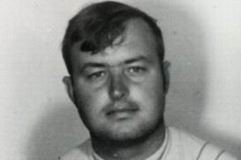
Gerard Schaefer
Serial killer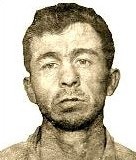 Donald Henry Gaskins
Serial killer · USA · 1969
Donald Henry Gaskins, also known as Donald “Pee Wee” Gaskins, was a serial kill…
200 victims
Donald Henry Gaskins
Serial killer · USA · 1969
Donald Henry Gaskins, also known as Donald “Pee Wee” Gaskins, was a serial kill…
200 victims
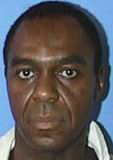 Carl Eugene Watts
Serial killer · USA · 1974
Carl Eugene Watts (born November 7, 1953; died September 21, 2007), also known…
100 victims
Carl Eugene Watts
Serial killer · USA · 1974
Carl Eugene Watts (born November 7, 1953; died September 21, 2007), also known…
100 victims
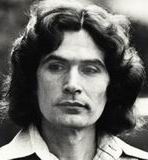 Rodney Alcala
Serial killer · USA · 1977
Rodney James Alcala (born August 23, 1943) was also known as Rodrigo Jacques Al…
100 victims
Rodney Alcala
Serial killer · USA · 1977
Rodney James Alcala (born August 23, 1943) was also known as Rodrigo Jacques Al…
100 victims
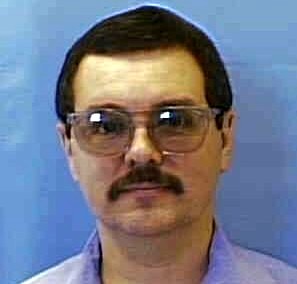 Donald Harvey
Serial killer · USA · 1970
Donald Harvey was known as an American serial killer and a self-professed “Ange…
87 victims
Donald Harvey
Serial killer · USA · 1970
Donald Harvey was known as an American serial killer and a self-professed “Ange…
87 victims
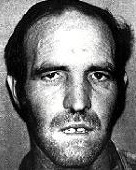 Ottis Toole
Serial killer · USA · 1961
Ottis Elwood Toole (sometimes misspelled as “Otis”) was an American serial kill…
65 victims
Ottis Toole
Serial killer · USA · 1961
Ottis Elwood Toole (sometimes misspelled as “Otis”) was an American serial kill…
65 victims
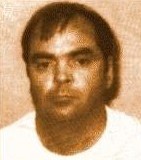 Donald Leroy Evans
Serial killer · USA · 1975
Donald Leroy Evans (born July 5, 1957) was an American serial killer who murder…
60 victims
Donald Leroy Evans
Serial killer · USA · 1975
Donald Leroy Evans (born July 5, 1957) was an American serial killer who murder…
60 victims
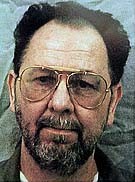 Darrell Mease
Murderer · USA · 1988
Darrell Mease was prosecuted in the case of State of Missouri v. Darrell Mease,…
3 victims
Darrell Mease
Murderer · USA · 1988
Darrell Mease was prosecuted in the case of State of Missouri v. Darrell Mease,…
3 victims
 Stephen Nethery
Murderer · USA · 1981
Stephen Ray Nethery was convicted of capital murder and sentenced to death by t…
1 victim
Stephen Nethery
Murderer · USA · 1981
Stephen Ray Nethery was convicted of capital murder and sentenced to death by t…
1 victim
 Irina Gaidamachuk
Serial killer · Russia · 2002
Irina Viktorovna Gaidamachuk (Russian: Ирина Викторовна Гайдамачук) was born in…
17 victims
Irina Gaidamachuk
Serial killer · Russia · 2002
Irina Viktorovna Gaidamachuk (Russian: Ирина Викторовна Гайдамачук) was born in…
17 victims
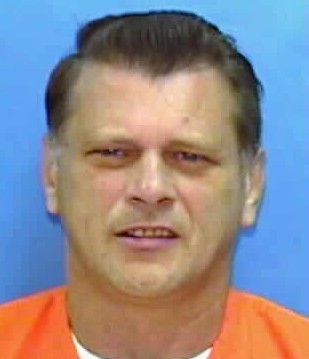 Gary Eldon Alvord
Murderer · USA · 1973
Gary Eldon Alvord was tried in the Thirteenth Judicial Circuit, Hillsborough Co…
3 victims
Gary Eldon Alvord
Murderer · USA · 1973
Gary Eldon Alvord was tried in the Thirteenth Judicial Circuit, Hillsborough Co…
3 victims
 Jock Palfreeman
Murderer · Bulgaria · 2007
Jock Palfreeman was an Australian convicted of murder in Bulgaria. In December…
1 victim
Jock Palfreeman
Murderer · Bulgaria · 2007
Jock Palfreeman was an Australian convicted of murder in Bulgaria. In December…
1 victim
 Joseph Daniel Burns
Murderer · USA · 1994
Joseph Daniel “JoJo” Burns was executed by lethal injection in Mississippi on J…
1 victim
Joseph Daniel Burns
Murderer · USA · 1994
Joseph Daniel “JoJo” Burns was executed by lethal injection in Mississippi on J…
1 victim
- Gender
- male
- Country
- USA
- Location
- Florida, USA
- Date of birth
- March 25, 1946
- Age at first offence
- 23
- Characteristics
- abuse, mutilation, rape
- Victim profile
- Leigh Hainline Bonadies, 25 / Carmen Marie Hallock, 22 / Belinda Hutchens, 22 / Collette Goodenough, 19, and Barbara Ann Wilcox , 19 / Susan Place, 17, and Georgia Jessup, 16 / Mary Alice Briscolina, 14, and Elsie Lina Farmer, 14
- Method of murder
- Shooting / Strangulation
- Date(s) of murder
- 1969 - 1973
- Years active
- 1969–1973
- Date of arrest
- April 7, 1973
- Status
-
Died in custody
Sentenced to two concurrent terms of life imprisonment in October 1973; on December 3, 1995, Gerard Schaefer was found stabbed to death in his cell, killed by fellow inmate Vincent Faustino Rivera
Case Overview
Gerard John Schaefer was born in Wisconsin on March 25, 1946. He was the oldest of three children. He later described his family as “turbulent and conflictual.”
Years later, court-appointed psychiatrists interviewed Schaefer. He referred to himself as “an illegitimate child,” the product of a hasty shotgun wedding. He described his father as a verbally abusive alcoholic, flagrantly adulterous, and often absent from home on business trips or otherwise.
By 1960, Schaefer’s family had settled in Fort Lauderdale, Florida. He graduated high school there in 1964. He was working on the first of several college degrees when his parents divorced three years later.
Background
Schaefer told court-appointed psychiatrists about sexual issues and violent self-loathing. Dr. R. C. Eaton recorded in 1973 that “From an early age,” Schaefer “[Schaefer] has had numerous sexual hang-ups.” Experiments with bondage and sadomasochism began around age 12. Schaefer told Dr. Mordecai Haber, “I’d tie myself up to a tree,” adding: “and I’d get excited sexually and do something to hurt myself.”
Schaefer also told Dr. Haber that, around the same time, he began to “masturbate and fantaslze about hurting other people, women in particular.” Schaefer recalled: “I discovered womens underwearpanties. Sometimes I wore them. I wanted to hurt myself. ”
Schaefer said his violent self-loathing went back to his earliest childhood games. In those games, he told Dr. Haber, “I always got killed. I wanted to die. My father favored my sister, so I wanted to be a girl. I wanted to die. I was such a disappointment to my family as a kid, to my father-he loved my sister. I couldn’t please my father, so in playing games I wanted to be killed.”
Schaefer claimed he visited a psychiatrist in 1966 seeking relief from his sexual deviance and homicidal fantasies, but therapy did not help. He later said he kept on hearing voices “telling him to kill.”
In 1966, he toured the South with Moral Rearmament, the “Up With People” group. Schaefer thought about the priesthood as a calling, but he was turned away from St. john's Seminary, where he recalled: “they said I didn’t have enough falth.”
Schaefer’s rejection angered him, and he quit the Catholic Church. His next goal was a teaching job with an aim to instill “American values” such as “honesty, purity, unselfishness and love.” However, he was twice dropped from student-teaching programs for trying to impose his own moral and political values on his students.
The second time, supervisor Richard Goodhart recalled, “l told him when he left that he’d better never let me hear of his trying to get a job with any authority over other people, or I’d do anything I could to prevent ¡t.”
Early adult life and relationships
In 1968, Schaefer married Martha Fogg, but it did not work out. Martha filed for divorce in May 1970, claiming “extreme cruelty.”
Schaefer took a few weeks to recuperate in Europe and North Africa that summer, returning home with a new goal. If he could not be a priest or teacher, he wanted to be a policeman.
Law-enforcement employment and dismissal
Schaefer applied to several departments but was rejected by the Broward County sheriff's office after failing a psychological test. A small Wilton Manors Police Department hired him.
In March 1972, Schaefer earned a commendation for his role in a drug bust. One month later, on April 20, he was fired. Explanations varied: Chief Bernard Scott later said Schaefer did not have “an ounce of common sense.” Ex-FBI Agent Robert Ressler reported that Schaefer was disciplined for running female traffic violators through the department’s computer, obtaining personal information, and later calling them for dates.
Near the end of June, Schaefer signed on with the Martin County Sheriff's Department and moved to Stuart, Florida. He had been there less than a month when he made “a dumb mistake” that cost him his career and freedom.
The offence
On July 21, 1972, Schaefer picked up two hitchhikers, 17-year-old Pamela Wells and 18-year-old Nancy Trotter, on the highway near a local beach. He told them, falsely, that hitchhiking was illegal in Martin County. He then drove them back to a halfway house where they were staying. Schaefer offered to meet them next morning off duty and drive them to the beach himself. The girls agreed.
However, instead of taking them to the beach on July 22, Schaefer drove them to swampy Hutchinson Island off State Road A1A. There he started making sexual remarks. He drew a gun and told the girls he planned to sell them as “white slaves” to a foreign prostitution syndicate.
Schaefer forced the girls out of the car. He bound both girls and left them balanced on tree roots with nooses around their necks, at risk of hanging if they slipped and fell. Schaefer left them, promising to return shortly.
In his absence, the girls escaped and reached the highway. There they flagged down a passing police car. The girls had no problem identifying their assailant because Schaefer had told them his name.
Police response and immediate confession
By that time, Schaefer had discovered their escape and telephoned Sheriff Richard Crowder. Schaefer told his boss: “I've done something foolish.” He added: “You're going to be mad at me.” He said he had “overdone” his job and tried to “scare” the girls out of hitchhiking in the future for their own good.
Schaefer was fired on the spot. He was charged with false imprisonment and two counts of aggravated assault and was released on $15,000 bond.
Trial and conviction for the Hutchinson Island murders
At trial in November 1972, Schaefer pled guilty on one assault charge and the other counts were dropped. Judge D. C. Smith called Schaefer a “thoughtless fool” and sentenced him to a year in county jail followed by three years’ probation. Schaefer began serving his sentence on January 15, 1973.
While Schaefer was free on bond pending trial for the assault, additional missing persons were reported. On September 27, 1972, 17-year-old Susan Place and 16-year-old Georgia Jessup vanished from Fort Lauderdale. Susan’s parents said the girls were last seen at her house leaving with an older man named “Gerry Shepherd” on their way to “play guitar” at a nearby beach. They never came back.
Lucille Place noted Schaefer’s license number and a description of his blue-green Datsun. It was March 25, 1973, before investigators traced the plate number back to Schaefer, by which time he was already in jail for assaulting teenage girls.
Schaefer denied any contact with Place and Jessup.
The case began unraveling on April 1, 1973, when skeletal remains were found on Hutchinson Island by three men collecting aluminum cans. Four days later, the victims were identified from dental records. Susan Place had been shot in the jaw. Detectives remarked that evidence from the crime scene indicated the two girls were “tied to a tree and butchered.”
On April 7, police searched the home of Schaefer’s mother, where Schaefer had personal items stored in a spare bedroom. The search recovered evidence including:
- a stash of women's jewelry
- 100-plus pages of writing and sketches depicting mutilation-murders of young women
- newspaper clippings about two women missing since 1969
- pieces of I.D. belonging to vanished hitchhikers Collette Goodenough and Barbara Wilcox, both 19
The two girls had last been seen alive on January 8, one week before Schaefer was sent to jail in Martin County. While skeletal remains were found in early 1977, no cause of death could be determined, and no charges were filed in that matter.
Other missing women were linked through jewelry and related items but did not lead to charges. A news clip referred to the February 1969 disappearance of waitress Carmen Hallock, abducted from her home. Items of her jewelry were found in Schaefer’s hoard, and a gold-filled tooth was identified by Hallock’s dentist, but no charges were filed.
The second missing woman, Leigh Bonadies, had been a neighbor of Schaefer’s when she disappeared in September 1969. Schaefer had complained of her “taunting” him by undressing with her curtains open. A piece of her jewelry was found among his belongings. When her skeletal remains were recovered in 1978, no charges were filed.
More jewelry linked Schaefer to the disappearance of 14-year-old Mary Briscolina, who vanished from Broward County with 13-year-old Elsie Farmer in October 1972. Their skeletons were found in early 1973, but no cause of death could be determined and no charges were filed.
Schaefer faced charges in only two murders. He was indicted on May 18, 1973, for the slayings of Jessup and Place. He was held without bond pending trial. In October 1973, he was convicted on two counts of first-degree murder and received concurrent terms of life imprisonment.
Appeals and related civil litigation
Numerous appeals were filed. Some 20 appeals were uniformly rejected by various state and federal courts.
By 1990, former high school girlfriend Sondra London published a collection of Schaefer’s stories under the title Killer Fiction. More volumes followed. Schaefer insisted that the stories were art, while police and prosecutors described them as thinly veiled descriptions of actual crimes. Schaefer also admitted such matters in private letters to attorneys and acquaintances.
A letter dated April 9, 1991 included Schaefer’s reference to a story titled “Murder Demons.” Schaefer wrote: “What crimes am I supposed to confess? Farmer? Briscolina? What do you think [“Murder Demons”] is? You want confessions but don't recognize them when I anoint you with them and we've just gotten started.”
On January 20, 1991, he wrote: “As you know,” he wrote on january 20, 1991, “I've always harped on [District Attorney Robertl Stone's list of 34. In 1973 I sat down and drew up a list of my own. As I recall, my list was just over 80.”
The next day he wrote: “I'm not claiming a huge number. . . . I would say ¡t runs between 80 and 110. But over eight years and three continents.... One whore drowned in her own vomit while watching me disembowel her girlfriend. I'm not sure that counts as a valid kill. Did the pregnant ones count as two kills? lt can get confusing.”
Years later, his letters led to descriptions in true-crime books describing him as a prolific serial killer. Schaefer responded with lawsuits filed against various authors for libel. Those lawsuits were uniformly dismissed by the courts.
In one such case, judge William Steckler branded Schaefer a serial killer. The court found him “undeniably linked” to numerous murders beyond the two for which he stood convicted.
The judgment included the statement: “He boasts of the private and public associations he has based on the reports that he is a serial killer of woríd-class proportions,” Steckler wrote, “land ¡t is only arrogant perversity which propels him toward this and similarly meritless lawsuits in which he claims otherwlse.”
Death in custody
Schaefer’s death occurred on December 3, 1995. Prison officials found him stabbed to death in his cell. He had been killed by fellow inmate Vincent Faustino Rivera.
According to the status narrative, Rivera was the inmate identified by prison officials as Schaefer’s killer. Rivera had been serving life plus 20 years for two murders in Tampa. The narrative stated that no specific motive had been offered.
Subsequent accounts and related materials
A publication described that Rivera was convicted of killing Schaefer and had “53 years added onto the life-plus-20 years” he was already serving for double-murder. It also stated Rivera did not confess to the crime or give a motive.
Other accounts in the narrative described possible explanations: Schaefer’s sister claimed his murder was related to cover up attempts connected to his attempts to verify a confession to the killing of Adam Walsh made by Ottis Toole and subsequently retracted. The narrative also said other suggestions included Schaefer owing some prisoners money and rumors he was a “snitch.” Another account attributed to Sondra London claimed Rivera killed Schaefer in an argument over a cup of coffee. The narrative further described that Schaefer had been attacked on at least one other occasion and that his cell set on fire twice.
Civil appeal: Gerard Schaefer v. Michael Newton and Avon Books
A federal appellate decision described Schaefer’s action for defamation against author Michael Newton and his publisher Avon Books. In the appellate caption, Schaefer was identified as “Gerard SCHAEFER, Plaintiff/Appellant, v. Michael NEWTON and Avon Books, Defendants/Appellees.” The appellate court was the United States Court of Appeals, Seventh Circuit. The decision date was June 8, 1995. The matter was “Submitted June 7, 1995.”
The appellate order stated that the district court had granted summary judgment for Newton and Avon. The appellate court affirmed.
The “Background” section of the appellate decision stated that in 1973 Schaefer was arrested for aggravated assault after two women he abducted and tied to a tree escaped and contacted police. It stated police found a grave containing two bodies later identified as Susan Carole Place and Georgia Jessup. It stated Schaefer was convicted of murdering both women and sentenced to life imprisonment. It also stated evidence in Schaefer’s mother’s home made him a suspect in other murders, including jewelry, women's clothing, human teeth, a passport, and manuscripts detailing ritualistic murders.
The appellate decision described that newspaper and magazine articles written about Schaefer followed the police investigation and reported he was a suspect in other murders. The decision listed example articles including:
- “Jayne Ellison, 6 Dead; 28 May Be: A Trail of Butchered Girls, Palm Beach Post-Times, May 13, 1973, at 1”
- “Two Murders Linked to 26 Lost, Slain, Miami News, May 14, 1973, at 14A”
- “Crime: Bluebeard on the Beach, Time, May 28, 1973, at 31”
- “Pat Plarski, Killer's Book: Fiction or 'How-To'?, Palm Beach Post, Aug. 14, 1989, at 1”
The appellate decision described Newton’s book Hunting Humans: The Encyclopedia of Serial Killers, with an entry labeled “Schaefer, Gerard John.” It reproduced the entry’s text: “A homicidal ex-policeman from Oakland Park, Florida, dubbed the 'Sex Beast' by local newsmen, Schaefer was theoretically linked with the murders of at least 20 persons after the jewelry, teeth, and clothing of several victims were recovered from a trunk in the attic of his mother's home. The public defender's office was unable to prevent Schaefer's conviction and imprisonment on first-degree murder charges, the killer took it in stride. When Schaefer's wife divorced him and became engaged to his defense attorney, he gave the couple his blessing, requesting that the same lawyer continue to handle his case through forthcoming appeals. Hunting Humans, 298 (R. 3 at 7).”
The appellate decision described that Schaefer objected to the entry and brought suit for damages and injunctive relief, claiming: “plaintiff has never been linked to 20 murders; plaintiff is not a serial killer; plaintiff should not be listed in an encyclopedia of modern serial killers published by the defendants.”
The decision stated that after preliminary examination, the court notified the parties that it had tentatively concluded oral argument would not be helpful. It noted that no statement as to need of oral argument had been filed and that the appeal was submitted on the briefs and the record.
The appellate analysis included that under Indiana law, to maintain a defamation action a plaintiff had to show four elements: defamatory imputation, malice, publication, and damages. It also included statements about “truth” as a defense and about malice requirements.
Other details
Schaefer was described in the narrative as a “former Wilton Manors police officer and a Martin County sheriff’s deputy,” and he was accused within the narrative of abducting, torturing, murdering and raping dozens of women across South Florida and other states in the late 1960s and early 1970s.
The narrative stated a Fort Lauderdale homicide detective, John Curcio, had been gathering forensic evidence and sending it to the FBI’s Missing Persons DNA Database. It also stated Curcio had started working with the family of Debora Sue Lowe three months before an “August 06, 2005” account.
The narrative gave details about Debora Sue Lowe: she was a 13-year-old last seen about 8:30 a.m. on a drizzly Tuesday as she walked to Rickards Middle School on Feb. 29, 1972, wearing black slacks with roses, a yellow blouse and a tan poncho. It described three of her siblings—Eva, James and Sherral—submitting DNA samples to the Florida Department of Law Enforcement’s Missing Persons DNA Database to match possible remains. It stated the Lowe family’s DNA had been entered into the FBI’s national database.
The narrative stated Curcio believed Schaefer was responsible for the murders of Carmen Hallock, 22, Belinda Hutchins, 22, and Leigh Bonadies Hainline, 25, with respective disappearance years and details. It stated Hallock and Hutchins had dated Schaefer, and Hainline had been a childhood friend and tennis partner, and that only Hainline’s remains were found. The narrative also stated police executed a search warrant in 1973 at the Fort Lauderdale house where Schaefer lived with his mother and found jewelry, teeth and other possessions belonging to each woman, and short stories typed double-spaced on white paper describing abduction, rape and strangulation of young women, including a woman named Carmen. It reproduced a detail from those stories about Carmen’s attire: “a woman named Carmen.” It further described that Hallock's sister told police her sister bought a new black dress for a date with a married teacher. The narrative stated police never had enough evidence to try Schaefer on the three cases.
The narrative stated Schaefer was suspected in December 1969 kidnappings of two schoolgirls, Peggy Rahn, 9, and Wendy Stevenson, 8. It stated they vanished in late 1970 after being seen in the company of a man fitting Schaefer’s description. It stated Schaefer denied involvement when publicly accused and that in a letter to London in 1989 he boasted of killing and cannibalizing the two children, including the quoted statement: “Peggy and Wendy just happened along at a time when I was curious about Fish's cravings for the flesh of young girls. . . . I assure you these girls were not molested sexually. I found both of them very satisfactory, particularly with sautéed onions and peppers.”
The narrative further stated that Schaefer briefly dated Sondra London in high school, that London later became a true crime writer, that in 1989 she published Killer Fiction, and that Beyond Killer Fiction was later released. After Schaefer’s death, London released another edition containing stories and rambling articles in the previous books along with Schaefer’s letters where he boasted of killing 34 women and girls and how he was admired by fellow inmate Ted Bundy.
The narrative included that Schaefer wrote death threats to London after she broke off an engagement and got engaged to Danny Rolling. It stated Schaefer claimed links to the Dixie Mafia and the Ku Klux Klan who would do his bidding on the outside. It also said Schaefer was despised by fellow inmates and had been attacked several times before he was murdered.
The narrative stated Schaefer’s reputation as “one of the sickest” was described by Bill Hagerty, an ex-FBI agent who studied Schaefer for VICAP in the early 1980s. Hagerty’s quoted statement was: “one of the sickest. If I had a list of the top five, which would include all of the serial killers I have interviewed throughout the country, he would definitely be in the top five.”
It included a quote from Shirley Jessup about Schaefer’s murder: “I'd like to send a present to the guy who killed him,” and “I've always believed he was going to get his. I just wish it would have been sooner than later. ”
A further appellate-related context described Schaefer’s defamation case in Seventh Circuit included that Schaefer was convicted in September 1973 of the murders of Susan Place and Georgia Jessup. It said one of the girls' mothers identified Schaefer as the man who drove her daughter away, and that investigators obtained one of the teens’ purse, a suede bag, from Schaefer’s wife, who later divorced him.
The narrative also said investigators believed Schaefer abducted two young Pompano Beach friends and that the girls have never been found. It stated that because of the April 19, 1989 letter, investigators feared he murdered the girls and ate their remains.
It stated Schaefer was described as having started as a serial killer in his early 20s, possibly earlier, and included details that he moved from Atlanta to Fort Lauderdale in 1960 at age 14. It stated he graduated from St. Thomas Aquinas High School, went to Broward Community College, transferred to Florida Atlantic University, graduated from FAU in 1971, and joined the Wilton Manors Police Department. It said Wilton Manors fired him after learning he applied for a job with the Broward Sheriff’s Office.
The narrative included a quote from then-Wilton Manors Police Chief Bernard Scott: Schaefer “used poor judgment and did dumb things.” It stated Broward Sheriff’s Office did not hire him.
It stated Martin County later learned the job recommendation letter from Scott was forged. It stated shortly after getting hired in June 1972, he was arrested on charges of abducting two teenaged girls who got away. It stated police believed he committed scores of other murders but he was never charged.
The narrative included a quote from Richard McIlwain, a former investigator with the Martin County State Attorney's office: “He never admitted to killing anyone to me,” and a prior quote: “He could “talk with the best of them.”” It stated that McIlwain said the details in Schaefer’s writings and what was found at the crime scene matched. The narrative included McIlwain’s quote describing writings: “He'd strangle them, rape them, bury them and then dig them up again to rape them again,” and described a claim about burying women and having them stand on an orange crate while he bound them.
The narrative stated Schaefer maintained the writings were fiction.
The narrative also included a statement about the appellate decision’s caption and the court’s affirmation that summary judgment was granted to Newton and Avon Books, with the judgment affirmed.
Timeline
- March 25, 1946 — Gerard John Schaefer was born in Wisconsin.
- 1960 — Schaefer’s family settled in Fort Lauderdale, Florida.
- 1964 — Schaefer graduated high school in Fort Lauderdale.
- 1967 — Schaefer toured the South with Moral Rearmament.
- 1968 — Schaefer married Martha Fogg.
- May 1970 — Martha Fogg filed for divorce, claiming “extreme cruelty.”
- March 1972 — Schaefer earned a commendation for his role in a drug bust.
- April 20, 1972 — Schaefer was fired.
- June 1972 — Schaefer signed on with the Martin County Sheriff's Department and moved to Stuart, Florida.
- July 21, 1972 — Schaefer picked up Pamela Wells and Nancy Trotter on the highway near a local beach.
- July 22, 1972 — Schaefer drove Pamela Wells and Nancy Trotter to Hutchinson Island instead of the beach.
- September 27, 1972 — Susan Place and Georgia Jessup vanished from Fort Lauderdale.
- January 8, — Susan Place and Georgia Jessup were last seen alive.
- March 25, 1973 — Investigators traced the license plate number to Schaefer.
- April 1, 1973 — Skeletal remains were found on Hutchinson Island by men collecting aluminum cans.
- April 5, 1973 — The victims were identified from dental records.
- April 7, 1973 — Police searched the home of Schaefer’s mother and recovered evidence in a spare bedroom.
- May 18, 1973 — Schaefer was indicted for the slayings of Jessup and Place.
- October 1973 — Schaefer was convicted of two counts of first-degree murder and sentenced to concurrent terms of life imprisonment.
- January 15, 1973 — Schaefer began serving his county jail sentence.
- April 9, 1991 — Schaefer wrote a letter referencing “Murder Demons.”
- January 20, 1991 — Schaefer wrote a letter discussing a list of “34” and his own list.
- December 3, 1995 — Schaefer was found stabbed to death in his cell; he was killed by fellow inmate Vincent Faustino Rivera.
- June 7, 1995 — The defamation appeal was submitted on briefs and record.
- June 8, 1995 — The defamation appeal decision was issued affirming summary judgment for Newton and Avon Books.
Spotted an error, or have more information about this case?