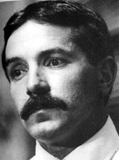
Randy Roth
Murderer Brian Kevin Rosenfeld
Murderer · USA · 1985
Brian Kevin Rosenfeld Brian Kevin Rosenfeld was sentenced to three concurrent l…
23 victims
Brian Kevin Rosenfeld
Murderer · USA · 1985
Brian Kevin Rosenfeld Brian Kevin Rosenfeld was sentenced to three concurrent l…
23 victims
 Russell Ellwood
Murderer · USA · 1991
Russell Ellwood was a former taxi driver. Authorities suspected him of killing…
20 victims
Russell Ellwood
Murderer · USA · 1991
Russell Ellwood was a former taxi driver. Authorities suspected him of killing…
20 victims
 Robert Martines Perez
Murderer · USA · 1994
Name: Robert Martines Perez · Other name used in proceedings: Robert Martinez P…
15 victims
Robert Martines Perez
Murderer · USA · 1994
Name: Robert Martines Perez · Other name used in proceedings: Robert Martinez P…
15 victims
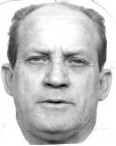 Billy Frank Vickers
Murderer · USA · 1993
Billy Frank Vickers Vickers was executed by lethal injection in Texas on Januar…
14 victims
Billy Frank Vickers
Murderer · USA · 1993
Billy Frank Vickers Vickers was executed by lethal injection in Texas on Januar…
14 victims
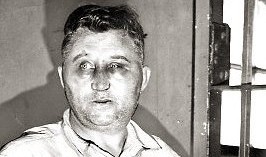 Harry Powers
Murderer · USA · 1931
Harry Powers was executed by hanging on March 18, 1932, at the West Virginia Pe…
5 victims
Harry Powers
Murderer · USA · 1931
Harry Powers was executed by hanging on March 18, 1932, at the West Virginia Pe…
5 victims
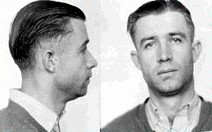 David Benjamin Knight
Murderer · USA · 1935
Howard C. Speakman and Judge Earl Anderson were involved in the case. Deputy C.…
1 victim
David Benjamin Knight
Murderer · USA · 1935
Howard C. Speakman and Judge Earl Anderson were involved in the case. Deputy C.…
1 victim
 Francis & Joseph Knapp
Murderers · USA · 1930
Francis Knapp and Joseph Jenkins Knapp were the brothers known as the Knapps. T…
1 victim
Francis & Joseph Knapp
Murderers · USA · 1930
Francis Knapp and Joseph Jenkins Knapp were the brothers known as the Knapps. T…
1 victim
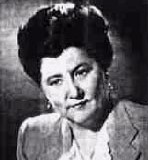 Maria Lee
Murderer · South Africa · 1947
Maria Helena Gertruida Lee (née van Niekerk), later known as Maria Lee, was bor…
1 victim
Maria Lee
Murderer · South Africa · 1947
Maria Helena Gertruida Lee (née van Niekerk), later known as Maria Lee, was bor…
1 victim
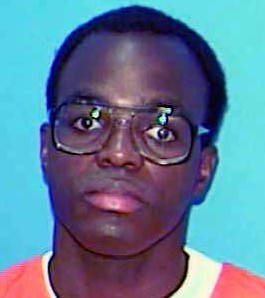 Arthur Barnhill
Murderer · USA · 1995
Arthur Barnhill was convicted and sentenced to death for the 08/06/95 murder of…
1 victim
Arthur Barnhill
Murderer · USA · 1995
Arthur Barnhill was convicted and sentenced to death for the 08/06/95 murder of…
1 victim
 Hilton Lewis Crawford
Murderer · USA · 1995
Hilton Lewis Crawford was executed by lethal injection in Texas on July 2, 2003…
1 victim
Hilton Lewis Crawford
Murderer · USA · 1995
Hilton Lewis Crawford was executed by lethal injection in Texas on July 2, 2003…
1 victim
- Gender
- male
- Country
- USA
- Location
- Lake Sammamish, King County, Washington, USA
- Date of birth
- December 26, 1954
- Age at first offence
- 37
- Characteristics
- parricide, to collect insurance money
- Victim profile
- Cynthia Baumgartner Roth, 34 (his fourth wife)
- Method of murder
- Drowning
- Date(s) of murder
- July 23, 1991
- Years active
- 1991
- Date of arrest
- October 8, 1991
- Status
-
Imprisoned
Sentenced to 50 years in prison on June 21, 1992
Case record: Randy Roth
Randy Roth was convicted of murder and theft.
Status
Roth was sentenced to 50 years in prison on June 21, 1992.
Background
Randy Roth was born the day after Christmas 1954, one of five children of Gordon and Lizabeth Roth. The family moved from North Dakota to Washington in the late 50s.
Randy and his brother David, also a convicted murderer, later gave conflicting reports on the nature of their upbringing. David claimed their father was abusive and their mother supportive. Randy apparently bonded with his father more closely and remained in touch with him throughout his life while snubbing his mother, telling friends she was dead or mentally unstable. The Roths were practicing Catholics, but they divorced in 1971.
According to former girlfriends, Randy had developed a reputation by high school of being a bully and a punk who enjoyed playing cruel pranks on others. He was dominating and controlling of his girlfriends, and his male friends were only those who toadied to him. He enjoyed fixing cars and driving them recklessly on country back roads.
After graduating Meadowdale High School in 1973, Roth enlisted in the Marine Corps, wanting to emulate his movie hero Billy Jack. Shortly before his deployment he robbed a service station where he had previously been employed, but he was not charged with the crime at that time. Roth was disappointed in the Marines because he served as a file clerk in Okinawa rather than the combat action he had fantasized about. After less than a year, he was discharged when his mother (who was living on welfare) wrote a letter to the service protesting that it was a hardship to have him gone and he was needed home to support her.
Upon returning home, he became engaged, but his fiancée broke it off after she found another woman's purse in her parents' home. A few months later the fiancée's family's home was robbed, and she told police she suspected Randy Roth of the crime, as well as the earlier robbery. Items stolen from the home were recovered at Roth's residence and he pled guilty to burglary. Charges related to the previous stick-up were dropped, and Roth served only two weeks in jail.
Shortly after being released, Roth married the other woman he'd been seeing (Donna Sanchez). She gave birth to a son Gregg in 1978, but shortly thereafter and without any explanation, he filed for divorce.
Janis Roth
In early 1981, Randy Roth met Janis Miranda, also a divorced single parent, and they married that March. Janis had come from an impoverished upbringing in Texas, raised by a mother who labored to support her several children after their alcoholic father abandoned them. Marrying a serviceman, she gave birth to a daughter Jalina while stationed in Germany, but the marriage ended in divorce and Janis took her infant child to the West Coast seeking to begin a new life.
Randy insisted on ample life insurance for his new wife as they were buying a house together and he told her he wanted to be able to pay the mortgage if the worst should come to pass. Janis had been extremely excited about her new husband, but after a few months, her friends started to notice that she was acting very strange and wary of everything.
On the day after Thanksgiving 1981, Randy Roth took Janis hiking at Beacon Rock, where she plummeted to her death. There were no witnesses to the fall besides Roth and the stories he told to others about the incident were contradictory. Police and rescue workers were unable to locate the body for several hours after the fall, and it was later determined that it would have been virtually impossible for her to have fallen from where Roth claimed the accident occurred. Although some suspicion was raised at the time that Roth had pushed his wife, there did not seem to be sufficient evidence to proceed with an arrest and trial.
Roth arranged the same day to have his wife cremated and filed a claim on her life insurance policy early the next morning, while failing to contact her friends and family and inform them of her death.
For the next two and a half years after Janis's death, Randy Roth devoted himself to working as a mechanic and raising his son. He moved to a new house in Mountlake Terrace, where he befriended his neighbor Ben Goodwin and his family. The Roths and Goodwins remained good friends for most of the following six years, but Randy secretly seduced their teenage daughter, Brittany, with the promise of eventually marrying her when she was 18.
Roth also told numerous fictitious tales of serving in Vietnam, making his brief stint as a Marine Corps file clerk appear as if he had been in action similar to movies like Hamburger Hill. Ben Goodwin, who was a Vietnam vet, became suspicious of Roth's stories. The latter never told his age to anyone, but Goodwin was skeptical about his war tales.
In 1985, Roth married Donna Clift, another divorced mother of a small child. She was 21 years old and had gotten pregnant in high school and married her daughter Brittney's father, but the marriage fell apart and she moved from her native Arizona to Washington. Randy quickly talked her into marrying him, but as usual didn't tell her his age or much about his life beyond various contradictory stories. He upset Donna by playing various mean-spirited jokes on her 3-year old daughter and becoming cold and aloof after the honeymoon. After only three months, their marriage ended when a family rafting trip on the Skykomish River ended in disaster. Randy went out with Donna along on an inflatable raft, which he attempted to steer through the rapids into sharp rocks. A terrified Donna immediately filed for divorce afterwards.
Not long afterwards, he befriended Mary Jo Phillips, a divorced mother of three children. Roth became engaged to her, but abruptly broke it off when he found that she'd been treated for cancer once before and wasn't insurable.
Cynthia Roth (Baumgartner Roth)
Roth remained single until 1990, when he met Cynthia Loucks Baumgartner at one of his son's Little League games. Cynthia was born in 1957. She was the child of an older couple who had a teenage son and had been trying unsuccessfully for years to have another baby. Raised in a deeply religious family, she married Tom Baumgartner at the age of 21, and their sons Tyson and Rylie were born in 1979 and 1981. Tom worked hard as a parcel carrier for the USPS to provide for his family, but in 1985 he suddenly came down with Hodgkin's Disease and died at the age of 29.
Cynthia was well-provided for with various survivors' benefits and the support of her family and close friend Lori Baker, and so she didn't need to work. Since she refused to marry a divorced man due to her religious beliefs, Randy Roth told her nothing about his marriages except that Janis Miranda had accidentally fallen to her death.
That August, the two abruptly ran off to Las Vegas to get married, something that shocked Cynthia's family. Randy Roth quickly put up his house for sale and purchased a big new home in Woodinville where he moved with his new enlarged family.
Cynthia gradually became aware that Roth felt a need to control every aspect of her life, and did not want her doing anything on her own. Friends noticed her appearance and her housekeeping, which had always been beyond reproach in the past, were given less and less attention, and that Cynthia seemed to regret her marriage to Roth. Roth was also physically and mentally abusive to all three boys.
On July 23, 1991, just a few weeks short of their first wedding anniversary, the couple took Cynthia's two sons on a day trip to Lake Sammamish. The day was hot when the Roths arrived and the beach was crowded. Randy and Cynthia left the boys to play in the designated swimming area while they paddled their 11 feet (3.4 m) inflatable raft into deeper waters.
Several hours later Randy Roth returned with Cynthia dead or nearly dead from drowning. She was treated at the scene and transported to hospital where she was pronounced dead. Roth claimed their raft was tipped over by the wake from a passing speedboat while Cynthia was swimming next to it and she drowned as a result.
Roth's apparent lack of emotion and contradicting versions of how events had unfolded immediately led investigators to consider him a suspect, but there was no solid evidence that she had been forcibly drowned. Once again Roth failed to inform family and friends of the death, but immediately went about trying to collect on a large life insurance policy, nearly $400,000, that he had taken out on his wife. He arranged for a cremation as soon as the body was released despite strong objections from Cynthia's parents.
The offence
Roth was convicted of the 1991 murder of his fourth wife, Cynthia Baumgartner Roth, and of theft.
Investigation
Detectives and prosecutors assigned to the case knew from the beginning it would be difficult to secure a conviction. There was no physical evidence that Roth had forcibly drowned his wife and no eyewitnesses who actually saw him do so.
They proceeded methodically, interviewing the families of his previous wives along with former friends and neighbors. They began to uncover evidence that Roth's motive was financial, and that he had repeatedly attempted to defraud insurance companies and had stolen from his employers and nearly every job he had ever held.
Investigators concluded that Roth wanted a much more lavish lifestyle than he could afford on a mechanic's income, with expensive homes, multiple cars, and various other expensive toys for himself and his son. They concluded he had discovered a talent for seducing single mothers with money, then disposing of them to fund his lifestyle.
Lori Baker, a long time friend of Cynthia's, discovered that her will and other possessions were missing from her safe deposit box, and that Randy Roth was the last person to have accessed the box, two days after Cynthia's death. A second copy of the will was discovered in the county recording office. Roth became extremely agitated when he discovered that Cynthia's will specified Baker and not Roth to be the guardian of her children if she were to die. This meant he would receive no survivor's benefits from Social Security on their behalf. When Baker came to collect the children's belongings Roth told her she had "ruined his scenario" and he would not have enough money to keep his house payments up.
Meanwhile, the Goodwins told investigators about Roth's having seduced their daughter and of a staged burglary he'd conducted on his own house in 1988 for insurance money, but had told nobody about this before because they were afraid of him.
Investigators also revisited the death of Janis Roth ten years earlier and met with the detectives on that case, who had basically found themselves in the same situation. Roth's story had not quite made sense, he had not seemed like he was particularly upset that his wife was dead, but there was no direct evidence of foul play and the body had been speedily cremated. Given the apparent pattern and the volume of witnesses to other criminal behaviors they were able to convince a judge to issue warrants for the arrest of Roth and a search of his home in Woodinville.
During the search King County detectives uncovered numerous pieces of evidence of several crimes and other dishonest acts. They found large amounts of equipment and materials belonging to the automotive dealership where Roth was employed. Roth had a large collection of military uniforms, plaques, medals, magazines, and books about the Vietnam War, with some fresh receipts from stores where he'd purchased them. A wetsuit was found in a closet. There were no firearms in the house, but Roth had a closet full of Japanese throwing stars, nunchucks, knives, and homemade weapons such as baseball bats with nails driven into them. Although he'd often told women he had a vasectomy and found sex painful, investigators found several packages of condoms and sex-themed magazines. Cynthia's belongings had been stuffed in trash bags, including various family photos.
A poem written by Cynthia Roth was found in the garage. It began with the words "Randy does not 'love' Cindy, Randy hates Cindy" and went on to detail 44 complaints and criticisms Roth had directed at her regarding her appearance, appetite and sense of style.
Investigators also discovered that Roth had telephoned a friend just after being arrested and the friend had already removed further evidence at his behest.
Several re-enactments undertaken at Lake Sammamish determined that it was virtually impossible to generate sufficient wake to flip the raft used by the Roths with type of powerboat used on the day of the drowning. Investigators also found that the items Roth claimed to have recovered from the lake after the drowning but before heading to shore would have sunk rapidly if they had actually fallen from the boat. They discovered that Roth's brother David was already in prison for murdering a female hitchhiker who had refused to have sex with him. They also found out about Roth's previous conviction for robbery in 1973.
Investigators discovered that Roth had tried to claim survivors' benefits for Janis' daughter although she was not living with him, and that he had tried to "double dip", to claim benefits for his own son after Cynthia's death, even though he was already receiving them on behalf of Janis. He had lied to the interviewer at the Social Security office about Cynthia, claiming she had divorced her first husband.
Arrest and charges
Roth was charged in King County Superior Court with first-degree murder and was also charged with theft counts.
Roth was arrested for murder on October 8, 1991. A bail set at $1 million was described as occurring the day he was charged. A 20-page document filed by King County prosecutors supported the murder charge. A King County Superior Court Judge Carmen Otero kept bail at $1 million.
Trial
Roth's defense team attempted to have the entire case thrown out of court, and when that failed, attempted to suppress evidence and testimony regarding the faked burglaries; this maneuver also failed.
Jury selection began in February 1992 and the trial began the following month. The courtroom was packed with family and friends of the victim and the press. Roth appeared thinner and meeker looking than before and appeared detached and lacking in emotion throughout the proceedings. He almost never looked directly at the jury or at relatives and old friends who testified against him.
His defense presented him as a man being persecuted because of bad luck, having lost two wives in tragic accidents. The prosecution portrayed him as emotionless and greedy, who cared more about cars and money than his wife and children.
Among the visitors to the trial were Roth's own mother and three sisters. After three days they refused to attend anymore, claiming that the whole thing was "a circus" and their son and brother was not receiving a fair trial.
Over 100 witnesses testified. A scuba instructor testified that he had trained Roth and that he was a skilled swimmer, explaining the wetsuit found in the search and directly contradicting Roth's claim that he was simply too weak a swimmer to have been of any help to Cynthia.
Eyewitnesses from Lake Sammamish described Roth slowly paddling the raft back to the beach, not appearing panicked and not signaling for help until he had beached the raft, despite the fact that lifeguards were warning him not to bring the raft into the designated swimming area. There was also testimony that despite alleging Cynthia's death was caused by the raft flipping over, Roth had still had several bags of possessions on board when he returned to the beach and he was still wearing his prescription sunglasses, despite claiming to have been in the water himself at the moment the raft flipped.
Jalina Miranda, daughter of Janis Roth, described how her mother had shown her a hidden envelope with money in it only a few days before her fatal fall from Beacon Rock. She told her daughter that the money was for her and that she was to take it if anything happened to her.
More than a week after the accident Roth finally told Jalina that her mother was dead, she said. She retrieved the envelope from its hiding place, but Roth saw her with it and took it from her, promising he would spend the money on toys and presents for the girl. They never spoke again after that day and Roth never delivered on his promises.
Possibly the most damning piece of evidence was the "Randy doesn't love Cindy" poem that had been found during the initial search.
The Goodwins told about his staged burglary and seduction of their daughter. Donna Clift told about the terrifying raft trip on the Skykomish River. Mary Jo Phillips told how Roth had suddenly dumped her after finding that she was uninsurable.
Roth took the stand and gave more than twenty hours of testimony over the course of a week. When prosecutors challenged him on the inconsistencies in his account, he claimed others had misunderstood him or that he couldn't recall whatever incident was in question. He was forced to admit lies about having served in Vietnam, about being a martial arts instructor and owning a cattle ranch. He insisted that anyone claiming his story about the drowning was false or inconsistent was mis-remembering what had happened that day. His demeanor on the stand was described as clinical and detached, showing apparent lack of emotion.
Closing arguments and verdict
After closing arguments, the jury deliberated for eight and a half hours before returning a verdict: guilty of one count of murder in the first degree, one count of theft in the first degree, and one count of theft in the second degree.
Sentencing
Roth was sentenced to 50 years for first degree murder. He was sentenced to one year for theft charges.
The state of Skamania County had stated it would not pursue a conviction for that death if Roth was sentenced to more than fifty years. He was therefore never charged with the death of Janis Roth.
"on to the Court of Appeals."
"This (the sentencing) was just something Randy had to go through to clear the way for the appeal,"
"Grandstanding,"
Appeals
A 1994 appeal of the conviction failed.
Other details
Roth agreed to a plea bargain on additional theft charges stemming from the stolen materials and equipment discovered during the initial search of his home.
Lori Baker, the friend named guardian of Cynthia Roth's sons, filed a lawsuit to bar Roth or his family from benefiting financially from either insurance payments or the sale of the couple's former home.
Roth was never charged with the death of his second wife, Janis Roth.
Roth's first wife Donna Sanchez remained a defender, arguing that their marriage had been a happy one and she had no clue why he'd wanted a divorce.
A 1992 report described that Roth collected $365,000 from two insurance policies on Cynthia and $100,000 worth of insurance on Janis. Another account described that Roth's wife Cynthia drowned July 23, 1991, and that Roth claimed their raft was tipped over by the wake of a passing speedboat and she drowned before he could save her.
Roth's children with Cynthia were described as Rylie, 11, and Tyson, 13, and they watched the sentencing and had been undergoing therapy since the trial.
A Slayer's Act was described as barring Roth from access to the money, leaving Cynthia Roth's two boys and Roth's son, Greg, as beneficiaries. Roth's father, Gordon, was described as set up as trustee of the money because the children were minors. Lori Baker, the guardian to Cynthia Roth's sons, was trying to prevent Roth's father and son from receiving any life-insurance proceeds.
Roth was eligible for parole in 2029.
Roth was described as prisoner #245201 at the Monroe Correctional Complex.
The families of Cynthia were described as embracing in the courtroom after Roth was led away. Cynthia's parents were named as Merle and Hazel Loucks of Marysville.
Aftermath
After the trial, Roth agreed to additional theft plea terms stemming from stolen materials and equipment discovered during the initial search of his home.
Skamania County had stated it would not pursue a conviction for Janis Roth's death if Roth was sentenced to more than fifty years, and Roth was therefore not charged for that death.
At least two true crime books were based on Roth's crimes: A Rose for Her Grave by Ann Rule and Fatal Charm by Carlton Smith. Ann Rule attended the trial in the press section, and her book profiled several murders of women while devoting 341 pages solely to the Roth case. Carlton Smith’s Fatal Charm started off with the drowning of Cynthia Roth and the subsequent trial and delved deeper into Roth's early life and upbringing and the pre-trial motions that were described as largely responsible for prosecutors obtaining a conviction.
People named in the case
- Randy Roth (defendant)
- Gordon Roth (father; described as trustee in connection with money)
- Lizabeth Roth (mother)
- David Roth (brother; convicted murderer)
- Janis Miranda Roth (second wife; died in 1981)
- Jalina Miranda (daughter of Janis; 18 at one time described)
- Donna Sanchez (first wife)
- Gregg (son; described as born 1978)
- Donna Clift (third wife)
- Mary Jo Phillips (fiancée; third engagement)
- Cynthia Loucks Baumgartner Roth (fourth wife; died July 23, 1991)
- Tom Baumgartner (Cynthia's first husband; died in 1985)
- Tyson Baumgartner (Cynthia's son; born 1979; referenced as one of her boys)
- Rylie Baumgartner (Cynthia's son; born 1981; referenced as one of her boys)
- Lori Baker (friend of Cynthia; guardian in Cynthia’s will)
- Brittany (Goodwins’ teenage daughter; seduced by Roth)
- Ben Goodwin (neighbor)
- Skamania County Prosecutor Bob Leick (described as planning to file charges if sentence not in the 50-year range)
- Senior Deputy Prosecutor Marilyn Brenneman
- Defense attorney George Cody
- Defense attorney John Muenster
- Judge Frank Sullivan (sentencing judge described)
- Judge Carmen Otero (court judge described in the charging-bail context)
- Detective(s) and prosecutors assigned to the case (collectively described)
- King County detectives (collectively described)
- Scuba instructor (witness; name not given)
- Dr. David Roselle (on duty at Overlake on the day of Cynthia’s death)
- Elizabeth Roth (Roth's mother; mentioned as in court)
- Merle and Hazel Loucks (Cynthia’s parents)

Spotted an error, or have more information about this case?