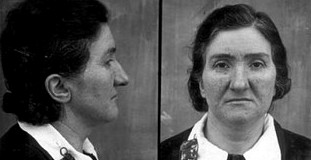
Leonarda Cianciulli
Serial killer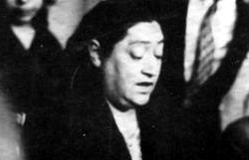 Felicitas Sanchez Aguillon
Serial killer · Mexico · 1930
Felícitas Sánchez Aguillón or Sánchez Neyra (1890 - June 16, 1941) was a Mexica…
50 victims
Felicitas Sanchez Aguillon
Serial killer · Mexico · 1930
Felícitas Sánchez Aguillón or Sánchez Neyra (1890 - June 16, 1941) was a Mexica…
50 victims
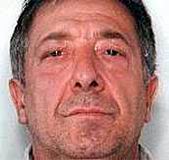 Donato Bilancia
Serial killer · Italy · 1997
Donato Bilancia was sentenced to 13 terms of life imprisonment, with no possibi…
17 victims
Donato Bilancia
Serial killer · Italy · 1997
Donato Bilancia was sentenced to 13 terms of life imprisonment, with no possibi…
17 victims
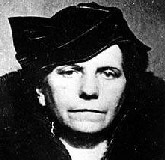 Marie Alexandrine Becker
Serial killer · Belgium · 1932
Marie Alexandrine Becker was born in 1877 and was from Liege, Belgium. She spen…
10 victims
Marie Alexandrine Becker
Serial killer · Belgium · 1932
Marie Alexandrine Becker was born in 1877 and was from Liege, Belgium. She spen…
10 victims
 Maurizio Minghella
Serial killer · Italy · 1978
Maurizio Minghella was born in Genova on 16 luglio 1958. He lived in the Bolzan…
9 victims
Maurizio Minghella
Serial killer · Italy · 1978
Maurizio Minghella was born in Genova on 16 luglio 1958. He lived in the Bolzan…
9 victims
 Terry Lynn King
Murderer · USA · 1983
Terry Lynn King was convicted of murder in the first degree while in the perpet…
1 victim
Terry Lynn King
Murderer · USA · 1983
Terry Lynn King was convicted of murder in the first degree while in the perpet…
1 victim
 Chevie Kehoe
Murderer · USA · 1996
Chevie Kehoe was born on January 19, 1973, and was identified as the oldest of…
3 victims
Chevie Kehoe
Murderer · USA · 1996
Chevie Kehoe was born on January 19, 1973, and was identified as the oldest of…
3 victims
 Colin Ferguson
Mass murderer · USA · 1993
Colin Ferguson was convicted of the December 7, 1993 shooting of 25 people aboa…
6 victims
Colin Ferguson
Mass murderer · USA · 1993
Colin Ferguson was convicted of the December 7, 1993 shooting of 25 people aboa…
6 victims
 Bruce Edwin Callins
Murderer · USA · 1980
Bruce Edwin Callins filed a petition for certiorari that was docketed in Johnso…
1 victim
Bruce Edwin Callins
Murderer · USA · 1980
Bruce Edwin Callins filed a petition for certiorari that was docketed in Johnso…
1 victim
 Dorothy Glaser
Murderer · USA · 1985
Dorothy Glaser was convicted of attempt to commit murder and malice murder in c…
1 victim
Dorothy Glaser
Murderer · USA · 1985
Dorothy Glaser was convicted of attempt to commit murder and malice murder in c…
1 victim
 Billy Ray Fox
Murderer · USA · 1985
Billy Ray Fox was convicted in Oklahoma County District Court of three counts o…
3 victims
Billy Ray Fox
Murderer · USA · 1985
Billy Ray Fox was convicted in Oklahoma County District Court of three counts o…
3 victims
- Gender
- female
- Country
- Italy
- Location
- Correggio, Emilia Romagna, Italy
- Date of birth
- November 14, 1893
- Age at first offence
- 46
- Characteristics
- cannibalism, torture, mutilation, evisceration
- Victim profile
- Faustina Setti, 73 / Francesca Soavi / Virginia Cacioppo, 53
- Method of murder
- Beating with an axe
- Date(s) of murder
- 1939 - 1940
- Years active
- 1939–1940
- Date of arrest
- —
- Status
-
Died in custody
Sentenced to thirty years in prison and three years in a criminal asylum; died of cerebral apoplexy in the women's criminal asylum in Pozzuoli on October 15, 1970
Case information
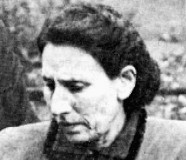
Leonarda Cianciulli (November 14, 1893, Montella, Province of Avellino – October 15, 1970) was an Italian serial killer. She was better known as the “Soap-Maker of Correggio.”
STATUS and death
Cianciulli was sentenced to thirty years in prison and three years in a criminal asylum. She died of cerebral apoplexy in the women's criminal asylum in Pozzuoli on October 15, 1970.
Background
Cianciulli was born in Montella. While still a young girl, Leonarda attempted suicide twice.
In 1914, she married a registry office clerk, Raffaele Pansardi. Her parents did not approve the marriage because they had planned for her to marry another man. Cianciulli claimed that her mother cursed them on this occasion. The couple moved to Lariano in Alta Irpinia.
Their home was destroyed by an earthquake in 1930, and they moved once more, to Correggio, where Leonarda opened a small shop and became very popular as a “nice, gentle woman,” a doting mother, and a nice neighbour.
Cianciulli had seventeen pregnancies during her marriage. Three children were lost to miscarriage, and ten more died in their youth. Consequently, she was heavily protective of the four surviving children.
Her fears were fueled by a warning she received from a fortune teller who said that she would marry and have children, but that all of the children would die. Cianciulli reportedly also visited another Gypsy who practiced palm reading. That second Gypsy told her, “In your right hand I see prison, in your left a criminal asylum.” Cianciulli was superstitious and appears to have taken these warnings very much to heart.
In 1939, she heard that her eldest and favourite son, Giuseppe, was to join the Italian army in preparation for World War II. Giuseppe was her favourite child. She came to the conclusion that his safety required human sacrifices.
She planned the deaths of three middle-aged women, all neighbours. The reasons given for how she selected them differed in the account: some sources recorded that she was something of a fortune teller herself and that the women visited her for help, while others stated that they were friends seeking advice.
Timeline
- 1914 — Leonarda Cianciulli married Raffaele Pansardi.
- 1930 — An earthquake destroyed the couple’s home.
- 1939 — Cianciulli heard that her eldest and favourite son, Giuseppe, was to join the Italian army.
- 1939 — She murdered Faustina Setti in Correggio.
- 1940 — She murdered Francesca Soavi.
- September 5, 1940 — Francesca Soavi was killed.
- September 30, 1940 — Virginia Cacioppo was killed.
- 1946 — Cianciulli was tried for murder in Reggio Emilia.
- October 15, 1970 — Cianciulli died of cerebral apoplexy in the women’s criminal asylum in Pozzuoli.
The offence
Cianciulli murdered three women in Correggio between 1939 and 1940. She turned their bodies into soap.
Method and preparation
In her memoir titled “An Embittered Soul's Confessions,” Cianciulli described dissolving body parts in caustic soda used to make soap, emptying the mixture into a nearby septic tank, and processing blood into dried material and mixing it with food ingredients.
Victims
Cianciulli murdered three women:
- Faustina Setti
- Francesca Soavi
- Virginia Cacioppo
Faustina Setti
Faustina Setti was described as a lifelong spinster and one of Cianciulli’s victims. Setti came to Cianciulli for help in finding a husband.
Cianciulli told Setti about a suitable mate in Pola, and convinced her to tell nobody of the news. Cianciulli further convinced Setti to write letters and postcards to relatives and friends, to be mailed when she reached Pola, telling them that everything was fine.
On the day of her departure, Setti came to visit Cianciulli one last time. Cianciulli offered her a glass of drugged wine, then killed her with an axe and dragged the body into a closet. Cianciulli cut the body into nine parts, gathered the blood into a basin, and later processed it.
In her memoir titled “An Embittered Soul's Confessions,” Cianciulli described what happened next in her official statement:
I threw the pieces into a pot, added seven kilos of caustic soda, which I had bought to make soap, and stirred the whole mixture until the pieces dissolved in a thick, dark mush that I poured into several buckets and emptied in a nearby septic tank. As for the blood in the basin, I waited until it had coagulated, dried it in the oven, ground it and mixed it with flour, sugar, chocolate, milk and eggs, as well as a bit of margarine, kneading all the ingredients together. I made lots of crunchy tea cakes and served them to the ladies who came to visit, though Giuseppe and I also ate them.
Some sources recorded that Cianciulli received Setti’s life savings, 30,000 lire, as payment for her services.
Francesca Soavi
Francesca Soavi was the second victim. Cianciulli claimed to have found her a job at a school for girls in Piacenza.
As with Setti, Soavi was convinced to write postcards to be sent to friends, detailing her plans, this time from Correggio. Soavi came to visit Cianciulli before her departure, received drugged wine, and was killed with an axe.
The murder occurred on September 5, 1940. Soavi’s body was treated the same way as Setti’s. Cianciulli is said to have obtained 3,000 lire from her second victim.
Virginia Cacioppo
Virginia Cacioppo was Cianciulli’s final victim. She had been described as a former soprano who had sung at La Scala. She was also described as a 53-year-old who was reduced to living with her memories of the past in poverty.
For Cacioppo, Cianciulli claimed to have found work as secretary for a mysterious impresario in Florence. As with the other two women, she was told not to tell a single person where she was going. On September 30, 1940, Cacioppo came for a last visit with Cianciulli.
The pattern to the murder was described as exactly the same as the first two. According to Cianciulli’s statement:
She ended up in the pot, like the other two...her flesh was fat and white, when it had melted I added a bottle of cologne, and after a long time on the boil I was able to make some most acceptable creamy soap. I gave bars to neighbours and acquaintances. The cakes, too, were better: that woman was really sweet.
Cianciulli reportedly received 50,000 lire and assorted jewels from Cacioppo.
Investigation
Cacioppo’s sister-in-law grew suspicious at Cacioppo’s sudden disappearance. The sister-in-law had last seen Cacioppo entering Cianciulli’s house. The sister-in-law reported her fears to the superintendent of police in Reggio Emilia.
Investigators opened an investigation and soon arrested Cianciulli. Cianciulli immediately confessed to the murders and provided detailed accounts of what she had done.
Trial
Cianciulli was tried for murder in Reggio Emilia in 1946.
Cianciulli remained unrepentant. During the trial, she corrected the official account while on the stand. At the trial in Reggio Emilia last week, Poetess Leonarda gripped the witness-stand rail with oddly delicate hands and calmly set the prosecutor right on certain details. Her deep-set dark eyes gleamed with a wild inner pride as she concluded:
I gave the copper ladle, which I used to skim the fat off the kettles, to my country, which was so badly in in need of metal during the last days of the war....
She was found guilty of her crimes and sentenced to thirty years in prison and three years in a criminal asylum.
Sentencing
Cianciulli received a sentence of thirty years in prison and three years in a criminal asylum.
Outcome
Cianciulli died of cerebral apoplexy in the women’s criminal asylum in Pozzuoli on October 15, 1970.
Aftermath and materials on display
A number of artifacts from the case were on display at the Criminological Museum in Rome, including the pot in which the victims were boiled.
Other details
Cianciulli married Raffaele Pansardi in 1914. Materials and tools associated with the case included a hammer, hacksaw, kitchen knife, axes, and a hatchet. The case is associated with Reggio Emilia, Public Prosecutor’s Office, 1949.
Spotted an error, or have more information about this case?