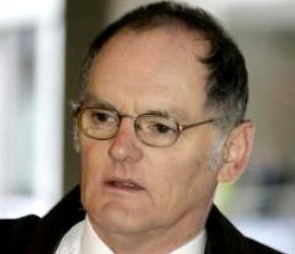
Gordon Park
Murderer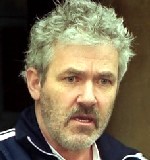 John Cooper
Murderer · United Kingdom · 1985
John Cooper was a serial killer from Milford Haven, Pembrokeshire. Cooper was c…
4 victims
John Cooper
Murderer · United Kingdom · 1985
John Cooper was a serial killer from Milford Haven, Pembrokeshire. Cooper was c…
4 victims
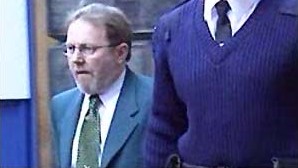 Andrew Walker
Murderer · United Kingdom · 1985
Royal Scots corporal Andrew Walker killed three Army colleagues in a payroll ro…
3 victims
Andrew Walker
Murderer · United Kingdom · 1985
Royal Scots corporal Andrew Walker killed three Army colleagues in a payroll ro…
3 victims
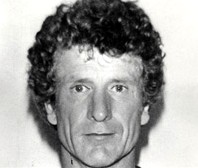 Arthur Hutchinson
Murderer · United Kingdom · 1983
Arthur Hutchinson was an English murderer and rapist who committed three murder…
3 victims
Arthur Hutchinson
Murderer · United Kingdom · 1983
Arthur Hutchinson was an English murderer and rapist who committed three murder…
3 victims
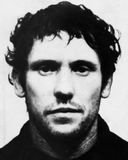 Barry Prudom
Murderer · United Kingdom · 1982
Barry Prudom was the prime suspect in the killings of police officers after pol…
3 victims
Barry Prudom
Murderer · United Kingdom · 1982
Barry Prudom was the prime suspect in the killings of police officers after pol…
3 victims
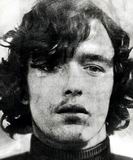 David McGreavy
Murderer · United Kingdom · 1973
David McGreavy was born in 1950 or 1951. He was an English convicted murderer w…
3 victims
David McGreavy
Murderer · United Kingdom · 1973
David McGreavy was born in 1950 or 1951. He was an English convicted murderer w…
3 victims
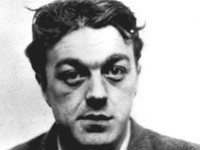 Harry Maurice Roberts
Murderer · United Kingdom · 1966
Name: Harry Maurice Roberts Birth year: 1936 Birthplace: Kennington, London, En…
3 victims
Harry Maurice Roberts
Murderer · United Kingdom · 1966
Name: Harry Maurice Roberts Birth year: 1936 Birthplace: Kennington, London, En…
3 victims
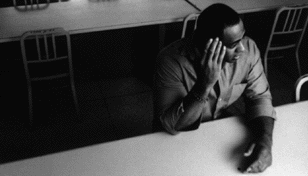 Daniel Webb
Homicide · USA · 1989
Daniel Webb (No 124596) was held at Sommers Correctional Institution in Somers,…
1 victim
Daniel Webb
Homicide · USA · 1989
Daniel Webb (No 124596) was held at Sommers Correctional Institution in Somers,…
1 victim
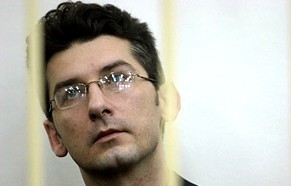 Krystian Bala
Murderer · Poland · 2000
Krystian Bala (born 1973) was a Polish writer and photographer. In 2007, he was…
1 victim
Krystian Bala
Murderer · Poland · 2000
Krystian Bala (born 1973) was a Polish writer and photographer. In 2007, he was…
1 victim
 Donetta Hill
Murderer · USA · 1990
Donetta Hill, also referred to as Doneta Hill, was born in 1966. She was a Sout…
2 victims
Donetta Hill
Murderer · USA · 1990
Donetta Hill, also referred to as Doneta Hill, was born in 1966. She was a Sout…
2 victims
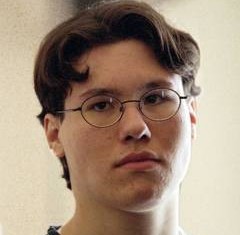 Seth Privacky
Mass murderer · USA · 1998
Seth Privacky (June 2, 1980 - July 15, 2010) was sentenced to life in prison wi…
5 victims
Seth Privacky
Mass murderer · USA · 1998
Seth Privacky (June 2, 1980 - July 15, 2010) was sentenced to life in prison wi…
5 victims
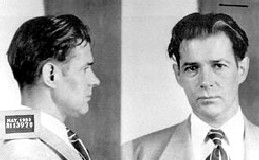 Gerhard Puff
Murderer · USA · 1952
Gerhard Arthur Puff (died August 21, 1954) was an American gangster. He was exe…
1 victim
Gerhard Puff
Murderer · USA · 1952
Gerhard Arthur Puff (died August 21, 1954) was an American gangster. He was exe…
1 victim
- Gender
- male
- Country
- United Kingdom
- Location
- Cumbria, North West England, England, United Kingdom
- Date of birth
- January 25, 1944
- Age at first offence
- 32
- Characteristics
- parricide
- Victim profile
- Carol Ann Park, 30 (his first wife)
- Method of murder
- Bludgeoned to death with an ice axe
- Date(s) of murder
- July 17, 1976
- Years active
- 1976
- Date of arrest
- January 13, 2004
- Status
-
Life imprisonment
Sentenced to life in prison, 2005; found hanged and unconscious in his prison cell in Garth Prison on 25 January 2010 and pronounced dead at the scene later that morning
Case name
Gordon Park (murder of his wife, Carol Park)
STATUS
Sentenced to life in prison in 2005; found hanged and unconscious in his prison cell in Garth Prison on 25 January 2010 and pronounced dead at the scene later that morning
Timeline
- July 17, 1976 — Carol Park went missing.
- 1997 — Carol Park’s body was discovered at the bottom of Coniston Water.
- August 13 — Carol Park’s body was brought to the surface by police divers.
- 8.00am (following August 24, 1997 arrival home) — Gordon Park was arrested on suspicion of murder and charged with the murder of Carol Park.
- 1997 (after two weeks on remand) — Gordon Park’s solicitors persuaded the court to grant him bail.
- January 6, 1998 — The charges against Gordon Park were dropped due to lack of evidence.
- January 13, 2004 — Gordon Park was again arrested.
- (10-week trial at Manchester Crown Court leading to sentence) — Gordon Park was convicted of the murder and sentenced to life imprisonment with a minimum term of at least 15 years before being considered for parole.
- December 6, 2007 — Clarion Solicitors said they would launch an appeal.
- (October, campaigners’ statement referenced “this week” in relation to a signed, witnessed statement) — Campaigners in support of Park said they had in their possession a signed, witnessed statement made “this week”.
- November 2008 — The appeal bid was rejected by three judges at the Court of Appeal in London.
- 25 January 2010 — Park was found hanged and unconscious in his prison cell in Garth Prison and pronounced dead later that morning.
- May 1, 2007 — Sandra Lean’s book No Smoke - The Shocking Truth About British Justice was published (features seven high-profile convicted murderers including Park).
Background
Gordon Park was born in 1943 and was described as a retired teacher from Leece, near Barrow-in-Furness, Cumbria. He was jailed for life in 2005 for the murder of his wife in 1976.
Gordon Park was described in another part of the record as born 1944 and as a retired teacher from Leece, near Ulverston, Cumbria. Carol Park was the wife and the mother of three children, and she was described as 30 years old at the time of the murder in 1976.
Carol Park disappeared in July 1976 and remained hidden in Coniston Water until 1997, when her body was discovered by divers.
Mrs Park was dubbed “the Lady in the Lake” by detectives after the Raymond Chandler crime novel The Lady in the Lake.
Park’s son Jeremy supported him, and the record said Jeremy is also Gordon’s and Carol’s son. The record also referred to Park’s son Rachael. The record said Park and Carol adopted a third child, Vanessa, when she was 18 months old, after her mother Christie (Carol’s sister) was murdered in 1969 at age 17 by Christie’s boyfriend.
Gordon Park’s interests included sailing and climbing, and these were described as relevant to the case due to the knots used to tie up Carol Park’s body.
While in prison, Park was described as practising tai chi, taking a maths degree, and keeping fit.
The offence
Carol Park was killed in 1976. The record said she was bludgeoned to death with an ice axe. Her face was described as smashed by multiple blows, and it was later found in court that the murder weapon was an ice axe.
The record said her body was bound with rope using complex knots, weighed down with rocks and lead piping, and then dumped overboard from a boat on Coniston Water. The record described her body as being in the foetal position after being trussed.
The record stated that the court heard that if Carol Park’s body had been dumped just a few feet further from the shore it would never have been found, and that it had landed on an underwater ledge; if it had landed a few metres farther from the shore it would probably have sunk to the bottom.
Investigation
Carol Park’s body was found in 1997, wearing only a nightdress, 75 feet down at the bottom of Coniston Water by amateur divers. The body was brought to the surface by police divers on August 13.
The record stated the body had been wrapped in a pinafore dress, a canvas rucksack and plastic bags, tied with several knots, and weighed down with lead piping. It also stated her eyes had been covered by plasters.
The record said there were severe injuries to the skull and that her face had been smashed by multiple blows.
The record said the body was tied with knots, and that there had been a meticulous use of knots which implicated Park. It further stated that Park was a climber and sailor with an “unusual” interest in knots.
The record stated that the knots used were “granny” knots, and that police were unable to find a single example of such a knot on Park’s property. It also stated that other evidence about rocks found near the body being similar to those from near Park’s home was “bitterly disputed”.
The record said the police then revisited the site where the body was discovered after a later arrest and found a piece of Westmorland green slate, described as a stone that matched rocks that made up the wall of the family’s bungalow.
The record said Keith Churchman, a police officer involved in the case, said: “the other difficulty was of course the body was taken away from the place where it was killed.”
The record also said it was reported that the police files from the original missing persons enquiry into Carol Park had gone missing.
The record stated that Park’s supporters claimed that officers had put words in a witness’s mouth, and it recorded a campaigners’ statement that “police officers did put words in my mouth regarding Gordon Park” and “the police told me what to say in court.”
The record stated that Cumbria Constabulary said detectives carried out a full and thorough investigation and presented the full facts to the CPS, after which the case was tried by a jury and Gordon Park was found guilty of the murder of Carol Park in 1976.
Arrest
The record said that at the time of the discovery of the body, Gordon Park and his third wife Jenny were on a cycling holiday in France, and that they heard news of the discovery of the body and were said to have seen footage of the police searching their house.
The record said that on August 24 they arrived home and Gordon was arrested on suspicion of murder at 8.00am the next morning. The record said he was charged with the murder of Carol Park and remanded in Preston prison.
After the charges were dropped, the record said the fact that the charges were dropped angered Carol’s brother, Ivor Price, who said he was disgusted by the way Carol was portrayed in the trial, and said Carol was not “someone who [was] cheap or had a string of lovers.”
The record stated that Gordon Park was again arrested on January 13, 2004, with police saying the murder file had never been closed and that the arrest followed new leads.
The record said the new leads were later reported to be a confession by Michael Wainwright, who claimed to have been a cell mate of Gordon’s during his short prison stay in 1997.
Trial
The case was brought to trial at Manchester Crown Court and lasted ten weeks.
The record said there was no single piece of evidence that pointed to Gordon indisputably. The prosecution argued that when the evidence was placed together it could only point at Park, and not “a 'mysterious stranger or secret lover'.”
The record said the case primarily rested on circumstantial evidence, and that the jury was asked to consider knots, rocks used to weight down the body, and the ice axe, all linking Gordon Park to the crime.
The record said that statements of Michael Wainwright and another of Gordon’s cell mates, described as having learning difficulties, were used as evidence by the prosecution.
The record stated that the statements were about Park’s alleged role and included speculation by the prosecution that Gordon had “drugged his wife, possibly on or around the 17th July, tied her up and stored her body in a chest freezer before dumping it in Coniston Water”.
The record also said the court found that Gordon first put his hands around Carol’s neck to strangle her and that she had struggled. It said he then grabbed his ice axe and brought it down on her face with “considerable” force, smashing the front right-hand side of her face, splitting open her head and smashing her teeth.
The record quoted pathologist Dr. Edwin Tapp describing the attack as: “two big heavy, crushing blows”.
The record said that after this Gordon dumped his wife’s body in the lake and went back to his day-to-day life.
During sentencing, the record said the judge said he had taken into account the “terrible concealment” of the body.
The record stated that Park was told he must serve at least 15 years, and that he was sentenced to be jailed for life.
The record stated the record contained narrative about “the Lady in the Lake trial”, described as a 2005 murder case.
Sentencing
The trial judge sentenced Gordon Park to life imprisonment and recommended that he should serve a minimum of 15 years before being considered for parole.
The record stated that at sentencing he was told he must serve at least 15 years.
Appeals
On December 6, 2007, the record said Clarion Solicitors represented Gordon Park and said they would launch an appeal, stating:
“The appeal is based upon fresh evidence that was not available at the original trial, it is hoped the conviction will be quashed and a retrial ordered... Upon his conviction, Mr Park's family and friends launched a campaign to clear his name, claiming there was no single piece of evidence that pointed indisputably to him.”
The record named Rob Rode as a solicitor for Park and said he hoped to hear from Manchester Crown Court on whether grounds for appeal were strong enough for the matter to be taken to the Court of Appeal in London. It also stated that Simon Bourne-Arton QC worked with Rode.
The record said that in October, campaigners in support of Park said they had “a signed, witnessed, statement, made this week, by one of the main prosecution witnesses, stating, ‘police officers did put words in my mouth regarding Gordon Park’ and ‘the police told me what to say in court.’”
The record stated that Pastor George Harrison, acting as spokesperson for campaigners, claimed that the appeals process was flawed and “rendered virtually impossible” due to costs.
In November 2008, the record stated that the appeal bid was rejected by three judges at the Court of Appeal in London. It stated that QC Simon Bourne had wanted to call an expert witness to challenge geological evidence used at the trial.
The record quoted Lord Justice Keene saying:
“The new evidence did not raise “a reasonable doubt as to the safety of this conviction”, saying that the geological evidence was only a small element of the “strong circumstantial case against the applicant”.”
The record stated that the new evidence presented by geologist Andrew Moncrief concerned the rock found with the body and that Moncrief argued it was “indistinguishable” from others in the area and therefore “meaningless”.
Outcome
Gordon Park was sentenced to life in prison in 2005.
On 25 January 2010, the record stated that on the morning of Park’s 66th birthday he was found hanged and unconscious in his prison cell in Garth Prison and pronounced dead at the scene later in the morning.
The record stated it was believed that a ligature was involved and that Park inflicted the injuries upon himself.
The record stated that Park had not been assessed for the risk of suicide.
The record quoted Jeremy Park as saying: “we are all completely devastated and still believe his innocence 100%”.
Aftermath
The record stated that Park was supported by his family and friends and continued to profess his innocence.
It said that after a guilty verdict, local paper sales for the North-West Evening Mail increased and that special editions ran.
The record stated that around a year into Park’s life sentence, about 40 family members and friends held a vigil at Strangeways Prison “in a bid to raise awareness of “the fact that there is an innocent man in prison”.” It added that another vigil was held a year later led by Jenny Park and a third on the third anniversary of Park’s imprisonment.
The record stated that support included a £5,000 offer for anyone providing evidence that leads to Gordon’s freedom, along with planned adverts in the North-West Evening Mail and leaflets to 20,000 homes in the Furness area. The record stated that Jeremy Park wrote to the North-West Evening Mail to confirm he wanted nothing to do with the reward and that George Harrison had no right to include his name, contact details or email address, or mention the freegordon website, in the adverts.
The record included a statement from Ivor Price after the guilty verdict, saying: “no doubt” and “Carol was a lovely, bubbly girl who was very clever and intelligent. What has been said about her has been heartbreaking. This was about one thing: justice for Carol.”
The record stated the Price family sat away from Gordon Park’s supporters during the trial.
The record also stated that Tony Benn supported Park, saying that there was considerable doubt about Gordon’s conviction and that he would do all he could to help campaign for his freedom. It recorded Benn being quoted that the case was a “grave injustice”.
The record stated Tony Benn was one of over 300 people who signed the “Gordon Park is Innocent” petition.
The record said supporters claimed the evidence against Park had holes and described time between murder and trial as making it difficult to track potential witnesses. It said Keith Churchman commented that “the other difficulty was of course the body was taken away from the place where it was killed.”
The record stated the case featured prominently in the book No Smoke - The Shocking Truth About British Justice by Sandra Lean, published on May 1, 2007, which claimed the expert testimonies in the Lady in the Lake trial were flawed and that certain evidence was withheld, and that sensationalist reporting influenced the court by persuading them that Park was the only person who could have killed his wife.
The record quoted Park in a written interview with The Westmorland Gazette nine months into his sentence:
“They [other inmates] may smoke incessantly, play loud music, the TV or video games, rifle your drawers, steal, lie etc. There is not a lot you can do about it... I watched a guy "chasing the dragon". It frightened me to death. I had never seen that before.”
The record also quoted Park protesting his innocence:
“If I knew who killed my wife, how, where, why, then I would have said so. I did not know then. I do not know now.”
Other details
Trial-related claims about evidence disputes
The record stated that Park’s supporters claimed police were unable to find a “single example of such a knot” on Park’s property, and that they disputed evidence about rocks found near the body.
The record stated that some investigators allegedly failed to acknowledge that rigor mortis passes in a 24-48 hour time period and that the body could feasibly have been trussed once rigor mortis had passed.
The record also stated that Professor Kenneth Pye, a defense witness, said there was no evidence that the rock had ever been on the lake bed at all.
The record stated that an article said a policeman said to be responsible for finding the rock fainted when produced in court, offering no explanation, while still denying he ever found it.
The record stated that one claim about knots was that the knots on Carol’s body were mostly “granny knots”, and that there was no evidence Gordon ever used. It also stated that an article claimed the evidence of knots was irrelevant because climbers and yachtsmen were common in the area.
The record stated that prosecution eventually admitted Westmorland green slate had been worked in the area for hundreds of years and could have come from anywhere.
Missing persons enquiry and relationship narrative
The record said Carol had talked of tracing her biological parents and that she was adopted.
The record stated that on the day she vanished the family had been due to visit Blackpool on a day trip. It said Carol said she felt unwell and wanted to remain behind in bed, and she was never seen alive again by her family.
The record stated that Gordon claimed Carol left home for another man and that their relationship was turbulent, with Carol leaving their home in Leece twice before.
The record stated Gordon claimed he did not report her missing for six weeks and said it was because she had left their home twice before. It stated Gordon claimed that it wasn’t until she didn’t return in time to take up her job as a primary school teacher in September that he realised there was a problem and reported her missing via his solicitor, after which her family was informed.
The record stated Gordon claimed he returned home to find Carol had left the house, leaving behind her wedding ring, and there was no sign of a struggle.
The record stated a missing persons enquiry was launched but nothing came of it, and that the missing persons report was subsequently lost.
The record stated it was implied by some that freemasons involvement by both Gordon and a senior police commander (who had died by the time the article was published) contributed, and that Sandra Lean refuted this by claiming Gordon had never been a freemason.
Witness-related points and contested testimony
The record stated that Michael Wainwright was described as a “jailhouse snitch” and described as “the most disreputable of all”, and that it said banks was described as “highly suggestible”, frequently changed his story, and also claimed Park had admitted to killing Carol while sailing to Blankpool.
The record stated Wainwright was described as a heavy cannabis smoker and admitted to hearing voices. It said Wainwright claimed Gordon said he went upstairs, found Carol in bed with another man, and killed her in a fit of rage.
The record stated that it had been said Park had never actually met Wainwright.
The record said the only first-hand witness named was Joan Young, who came forward in 2004 claiming she had seen someone push something over the side of a boat on Coniston Water. It said her testimony was challenged due to time passed and that her husband saw nothing. It said her husband claimed he was reading his paper at the time.
The record stated it had been said Young was too far away to identify the person in the boat and that it couldn’t have been Carol Park’s body being dumped because the Youngs were positioned so that the location Carol’s body was found would have been visibly blocked by an island.
The record stated Young described a boat that appeared to be a cruiser.
The record stated that despite Gordon owning a large yacht in 1997, in 1976 he owned a 505 racing dinghy and sold it later that year.
The record said there were three witnesses said to provide direct evidence supporting the idea that Park was innocent: a neighbour claiming they saw Carol at the bottom of her driveway; a second neighbour claiming they saw an unidentified man in a Volkswagen Beetle in the Parks’ drive for twenty minutes; and a woman who knew Carol seeing her at Charnock Richard services around 6pm that night, noting Carol had not greeted her husband and describing her as “snobby”.
The record stated that the presence of the unidentified car “has never been accounted for.”
Other individuals mentioned
The record mentioned Raymond Chandler in relation to the detective nickname “Lady in the Lake”.
The record mentioned John Rapson and stated he was responsible for murdering Carol’s sister (Christie).
The record mentioned Michael Wainwright, Banks (spelled as Banks in the record), Joan Young, Sandra Lean, Exposure Publishing, Andrew Moncrief, Pastor George Harrison, Tony Benn, Lord Justice Keene, QC Simon Bourne, Rob Rode, Clarion Solicitors, CPS, Cumbria Constabulary, Manchester Crown Court, and the Court of Appeal in London.
The record referenced The Westmorland Gazette, the North-West Evening Mail, Inside Time, and the Sunday Herald, and also referenced the film/press attention and petitions, vigils, and planned adverts and leaflets.
People and family relationships
Gordon Park had a wife named Carol Park (also referred to as Carol Ann Park and Carol Park). He had a third wife named Jenny. The record also stated he had a second wife named Catherine, and that his third wife Jenny was whom he was still married to at the time of imprisonment.
The record stated Park worked as a village primary school teacher and had been retired by the time he was prosecuted for the murder of his first wife, Carol.
The record stated Park’s children included Jeremy, Rachael, and Vanessa. The record stated Vanessa was adopted when she was 18 months old after Carol’s sister Christie was murdered in 1969 at age 17 by her boyfriend.

Spotted an error, or have more information about this case?