
Nathan Ybanez
Homicide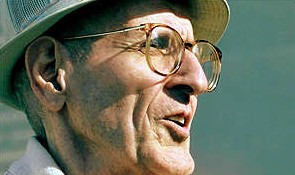 Jack Kevorkian
Homicide · USA · 1990
Jack Kevorkian (born May 26, 1928) was a controversial American pathologist. He…
130 victims
Jack Kevorkian
Homicide · USA · 1990
Jack Kevorkian (born May 26, 1928) was a controversial American pathologist. He…
130 victims
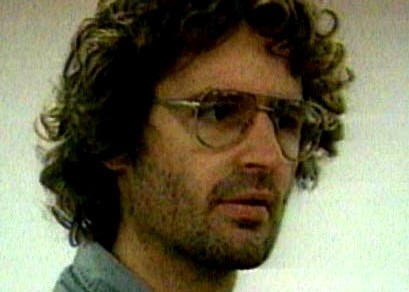 David Koresh
Homicide · USA · 1993
David Koresh (born Vernon Wayne Howell; August 17, 1959 – April 19, 1993) led t…
79 victims
David Koresh
Homicide · USA · 1993
David Koresh (born Vernon Wayne Howell; August 17, 1959 – April 19, 1993) led t…
79 victims
 Todd Hall
Homicide · USA · 1996
Todd Hall was described by neighbors as "mentally slow" and was said to have su…
9 victims
Todd Hall
Homicide · USA · 1996
Todd Hall was described by neighbors as "mentally slow" and was said to have su…
9 victims
 Joshua Jenkins
Homicide · USA · 1996
Joshua Jenkins was a 15-year-old American killer who killed five members of his…
5 victims
Joshua Jenkins
Homicide · USA · 1996
Joshua Jenkins was a 15-year-old American killer who killed five members of his…
5 victims
 Horace Rayner
Murderer · United Kingdom · 1907
Horace Raynor was sentenced to death for the killing of William Whiteley. After…
1 victim
Horace Rayner
Murderer · United Kingdom · 1907
Horace Raynor was sentenced to death for the killing of William Whiteley. After…
1 victim
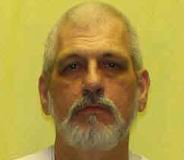 Harry Mitts
Murderer · USA · 1994
Harry Mitts was sentenced to death in November 1994 for murders and attempted m…
2 victims
Harry Mitts
Murderer · USA · 1994
Harry Mitts was sentenced to death in November 1994 for murders and attempted m…
2 victims
 Katherine Bunnell
Murderer · USA · 2004
Defendant: Katherine Bunnell (alias Jane Doe) Victim: Thomas “T.J.” Wright (3-y…
1 victim
Katherine Bunnell
Murderer · USA · 2004
Defendant: Katherine Bunnell (alias Jane Doe) Victim: Thomas “T.J.” Wright (3-y…
1 victim
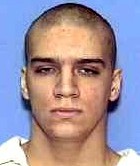 Mark Sam Arthur
Homicide · USA · 1996
Mark Sam Arthur was a juvenile at the time of the offence and was later sentenc…
1 victim
Mark Sam Arthur
Homicide · USA · 1996
Mark Sam Arthur was a juvenile at the time of the offence and was later sentenc…
1 victim
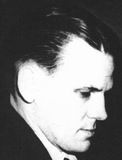 James Crittenton Lucas
Murderer · USA · 1938
James Crittenton Lucas was an American criminal known as James “Texas Bank Robb…
1 victim
James Crittenton Lucas
Murderer · USA · 1938
James Crittenton Lucas was an American criminal known as James “Texas Bank Robb…
1 victim
- Gender
- male
- Country
- USA
- Location
- Douglas County, Colorado, USA
- Date of birth
- 1982
- Age at first offence
- 16
- Characteristics
- juvenile (16), parricide, history of mental illness, abuse, drug addict
- Victim profile
- Julie Ybanez, 43 (his mother)
- Method of murder
- Strangulation
- Date(s) of murder
- June 5, 1998
- Years active
- 1998
- Date of arrest
- Next day
- Status
-
Life imprisonment
Sentenced to life in prison without parole on January 27, 2000
Case details
Nathan Ybanez was a 16-year-old defendant convicted of first-degree murder in his mother’s slaying. He was sentenced to life in prison without parole on January 27, 2000.
Timeline
- June 5, 1998 — Nathan Ybanez and Erik Jensen bludgeoned and strangled Julie Ybanez, a 43-year-old mother of Nathan Ybanez.
- June 6, 1998 (about 4 a.m.) — A Douglas County deputy spotted Nathan in Daniels Park in Highlands Ranch with his mother’s dead body in a sleeping bag; Nathan had planned to bury her in the park.
- Late 1997 — The secrets of Nathan Ybanez’s home life began spilling out, including reports that his father was beating him and that he was being abused; Nathan wandered the streets for two days and called the Douglas County Sheriff’s Office requesting social services.
- During a period in 1997 — Nathan ran away at least twice after being reported missing by his parents, following arguments about drug use and discipline; his parents threatened to send him to a Christian military school; his mother confiscated some of his albums.
- About 8 months after his 1997 help-seeking call — Nathan beat and strangled his mother with a fireplace tool in their Highlands Ranch apartment.
- June 5, 1996 — Julie told Nate that she was sending him to a Christian boot camp in Missouri.
- June 5, 1996 (night) — Erik Jensen picked Nate up from work and drove to Nate’s place; Nate told Erik to check on him if he was not back in 20 minutes.
- August 1999 — Erik Jensen went on trial first and was convicted of first-degree murder.
- October 1999 — Nathan Ybanez’s trial commenced; it was televised on Court TV.
- January 28, 2000 — Court TV published a report discussing Nathan Ybanez’s conviction and sentencing.
- September 20, 2005 — A journal entry excerpt from Nathan Ybanez was published online.
The offence
Julie Ybanez was killed by Nathan Ybanez in Highlands Ranch, Colorado. The killing involved blows to her head and strangling.
The trial evidence described:
- Julie received 20 blows to the head with fireplace tongs.
- She was strangled.
- There were three fractured fingers.
- Prosecutors were uncertain which happened first and who the strangler was, and the defense stated that dispute.
Nathan denied doing the choking that was declared the cause of death.
After the killing:
- Prosecutors said Nathan and Erik Jensen phoned a “Troublebound” member to request help cleaning up the crime scene.
- They helped clean up the crime scene and carry Julie’s body to the car trunk.
- Brett Baker assisted in building the cases against the two boys in exchange for immunity.
People involved
Defendant
- Nathan Ybanez — 16-year-old defendant convicted of first-degree murder in his mother’s slaying and sentenced to life in prison without parole.
Victim
- Julie Ybanez — 43-year-old mother of Nathan Ybanez; killed in her apartment in Highlands Ranch.
Other named individuals
- Erik Jensen — Nathan Ybanez’s friend; convicted and sentenced to life without parole for murder.
- Brett Baker — a “Troublebound” member connected to cleaning up and evidence handling; assisted in building the cases against the two boys in exchange for immunity.
- Julie Ybanez’s separated husband Roger Ybanez — Nathan Ybanez’s father; testified and denied sexually abusing Nathan or abusing him sexually or physically while acknowledging other instances of violence and threatening behavior.
- Terrence Johnson — Nathan Ybanez’s new lawyer; sought to overturn the verdict by challenging trial defense as ineffective; also quoted on conflict of interest and on his view of the odds at trial.
- Craig Truman — Nathan Ybanez’s trial lawyer; did not call any witnesses on his behalf and asked jurors for second-degree murder in closing.
- Jeff Pagliuca — Erik Jensen’s new lawyer; interviewed Nathan in prison and helped initiate a wider investigation into Nathan’s background.
- Dr. Rich ard Spiegle — psychologist and expert engaged to determine what prompted Nathan to kill; later described observations about scars and testimony about abuse claims.
- Mary Ellen Johnson — mother of Terrence Johnson and director of The Pendulum Foundation.
- Lynn Hefley — state Rep.; commented on sentencing reform and mitigation.
- Kathleen Heide — University of South Florida criminology professor; researched common characteristics among adolescent parricide offenders.
- Paul Mones — Oregon lawyer; represented more than 200 parricide offenders and was quoted about parricide cases and battered-child defenses.
- Curt Jensen — Erik Jensen’s father; discussed the family’s concerns and seeking social services.
- Tina Thompson — Roger Ybanez’s sister; said she had seen Roger yank and hit Nathan and said abuse allegations should be considered.
- Pat Jensen — Erik Jensen’s mother; described Julie expressing fear that Roger would hurt Nathan.
Investigation and pre-trial context
Nathan Ybanez’s home life included multiple reports of abuse and attempts to seek help.
In late 1997, Nathan told friends his dad was beating him. Parents of a schoolmate alerted police that they believed he was being abused. Nathan also called the Douglas County Sheriff’s Office after wandering the streets for two days and requested social services be contacted for relocation. An officer wrote that Nathan was unable to live at home and would not explain why he had run away. The deputy returned Nathan to his mother, and the Sheriff’s Office refused to discuss whether child welfare workers were called.
Eight months later, Nathan killed Julie Ybanez in Highlands Ranch with a fireplace tool.
At least two runaways were documented in Douglas County Sheriff’s Office records. Nathan was returned after one midnight dash to the Bakers’ house, where he arrived crying. Nathan described a raging father who had shaken him awake, trashed his room, thrown him against a wall, and choked him while his mother stood by.
His parents placed him in a mental hospital, Centennial Peaks in Louisville. His psychologist, Dr. Rich ard Spiegle, later addressed hospital records reporting a “choking” incident.
Relatives said Julie was obsessed with tracking Nathan’s movements. Julie told Pat Jensen, Erik’s mom, that she feared Roger would hurt Nathan.
The Bakers and Jensens discussed concerns and took them to Douglas County Social Services offices, filling out a report and telling a caseworker authorities should investigate Nathan’s home life. Curt Jensen said they never heard from an investigator.
Arrest and discovery at the scene
At about 4 a.m. on June 6, 1998, a Douglas County deputy steered his patrol car into Daniels Park in Highlands Ranch and saw a blue Lexus with its headlights on. The trunk lid was open and Nathan stood next to a sleeping bag. Inside the sleeping bag was Nathan’s dead mother. Nathan had planned to bury her in the park.
Nathan’s parents had told him earlier that morning that they had decided to send him away because they would not tolerate his running away and drug use.
A police officer on patrol spotted Nathan in a public park standing over his mother’s body the next morning after the killing.
Trial
Charges and posture of the case
Nathan Ybanez was charged as an adult with first-degree murder. The Douglas County district attorney bypassed the juvenile justice system by filing first-degree murder charges in adult criminal court.
The defense insisted that, although Nathan played a part, he was not guilty of first-degree murder like Erik Jensen. The defense argued Jensen was the real instigator and Nathan was a follower. The defense also sought to reduce the conviction to a lesser charge.
Defence representation and trial conduct
Craig Truman was Nathan Ybanez’s trial lawyer. The trial lasted less than three days and was televised on Court TV. Truman called no witnesses on Nathan’s behalf. In the closing arguments, Truman asked jurors to hand Nathan a second-degree murder conviction instead of first-degree, and the jury returned a first-degree murder guilty verdict.
A conflict was described in trial proceedings. The tension between father and son became publicly evident by an audio tape played during a motion to throw out Nathan’s confession, in which Roger is heard cursing him angrily before storming out of the room.
Terrence Johnson later said Nathan “basically” walked into trial with “absolutely no chance of winning” because of ineffective assistance and conflict issues. The account included that the father was allowed to guide the defense process.
Evidence and testimony mentioned
The prosecution argued Nathan acted with deliberation, using fireplace tongs to beat and strangle his mother during a struggle. Prosecutors said Nathan and Erik phoned for help cleaning up after the murder.
Brett Baker testified on premeditation and post-crime involvement. Baker testified that Nathan remarked beforehand that he was going to kill his mother, which the prosecution used to support premeditation. Baker also testified that Jensen described after the murder how he had helped Nathan kill Julie.
Prosecutors put Roger Ybanez on the stand. During trial testimony, Roger briefly admitted to a fight he provoked with his son, including grabbing Nathan and throwing him up against the wall and telling him he needed to pay attention.
Truman mocked the notion of abuse briefly during defense argument, quoting friends as saying Roger “can’t discipline you,” and Nathan “can” have rights and that “you’re being abused, and we’re going to help you,” which was described as influencing Nathan’s belief.
Verdict
A jury convicted Nathan Ybanez of first-degree murder. The verdict triggered mandatory life without parole.
Sentencing
Nathan Ybanez was sentenced to life in prison without parole. The sentencing outcome is stated as occurring on January 27, 2000.
Appeals and post-trial developments
Nathan Ybanez planned to appeal his conviction based on ineffective assistance of counsel. His new lawyers and family members stated that he had been “steamrolled” by the legal system and that his father, the alleged abuser, was allowed to guide the defense process.
In prison interviews and investigations:
- Jeff Pagliuca, Erik Jensen’s new lawyer, interviewed Nathan in prison and quizzed him about his background in search of indications of abuse.
- Nathan skirted questions about his background; Pagliuca later concluded that Nathan fit a profile of a sexual-abuse victim and shared those findings with the Jensens.
- Terrence Johnson agreed to begin investigating the conviction and family history and enlisted Dr. Rich ard Spiegle, a forensic psychologist and former child therapist.
Dr. Rich ard Spiegle described an investigative approach that included initially assuming many kids were lying and trying to get out of trouble. He said Nathan seemed credible, noting that sexual-abuse victims may not trust people, may be slow to reveal secrets, and may have difficulty remembering due to physical and sexual trauma.
Spiegle identified scars on Nathan’s back after Nathan lifted his shirt with hesitation. Spiegle said the scars likely were lashings and sought expert examination at the Kempe Children’s Center in Denver, and the expert ruled the marks were likely caused by lashings.
In later therapy sessions and correspondence, Nathan described accounts of abuse, including claims of sexual assaults. Dr. Rich ard Spiegle later said Nathan testified in a court hearing that his mother forced him to have sex with her in a Disneyland hotel and that his father forced him to have oral sex with him during showers.
Roger Ybanez denied sexually abusing Nathan and denied sexually or physically abusing him, while acknowledging instances where witnesses described him acting violently and demeaningly toward Nathan, including shoving, grabbing, throwing, and striking with objects at a young age.
Imprisonment and other records
Nathan Ybanez was described as having earned his GED and practicing meditation in prison. He told FRONTLINE he was “better in prison” than when he was free. He and Erik Jensen developed writing and visual art talents while serving time.
Nathan wrote prison journal excerpts that discussed daily life, including canteen day, shake-downs, lockdowns, sleep and fatigue, prison conditions, and education access.
In journal excerpts:
- He wrote about prison life and canteen day routines, including “shake-down” descriptions where guards tore everything in his cell up looking for stuff they could take.
- He wrote that he had never been forced to stab anyone and “haven’t been raped” (stated in the prison journal excerpt).
- He described prison work, education programs, and college class access rules including age and parole eligibility criteria.
- He described prison facilities and living arrangements, including cell dimensions and lack of space, and described rules about water and washing clothes.
- He described being in ad seg (solitary) and described placement of metal plates on windows in ad seg.
- He wrote about isolation and concerns about people being moved.
- He described fear and frustration triggers and his views on prison violence and suicide attempts observed by him.
A journal excerpt dated 4/14/05 included the line “This was a good person with a good mind who was destroyed as a child,” attributed to Dr. Rich ard Spiegle in the broader narrative about scars and psychological impact. Another journal excerpt included a line attributed to Nathan about prison life being “like Chinese water torture” and about studying law for a chance to get out.
Nathan described being 24 at the time the journal excerpts were discussed, and that he entered prison at 16.
Other details
- Erik Jensen had been convicted and sentenced to life without parole earlier for assisting or involvement in Julie Ybanez’s murder.
- Brett Baker was described as striking a plea deal to avoid being charged and as being free.
- The prosecution argued Jensen was the real instigator and Nathan was a follower, while Nathan denied choking and denied doing the choking declared the cause of death.
- The prosecution’s witnesses included nine witnesses in Nathan’s trial, including Roger Ybanez, while Nathan’s attorney called none.
- There were claims that jurisdictions and policies enabled prosecutors to charge juveniles as adults and that Colorado had mandatory life without parole sentences for first-degree murder.
- The case drew attention from advocates including The Pendulum Foundation.
- Quotes included:
- Terrence Johnson said: “Nathan basically walked into this trial with absolutely no chance of winning,” and later said: “It was a total conflict of interest.”
- Craig Truman quoted Nathan’s friends as saying: “Your father, Roger Ybanez, can't discipline you,” and “Your mom can't tell you who your friends are. You've got rights. You're being abused, and we're going to help you. "And after several times, Nathan came to believe it.”
- Roger Ybanez said: “I definitely deny all of that,” and acknowledged: “Like every parent, you may see something like that,” and that friends convinced him he was being abused.
- Erik Jensen said: “He acted scared around them.”
- Erik Jensen said about the situation: “This was a situation where I was just a kid trying to help my friend who was hurting, not really realizing what was happening.”
- Nathan said: “I was in a place where no one should ever be, where there was no hope, and I felt completely trapped on the verge of death,” and “I was broken. I had no control. I think now: If only I was smarter; if only I could have figured out a different way to end the pain.”
- Nathan said: “I was kind of blank afterwards,” and “Not really relief, but just -- I don't know. ... You're just blank. You're just existing.”
- Curt Jensen said: “We asked ourselves, what are we going to do about these things?”
- Curt Jensen said: “Both Roger and the police were basically telling us not to get involved.”
- Curt Jensen said: “So the Jensens took their concerns to Douglas County Social Services offices, telling a caseworker that authorities should investigate Nathan's home life.”
- Curt Jensen said: “This was a big, big step for us.”
- Tina Thompson said: “I've seen him yank him (Nathan) around and hit him,” and “I've lost a lot. But I also know that, for one-time offenders, regardless of offense at this point, I feel like the law was carried out in the worst way possible.”
- Paul Mones was quoted: “For many years nobody could understand why a kid could kill a parent,” and “Now we know that in most cases it's inextricably related to their treatment by parents.”
- Mary Ellen Johnson said: “many of these kids have proven they can be rehabilitated,” and Rep. Lynn Hefley said: “These are special cases, and there should be a way to mitigate the punishment, not send them away forever.”
- Mary Ellen Johnson also said: “many of these kids have proven they can be rehabilitated,” and Derry Rice was quoted: “This is the killing of a mother,” and “That's something we shouldn't forget.”
- Nathan said: “Sometimes I have these dreams,” and Pagliuca thought: “This kid fits the profile of a sexual-abuse victim.”

Spotted an error, or have more information about this case?