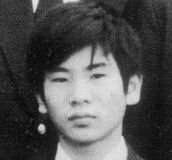
Seito Sakakibara
Homicide Nevada-Tan
Homicide · Japan · 2004
Nevada-tan was a name commonly used to describe an 11-year-old Japanese schoolg…
1 victim
Nevada-Tan
Homicide · Japan · 2004
Nevada-tan was a name commonly used to describe an 11-year-old Japanese schoolg…
1 victim
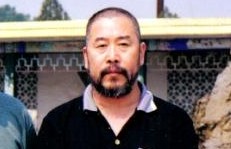 Hu Wanlin
Homicide · China · 1997
Hu Wanlin (胡万林), born 1949, was from Mianyang, Sichuan Province. · 1993 — While…
146 victims
Hu Wanlin
Homicide · China · 1997
Hu Wanlin (胡万林), born 1949, was from Mianyang, Sichuan Province. · 1993 — While…
146 victims
 Jack Kevorkian
Homicide · USA · 1990
Jack Kevorkian (born May 26, 1928) was a controversial American pathologist. He…
130 victims
Jack Kevorkian
Homicide · USA · 1990
Jack Kevorkian (born May 26, 1928) was a controversial American pathologist. He…
130 victims
 David Koresh
Homicide · USA · 1993
David Koresh (born Vernon Wayne Howell; August 17, 1959 – April 19, 1993) led t…
79 victims
David Koresh
Homicide · USA · 1993
David Koresh (born Vernon Wayne Howell; August 17, 1959 – April 19, 1993) led t…
79 victims
 Todd Hall
Homicide · USA · 1996
Todd Hall was described by neighbors as "mentally slow" and was said to have su…
9 victims
Todd Hall
Homicide · USA · 1996
Todd Hall was described by neighbors as "mentally slow" and was said to have su…
9 victims
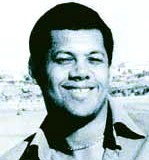 Victor Miller
Murderer · United Kingdom · 1988
Victor Miller was a computer operator in the United Kingdom. He was described a…
1 victim
Victor Miller
Murderer · United Kingdom · 1988
Victor Miller was a computer operator in the United Kingdom. He was described a…
1 victim
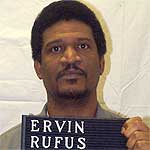 James Rufus Ervin
Homicide · USA · 1994
James Rufus Ervin — defendant · Lucius House — resident of St. Louis; accomplic…
1 victim
James Rufus Ervin
Homicide · USA · 1994
James Rufus Ervin — defendant · Lucius House — resident of St. Louis; accomplic…
1 victim
 Lloyd Chase Allen
Murderer · USA · 1991
Lloyd Chase Allen was convicted and sentenced to death for the November 13, 199…
1 victim
Lloyd Chase Allen
Murderer · USA · 1991
Lloyd Chase Allen was convicted and sentenced to death for the November 13, 199…
1 victim
 Wanda Jean Aallen
Murderess · USA · 1981
Wanda Jean Allen was born on August 17, 1959 and was executed on January 11, 20…
2 victims
Wanda Jean Aallen
Murderess · USA · 1981
Wanda Jean Allen was born on August 17, 1959 and was executed on January 11, 20…
2 victims
- Gender
- male
- Country
- Japan
- Location
- Kobe, Hyōgo Prefecture , Japan
- Date of birth
- July 7, 1982
- Age at first offence
- 15
- Characteristics
- juvenile (14), beheading, mutilation
- Victim profile
- Ayaka Yamashita, 10 / Jun Hase, 11
- Method of murder
- B ludgeoned to death with a steel pipe / Strangulation
- Date(s) of murder
- March 16/May 24, 1997
- Years active
- 1997
- Date of arrest
- June 28, 1997
- Status
-
Released
Released on March 11, 2004
Case identity
Seito Sakakibara (酒鬼薔薇 聖斗, Sakakibara Seito) was the alias of a then-14-year-old student from Kobe, Japan. He was also identified as Onibara due to an error in reporting by the Japanese media. His real name had not been released to the press as per Japanese legal procedures prohibiting the identification of juvenile offenders, and he was officially referred to as “Boy A” in Japanese legal documentation.
Timeline
- March 16, 1997 — Sakakibara carried out an attack on a 10-year-old girl that he later described in his diary; he later confessed to the murder of 10-year-old Ayaka Yamashita on this date.
- May 24, 1997 — Jun Hase was killed and then decapitated; his head was left outside a school gate.
- May 27, 1997 — Jun Hase’s head was found by a school janitor, and his headless body was later found under a house in the woods near the school.
- June 1, 2004 — Satomi Mitarai was murdered by 11-year-old “Girl A” (AKA Nevada-tan).
- June 3, 1997 — A brown envelope postmarked June 3, with no return address or name, was used to deliver a letter to the newspaper Kobe Shimbun.
- June 6, 1997 — A letter was sent to the newspaper Kobe Shimbun in which Sakakibara claimed responsibility and threatened more killings would follow.
- June 28, 1997 — A 14-year-old junior high school student (later referred to as “Boy A”) was arrested as a suspect in the Hase murder.
- October 1997 — Sakakibara was sent to the special medical reformatory for juvenile offenders in Fuchu, western Tokyo, to receive psychiatric treatment and counseling.
- November 2001 — He was transferred to an ordinary reformatory to learn some social skills.
- November 2002 — He returned to the medical reformatory.
- March 10, 2004 — Sakakibara was released on parole, and the Justice Ministry announced his release.
- March 11, 2004 — He was released on a provisional basis on March 11, 2004, with a full release to follow on January 1, 2005.
- December 31, 2004 — His supervised parole was set to last until the end of December 2004.
Background
Sakakibara began carrying cutting weapons while still in elementary school, writing in his diary that: “I can ease my irritation when I'm holding a survival knife or spinning scissors like a pistol.”
At age 12, he exhibited extreme cruelty to animals. He lined up a row of frogs in a street and rode over them with his bicycle. He also mutilated cats and decapitated pigeons.
After the March 16 attack, he wrote in his diary: “I carried out sacred experiments today to confirm how fragile human beings are... I brought the hammer down, when the girl turned to face me. I think I hit her a few times but I was too excited to remember.”
The following week, on March 23, he wrote: “This morning my mom told me, 'Poor girl. The girl attacked seems to have died.' There is no sign of my being caught... I thank you, "Bamoidōkishin", for this... Please continue to protect me.”
He used a floating head of Buddha with a swastika-like symbol that was referenced as an “imaginary Bamoidooki is a floating head of Buddha with a swastika-like symbol.”
A personality profile in analysis was described as a case of hikikomori syndrome.
In an analysis by journalist Gamal Nkrumah, the following quotation appeared: “The worst thing about the Sakakibara case is that one might have seen it coming. Yet neither his family — nor Japan — heeded the tell-tale signs. Japanese children are confronted with an extremely difficult examination at the tender age of six. Their performance effectively determines their whole future, for it decides whether they will go to a good elementary school, or one of the despised state schools. Parents have no faith in the state system, and Sakakibara's mother was no exception. She pressured her first-born to excel at school, even though social workers warned her that her son was mentally unstable. He was already torturing and killing young animals as a 'hobby'. Soon after, he began physically attacking girls as he walked to school.”
Analysts and psychologists also found similarities to serial killer Tsutomu Miyazaki and referenced the 1989 “Otaku Murderer.”
A search of Sakakibara’s room turned up thousands of H manga volumes and pornographic videos and anime. Japanese politician Shizuka Kamei called for restricting objectionable content, stating: “Movies lacking any literary or educational merit made for just showing cruel scenes... Adults should be blamed for this,” and that: “[t]he incident gives adults the chance to rethink the policy of self-imposed restrictions on these films and whether they should allow them just because they are profitable.”
The offence
Between March and May 1997, Sakakibara murdered an 11-year-old boy, Jun Hase, and a 10-year-old girl. He also assaulted three other girls on and around the same date.
After the March 16 attack, he described in his diary how he struck the girl:
On March 23, he wrote about his mother telling him about the attacked girl’s death: I thank you, God Bamoidōki, for this... Please continue to protect me.”
Murder of Jun Hase (11-year-old)
On May 27, 1997, the head of Jun Hase (ca. 1986 - May 27, 1997), a student at Tainohata Elementary School, was found in front of the school gate hours before students arrived for classes. Hase had apparently been beheaded with a knife, with further mutilations being done before being left at the front.
A note written in red pen was found stuffed in his mouth, identifying the killer as “Sakakibara.” The note read: “This is the beginning of the game... You police guys stop me if you can... I desperately want to see people die, it is a thrill for me to commit murder. A bloody judgment is needed for my years of great bitterness.”
Additionally, some English was on the note as well: “shooll [ sic ] kill”.
Police commented that the style of Hase’s killing and the note was reminiscent of that of the Zodiac murders in the San Francisco area during the late 1960s.
The boy’s headless body was found later that day under a house in the woods near the school.
The killing occurred at Tainohata Elementary School.
Similar slogans were found painted on walls near the elementary school where the head was found.
Two mutilated cats were found outside the main gate of the junior high school where the boy’s head was found before he vanished.
Police sources said that mutilated cat carcasses were also found near the two other crime scenes before the attacks occurred.
Investigation
On June 6, Sakakibara sent a letter to the newspaper Kobe Shimbun in which he claimed responsibility for the slaying and decapitation of Jun Hase and threatened that more killings would follow.
The second letter was delivered in a brown envelope postmarked June 3. It had no return address or name.
The enclosed materials included a three-page, 1400-word letter written in red ink, which included a six-character name that could be pronounced as “Sakakibara Seito.” The same characters (described by meaning as alcohol, devil, rose, saint and fight) were used in the first message inserted into the boy’s mouth.
The letter began with the phrase of “Now, it's the beginning of a game,” and stated: “I am putting my life at stake for the sake of this game...If I'm caught, I'll probably be hanged...police should be angrier and more tenacious in pursuing me.... It's only when I kill that I am liberated from the constant hatred that I suffer and that I am able to attain peace. It is only when I give pain to people that I can ease my own pain.”
The letter also lashed out against the Japanese educational system, calling it “compulsory education which formed me, an invisible person.”
In the initial panic, the Japanese media misreported the name as “Onibara” (Demon’s Rose), while Sakakibara insisted it was as he gave it.
Infuriated by the mixup, Sakakibara later wrote to the station: “From now on, if you misread my name or spoil my mood I will kill three vegetables a week.... If you think I can only kill children you are greatly mistaken.”
A 14-year-old junior high school student was arrested as a suspect in the Hase murder on June 28.
After his arrest, “Boy A” confessed to the murder of 10-year-old Ayaka Yamashita on March 16 and also assaulting three other girls on and around that same date.
Arrest and detention
On June 28, a 14-year-old boy who turned 15 two weeks after detention was arrested for the Hase killing as well as the two March 15 assaults. The boy could not be identified because of his age. He was referred to as “Boy A.”
A note included in the materials at the time of the investigation warned:
The note ended with English: “shooll (sic) kill”
It was signed with a combination of Japanese characters meaning rice wine, rose and sacred master, followed by “the school killer.”
The killer also used a cross-like symbol reminiscent to the one used by San Francisco’s “Zodiac” killer.
The letter to Kobe Shimbun included: “Now, it's the beginning of a game,” “I'm putting my life at stake for the sake of this game...If I'm caught, I'll probably be hanged...police should be angrier and more tenacious in pursuing me....
Sentencing and correctional treatment
In Japan, at that time a person under the age of sixteen could not be charged as an adult and could not be identified publicly. The offender was sentenced to a youth reformatory for treatment.
He was sent to the special medical reformatory for juvenile offenders in Fuchu, western Tokyo, in October 1997 to receive psychiatric treatment and counseling.
He was transferred to an ordinary reformatory in November 2001 to learn some social skills, before returning to the medical reformatory in November 2002.
In 2003, he was judged to be “cured” of his sexual sadism and compulsion to kill.
The parole board decision was made on a request filed in March 2003. A three-member panel of the Kanto Regional Parole Board accepted the request for parole.
Tetsuo Obata, chairman of the parol board, told reporters: “The board judged he has been rehabilitated to a desirable level and should be released so he can make a smooth return to society.”
Obata added: “The board has interviewed the man on various occasions and closely examined his correctional state,” and “(We) came to conclude that psychiatric care and correctional education at reformatories have obtained good results.”
To help him proceed with rehabilitation in society until his detention term expired at the end of December, the board selected a place where he would live and mapped out plans for his daily life. Obata said the place of residence would not be released so he could quietly obtain work and become able to support himself.
Obata also said the government announced his release in response to public interest in the crimes he committed, stating: “Considering the peculiar and grave nature of his crimes, we thought public cooperation for his rehabilitation is essential,”
Appeals
No appeal details were included in the provided material.
Outcome
The Justice Ministry announced on March 11, 2004 that Sakakibara was being released on a provisional basis, with a full release to follow on January 1, 2005.
A Wikipedia.org section title “Kobe killer set free” and “Reformatory parolee 'has grown up'” appeared in the provided text.
Aftermath
Sakakibara’s supervised parole lasted until December 31, 2004.
It was reported that soon after he was no longer required to report to his parole officer he moved twice in quick succession and then disappeared. Even his father, who he was still close to, said he had not heard from his son since last year and did not know where his son was living.
Due to the seriousness of the crimes and because they were committed as a minor, his name and new residence to that day remained a highly-guarded secret.
The Japanese government made unusual considerations due to the extreme nature of his crimes. His release was announced to the public, and the victim’s families were to be periodically notified of his whereabouts.
Sources close to the case said he had read notes written by the victims’ families and said he would like to find a job to pay them compensation.
He was quoted as saying he would not forget the severity of his crimes and would like to spend his life making up for them.
His mother released a statement through her lawyer: “Our son is now doing his best to have courage to plunge into the world of anxieties and uncertainties. . . . I believe there will be a long and tough road ahead for us and our son, but if possible, I hope the public will watch over us quietly.”
Lawyer Yoshikuni Noguchi, who served as his counselor during the juvenile trial, cautioned: “If people around him make a big fuss and put him on the spot, it would make it difficult for him to reintegrate into society. “
Noguchi also said: “By realizing the value of his own life, he now feels he wants to make up for having taken people's lives. He has grown up a lot in a short period of time. I am not worried” about the possibility of repeat offenses.
Meanwhile, the families of the victims urged the government to provide them with information on the perpetrator. Some relatives questioned whether he really had been rehabilitated.
Hase’s father, Mamoru, 47, said in a statement after learning of the release: “The most important issue is whether he is really rehabilitated. “I believe the man will face various difficulties after returning to society and I think it is an ordeal he deserves. The crimes he committed cannot be redeemed even with his whole life. I hope that he will not forget that and live his life bearing a heavy cross on his back.”
It was said the Justice Ministry’s rare decision to provide the victim’s relatives with advance information regarding the release was an improvement, and that such notification was only applicable in criminal cases involving adults. Hase urged the ministry to apply it to juvenile cases as soon as possible.
Yamashita’s mother, Kyoko, 48, said that while she would like to believe the man had been rehabilitated, she wondered if a person who committed such brutal acts could truly be reformed in such a short time: “Of course I have not forgiven his crimes, but I think Ayaka would hope that the man redeems his heart as a human being and lives a good life,” she said. “Every time incidents involving children occur, I feel that we must question ourselves about what we adults are here for.”
Prime Minister Junichiro Koizumi told reporters there was probably no other choice but to release the man to give him a chance to rehabilitate himself. He said he had “mixed feelings” when considering the sentiment of the victims’ families.
This case and other serious crimes committed by youths were described as sparking a debate over how to deal with minors who commit heinous crimes, leading the Diet to revise the Juvenile Law in 2000 by lowering the age for criminal responsibility from 16 to 14.
In 2000, the Diet lowered the age for criminal responsibility from 16 to 14 as a result of the Sakakibara murders.
After the June 1, 2004 murder of Satomi Mitarai by 11-year-old “Girl A” (AKA Nevada-tan), there had been discussion for the need for further revision.
Also mentioned, the release had been preceded by a debate about the need to transfer him to prison. Critics charged that because the government took the unusual step of notifying the public, he was likely not fit for release and should be transferred to prison.
It was also stated that his real name had been circulated on the internet since June 29, 1997, according to journalist Fumihiko Takayama.
Controversy
A number of people including Shōjirō Gotō, a lawyer who dealt with many false accusation cases, Hidehiko Kumagai, and Nobuyoshi Iwata, former principal of the junior high school that Boy A attended, insisted that Boy A was wrongfully accused and pointed out contradictions in the statements of investigating authorities.
Spotted an error, or have more information about this case?