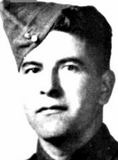
August Sangret
Murderer Buck Ruxton
Murderer · United Kingdom · 1935
Buck Ruxton (21 March 1899, Bombay – 12 May 1936, Manchester) was also known as…
2 victims
Buck Ruxton
Murderer · United Kingdom · 1935
Buck Ruxton (21 March 1899, Bombay – 12 May 1936, Manchester) was also known as…
2 victims
 Miles Giffard
Murderer · United Kingdom · 1952
Miles William Giffard (1927 - 24 February 1953) twice played cricket for the Co…
2 victims
Miles Giffard
Murderer · United Kingdom · 1952
Miles William Giffard (1927 - 24 February 1953) twice played cricket for the Co…
2 victims
 Neville Heath
Murderer · United Kingdom · 1946
Neville George Clevely Heath (1917–46) was born in Essex, England, and later li…
2 victims
Neville Heath
Murderer · United Kingdom · 1946
Neville George Clevely Heath (1917–46) was born in Essex, England, and later li…
2 victims
 Juan Manuel Álvarez
Mass murderer · California · 2005
Juan Manuel Álvarez (born February 26, 1979) was a laborer from Compton, Califo…
11 victims
Juan Manuel Álvarez
Mass murderer · California · 2005
Juan Manuel Álvarez (born February 26, 1979) was a laborer from Compton, Califo…
11 victims
 Beatrice Annie Pace
Justice miscarriage · United Kingdom · 1928
Beatrice Annie Pace was tried and acquitted for murdering her husband with arse…
0 victims
Beatrice Annie Pace
Justice miscarriage · United Kingdom · 1928
Beatrice Annie Pace was tried and acquitted for murdering her husband with arse…
0 victims
 Alexander Spesivtsev
Serial killer · Rusia · 1991
Alexander Nikolayevich Spesivtsev (Russian: Александр Николаевич Спесивцев ), a…
19 victims
Alexander Spesivtsev
Serial killer · Rusia · 1991
Alexander Nikolayevich Spesivtsev (Russian: Александр Николаевич Спесивцев ), a…
19 victims
 Daniel Camargo Barbosa
Serial killer · Colombia / Ecuador · 1974
Daniel Camargo Barbosa was a psychopathic serial killer from Colombia. It was b…
72 victims
Daniel Camargo Barbosa
Serial killer · Colombia / Ecuador · 1974
Daniel Camargo Barbosa was a psychopathic serial killer from Colombia. It was b…
72 victims
- Gender
- male
- Country
- United Kingdom
- Location
- Hankley Common, Surrey, England, United Kingdom
- Date of birth
- August 28, 1913
- Age at first offence
- 29
- Characteristics
- —
- Victim profile
- Joan Pearl Wolfe, 19
- Method of murder
- St abbing with knife
- Date(s) of murder
- September 21, 1942
- Years active
- 1942
- Date of arrest
- December 6, 1942
- Status
-
Executed
Executed by hanging at Wandsworth Prison on 29 April 1943
Case record: August Sangret (The Wigwam Murder)
Background
August Sangret was a French-Canadian soldier of First Nations birth who was convicted of murdering Joan Wolfe in Surrey, England and was hanged.
L/27572 Private August Sangret, Royal Canadian Infantry Corps, was commemorated on the Brookwood Memorial, Panel 23, Column 3.
Other executed criminals present on the Brookwood Memorial were Ernest James Kemp and Theodore Schurch.
The offence
On 7 October 1942, two soldiers noticed an arm protruding from a mound of earth on Hankley Common near Godalming, Surrey. A badly decomposed fully-clothed woman was found to have been loosely buried on the mound.
Professor Keith Simpson concluded the woman had been stabbed with a hooked-tipped knife and that she was then killed with a heavy blunt instrument. Simpson also deduced that the attack had occurred elsewhere and that the corpse had been dragged to the ridge where it was buried.
The victim was identified as Joan Pearl Wolfe, who was living rough in a crude shelter made of tree branches, and the newspapers gave her the nickname “Wigwam Girl”.
Investigation
On 7 October 1942, Royal Marine William Moore was patrolling the area on a routine march when, in one of the many tank tracks that criss-crossed the area, he saw what looked like a human hand protruding from a mound of earth. He reported the find to his sergeant, who passed the information to Lieutenant Norman McLeod who called the police.
By evening, a full scale police investigation was underway. Among the investigators were forensic pathologist Cedrick Keith Simpson and his secretary Molly Lefebure.
The body was a female placed face down in a shallow grave which had then been disturbed by a passing vehicle, probably a half-track. Exhumation began the next day. There was a strong smell of putrefaction, with flies and maggots everywhere. The body was badly decomposed and the head practically fell apart. Clothes were found among the decomposing remains. The body was removed and taken to Guy’s Hospital.
Simpson examined the body. Based on the hydrolysation of body fats saponification and taking into account the extra heat that would be generated by the maggots, Simpson estimated that the victim had died in mid-September.
Simpson reconstructed the skull by wiring together fragments that could be found, revealing a large impact site. Simpson concluded the victim died as a result of a single massive blow to the head while the victim was already lying face down. The blow caved in the skull and simultaneously broke the jaw and dislodged teeth. Simpson stated the murder weapon was a pole or bough.
Simpson found knife wounds inflicted before the victim had died. The wounds on the arms, particularly the right arm, suggested a struggle in which the victim fended off stabs to the face; the cuts were unusual in that tissue had been pulled out of the lesions. There were knife wounds in the head too, including one described as a particularly unusual round countersunk hole. Simpson concluded that the knife blade resembled a parrot’s beak.
The police quickly realised that the body and clothes matched the description of missing Joan Wolfe. A search of the area where she was found was carried out by sixty police constables. Finds included a missing shoe, a tuft of hair, a fragment of skull, and a tooth.
Later, Wolfe’s bag was found with personal effects and identity papers, and a bloody bough was found that was certainly the murder weapon.
A letter was found written by the victim to August Sangret informing him that she was pregnant.
On Sangret’s clothes, bloodstains were found, and his army knife was found soon after in a drainpipe.
The investigation also found a missing identity card and a letter to a Canadian soldier called August Sangret.
Arrest
August Sangret was arrested and taken to Godalming police station. He was interviewed at length by inspector Edward Greeno.
The questioning went on for days and Sangret’s statement, described as the longest statement ever made, took a policeman five days to write out in longhand.
Sangret was charged with Wolfe’s murder.
People involved
August Sangret
- Role: Defendant; Royal Canadian Infantry Corps soldier
- Birth: 28 August 1913 in Battleford, Saskatchewan
- Description: Of mixed race, called in French Bois-Brûlés (“burnt wood”), part French Canadian and part Cree
- Education: Received little education; illiterate but not unintelligent
- Languages and skills: Spoke the Cree language; learned traditional skills including construction of sturdy shelters or wigwams made from long poles covered by sheets of birch bark, using a small crooked knife unique to the Cree
- Prior record: Criminal record including six months in gaol for a violent assault in 1932
- Military service: Served in the Battleford Light Infantry militia regiment which trained for two weeks each year from 1935 to 1939
- Enlistment: Enlisted as a full-time soldier in The Royal Regina Rifles on 19 June 1940
- Disciplinary history: Repeatedly punished for minor infractions of military discipline, had repeated spells on the sick list, and was at least twice treated for venereal disease requiring five admissions to hospital
- Deployment: Arrived in Britain on 24 March 1940 and was initially stationed in Fleet; sent to Aldershot; in July posted to a newly formed Educational Company which ran a course for men lacking elementary education
- Relationship to victim: He admitted having intimate relations with Joan Wolfe and living with her tree wigwam
- Declaration before execution: “I am not guilty. I never killed that girl.”
Joan Pearl Wolfe (“Wigwam Girl”)
- Birth: 11 March 1923
- Family: Wolfe’s mother was Edith Mary Watts, who had married a Mr Wolfe who suffered from an illness believed by his neighbours to be a form of sleeping sickness; he ended his life by gassing himself. Watts later married twice more. Joan had a sister and a half-sister.
- Residence: Lived with her mother in Tonbridge, in a council house in Lodge Oak Lane
- Religion and upbringing: Brought up as a Catholic, attended a convent school, regularly wore a conspicuous crucifix about her neck
- Engagement: In 1938, aged sixteen, had become engaged to a young man from nearby Tunbridge Wells; engagement evidently broke down
- Relationship and leaving home: Wolfe left home before she was seventeen years old; became increasingly promiscuous after heading to Aldershot, home of the British Army
- Police intervention: Police intervened on several occasions and repeatedly questioned her because she was still a minor; she made claims that the police never did anything to help her, but she was offered various forms of assistance with varying levels of compulsion; she returned home more than once and drifted back
- Engagement to Canadian soldier: Wolfe became engaged to a Canadian soldier, Francis Hearn; Hearn returned to Canada promising to marry her; Wolfe wore a ring that he had given her and sometimes referred to herself as his wife
- Meeting August Sangret: On 17 July 1942, the day after Hearn left for Canada, Wolfe met Sangret for the first time in a pub in Godalming; they talked and walked through a local park; they had sex that night and arranged to meet again; Wolfe did not keep the next date, but Sangret met her again by chance a few days later when she seemed to be on a date with another soldier named Hartnell; the three conversed for some time and Hartnell left; Sangret and Wolfe met regularly after that
- Hospital letter and contents: On 23 July, Wolfe found herself in hospital and wrote to Sangret:
My Dear August, Well, my dear, I hope I am forgiven for not turning up to see you last night, but I was in the police station five hours and they did not help me. I was walking along the road and suddenly came over queer. I fainted for the first time in my whole life. The brought me to the hospital here. They are going to examine me. I shall know whether I am all right or not then. I hope you will come and see me, as I really want to see you very much and being in bed all day is awful. You can come any night between 6-7 p.m. and Sunday afternoon. Please try and come. I have your picture on the locker beside me. The nurses know you are my boy friend, they told me to tell you to come and see me. You have to tell them my name and ask for Emergency Ward. Well, hoping to see you soon, I will say au revoir. God bless you. Love Joan.
- Disappearance: On 14 September, Wolfe disappeared; the affair between Sangret and Wolfe had lasted 81 days
Additional named individuals
- Stephen-stratford.co.uk is referenced for commemoration and description
- Professor Keith Simpson: Forensic pathologist who examined the body
- Cedrick Keith Simpson: Forensic pathologist who examined the body
- Molly Lefebure: Secretary of Simpson
- Royal Marine William Moore: Noticed the hand protruding from the earth
- Lieutenant Norman McLeod: Called the police after information was passed
- Inspector Edward Greeno: Interviewed Sangret
- Captain Creasey: Noted in a diary regarding the case
- Sergeant Hicks: Read out Wolfe’s letters to Sangret
- Private Donald Brett: Discovered the couple in a wigwam
- Professor Keith Simpson: Concluded stabbing and blunt-force killing
- Home Secretary Herbert Morrison: Chose to disregard the jury’s recommendation to mercy
- Judge: Delivered jury directions including the circumstantial evidence standard
- Harry Alan Towers: Dramatised the case twice
- M. J. Trow: Authored The Wigwam Murder
Trial
Preliminary hearings
Preliminary hearings were held at Guildford on 12, 13, 19 and 20 January 1943.
Captain Creasey noted in his diary that the case was “medium strong, circumstantial case only.”
Judge’s direction to the jury
The judge finished his summary with the words:
That the girl (Wolfe) was murdered is not in dispute; that she was murdered by some man is also quite plain; and the only question you have to determine is: Have the Crown satisfied you beyond all real doubt that the prisoner, August Sanget, is the man who murdered her? [...] I can only conclude by saying what I said at the beginning; when dealing with a case of circumstantial evidence you must be satisfied beyond all doubt before you find the prisoner guilty. If you come to the conclusion that, on the facts as proved to you, no real doubt is left in your minds that his was the hand which slew this unhappy girl, then you will convict him.
Verdict and recommendation
The jury took two hours to reach their verdict and made a strong recommendation to mercy.
Before sentence of death was passed, Sangret declared: “I am not guilty. I never killed that girl.”
Appeal
Sangret’s appeal was heard on 13 April. The appeal was dismissed.
The Home Secretary Herbert Morrison found the jury’s recommendation surprising, even inexplicable. Seeing no good reason to interfere, he let the law take its course. Sangret was held in the condemned cell at Wandsworth Prison where he was hanged on 29 April 1943.
Edward Greeno’s opinion in memoirs published in 1960 included:
I had interviewed thousands of people in this case and seventy-four of them went into the witness-box. The case was so watertight that, as Sir Norman Kendal said later, Sanget's appeal against the death sentence 'was almost a farce'.
Greeno also wrote:
One small doubt remained. Sanget murdered the girl because she was expecting his child—but was she? Was she expecting anybody's child? The doctors didn't think so on the occasion that the police sent her to hospital, and when her body was found it was too late to tell. But this is certain: Sangret did murder her. He confessed before he died, and this is where I quarrel with the rules. It is never announced when a murderer confesses. But why not? There are always cranks and crackpots to argue that some wicked policeman has framed some poor fellow. So why make an official secret of the fact that the policeman did his job?
Sentencing
Sangret was found guilty of murder and was sentenced to death by hanging.
Outcome
August Sangret was executed by hanging at Wandsworth Prison on 29 April 1943.
Aftermath
The Sangret case was dramatised twice by Harry Alan Towers: as “The Case of the Hunted Hunter” in the series Secrets of Scotland Yard in approximately 1949, then on the series The Black Museum in 1952 under the title of “The Brass Button”.
The case was featured in the Discovery Channel television series Crime Museum UK in the episode “Strange Weapons”.
The case was also featured in the Discovery Channel series Crime Museum UK with Martin Kemp.
The case was the subject of the non-fiction book The Wigwam Murder by M. J. Trow.


Spotted an error, or have more information about this case?