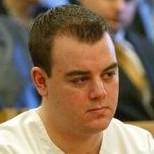
Conner Schierman
Mass murderer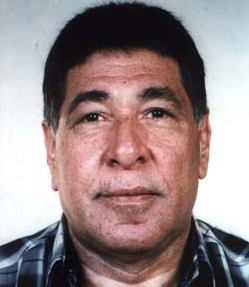 Gameel Al-Batouti
Mass murderer · USA · 1999
Gameel Al-Batouti (also rendered “Gamil ElBatouty” or “El Batouty” in U.S. offi…
216 victims
Gameel Al-Batouti
Mass murderer · USA · 1999
Gameel Al-Batouti (also rendered “Gamil ElBatouty” or “El Batouty” in U.S. offi…
216 victims
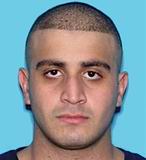 Omar Mateen
Mass murderer · USA · 2016
Omar Mir Seddique Mateen was an American mass murderer who killed 49 people and…
49 victims
Omar Mateen
Mass murderer · USA · 2016
Omar Mir Seddique Mateen was an American mass murderer who killed 49 people and…
49 victims
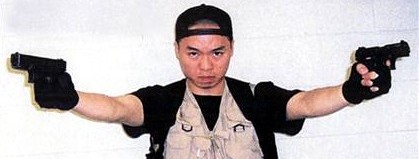 Seung-Hui Cho
Mass murderer · USA · 2007
Seung-Hui Cho was a mass murderer who shot and killed 32 people and wounded man…
32 victims
Seung-Hui Cho
Mass murderer · USA · 2007
Seung-Hui Cho was a mass murderer who shot and killed 32 people and wounded man…
32 victims
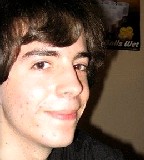 Adam Lanza
Mass murderer · USA · 2012
Adam Lanza, 20, fatally shot twenty children and six adult staff members in a m…
27 victims
Adam Lanza
Mass murderer · USA · 2012
Adam Lanza, 20, fatally shot twenty children and six adult staff members in a m…
27 victims
 Eric Harris
Mass murderer · USA · 1999
Eric Harris committed suicide by gunshot to the roof of the mouth on April 20,…
13 victims
Eric Harris
Mass murderer · USA · 1999
Eric Harris committed suicide by gunshot to the roof of the mouth on April 20,…
13 victims
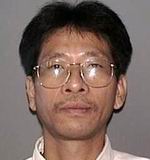 Jiverly Wong
Mass murderer · USA · 2009
December 8, 1967 — Jiverly Antares Wong was born. · late 1980s — Wong first cam…
13 victims
Jiverly Wong
Mass murderer · USA · 2009
December 8, 1967 — Jiverly Antares Wong was born. · late 1980s — Wong first cam…
13 victims
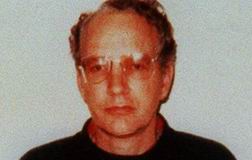 Robert Lowe
Murderer · Australia · 1991
Robert Arthur Selby Lowe was born in England in 1937. He attended boarding scho…
1 victim
Robert Lowe
Murderer · Australia · 1991
Robert Arthur Selby Lowe was born in England in 1937. He attended boarding scho…
1 victim
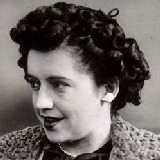 Evelyn Dick
Murderer · Canada · 1944
Evelyn Dick was born to Donald MacLean and Alexandra MacLean on October 13, 192…
2 victims
Evelyn Dick
Murderer · Canada · 1944
Evelyn Dick was born to Donald MacLean and Alexandra MacLean on October 13, 192…
2 victims
 Cheng Chieh
Mass murderer · Taiwan · 2014
Cheng Chieh (鄭捷) was a 21-year-old university student. He was a second-year stu…
4 victims
Cheng Chieh
Mass murderer · Taiwan · 2014
Cheng Chieh (鄭捷) was a 21-year-old university student. He was a second-year stu…
4 victims
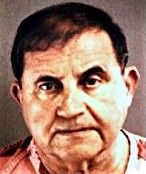 Thomas Blanton
Mass murderer · USA · 1963
Thomas Blanton Jr. was a Ku Klux Klan member. A Ku Klux Klan bombing of the Six…
4 victims
Thomas Blanton
Mass murderer · USA · 1963
Thomas Blanton Jr. was a Ku Klux Klan member. A Ku Klux Klan bombing of the Six…
4 victims
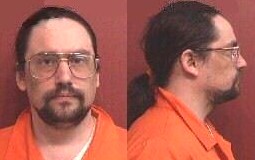 William Gollehon
Murderer · USA · 1985
William Jay Gollehon was sentenced to death in 1992 after he and Douglas Turner…
7 victims
William Gollehon
Murderer · USA · 1985
William Jay Gollehon was sentenced to death in 1992 after he and Douglas Turner…
7 victims
- Gender
- male
- Country
- USA
- Location
- Kirkland, King County, Washington, USA
- Date of birth
- 1981
- Age at first offence
- 25
- Characteristics
- alcohol, attempted rape, murder-suicide, motive unknown
- Victim profile
- Olga Milkin, 28; her sons, Justin, 5 and Andrew, 3; and her sister, Lyubov Botvina, 24
- Method of murder
- St abbing with knife
- Date(s) of murder
- July 17, 2006
- Years active
- 2006
- Date of arrest
- 2 days after
- Status
-
Sentenced to death
Sentenced to death on May 5, 2010
Case identification
Conner Schierman
Timeline
- July 17, 2006 — Olga Milkin, 28, her sons Justin, 5, and Andrew, 3, and her sister Lyubov Botvina, 24, were stabbed and killed in a Kirkland home; investigators later determined the fire was set intentionally and described multiple points of origin.
- July 31, 2006 — Conner Schierman pleaded not guilty to four charges of aggravated first-degree murder and one count of arson.
- April 12, 2010 — A jury found Conner Schierman guilty of murdering Olga Milkin, Justin, Andrew, and Lyubov Botvina.
- May 5, 2010 — Conner Schierman was sentenced to death.
Background
Conner Schierman was a former Kirkland resident. He lived across the street from the Milkin family shortly before the killings. He moved in across the street just weeks before the murders.
Sgt. Leonid Milkin, who was serving with the National Guard in Iraq at the time of the slayings, later returned to Kirkland and spoke publicly about the tragedy. Olga Milkin was 28. Justin Milkin was 5. Andrew Milkin was 3. Lyubov Botvina was 24.
The offence
Investigators recovered the victims’ bodies after a fire at the Milkin home in Kirkland. Police said Olga Milkin, her sons Justin and Andrew, and her sister Lyubov Botvina were stabbed multiple times before the fire was set. Autopsies and the medical examiner’s office described wounds to the upper body, neck, and head, and Andrew’s throat was cut. No motive was initially given for the killings, and prosecutors later stated that they could not establish a motive.
Conner Schierman acknowledged that he burned down the home on the 9500 block of Slater Avenue because he did not think anyone would believe he did not murder four people. Prosecutors contended that he burned the home to cover up the crime.
Schierman told police he drank vodka, blacked out, awakened covered in blood in the victims’ home, and then poured gasoline in and around the home and set it on fire. Prosecutors contended that the killings were premeditated. Investigators said Schierman purchased gasoline, doused the home and bodies with gasoline, and set the house ablaze. Investigators also described a hunting knife believed to be the murder weapon found in the victims’ home.
Police identified Schierman as the suspect and described evidence including DNA recovered from items found in the Milkin home, a DNA identification of Olga Milkin’s DNA on Schierman’s necklace when he was arrested, and DNA of both women found on the soles of Schierman’s shoes.
Investigators also said Schierman was accused of entering the home in the 9500 block of Slater Avenue Northeast armed with two knives, firearms, gloves, and an ax, and that he was tied to the killings through DNA evidence.
Investigation
Investigators determined the fire was set intentionally and described multiple points of origin. The fire was called in at 11:32 a.m. and the four bodies were found about four hours later.
Kirkland Police Department mistakenly turned over about 300 pages of confidential investigation files, including police reports, notes and other documents, along with photographs and videotapes of the suspect, to a Seattle television station through a public-disclosure request. The defense called the release outrageous. Kirkland police said the station agreed to stop broadcasting reports based on the materials and returned the materials to police. The prosecutor’s office had no comment at the time.
A phone tip line was set up for information about the deaths, listed as 425-587-3515.
Investigators described discovery of Schierman’s DNA from items found at the scene, including a pair of men’s shorts, a pair of gloves and a knife found in the rubble. Investigators also described video surveillance of Schierman filling two gas containers shortly before the fire.
Arrest and pretrial
Schierman was arrested in the Rose Hill area “in the general vicinity” of the burned house.
At an early court appearance, District Court Judge D. Mark Eide set bail at $4 million and set an arraignment hearing for 1:30 p.m. Monday. Superior Court Judge Greg Canova revoked Schierman’s bail; it had been set at $10 million. Schierman remained in King County Jail.
Schierman pleaded not guilty to four charges of aggravated first-degree murder and one count of arson. His defense attorney was James Conroy, and court-appointed attorney throughout the proceedings included Jim Conroy.
A motion to dismiss arson and four aggravated-murder charges was filed by the defense, alleging governmental misconduct connected to the accidental release of investigation notes to KING-TV. Canova refused to seal documents until the Monday hearing.
The defense sought time to prepare documents on why prosecutors should not seek the death penalty and asked for five months within a law-provided 30-day window for the report. Conroy also challenged whether Washington’s death penalty was constitutional and whether a prosecutor could “pick and choose who they decide to seek the death penalty for.”
Trial
Charges
Schierman was charged with four counts of aggravated murder and one count of first-degree arson, tied to the July 17 deaths of Olga Milkin, Lyubov Botvina, Justin Milkin, and Andrew Milkin.
Jury and verdict (guilt)
On April 12, 2010, a jury found Conner Schierman guilty of stabbing the Kirkland family to death nearly four years earlier and burning down their home to hide the crime. The verdict set the stage for a penalty phase.
The jury deliberated for just under 9 hours to determine Schierman’s sentence after the April 12 guilt verdict, following a trial that began in January. Schierman did not testify after his defense counsel closed their case on April 5 after more than two weeks of testimony. Defense attorney Jim Conroy made closing remarks to reporters that he hoped the jury would “get to know” Schierman “by telling them about Conner as a person.”
In closing arguments, King County Deputy Prosecutor Scott O’Toole told the jury that Leonid Milkin was about to begin another tour in Baghdad and promised his children he would be home by the time the leaves turned yellow and that they would count to for his return—100 days. O’Toole said Leonid never saw Olga again and never saw the two little boys again. O’Toole also told the jury: “This man, Conner Schierman, killed all of those people. He stabbed them at least 15 times before cutting their throats.”
Conroy maintained Schierman’s innocence and argued that it was “a longtime coming” and that mercy was not sympathy, stating: “Mercy is not sympathy. That is what these (jury) instructions tell you.”
Conroy argued that the jury needed to be unanimous for death and that “It just takes one reasonable doubt.” He also said: “One might think mercy is sympathy … mercy is not sympathy.
The prosecution could not establish a motive.
The trial included 67 state witnesses and 18 defense witnesses.
Penalty phase and allocution
During allocution at the end of the penalty phase proceedings, Schierman asked the jury to spare his life. He stated: “I’ve been told by people I’m going to die, I’m going to hell, but I’m already there.”
He also stated: “I know you don’t want my words, I know you don’t want my tears. You want your family back,” Schierman said. “I can’t give them back to you ... I may not have the right to ask anything of you, but I’m asking for your mercy. If not for me, then for my family.”
He also stated: “I can’t understand how all of this happened; I struggle with that,” Schierman said.
Schierman said he was in an alcohol blackout at the time of the murders. He later admitted to burning down the home on the 9500 block of Slater Avenue because he did not think anyone would believe he didn’t murder four people. Prosecutors contended it was to cover up the crime.
Schierman told the jury he was abused as a young child. Deputy Prosecutor Scott O’Toole responded: “Give me a break,” O’Toole said. “There is a certain point where you cross the line in society where we say, ‘No!’ … Murder is not a line you should cross … This defendant has not just crossed that line he has gone so far beyond it that he must suffer the ultimate punishment.”
O’Toole’s closing argument also described that it was almost four years ago the Sgt. Milkin was about to begin another tour in Baghdad and referenced his promise and the 100 days.
Sentencing
The penalty phase lasted two weeks. The jury deliberated for a day and a half and was unanimous. The decision came at 2 p.m. on May 5.
Schierman was sentenced to death on May 5, 2010.
Judge Gregory Canova read the verdict.
King County Prosecutor Dan Satterberg spoke to reporters after the verdict and stated: “The death penalty is the law of this state and it is reserved for the worst of the worst of crimes,” said Satterberg, who was not in office when the prosecutors brought the death penalty charge against Schierman. “This (prosecution) team was able to bring that case together for the jury and the jury made what we believe is the right call …These are wonderful people who come to America to live the dream and that dream was shattered.” Satterberg also called Schierman’s acts, “the worst crimes in the history of this county.”
Milkin’s statement after the verdict was read included: “We're all so relieved that this day has finally come,” Milkin said at a press conference with his family and the Botvina family after the verdict was read. “I'm just glad the justice system worked ... Conner Schierman came in the middle of the night like a thief and stole my family from me. I miss my family greatly. I won't ever forget them.”
Leonid Milkin also stated at another proceeding: “It's not just a tragedy - there is a person behind this. Four beautiful people have been murdered.”
Appeals
Conroy said they would try to appeal the verdict to the state Supreme Court within the next week, and said he took issue with jury selection and the “inflammatory” statements made by the prosecution in court: “Conner Schierman is a good person and he’s been convicted of a very horrible crime,” Conroy said. “It's sad because this thing is so out of context I don't that anybody will ever known what happened July 17 of 2006. It’s not Conner; it was never Conner.”
Outcome
Conner Schierman was sentenced to death on May 5, 2010 after the jury found him guilty of murdering Olga Milkin, Justin Milkin, Andrew Milkin, and Lyubov Botvina on April 12, 2010.
Aftermath
Leonid Milkin left the courtroom after hearing the jury’s decision to put Conner Schierman to death and was heard saying: “Justice has been done."
Milkin also stated: “I understand our lives are not going to be the same ever again,” said Yelena Shidlovski, sister of Lyubov and Olga. “I will never have my two sisters back. And although our lives will go on I am absolutely certain they will be in our hearts forever.
Schierman’s family declined to comment after the sentencing. Conroy said his defense would appeal.
Schierman also stated at allocution: “Being locked up has been a dehumanizing, pride swallowing siege,” Schierman said. “I had firm beliefs in God and what afterlife is like. Now I’m not so sure. I think people are afraid life is all we have.”
Other details
Schierman had no criminal history prior to his arrest in 2006. He had been described as a self-described recovering alcoholic and drug addict and as a patient at a rehabilitation home until about 17 months before one court appearance.
Schierman worked as a hotel maintenance worker and lived across the street from the victims shortly before the killings. Carillon Properties general manager Barbara Leland said Schierman was a good worker with no problems on the job and was liked by co-workers. Kiros News described Schierman as working for the past year and a half doing maintenance for Carillon Properties.
One neighbor, Sean Winter, became concerned when he heard that four people had died in the fire and Schierman didn’t answer his door. Winter let himself into Schierman’s house using a spare key and found Schierman lying on his bed with his face covered by a pillow. Schierman told Winter he wasn’t feeling well and kept the pillow over his face.
At the time of the arrest and early proceedings, Schierman was described as wearing a T-shirt stating he was an “Ultra Security Inmate.”
Spotted an error, or have more information about this case?