
Cheng Chieh
Mass murderer Anders Behring Breivik
Mass murderer · Norway · 2011
Anders Behring Breivik (born 13 February 1979) was the perpetrator of the 2011…
77 victims
Anders Behring Breivik
Mass murderer · Norway · 2011
Anders Behring Breivik (born 13 February 1979) was the perpetrator of the 2011…
77 victims
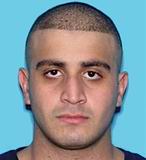 Omar Mateen
Mass murderer · USA · 2016
Omar Mir Seddique Mateen was an American mass murderer who killed 49 people and…
49 victims
Omar Mateen
Mass murderer · USA · 2016
Omar Mir Seddique Mateen was an American mass murderer who killed 49 people and…
49 victims
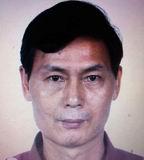 Chen Shuizong
Mass murderer · China · 2013
Chen Shuizong (simplified Chinese: 陈水总; traditional Chinese: 陳水總; pinyin: Chén…
46 victims
Chen Shuizong
Mass murderer · China · 2013
Chen Shuizong (simplified Chinese: 陈水总; traditional Chinese: 陳水總; pinyin: Chén…
46 victims
 Seung-Hui Cho
Mass murderer · USA · 2007
Seung-Hui Cho was a mass murderer who shot and killed 32 people and wounded man…
32 victims
Seung-Hui Cho
Mass murderer · USA · 2007
Seung-Hui Cho was a mass murderer who shot and killed 32 people and wounded man…
32 victims
 Adam Lanza
Mass murderer · USA · 2012
Adam Lanza, 20, fatally shot twenty children and six adult staff members in a m…
27 victims
Adam Lanza
Mass murderer · USA · 2012
Adam Lanza, 20, fatally shot twenty children and six adult staff members in a m…
27 victims
 Pamela Moss
Murderer · USA · 1996
Pamela Moss was convicted in connection with the March 13, 2012 murder of Doug…
2 victims
Pamela Moss
Murderer · USA · 1996
Pamela Moss was convicted in connection with the March 13, 2012 murder of Doug…
2 victims
 Roy Allen Harich
Murderer · USA · 1981
Roy Allen Harich (appellant/petitioner), v. State of Florida (appellee/responde…
1 victim
Roy Allen Harich
Murderer · USA · 1981
Roy Allen Harich (appellant/petitioner), v. State of Florida (appellee/responde…
1 victim
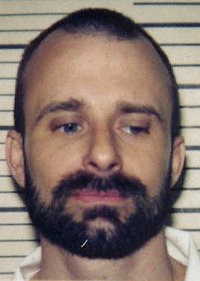 Eric Randall Nance
Murderer · USA · 1993
Eric Randall Nance was a white male who was born on 01/09/60. He was convicted…
1 victim
Eric Randall Nance
Murderer · USA · 1993
Eric Randall Nance was a white male who was born on 01/09/60. He was convicted…
1 victim
 Garry Dean Miller
Murderer · USA · 1988
Garry Dean Miller — offender · April Marie Wilson — victim (7-year-old) Garry D…
1 victim
Garry Dean Miller
Murderer · USA · 1988
Garry Dean Miller — offender · April Marie Wilson — victim (7-year-old) Garry D…
1 victim
 Sara Ege
Murderer · United Kingdom · 2010
Sara Ege was convicted of murder and perverting the course of justice at Cardif…
1 victim
Sara Ege
Murderer · United Kingdom · 2010
Sara Ege was convicted of murder and perverting the course of justice at Cardif…
1 victim
 Linda Henning
Murderer · USA · 1999
Linda Henning was convicted of felony murder and kidnapping in connection with…
1 victim
Linda Henning
Murderer · USA · 1999
Linda Henning was convicted of felony murder and kidnapping in connection with…
1 victim
- Gender
- male
- Country
- Taiwan
- Location
- New Taipei City, Taiwan
- Date of birth
- 1992
- Age at first offence
- 22
- Characteristics
- mentally ill
- Victim profile
- Chang Cheng-han, 26 (male); Hsieh Ching-yun, 28 (male), Pan Pi-chu, 47, and Lee Tsui-yun, 62 (both female)
- Method of murder
- Stabbing with knife
- Date(s) of murder
- May 21, 2014
- Years active
- 2014
- Date of arrest
- Same day
- Status
-
Charged with four counts of murder and 22 counts of attempted murder; in prison awaiting trial
Case record: Cheng Chieh
Background
Cheng Chieh (鄭捷) was a 21-year-old university student. He was a second-year student at Tunghai University in Taichung. Cheng was a suspected attacker in a mass stabbing on a Taipei Metro train.
Cheng’s early history included threats in elementary school to kill classmates over small disagreements. In junior high, he had carried a knife for a month looking for a chance to stab his teacher. In senior high, he began blogging about his plans to kill and posted articles about murders.
Cheng enrolled in Chung Cheng Institute of Technology in 2011 with the intention of receiving military training, but he was expelled two years later. He then transferred to Tunghai University. School officials at Tunghai University had noticed Cheng’s startling social media activity and offered him counseling before the incident, but no irregularities were discovered. Police said they were still determining if Cheng had a mental illness.
The offence
The Taipei Metro attack was a mass stabbing spree directed toward unspecific civilians on a Taipei Metro train near Jiangzicui Station. It took place on 21 May 2014. The attack involved a 30 cm long fruit knife, with the assailant hacking and chasing passengers on the train.
During the nearly four-minute ride, Cheng stabbed passengers at random. Police later said that many victims did not see the attacker coming, possibly because they were sleeping or looking at their cellphones. One victim said: "He looked very calm and seemed undisturbed by the terrified passengers when he stabbed at them, aiming mostly at their necks and stomachs."
As the train arrived at Jiangzicui Station, passengers rushed out of the attacker’s train car when the doors opened, and people on the platform shouted warnings. A female student on the platform at Jiangzicui station said: "A man inside with a knife attacking at random, don’t go in!" Another victim said after police arrived: "I’m so scared, help me!"
Cheng followed passengers onto the platform and was pursued by police. A passenger who was chased by Cheng and managed to escape said: "I heard people screaming when a woman collapsed and then I realised that a lunatic was attacking others with a knife. "As the train was moving, there was no way we could get off."
The attack resulted in 4 deaths and 24 injured. According to statistics compiled by the New Taipei Fire Department, the youngest victim was a 26-year-old graduate student at National Cheng Kung University, identified as Chang Cheng-han (male). The other three killed were 28-year-old Hsieh Ching-yun (male), 47-year-old Pan Pi-chu and 62-year-old Lee Tsui-yun (both female). They were taken to different hospitals in Taipei and New Taipei.
Investigation
Cheng was arrested after the attack and taken into custody. Police questioned Cheng after his arrest.
New Taipei Police Chief Chen Kou-en identified the suspected attacker as Cheng Chieh, a 21-year-old second-year student at Tunghai University in Taichung. Chief Chen said Cheng told police he had wanted to do something "shocking and big" and had plotted to carry out the attack from childhood. Chen said no other motive was presently known.
During questioning, Cheng said he originally intended to attack after his college graduation, but decided to move earlier since he had "no classes" on 21 May and he had grown tired of living. Cheng said he does not admit guilt, feels no regret, wants the death sentence, and that even if his parents were on the train he attacked, he would have killed them, as well as the prosecutors questioning him.
Under interrogation, Cheng confessed that he had planned the attack long time ago but only decided to commit the crime last week. Police said the suspect showed no remorse. Police said they did not have a medical record, but they could not rule out that he was mentally ill.
Cheng told police he found it difficult to live, so carried out murder to get death penalty. Police said Cheng said he had fantasised about a subway killing spree and had wanted to do “something big” since childhood.
A New Taipei City police department investigator said: "[Cheng] also told us he chose to commit the crime from Lungshan Temple station to Jiangzicui station because he knew the ride – the longest between stops – would give him more time to kill," and that Cheng “distressful” to live, but because he had no courage to kill himself, he decided to carry out mass murder so he could receive the death penalty.
Chen Kuo-en, the head of New Taipei City police department, said: "He told us he had wanted to do an 'important thing' since childhood and had told his friends about this," and that Cheng "bought two knives, including a 30 centimetre long one, from a supermarket, took the subway from the Sun Yat-sen Memorial Hall station in Taipei, and commenced the crime at Lungshan Temple station."
Police said Cheng attacked people at random and showed no sign of remorse after he was arrested. Lu Ping-kuan, the chief secretary of Tunghai University in Taichung in the west of the island, said they had learned through Cheng’s social media account on Facebook that the student was mentally unstable. Lu said: "We had tried to arrange a consultation for him, but because of the recent rainstorm we had to postpone the consultation to a later day."
Arrest
The attack happened at around 4:25 p.m. local time on the Bannan (blue) line inside a train heading west between Longshan Temple Station in Taipei and Jiangzicui Station in New Taipei. The distance between the two stations is the longest between any two stations in the metro system, lasting around 5 minutes.
When the train arrived at Jiangzicui Station, a single suspected assailant was subdued by passengers, police and metro staff after a brief standoff. He was taken to the nearby Haishan police station.
On 22 May, Cheng was taken to the New Taipei District Prosecutors Office for questioning. A prosecutor applied to detain him in the New Taipei District Court, which was approved by a judge around 6:20 am. Cheng was detained in the Taipei Detention Center located in Tucheng District, with an inmate number of 1892. Cheng had been taken into custody at the Taipei Detention Centre in the morning after lengthy questioning by police investigators.
Trial
Cheng was indicted by the New Taipei District Prosecutors Office on 21 July and charged with four counts of murder and 22 counts of attempted murder.
The Taipei Rapid Transit Corporation, the company that runs the Taipei Metro, sued Cheng for NT$20.61 million in lost earnings.
Sentencing
The material described public reaction calling for a quick death sentence, but it did not state any sentencing decision for Cheng.
Appeals
No appeals were stated.
Outcome
Cheng’s legal status was that he was charged and remained in prison awaiting trial.
Aftermath
Taipei Mayor Hau Lung-bin said police presence on the metro was increased soon after the incident and added that he was requesting reinforcements from the National Police Agency. On 22 May, Cheng was questioned at the New Taipei District Prosecutors Office. The next day, President Ma Ying-jeou condemned the attack and ordered the National Police Agency to investigate what led a university student to stab four people to death on a crowded subway train.
The Legislative Yuan on 23 May released a joint statement signed by all political parties calling for the National Police Agency to thoroughly re-examine and increase police deployment on metro systems, railways and airports. Taipei Mayor Hau Lung-bin announced that police officers from precincts in Taipei and New Taipei City were to be permanently deployed at each of the Taipei MRT commuter rail system’s 109 stations.
General manager Tan Gwa-guang of the Taipei Rapid Transit Corporation stated that the company would pay the medical expenses of the victims and set aside NT$4 million to compensate their families.
Tunghai University released an open letter, saying that Cheng was part of the family, and promised to set up an expert committee to investigate the matter.
KMT legislator Jiang Hui-zhen (江惠貞) said the passengers had put themselves in danger by focusing on their smartphones. KMT legislator Lin Te-fu (林德福) said the passengers should have quickly pressed the emergency alert button in the train and that the passengers lacked common sense. These remarks sparked a public outcry.
The incident sparked a debate online about whether the death penalty was appropriate punishment for such attacks. A Facebook group named "Indefinitely supporting death penalty for Cheng Chieh" had over 32,000 "likes" as of 22 May.
Lin Hsin-yi (林欣怡), executive director of the Taiwan Alliance to End the Death Penalty, said that the most important thing at present was for the public to think about how to help the victims of the metro slashing spree and ease the survivors and their relatives out of the suffering brought about by the tragedy.
On 27 May, Cheng’s parents publicly apologized at Jiangzicui Station and called for a quick death sentence for their son.
On 22 May, when the subway train arrived at Jiangzicui Station and Cheng was subdued, Taipei Mayor Hau Lung-bin and New Taipei City Mayor Eric Chu Li-luan said they would increase police patrols on the subway system in the aftermath of the attack. As of 4.50 pm on the day of the attack, the subway returned to normal operations according to Xinhua. The subway system had about 1.8 million passengers on an average day, while only 135 police officers were stationed there.
A commuter, Alice Chen, an accountant in her 40s, said: "I thought the metro system was OK today, although some people on the train were discussing the incident," and that: "They said it was terrifying. It’s terrifying but I think it’s a one-off incident."
A legislator of the ruling Kuomintang, Tsai Cheng-yuan, initiated a draft revision of the criminal law to make capital punishment the sole penalty for random killings in public.
Spotted an error, or have more information about this case?