Vuthy Seng
Murderer Brian Kevin Rosenfeld
Murderer · USA · 1985
Brian Kevin Rosenfeld Brian Kevin Rosenfeld was sentenced to three concurrent l…
23 victims
Brian Kevin Rosenfeld
Murderer · USA · 1985
Brian Kevin Rosenfeld Brian Kevin Rosenfeld was sentenced to three concurrent l…
23 victims
 Russell Ellwood
Murderer · USA · 1991
Russell Ellwood was a former taxi driver. Authorities suspected him of killing…
20 victims
Russell Ellwood
Murderer · USA · 1991
Russell Ellwood was a former taxi driver. Authorities suspected him of killing…
20 victims
 Robert Martines Perez
Murderer · USA · 1994
Name: Robert Martines Perez · Other name used in proceedings: Robert Martinez P…
15 victims
Robert Martines Perez
Murderer · USA · 1994
Name: Robert Martines Perez · Other name used in proceedings: Robert Martinez P…
15 victims
 Billy Frank Vickers
Murderer · USA · 1993
Billy Frank Vickers Vickers was executed by lethal injection in Texas on Januar…
14 victims
Billy Frank Vickers
Murderer · USA · 1993
Billy Frank Vickers Vickers was executed by lethal injection in Texas on Januar…
14 victims
 Lowell Lee Andrews
Murderer · USA · 1958
Name: Lowell Lee Andrews Date of execution: November 30, 1962 Status: Executed…
3 victims
Lowell Lee Andrews
Murderer · USA · 1958
Name: Lowell Lee Andrews Date of execution: November 30, 1962 Status: Executed…
3 victims
 Lydia Trueblood
Murderer · USA · 1915
Lydia Trueblood was born in 1915. She was convicted in Idaho in 1921 and died o…
6 victims
Lydia Trueblood
Murderer · USA · 1915
Lydia Trueblood was born in 1915. She was convicted in Idaho in 1921 and died o…
6 victims
 John Maloney
Murderer · USA · 1998
John Maloney — former police arson detective; Green Bay Police Department offic…
1 victim
John Maloney
Murderer · USA · 1998
John Maloney — former police arson detective; Green Bay Police Department offic…
1 victim
 Gaston Dominici
Homicide · France · 1952
Gaston Dominici was convicted of the triple murder of three Britons in France i…
3 victims
Gaston Dominici
Homicide · France · 1952
Gaston Dominici was convicted of the triple murder of three Britons in France i…
3 victims
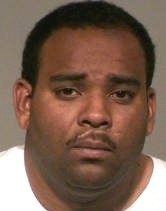 Edward George McGregor
Serial killer · USA · 1990
Edward George McGregor was a Missouri City man. He was 17 when the crime agains…
4 victims
Edward George McGregor
Serial killer · USA · 1990
Edward George McGregor was a Missouri City man. He was 17 when the crime agains…
4 victims
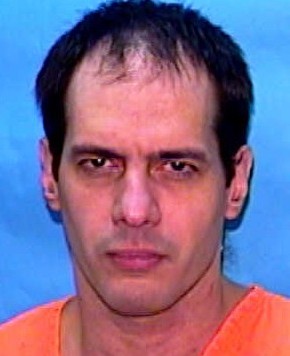 Juan Carlos Chavez
Murderer · USA · 1995
Juan Carlos Chavez was sentenced to death for the kidnapping, sexual assault, a…
1 victim
Juan Carlos Chavez
Murderer · USA · 1995
Juan Carlos Chavez was sentenced to death for the kidnapping, sexual assault, a…
1 victim
- Gender
- male
- Country
- USA
- Location
- Cambridge, Massachusetts, USA
- Date of birth
- 1961
- Age at first offence
- 34
- Characteristics
- revenge
- Victim profile
- Visal Men, 15, Virak Men, 12, and Sovanna Men, 9 ( his girlfriend's sons )
- Method of murder
- Shooting
- Date(s) of murder
- November 12, 1995
- Years active
- 1995
- Date of arrest
- Same day
- Status
-
Life imprisonment
Sentenced to three life terms in prison on December 10, 1997
Case record: Vuthy Seng
Status
Vuthy Seng was sentenced to three life terms in prison on December 10, 1997.
Timeline
- November 11, 1995 — Vuthy Seng awoke the victims’ mother and asked her what she loved most in the world.
- November 12, 1995 — The victims’ mother told Vuthy Seng he had until the end of the month to vacate her apartment; after making a telephone call to her, Seng entered the victims’ apartment, shot the four children in the head, and the three boys died over the following several days.
- December 9, 1997 — Vuthy Seng was found guilty on all indictments.
- December 10, 1997 — A jury rejected a defense of insanity and sentenced Seng to three life terms for fatally shooting his girlfriend’s three sons; the prosecutor asked that the three life sentences be served one after the other.
- 2002 — Seng’s convictions were set aside because of the admission in evidence of a statement obtained from him in the absence of adequate Miranda warnings.
- April 12, 2010 — Judgments were affirmed.
Background
Vuthy Seng lived with the victims and their mother in an apartment in Lowell. The mother began asking Seng to move out so she could reconcile with her husband. Seng repeatedly refused, professing his love for the mother and asking her to let him stay because he had no money. Relatives said Seng was angry after the girlfriend, Chhong Yim, told him to move out of her apartment because her children did not like him.
The offence
On the night of November 11, 1995, Seng awoke the mother and asked her what she loved most in the world. “I love my children the most,” she replied.
On November 12, the mother told Seng that he had until the end of the month to vacate her apartment. Later, while the mother was visiting at a friend's apartment, Seng telephoned her and again posed his query. The mother asked him not to hurt her children. She left to return home.
Seng had placed the telephone call from the apartment next door to the one he shared with the mother and the four victims. At the time, the victims were at home alone watching television. After making the telephone call, Seng entered the victims’ apartment, walked into the room where they were sitting, and proceeded to shoot each of the four children in the head.
When the oldest boy attempted to flee, Seng shot him in the head again and then struck him with a large knife that the family kept in the kitchen. Although wounded, the girl escaped through a window and ran back into the apartment building to get help. She was bleeding from the head.
When her neighbor answered the door, the girl struggled with her words, gestured to her head to indicate a firearm, and said “Thy,” the name she and her brothers called Seng. Her neighbor ran across the hallway and yelled, “Vuthy, are you crazy? Why are you killing the kids?” Eventually, the oldest child opened the door on his knees.
After the shooting, Seng left the apartment.
Victims and injuries
Four children—three boys and one girl—were found in their home suffering from severe injuries. All four had been shot in the head, and one also had been attacked with a large knife. Within days, the three boys died; the girl survived.
Seng was charged with shooting to death:
- 9-year-old Sovanna Men
- 15-year-old Visal Men
- 12-year-old Virak Men
A fourth child survived:
- Sathy Men (now 16 at trial) escaped and recovered from a gunshot wound in the head.
Investigation
Police and emergency responders arrived at the apartment and took the children to nearby hospitals. Over the next several days, the three boys died as a result of their wounds.
Neighbors came to Seng’s aid when they saw him stumbling in an alleyway as a result of an apparent gunshot wound to his ear. They gave him a new shirt and drove him to a friend's apartment nearby. Police found Seng there and arrested him.
Later, police discovered a firearm in a trash barrel near the victims’ apartment. Seng’s deoxyribonucleic acid (DNA) was found on the gun and on items in the apartment.
At trial, Seng attempted to demonstrate that law enforcement had assumed from the beginning that he was the assailant based on the story of the surviving victim. He argued that the victim's perception was faulty and that she could not say for certain whether someone other than Seng may have perpetrated the attacks.
Arrest
Seng was arrested after police found him at a friend's apartment nearby.
Trial
Charges and indictments
In 1995, Seng was indicted for the murders of the three boys, under G.L. c. 265, § 1, and for armed assault with intent to murder the girl, under G.L. c. 265, § 18(b). He was also charged with assault and battery by means of a dangerous weapon on the girl and one of the boys, under G.L. c. 265, § 15A(b), and with possession of a firearm without a license, under G.L. c. 269, § 10(a).
Indictments were found and returned in the Superior Court Department on December 21 and 29, 1995.
First trial and conviction set aside
Seng was found guilty on all the indictments on December 9, 1997. In 2002, his convictions were set aside because of the admission in evidence of a statement obtained from him in the absence of adequate Miranda warnings. Commonwealth v. Vuthy Seng, 436 Mass. 537, 548, cert. denied, 537 U.S. 942 (2002).
Second trial and verdict
After a second jury trial, Seng was found guilty of three charges of murder in the first degree on the theories of deliberate premeditation and extreme atrocity and cruelty, as well as guilty on all the remaining charges.
The defense conceded that Seng shot the children but asserted that Seng was insane at the time of the killings. During the trial, the defense characterized Seng as “destitute and broken” and said he was hearing voices; it argued that his mental troubles stemmed from a 1993 accident at a bottling factory in which he struck his head when a stack of crates fell on him.
Evidence and testimony
The surviving female child testified as a key prosecution witness.
After shooting the victims, Seng left the apartment. Neighbors assisted him because he was stumbling in an alleyway due to an apparent gunshot wound to his ear.
The surviving girl testified about what she said to her neighbor:
- She testified that when her neighbor opened her door, she pointed to her head and said “Thy,” the defendant’s nickname. Only then did her neighbor run across the hall and yell the defendant’s name.
Later in the proceedings, during the exchange concerning statements the victim made to Captain Sullivan, the following occurred:
THE PROSECUTOR: “What happened up at the hospital?” DEFENSE COUNSEL: “Objection.” THE VICTIM: “I told [Captain Sullivan] that he [the defendant] had a meat cleaver.” THE PROSECUTOR: “A meat cleaver or something else?” DEFENSE COUNSEL: “Objection, your Honor.” THE JUDGE: “Sustained.” THE VICTIM: “A knife--” THE JUDGE: “No, no, no.” THE PROSECUTOR: “Did you tell Detective--” THE JUDGE: “Move on to something else....”
During trial, cross-examination included the following relevant portions:
DEFENSE COUNSEL: “Yesterday you talked about seeing someone with a machete, isn't that right?” THE VICTIM: “Yes.” DEFENSE COUNSEL: “And that was the first time you had ever testified that you had ever seen anybody with a machete during this incident, isn't that right?” THE VICTIM: “Yes.” DEFENSE COUNSEL: “And, in fact, when you were speaking with [Officer Conroy], a couple of days later, he asked you specifically if you saw anybody with a machete or a meat cleaver, isn't that right?” THE VICTIM: “Yes.” DEFENSE COUNSEL: “And you told him a couple of days later that you don't remember seeing anything like that happening, isn't that right?” THE VICTIM: “I don't remember.” (Defense counsel shows the victim a document to refresh her recollection.) DEFENSE COUNSEL: “[W]hen you were talking to [Officer Conroy], you told him you couldn't remember seeing anybody with a machete or meat cleaver, right?” THE VICTIM: “Yes.”
When pressed about her statement to Officer Conroy, the victim said that her statement did not accurately reflect what had happened.
Claims of error at trial
Seng raised several grounds for reversal, including the order of peremptory challenges, the admission of a prior consistent statement, the denial of the opportunity to read an inconsistent statement into the record as a past recollection recorded, and the judge’s admonition regarding speculation about television programs or science fiction.
Order of peremptory challenges
Seng argued that the judge violated Rule 6 of the Rules of the Superior Court by requiring Seng to exercise his peremptory challenges before the Commonwealth during individual voir dire for certain jurors.
The procedure involved a two-stage process: prospective jurors appeared individually, counsel suggested further questions, and then the parties exercised peremptory challenges with alternating which party went first for each juror. For the first juror, the Commonwealth chose first, followed by the defendant; for the second juror, the defendant chose first, followed by the Commonwealth.
The court held that Rule 6 did not apply to the defendant's case because it did not govern empanelment conducted by means of individual voir dire. The court also held there was no prejudice requiring reversal. It noted that Seng used only fifteen out of his sixteen peremptory challenges.
Prior consistent statement
Seng argued that the judge erroneously allowed the Commonwealth to bolster the girl’s testimony with a prior consistent statement.
Seng had impeached the girl with inconsistencies about whether she saw Seng attack her brother with a machete-type knife. On cross-examination, defense counsel elicited testimony that the first time the victim “testified” to having seen anyone with a machete was on direct examination the day before, and that two days after the attacks she told Officer Phillip Conroy she could not remember seeing anyone with a meat cleaver or a machete.
The judge permitted the Commonwealth to ask the victim what happened at the hospital on the day of the brutal attack after agreeing the cross-examination impression related to memory rather than recent contrivance. The court found that, even if error, any harm was minimal because the judge quickly cut off further questioning and sustained objections.
Past recollection recorded
Seng attempted to read into the record the victim’s statement to Officer Conroy, arguing it qualified as past recollection recorded. The judge denied the request.
The court held that the argument failed the first element of the Nolan test because the victim testified her memory was not faulty. The court also held the judge acted within his discretion, including considering that Seng waited five days before attempting to introduce the statement.
Bowden defense and “CSI” instruction
Seng argued that the judge’s comments neutralized his Bowden defense. The judge had given a so-called Bowden instruction advising the jury that reasonable doubt could arise from a finding that law enforcement failed adequately to investigate the crime.
Immediately following the Bowden instruction, the judge said:
“And I remind you that this is real life and not CSI. I say that without being facetious. It's been observed across the country that people who've watched that particular program and similar programs tend to think that life is all that sort of science fiction and it's not. "Now, it may be, I say it may be, it may not be but if it is, then maybe you would like to have heard the testimony of a person or somebody or persons for that matter, that neither side had called has a witness. Once again, you may not speculate or guess as to what that witness's testimony might have been. Not knowing the testimony, of course, you can't tell which side it would have helped or hurt. I urge you, therefore, not to spend any time arguing about why so and so didn't testify.”
The court held the instruction did not remove relevant evidence from the jury’s consideration in a way requiring reversal, and it found no error. The court noted “CSI” was referenced at trial multiple times, including by the Commonwealth, by the judge, and twice by Seng.
Sentencing
On December 10, 1997, the jury rejected an insanity defense and sentenced Seng, 34, to three life terms for fatally shooting his girlfriend’s three sons in the head.
The prosecutor asked that the three life sentences be served one after the other. Assistant Middlesex District Attorney Rick Grundy said his request, which was granted, was a symbolic way of emphasizing the lost lives of the three children Seng was convicted of murdering.
“These were separate and distinct individuals,” Grundy said. “They came into the world separately and they left the world separately.”
The judge ordered that the sentences be served consecutively (one after the other).
Appeals
Seng appealed the convictions. The court affirmed the convictions and declined to grant relief under G.L. c. 278, § 33E. The court reviewed the record in accordance with G.L. c. 278, § 33E to determine whether there was any basis to set aside or reduce the verdict of murder in the first degree.
The court addressed an issue related to autopsy testimony. Autopsies were performed on the three male victims in 1995. At the 2007 trial, the Commonwealth called a medical examiner who did not perform the autopsies but reviewed the autopsy reports. The court stated most testimony was limited to the witness’s own opinions and conclusions and was permissible. When asked about the cause of death for one victim, the witness conveyed the conclusion contained in the original autopsy reports. The court held that such testimony violated Seng’s right to confront witnesses against him under the Sixth Amendment. The court noted Seng did not object. It concluded there was no substantial likelihood of a miscarriage of justice as a result of the error.
Outcome
Judgments were affirmed.
Aftermath
After the verdict, Chhong Yim thanked friends and supporters outside the courtroom. Speaking through an interpreter, she said:
“Not a day went by when me and my daughter didn't think of my three sons,” she said, speaking through an interpreter outside the courtroom.
Grundy said Seng would undergo a psychiatric evaluation at Bridgewater State Hospital, where he had been held for much of the time since the slaying. Grundy said Seng’s lawyers had refused to allow him to be evaluated for the entire time he had been there and that he suspected evaluation would take place and that it would show Seng was not suffering from any kind of psychotic condition and would be sent to prison.
Spotted an error, or have more information about this case?