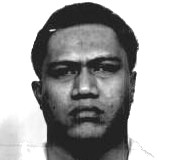
Frederick Lashley
Homicide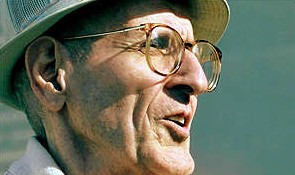 Jack Kevorkian
Homicide · USA · 1990
Jack Kevorkian (born May 26, 1928) was a controversial American pathologist. He…
130 victims
Jack Kevorkian
Homicide · USA · 1990
Jack Kevorkian (born May 26, 1928) was a controversial American pathologist. He…
130 victims
 Edward Charles Allaway
Homicide · USA · 1976
Edward Charles Allaway Edward Charles Allaway was found not guilty by reason of…
7 victims
Edward Charles Allaway
Homicide · USA · 1976
Edward Charles Allaway Edward Charles Allaway was found not guilty by reason of…
7 victims
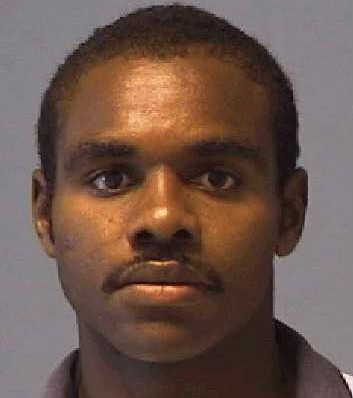 Clinton Bankston
Homicide · USA · 1987
15 August 1987 — Ann Morris (63), her sister Sally Nicholson (59), and Sally’s…
5 victims
Clinton Bankston
Homicide · USA · 1987
15 August 1987 — Ann Morris (63), her sister Sally Nicholson (59), and Sally’s…
5 victims
 Rashid Baz
Murderer · USA · 1994
Rashid Baz was Lebanese-born. He was under arrest after the shootings and later…
1 victim
Rashid Baz
Murderer · USA · 1994
Rashid Baz was Lebanese-born. He was under arrest after the shootings and later…
1 victim
 Min Chen
Murderer · Canada · 2003
Min Chen (born January 30, 1983) was a Chinese visa student from Shanghai, Chin…
1 victim
Min Chen
Murderer · Canada · 2003
Min Chen (born January 30, 1983) was a Chinese visa student from Shanghai, Chin…
1 victim
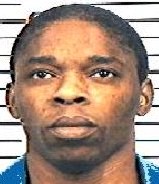 Bobby Joe Fields
Murderer · USA · 1993
Bobby Joe Fields was executed by lethal injection in Oklahoma on February 13, 2…
1 victim
Bobby Joe Fields
Murderer · USA · 1993
Bobby Joe Fields was executed by lethal injection in Oklahoma on February 13, 2…
1 victim
- Gender
- male
- Country
- USA
- Location
- St. Louis, Missouri, USA
- Date of birth
- March 10, 1964
- Age at first offence
- 17
- Characteristics
- juvenile (17), robbery
- Victim profile
- Janie Tracy, 55 ( his ailing foster mother )
- Method of murder
- St abbing with knife
- Date(s) of murder
- April 9, 1981
- Years active
- 1981
- Date of arrest
- Same day
- Status
-
Executed
Executed by lethal injection in Missouri on July 28, 1993
Case record: State of Missouri v. Frederick Lashley
Status and disposition
Frederick Lashley was executed on July 28, 1993.
Timeline
- July 28, 1993 — Frederick Lashley was executed by lethal injection in Missouri.
- April 9, 1981 — Janie Tracy was killed; Lashley entered her apartment and attacked her.
- 8:30pm (night of April 9, 1981) — The account stated that Lashley waited until after this time before Tracy returned home and entered the front door.
- Shortly after midnight (following April 9, 1981) — Lashley was apprehended while driving the stolen vehicle.
Background
Janie Tracy lived alone in a downstairs apartment in the City of St. Louis. She had heart trouble, diabetes and a neuromuscular problem that caused her to limp and required her to use a walking cane. She had difficulty walking since she had undergone a brain operation a number of years ago, which resulted in the removal of a portion of her skull on the left side of her head.
Frederick Lashley lived with and was cared for by Miss Tracy from the time he was two until he was sixteen. He had been present on occasions when there had been discussions concerning the soft spot on Miss Tracy’s head. Lashley had reared-caretaker relationship described as a foster mother relationship in appellate discussion, and the New York Times reported that Mrs. Tracy was his cousin and had reared him from the age of 2. At the time of the killing, Mrs. Tracy was recovering from brain surgery.
The New York Times also described Lashley as 29 at execution, and reported that he was the youngest person on Missouri’s death row when he was sentenced to die for stabbing Janie Tracy to death in St. Louis in 1981.
The offence
On the night of April 9, 1981, Miss Tracy was visiting her sister who lived several blocks from her apartment.
Sometime before 8:30pm, Lashley entered the apartment by climbing through the top of a window on the rear porch. He unscrewed the light bulb in the front room so that the light would not come on when the switch was turned on. His admitted purpose was to ambush Miss Tracy and take her money when she returned home. Lashley, armed with a cast iron skillet, waited in the dark in the bedroom adjacent to the front room. There was also evidence that a knife was involved.
When Miss Tracy returned home and entered the front door of the apartment she attempted to turn on the light. When the light did not come on she started into the room where Lashley was waiting. As she reached for the light switch he struck her in the head with the cast iron skillet, breaking it into two pieces.
Lashley took fifteen dollars and car keys from Miss Tracy’s purse. He locked the front door and drove off in the victim’s car.
Injuries and death
Hospital records showed Miss Tracy was comatose and brain dead when she arrived at the hospital. She had a cut on her head above the right ear and a one-inch incision above her left ear where the knife entered her skull through the soft spot and penetrated her brain. The account also stated that Lashley’s foster mother died two days later.
Investigation and evidence
The appellate discussion stated that during the guilt phase, the prosecution introduced items recovered from the murder scene, including a hammer found next to a piece of the broken skillet. The Missouri Supreme Court affirmed the trial court’s decision that the hammer was admissible under state law.
The federal appellate discussion described the assault and concluded that the butcher knife was the death weapon: “it is beyond dispute that the butcher knife wielded by [Lashley] was the death weapon.”
Arrest and apprehension
Lashley was apprehended while driving the stolen vehicle shortly after midnight.
Confessions
Lashley told police that he had unscrewed a light bulb to darken a room and waited for her, then struck her on the head with a skillet and stabbed her in the head.
The Supreme Court’s discussion in Paul DeLo, Superintendent, Potosi Correctional Center, v. Frederick Lashley described a series of confessions made promptly after his arrest, and stated:
“Thirty days after his 17th birthday, respondent entered his cousin's home, murdered her, and stole about $15.00. He was promptly arrested and made a series of confessions to the police. A portion of one of those confessions apparently referred to other crimes, but that portion was not admitted into evidence and is not in the record.”
Trial
A state-court jury convicted Lashley of capital murder, and he was sentenced to death. The Missouri Supreme Court affirmed the conviction and death sentence.
Appeals
United States Court of Appeals, Eighth Circuit (habeas corpus appeal)
Frederick Lashley, appellant, v. William Armontrout, Warden, Missouri Department Of Corrections, appellee, No. 90-1036.
Submitted Oct. 8, 1990; decided March 4, 1992. Before ARNOLD and FAGG, Circuit Judges, and WATERS, District Judge.
The Eighth Circuit affirmed the conviction but reversed and remanded for resentencing. The court described its resolution as follows:
“We affirm the conviction, but reverse and remand for resentencing.”
The Eighth Circuit addressed multiple claims:
Ineffective assistance of counsel
Lashley contended he received ineffective assistance of counsel because his trial attorney failed adequately to investigate and raise diminished capacity as a defense during the guilt phase and as a mitigating factor during the penalty phase.
The Eighth Circuit stated that trial counsel considered presenting diminished capacity based on Lashley’s claim that he was high on drugs when he killed his foster mother, but decided not to do so after evaluating evidence and discussing strategies with co-counsel and other attorneys. The psychiatrist examined Lashley and told the attorney there was no evidence Lashley was high on drugs the night of the murder. The Eighth Circuit held that defense counsel was not ineffective for not presenting an implausible theory of defense or mitigation and concluded:
“Given these circumstances, the Missouri Court of Appeals held ‘there was a reasonable basis for [the attorney's] trial strategy.’ Id. at 34. We agree and conclude that the attorney acted within the bounds of professionally competent assistance.”
Jury verdict correction and double jeopardy
Lashley contended the trial court’s handling of an improperly worded verdict violated double jeopardy and interfered with his right to a jury trial. The Eighth Circuit stated that a trial court may ask a jury to correct its verdict without violating the Fifth and Sixth Amendment rights, and agreed the trial court handled the situation neutrally. It discussed Missouri law that a jury verdict was not binding until accepted by the court and the jury discharged, and stated the trial court complied with Missouri law by requiring further deliberation and return of a verdict in proper form.
Sufficiency of evidence for premeditation, deliberation, and intent
Lashley contended the prosecution presented insufficient evidence of premeditation, deliberation, and intent to commit capital murder. The Eighth Circuit concluded that a rational jury could infer premeditation, deliberation, and intent based on waiting in ambush and inflicting a selective mortal wound. It stated:
“In our view, a rational jury could infer that by lying in wait and inflicting a selective mortal wound, Lashley did premeditate, deliberate, and intend to murder his foster mother.”
Witherspoon issue (jurors excused for cause)
Lashley contended he was denied his Sixth Amendment right to a fair and impartial jury because the trial court violated Witherspoon v. Illinois when it excused for cause jurors who expressed an unwillingness to impose the death penalty. The Eighth Circuit disagreed and stated that each of the excused jurors unequivocally indicated unwillingness or inability to consider the death sentence if convicted.
Admission of a hammer into evidence
Lashley contended he was denied due-process right to a fair trial by the erroneous admission of the hammer. The Eighth Circuit concluded admission did not amount to denial of due process and emphasized that the knife was the death weapon. It stated:
“The hammer was introduced along with other items recovered from the murder scene, and ‘[a] photograph showing the hammer and piece of skillet had already been received in evidence--without objection.’” and “‘[T]he only mention of the hammer in closing arguments was made by defense counsel[, and] it is beyond dispute that the butcher knife wielded by [Lashley] was the death weapon.’”
No evidentiary hearing in federal habeas
Lashley contended the district court erred in dismissing his habeas application without an evidentiary hearing. The Eighth Circuit concluded that this argument had no merit because dismissal without a hearing was proper where facts were not in dispute or could be resolved on the basis of the record, and because Lashley had a full evidentiary hearing during state postconviction proceedings. It concluded:
“The District Court properly declined to hold an evidentiary hearing.”
Ineffective assistance related to mitigating-circumstance instruction on no significant prior criminal activity
Lashley contended ineffective assistance of counsel because his trial attorney failed to introduce evidence supporting a mitigating-circumstance instruction as to no significant history of past criminal activities. The Eighth Circuit held this claim was procedurally barred because it was not included in the postconviction appeal to the Missouri Court of Appeals.
Eighth Amendment violation: refusal to give mitigating-circumstance instruction
The Eighth Circuit held that the Missouri trial court violated the Eighth Amendment by refusing to give the requested mitigating-circumstance instruction:
“The defendant has no significant history of prior criminal activity.”
It discussed Mo. Rev. Stat. § 565.012.3(1) (Supp. 1982) (current version Mo. Rev. Stat. § 565.032.3(1) (Supp. 1990)) establishing that mitigating factor.
It described a conference preceding the penalty phase where defense attorney made a motion in limine to prevent the State from introducing evidence of Lashley’s juvenile record, citing Missouri Revised Statutes § 211.271 (1978). It described the judge’s refusal to give the instruction despite a blank record and stated that the Eighth Amendment required allowing the jury to consider mitigating factors and that Lockett required the requested instruction be given if warranted by the evidence. The Eighth Circuit concluded:
“The trial judge's failure to give the requested instruction under these circumstances violated the defendant's Eighth Amendment rights as expressed in Lockett.”
It then directed that Missouri trial court must promptly commence proceedings to resentence unless the State wished to reduce sentence to life imprisonment, and stated the State could come forward with evidence or the court must tell the jury it may consider the mitigating circumstance.
Dissent in part H and concurrence in part G
The Eighth Circuit included a dissenting and concurring opinion by FAGG, Circuit Judge. The dissent stated the panel was reversing the death sentence because the state trial judge refused a mitigating circumstance instruction on an empty record, and argued that the majority’s view was contrary to controlling Supreme Court precedent. The dissent stated:
“I dissent from the court's holding in part H, which overturns Lashley's death sentence.”
The dissent also included an extensive explanation disagreeing with the interpretation of Lockett and Walton and argued that due process required instructions only when evidence warranted them, and criticized the idea that lack of evidence was itself evidence. The dissent concluded:
“In my view, the court unnecessarily reverses Lashley's death sentence based on the state trial judge's proper refusal to give a requested jury instruction that has no support in the record.”
Supreme Court of the United States (petition for certiorari)
The Supreme Court case is titled: Paul DeLo, Superintendent, Potosi Correctional Center, petitioner v. Frederick Lashley. No. 92-409.
The Supreme Court was on petition for writ of certiorari to the United States Court of Appeals for the Eighth Circuit. Decided March 8, 1993.
The portion included a Justice Stevens opinion with:
- Justice Blackmun joining.
- The opinion text described the constitutional issue and argued against summary disposition and without argument on the merits.
It stated:
“Thirty days after his 17th birthday, respondent entered his cousin's home, murdered her, and stole about $15.00. He was promptly arrested and made a series of confessions to the police.”
The opinion also discussed the question:
“That question is whether the presumption of innocence (uncontradicted in any way by the prosecution) supports an instruction to the jury at sentencing that the capital defendant's lack of a significant criminal history is a factor mitigating against its imposition of the death penalty.”
It addressed the sentencing statute and argument that Missouri’s capital sentencing statute provided that absence of any significant history of prior criminal activity was a mitigating circumstance, and that the jury should be so instructed when the record contained no evidence of prior criminal activity. It also stated:
“Speculation by appellate judges, see ante, at 2, about a matter that was neither available to the sentencing authority nor mentioned by the State in its petition in this Court, is not a substitute for admissible evidence presented in an adversary proceeding.”
It included discussion of Missouri law prohibiting use of juvenile record evidence in adult criminal proceedings, and quoted:
“Speculation about his juvenile record is impermissible; State law prohibits any use of such evidence in adult criminal proceedings.”
It also included the citation that Missouri’s capital sentencing statute provided a statutory mitigating factor that:
“The defendant had no significant history of prior criminal activity.”
The Supreme Court opinion further described that the presumption of innocence could act as an instrument of proof substituting for affirmative evidence, and argued that instruction should be given when the record revealed no prior criminal history evidence at sentencing.
Outcome
The Eighth Circuit reversed and remanded for resentencing while affirming the conviction. Lashley was later executed on July 28, 1993, after the Supreme Court and appeals process proceeded to execution.
Other details
The New York Times described the execution as occurring early in the morning and stated:
- Lashley was 29 at execution.
- Mrs. Tracy was 55.
- The Supreme Court unanimously rejected a late-hour appeal.
- A corrections official, George Lombardi, was quoted saying:
“He said he held no grudge against any of the persons involved in the execution, that he understood that those involved in the execution had a job to do,” and the article described Lashley’s understanding of the process.
The New York Times also reported statements from Sean O’Brien, director of the Missouri Capital Punishment Resource Center, quoting:
“Fred has some biological problems, including some brain damage, that makes him especially susceptible to the horrible influences of the drug. He was out of his mind.”
The New York Times reported that Missouri Attorney General Jay Nixon said:
“We feel very comfortable with what the jury and judge decided.”
The New York Times described Lashley’s lawyers’ arguments that he should not be executed for a crime committed when he was 17, and that he had been high on PCP when he killed her and had stolen less than $15.
People involved
- Frederick Lashley — convicted of capital murder; executed by lethal injection on July 28, 1993; admitted breaking in and striking Janie Tracy; took fifteen dollars and car keys; drove off in her car; apprehended while driving stolen vehicle; made confessions to police; was 29 at execution.
- Janie Tracy — the victim; 55; lived alone in a downstairs apartment in the City of St. Louis; had heart trouble, diabetes, and a neuromuscular problem causing her to limp and require a walking cane; difficulty walking after brain operation with removal of portion of skull on left side; had soft spot discussed with Lashley; visiting her sister on night of April 9, 1981; struck with cast iron skillet; injured by knife through soft spot; comatose and brain dead on arrival at hospital; recovered from brain surgery at time of killing.
- George Lombardi — a corrections official; was quoted in the New York Times statement about Lashley and execution participants.
- Sean O’Brien — director of the Missouri Capital Punishment Resource Center; quoted in the New York Times about biological problems and drug influence.
- Jay Nixon — Missouri Attorney General; was quoted in the New York Times about comfort with jury and judge decision.
- William Armontrout — appellee in the federal habeas appeal, Warden, Missouri Department Of Corrections.
- Paul DeLo — petitioner in the Supreme Court matter; Superintendent, Potosi Correctional Center.

Spotted an error, or have more information about this case?