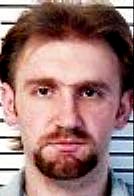
Jackie Lee Willingham
Murderer Brian Kevin Rosenfeld
Murderer · USA · 1985
Brian Kevin Rosenfeld Brian Kevin Rosenfeld was sentenced to three concurrent l…
23 victims
Brian Kevin Rosenfeld
Murderer · USA · 1985
Brian Kevin Rosenfeld Brian Kevin Rosenfeld was sentenced to three concurrent l…
23 victims
 Russell Ellwood
Murderer · USA · 1991
Russell Ellwood was a former taxi driver. Authorities suspected him of killing…
20 victims
Russell Ellwood
Murderer · USA · 1991
Russell Ellwood was a former taxi driver. Authorities suspected him of killing…
20 victims
 Robert Martines Perez
Murderer · USA · 1994
Name: Robert Martines Perez · Other name used in proceedings: Robert Martinez P…
15 victims
Robert Martines Perez
Murderer · USA · 1994
Name: Robert Martines Perez · Other name used in proceedings: Robert Martinez P…
15 victims
 Billy Frank Vickers
Murderer · USA · 1993
Billy Frank Vickers Vickers was executed by lethal injection in Texas on Januar…
14 victims
Billy Frank Vickers
Murderer · USA · 1993
Billy Frank Vickers Vickers was executed by lethal injection in Texas on Januar…
14 victims
 Graham Stafford
Murderer? · Australia · 1991
Graham Stuart Stafford was convicted in 1992 of the murder of twelve-year-old L…
1 victim
Graham Stafford
Murderer? · Australia · 1991
Graham Stuart Stafford was convicted in 1992 of the murder of twelve-year-old L…
1 victim
 Louis Kenneth Neu
Murderer · USA · 1933
Louis Kenneth Neu was executed by hanging in New York on February 1, 1935. Neu…
2 victims
Louis Kenneth Neu
Murderer · USA · 1933
Louis Kenneth Neu was executed by hanging in New York on February 1, 1935. Neu…
2 victims
 Zhao Zhihong
Serial killer · China · 1996
Zhao Zhihong received a death sentence in February 2015 for crimes including ra…
10 victims
Zhao Zhihong
Serial killer · China · 1996
Zhao Zhihong received a death sentence in February 2015 for crimes including ra…
10 victims
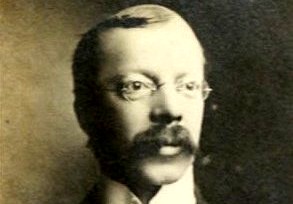 Dr. Hawley Harvey Crippen
Murderer · United Kingdom · 1910
Hawley Harvey Crippen (11 September 1862 – 23 November 1910), usually known as…
1 victim
Dr. Hawley Harvey Crippen
Murderer · United Kingdom · 1910
Hawley Harvey Crippen (11 September 1862 – 23 November 1910), usually known as…
1 victim
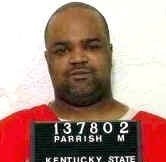 Melvin Lee Parrish
Murderer · USA · 1987
Melvin Lee Parrish was sentenced to death on February 1, 2001 in Jefferson Coun…
2 victims
Melvin Lee Parrish
Murderer · USA · 1987
Melvin Lee Parrish was sentenced to death on February 1, 2001 in Jefferson Coun…
2 victims
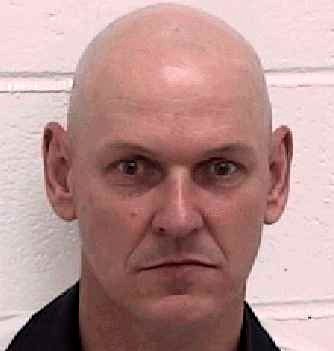 John Wayne Conner
Homicide · USA · 1982
John Wayne Conner John Wayne Conner was sentenced to death in July 1982. · Janu…
1 victim
John Wayne Conner
Homicide · USA · 1982
John Wayne Conner John Wayne Conner was sentenced to death in July 1982. · Janu…
1 victim
- Gender
- male
- Country
- USA
- Location
- Comanche County, Oklahoma, USA
- Date of birth
- October 23, 1969
- Age at first offence
- 25
- Characteristics
- robbery, abuse, drug addict
- Victim profile
- Jayne Van Wey (female, 62)
- Method of murder
- Beating
- Date(s) of murder
- December 20, 1994
- Years active
- 1994
- Date of arrest
- Same day
- Status
-
Executed
Executed by lethal injection in Oklahoma on July 24, 2003
Case record: Jackie Lee Willingham
Status
Jackie Lee Willingham was executed by lethal injection in Oklahoma on July 24, 2003.
Background
Jackie Lee Willingham was a travelling salesman when he attacked Jayne Van Wey.
Willingham presented an account in which he said he became angry after Jayne Van Wey rudely rebuffed his sales efforts and hostile vulgarity occurred between them.
At trial, Willingham testified that his attack was driven by anger over the prior confrontation and that he did not intend to kill or seriously injure her.
The offence
Jackie Lee Willingham beat and kicked Jayne Van Wey while she was in the restroom of her office. Willingham left her lying face down on the floor, bleeding and unconscious.
Jayne Van Wey died as a result of aspirating her own blood.
Willingham also admitted taking her credit cards and said he did so by first stopping in her office and taking the cards from her purse before going into the restroom, “to make it look like a robbery.”
Investigation
Lawton police department investigators learned that a sales team in Lawton would be meeting at a local restaurant later that afternoon, and that at least one member of the team, Kevin Longenecker, fit the suspect’s description.
Detective John Whittington asked about Kevin Longenecker and was told by Willingham that he was not there.
Detective Whittington noticed that Willingham was extremely uneasy and had a fresh scratch on his neck.
After Willingham offered an explanation for the scratch, Detective Whittington asked him to come to the police station and said the entire group would need to come. The detective explained that police were investigating an attack on a woman downtown that day.
At the police station, Willingham was advised of his Miranda rights, which he waived in writing.
Willingham initially denied any involvement in the attack. After Detective Whittington pointed out what looked like blood on Willingham’s boots and asked him to tell his side of the story, Willingham admitted that he had beaten Mrs. Van Wey.
Some details of Willingham’s version of the attack did not fit physical evidence, and he was asked to return to the scene and clarify his account.
After again waiving his Miranda rights, Willingham walked through the crime scene describing the attack somewhat differently on videotape.
After learning that Mrs. Van Wey had died, Willingham was interviewed again and finally admitted that he had forcefully kicked her in the head before leaving the restroom.
After two of Mrs. Van Wey’s credit cards were found in the restaurant where Detective Whittington had first spoken with Willingham, Detective Whittington advised Willingham of his rights and questioned him again, leading to Willingham admitting that he had not immediately followed Mrs. Van Wey into the restroom, but had stopped in her office and taken the cards from her purse first, “to make it look like a robbery.”
Arrest
The Lawton police department led to the arrest of Jackie Lee Willingham. Willingham was interviewed several times and admitted to beating Mrs. Van Wey.
Trial
Jackie Lee Willingham was charged with first degree malice murder in violation of 21 O.S.1991, § 701.7 in the district court of Comanche County, Case No. CRF-94-499.
The State filed a Bill of Particulars alleging two aggravating circumstances.
A jury trial was held before the Honorable Allen McCall, District Judge.
The jury found Willingham guilty of first degree murder and found that the murder was especially heinous, atrocious, or cruel.
The State also alleged that Willingham posed a continuing threat to society. The jury sentenced Willingham to death.
Sentencing
At the penalty phase, the jury rejected the State’s allegation that Willingham posed a continuing threat to society, see id. § 701.12(7).
The jury found that the murder was especially heinous, atrocious, or cruel (HAC aggravator), see id. § 701.12(4).
After weighing the HAC aggravator against the evidence presented in mitigation, the jury determined that Willingham should be put to death for the crime.
The trial court formally imposed the recommended sentence.
In direct appeal proceedings, the Oklahoma Court of Criminal Appeals affirmed the sentence, finding that even absent the improper victim impact evidence, the result would have been the same.
Appeals
Direct appeal (Oklahoma)
Willingham appealed and the Oklahoma Court of Criminal Appeals affirmed both conviction and sentence on direct appeal: Willingham v. State, 947 P.2d 1074 (Okla. Crim. App. 1997).
The Oklahoma Court of Criminal Appeals held that:
- probable cause existed to support seizure of defendant’s blood-covered boots during his first interview with police;
- second-degree depraved mind murder is not lesser included offense of first-degree malice murder;
- the fact that defendant intended to harm victim did not preclude conviction on charge of second-degree depraved mind murder, so long as defendant did not intend to take victim’s life, overruling Palmer v. State, 871 P.2d 429;
- any error resulting from giving of instruction on lesser-included offense of first-degree heat of passion manslaughter was harmless;
- the probative value of six photographs showing injuries sustained to the victim’s face to demonstrate malice aforethought outweighed prejudice to defendant;
- evidence was sufficient to support finding of heinous, atrocious or cruel aggravating circumstance; and
- sentence of death was appropriate.
Chapel, P.J., concurred in results. Lumpkin, J., concurred specially with separate opinion. LANE, Judge wrote the opinion.
The Oklahoma Court of Criminal Appeals also described the facts as including that the State’s evidence showed Willingham, a traveling salesman, beat and kicked Jayne Van Wey while she was in the restroom of her office; that Willingham left her lying face down on the floor, bleeding and unconscious; and that Mrs. Van Wey died as a result of aspirating her own blood.
Post-conviction
The Oklahoma Court of Criminal Appeals denied a subsequent application for post-conviction relief: Willingham v. State, No. PC-97-389 (Okla. Crim. App. Mar. 19, 1998) (unpub.).
Federal habeas proceeding (10th Circuit)
Willingham v. Mullin (Habeas 10th Circuit) BRORBY, Senior Circuit Judge: Jackie Lee Willingham appealed from an order of the district court denying his petition for a writ of habeas corpus under 28 U.S.C. § 2254.
The court stated that after a thorough review of the record and arguments, Willingham was not entitled to habeas relief.
The court described that in 1995, an Oklahoma jury found Willingham guilty of first degree malice murder and that at the penalty phase, the jury rejected a continuing threat finding but found HAC (heinous, atrocious, or cruel). The jury determined the death penalty after weighing the aggravator against evidence presented in mitigation.
Willingham commenced the habeas proceeding alleging fifteen grounds for relief. The district court denied the petition in its entirety. The district court granted a certificate of appealability (COA) on ten issues.
The case management conference resulted in a standard order stating that, unless Willingham submitted a motion to expand the COA within ten days, “[t]he issues to be raised in the opening brief are those set forth by the district court in its order granting a [COA].” Case Management Order, April 18, 2001.
The court limited its consideration to the ten issues certified for review:
- Refusal to instruct on second degree murder
- Use of victim impact evidence
- Ineffective assistance of counsel
- Admission of Willingham’s post-arraignment statements
- Prosecutorial misconduct during second stage closing argument
- Admission of cumulative photographs of the victim
- Admission of Willingham’s videotaped statement at crime scene
- Sufficiency of the evidence supporting the HAC aggravator
- Use of an improper reasonable doubt instruction
- Cumulative error
The federal court stated that most pertinent facts were established by Willingham’s own trial testimony and earlier admissions to police, and it then recounted Willingham’s account of the confrontation and attack in the restroom, including that he followed her into the restroom, pulled her from a stall, struck her several times in the face, slammed her head into the wall, and kicked her in the face with his boot after she tried to push herself up. The court also stated that after resistance ceased, Willingham left and that she lost consciousness and died asphyxiating on blood from her injuries.
The court concluded that even if errors occurred, considering them cumulatively, the cumulative effect was harmless and therefore affirmed the judgment of the district court.
The federal court affirmed the judgment: “Accordingly, the judgment of the district court is AFFIRMED.”
Outcome
Willingham was found guilty of first degree malice murder and was sentenced to death.
The Oklahoma Court of Criminal Appeals affirmed conviction and sentence on direct appeal.
The Oklahoma Court of Criminal Appeals denied post-conviction relief.
The federal habeas court affirmed the denial of habeas relief.
Willingham was executed by lethal injection in Oklahoma on July 24, 2003.
Other details
Jackie Lee Willingham was 33 at the time of clemency consideration.
Jayne Van Wey was 62.
The murder occurred in Jayne Van Wey’s Lawton office bathroom on Dec. 20, 1984.
During clemency considerations, the Oklahoma Pardon and Parole Board recommended clemency, but clemency was denied by Gov. Brad Henry.
The Pardon and Parole Board voted 3-2 to recommend clemency.
Fred Staggs was Willingham’s lawyer.
In his last statement, Willingham apologized to the Van Wey family and said he hoped that his execution brought them some closure and they could someday forgive him.
“I love you,” Willingham said to his family members.
“Okay, I’m ready.”
The lethal injection began at 6:07 p.m., and Willingham was pronounced dead two minutes later.
The execution took place as the 13th condemned killer put to death in Oklahoma in 2003 and the second execution that week.
Willingham requested a last meal of fettuccine alfredo, a small deep dish pepperoni pizza, breadsticks and two peppermint patties.
During the trial, Willingham challenged the State’s case on the element of intent and requested instructions on lesser offenses of heat-of-passion manslaughter and second degree depraved-mind murder.
The trial court granted the heat-of-passion manslaughter instruction but denied the second degree depraved-mind murder instruction.
The jury rejected Willingham’s intent defense and found him guilty of first-degree malice murder.
Willingham claimed he did not mean to kill Van Wey and that the woman was rude to him.
In the federal appeal description, Willingham said he attacked Van Wey out of anger and stated he attacked her in anger after their earlier confrontation.
The federal court cited: “Considering [any such] errors in the aggregate, we conclude upon review of the entire record that the cumulative [effect] is harmless” and referenced United States v. Becker, 230 F.3d 1224, 1233 (10th Cir. 2000), cert. denied, 121 S. Ct. 1666 (2001); and Moore v. Gibson, 195 F.3d 1152, 1175 (10th Cir. 1999).
Spotted an error, or have more information about this case?