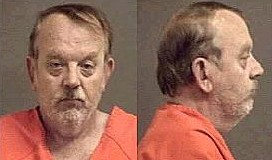
David Spanbauer
Serial killer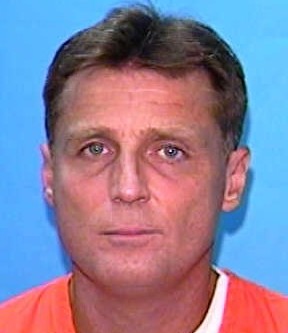 Glen Edward Rogers
Serial killer · USA · 1993
Glen Edward Rogers was a spree killer whose cross-country rampage in 1994-95 le…
70 victims
Glen Edward Rogers
Serial killer · USA · 1993
Glen Edward Rogers was a spree killer whose cross-country rampage in 1994-95 le…
70 victims
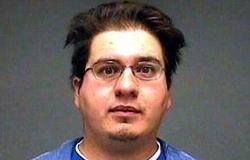 Efren Saldivar
Serial killer · USA · 1989
Efren Saldivar (born 30 September 1969) was an American serial killer who murde…
50 victims
Efren Saldivar
Serial killer · USA · 1989
Efren Saldivar (born 30 September 1969) was an American serial killer who murde…
50 victims
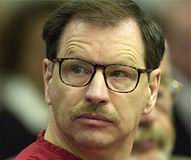 Gary Ridgway
Serial killer · USA · 1982
Gary Leon Ridgway Ridgway was born 18-February-1949 in Salt Lake City, UT. He w…
49 victims
Gary Ridgway
Serial killer · USA · 1982
Gary Leon Ridgway Ridgway was born 18-February-1949 in Salt Lake City, UT. He w…
49 victims
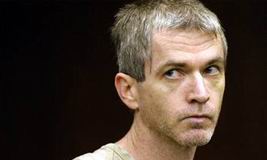 Charles Cullen
Serial killer · USA · 1984
Charles Cullen (born February 22, 1960) was a former nurse and the most prolifi…
45 victims
Charles Cullen
Serial killer · USA · 1984
Charles Cullen (born February 22, 1960) was a former nurse and the most prolifi…
45 victims
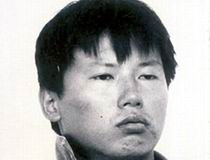 Charles Ng
Serial killer · USA · 1983
Charles Chi-Tat Ng (Chinese: 吳志達/吴志达; born December 24, 1960) was a Chinese-Ame…
25 victims
Charles Ng
Serial killer · USA · 1983
Charles Chi-Tat Ng (Chinese: 吳志達/吴志达; born December 24, 1960) was a Chinese-Ame…
25 victims
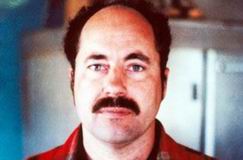 Leonard Lake
Serial killer · USA · 1983
Leonard Lake (October 29, 1945 – June 6, 1985) was an American serial killer. H…
25 victims
Leonard Lake
Serial killer · USA · 1983
Leonard Lake (October 29, 1945 – June 6, 1985) was an American serial killer. H…
25 victims
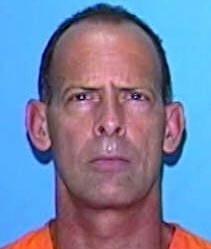 Jerry William Correll
Mass murderer · USA · 1985
Jerry William Correll was convicted and sentenced to death for the murders of h…
4 victims
Jerry William Correll
Mass murderer · USA · 1985
Jerry William Correll was convicted and sentenced to death for the murders of h…
4 victims
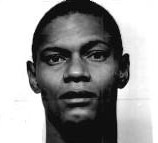 Norman Evans Green
Murderer · USA · 1985
Norman Evans Green was executed by lethal injection in Texas on February 24, 19…
1 victim
Norman Evans Green
Murderer · USA · 1985
Norman Evans Green was executed by lethal injection in Texas on February 24, 19…
1 victim
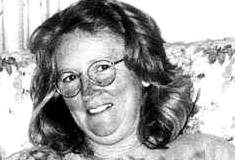 Katherine Knight
Murderer · Australia · 2000
Katherine Mary Knight (born 24 October 1955) was the first Australian woman to…
1 victim
Katherine Knight
Murderer · Australia · 2000
Katherine Mary Knight (born 24 October 1955) was the first Australian woman to…
1 victim
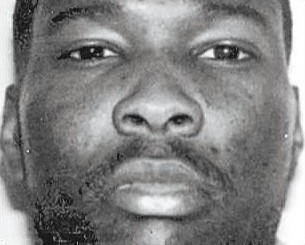 Mark Arlo Sheppard
Murderer · USA · 1993
November 28, 1993 — Mark Arlo Sheppard and his companion Andre Graham shot and…
2 victims
Mark Arlo Sheppard
Murderer · USA · 1993
November 28, 1993 — Mark Arlo Sheppard and his companion Andre Graham shot and…
2 victims
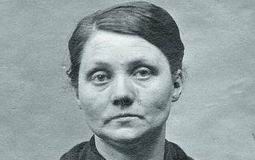 Hilda Nilsson
Serial killer · Sweden · 1915
Hilda Nilsson (1876 – 10 August 1917) was a Swedish serial killer from Helsingb…
8 victims
Hilda Nilsson
Serial killer · Sweden · 1915
Hilda Nilsson (1876 – 10 August 1917) was a Swedish serial killer from Helsingb…
8 victims
 Alexander Pichushkin
Serial killer · Russia · 1992
Alexander Yuryevich “Sasha” Pichushkin (Russian: Алекса́ндр Ю́рьевич Пичу́шкин,…
49 victims
Alexander Pichushkin
Serial killer · Russia · 1992
Alexander Yuryevich “Sasha” Pichushkin (Russian: Алекса́ндр Ю́рьевич Пичу́шкин,…
49 victims
- Gender
- male
- Country
- USA
- Location
- Wisconsin, USA
- Date of birth
- January 1941
- Age at first offence
- 51
- Characteristics
- kidnapping, rape, abuse, drug addict
- Victim profile
- Ronelle Eichstedt, 10 / Cora Jones, 12 / Trudi Jeschke, 21
- Method of murder
- Shooting
- Date(s) of murder
- 1992 / 1994
- Years active
- 1992–1994
- Date of arrest
- November 14, 1994
- Status
-
Died in custody
Sentenced to three life terms in prison without parole plus 403 years on December 20, 1994; died in prison on July 29, 2002
Overview
David Spanbauer was convicted in 1994 of kidnapping and murdering two children, and murdering a young Appleton woman. He was sentenced to three consecutive life terms in prison without parole plus 403 years on December 20, 1994. He died in prison on July 29, 2002 at Dodge Correctional Institution in Wisconsin from apparent natural causes, with liver and heart disease.
Status and death in prison
Spanbauer died on July 29, 2002 at Dodge Correctional Institution. Dodge County Coroner John Burgbacher pronounced Spanbauer dead at 4:25 p.m. Monday at the Dodge Correctional Institution in Waupun, apparently from heart disease or liver cancer. An autopsy was to be performed. Spanbauer had been in failing health for the past two years and died in an infirmary cell.
Sentencing
On December 20, 1994, Outagamie County Circuit Judge James Bayorgeon sentenced Spanbauer to three consecutive life terms plus 403 years. Spanbauer also faced convictions that included kidnapping and murdering two children and murdering a young Appleton woman about Teresa Halbach’s age.
The offence (1992–1994 crimes)
Spanbauer abducted and killed two girls, ages 10 and 12, in 1992 and 1994 while they bicycled on rural roads. He also killed a woman in her home in 1994.
Ronelle Eichstedt
Ronelle Eichstedt was 10 years old. She disappeared while riding her bicycle in rural Fond du Lac County on August 23, 1992. Her body was discovered in a farm field in Iowa County in southwestern Wisconsin on September 30, 1992.
Cora Jones
Cora Jones was 12 years old. She disappeared in Waupaca County on September 5, 1994. Two hunters discovered Jones’ body in Langlade County on September 10. On Labor Day 1994, Jones’ bike was found lying in the middle of Sanders Road in the Waupaca County Town of Dayton, and a massive search began the next day involving hundreds of volunteers combing an area within a 10-mile radius of Jones’ missing bike. Jones’ body was found five days later in Langlade County.
Spanbauer was described as abducting and murdering Jones and molested her. Jones’ body was found lying alongside a rural town road.
Trudi Jeschke
Trudi Jeschke was 21 years old. She was housesitting. She was shot to death in a northside Appleton home on July 9, 1994 after Spanbauer apparently surprising a burglar. Spanbauer broke into an Appleton residence in July 1994, and he found Trudi Jeschke in a bedroom where she was housesitting.
Attempted abduction near Hartman Creek State Park
On July 3, 1994, a 24-year-old Illinois woman was the target of an attempted abduction by Spanbauer near Hartman Creek State Park in Waupaca County. Spanbauer confessed to the attempted abduction on November 15.
Investigation and confessions
The investigation into the Eichstedt abduction and murder had gone cold at the time Cora Jones’ bike was found lying on Sanders Road. A massive search began the next day that involved hundreds of volunteers. The search for Jones garnered national attention after the FBI joined. A rural Waupaca church was quickly turned into a search center.
The investigation continued while a series of seemingly unconnected crimes were going on in the Appleton area, including two home-invasion sexual assaults in Appleton involving a 15-year-old girl and a 31-year-old woman.
Spanbauer was arrested in Combined Locks after attempting to break into a residence on November 14, 1994. He was tackled by homeowner Gerald Argall after fleeing on foot from behind his house. Spanbauer was booked into jail on burglary charges and quickly became a suspect in the murders.
Four days after being booked, Spanbauer confessed to the murders of Jones, Eichstedt, and Jeschke, as well as to the sexual assaults and assorted burglaries, and to the attempted abduction near Hartman Creek.
On November 15, Spanbauer confessed to the attempted abduction near Hartman Creek. On November 18, Spanbauer confessed to the Eichstedt, Jeschke and Jones murders and the sexual assaults in Appleton.
The murder investigation was conducted by a task force made up of investigators from the Waupaca County Sheriff’s Department, the Langlade County Sheriff’s Department, the FBI and the Wisconsin Department of Justice Division of Criminal Investigation. A reward fund approached $150,000.
Timeline
- August 23, 1992 — 10-year-old Ronelle Eichstedt disappeared while riding her bicycle in rural Fond du Lac County.
- September 30, 1992 — Eichstedt’s body was discovered in a farm field in Iowa County in southwestern Wisconsin.
- July 3, 1994 — A 24-year-old Illinois woman was the target of an attempted abduction by Spanbauer near Hartman Creek State Park in Waupaca County.
- July 9, 1994 — 21-year-old Trudi Jeschke was shot to death in a northside Appleton home after apparently surprising a burglar.
- September 5, 1994 — 12-year-old Cora Jones disappeared in Waupaca County.
- September 10, 1994 — Two hunters discovered Jones’ body in Langlade County.
- November 14, 1994 — Spanbauer was arrested in Combined Locks after attempting to break into a residence; he was tackled by homeowner Gerald Argall after fleeing on foot.
- November 15, 1994 — Spanbauer confessed to the attempted abduction near Hartman Creek.
- November 18, 1994 — Spanbauer confessed to the Eichstedt, Jeschke and Jones murders and the sexual assaults in Appleton.
- December 20, 1994 — Spanbauer was sentenced to three consecutive life terms plus 403 years.
- July 29, 2002 — Spanbauer died in prison at Dodge Correctional Institution in Wisconsin from apparent natural causes; liver and heart disease.
Arrest
On November 14, 1994, Spanbauer was arrested in Combined Locks after attempting to break into a residence.
Trial and pleas
After his arrest, Spanbauer pleaded guilty to the crimes and avoided a trial. He entered guilty pleas to 18 felonies from five counties on December 8.
Background and other legal proceedings
Spanbauer’s criminal career began when he was a juvenile, and his serious offenses started shortly after his dishonorable discharge from the Navy in 1959. His offences included the rape of a 16-year-old girl and the shooting of her uncle.
In the late 1950s and 1960 period, a federal appellate case included Spanbauer’s earlier convictions and waiver-of-counsel issues. In that case:
- On February 29, 1960, Spanbauer waived preliminary examination on seven additional counts, pleaded guilty to each of the ten counts, and waived counsel on the seven additional counts.
- On May 3, 1960, after evaluation under the sex deviate law, Spanbauer committed to the sex deviate facility for treatment.
- Spanbauer petitioned for a writ of habeas corpus; the Wisconsin Supreme Court denied without opinion on September 11, 1964.
- In United States Court of Appeals, Seventh Circuit, the judgment of the district court denying the petition was affirmed on December 28, 1966.
Spanbauer had been arrested in Dane County on August 16, 1972 for abduction and rape of a hitchhiker. In May 1973, he was sentenced to a revocation of parole sending him back to prison on his original charge, and he also received a new sentence of 18 years in prison on new charges, to be served concurrent to his Brown County sentence. He was released in 1991.
Other victims and incidents named in the case record
- In 1994, the record described home-invasion sexual assaults in Appleton involving a 15-year-old girl and a 31-year-old woman.
- The record stated that Spanbauer was prosecuted in December 1994 for crimes committed in five counties, including three murders.
- A lifelong burglar and thief from Oshkosh was described; he spent most of his adult life in prison.
Names and roles of people mentioned
- Tom Zoesch — attorney who handled Spanbauer’s case; he said he found his experience emotionally draining and said he was able to keep his professional cool until it was all done.
- Dean Strang — Avery’s attorney, referenced in discussion about another murder case.
- Steven Avery and Brendan Dassey — referenced in relation to Teresa Halbach’s murder case.
- Ken Kratz — special prosecutor referenced.
- District Attorney Vince Biskupic — prosecuted Spanbauer; said he expected few people would shed a tear over Spanbauer’s death.
- Appleton Police Department Detective Dan Woodkey and investigator Randy Cook — described interviews and transport details.
- Larry Shadick, chief deputy for the Langlade County Sheriff’s Department — described fear in the area and who heard Spanbauer’s confession.
- Gerald Argall — the homeowner who tackled Spanbauer after his flight on November 14, 1994.
- Vicki Jones — Cora’s mother.
- Linda Jeschke — mother of Trudi Jeschke.
- Rick Jones — father of David Spanbauer’s last victim.
- Thomas Zoesch — named as Appleton attorney representing Spanbauer and described as remaining unofficial counsel.
- Detective Dan Woodkey — quoted describing Spanbauer as a manipulator.
- Judge James Bayorgeon — sentenced Spanbauer on December 20, 1994.
- Coroner John Burgbacher — pronounced Spanbauer dead and stated cause as apparent heart disease or liver cancer.
Verbatim statements (quotes)
Tom Zoesch said:
“I was able to successfully keep my professional cool until it was all done. It wasn't easy, but I was able to do it.”
“Then I just broke down. I went home and I was just weeping.”
Zoesch said:
“People will ask me, 'How can you defend this person or that person?' and I liken it to an emergency room doctor and if two bodies are brought in at the same time, one is Jesus Christ and the other is Adolf Hitler or Attila the Hun, you've got to work just as hard to save the evil one.”
Zoesch said:
“There wasn't the allegation involving David Spanbauer, for the most part, of torture, and that's a component in the Avery charge.”
Zoesch said:
“If it goes to trial, I think it's going to be difficult to find twelve people who haven't formed some sort of opinion,”
Zoesch said:
“A number of them have commented that it was too graphic, too detailed., I'm not criticizing Mr. Kratz at all maybe it's a situation where you've got to be graphic.”
Zoesch said:
“His testimony against his uncle is going to be very detrimental to the defense and crucial and extremely helpful to Mr. Kratz.”
District Attorney Vince Biskupic said:
“Considering the tragedies that he's caused for numerous families around the state, you would be hard-pressed to find anyone who is shedding a tear over this death,”
Rick Jones said:
“At least my tax money is no longer going to keep him alive,”
“I always look at my check stub at my taxes and I always knew that I was paying for health care for the guy who killed my daughter,”
“There will be a party tonight.”
Vicki Jones said:
“It is kind of a relief. It is a weight off of our shoulders,”
“We have been waiting eight years, and we know how bad death is. But after what he did to Cora he didn’t deserve to live.”
Woodkey said:
“She said, ‘The case is finally over.’”
Woodkey said:
“He’d request things we’d never give him,”
“I’d never give him a moment’s satisfaction.”
Woodkey said:
“He was in the back seat talking about how terrible it was, and the whole time he never expressed any remorse for killing those three young ladies,”
“We couldn’t believe what we were hearing.”
Larry Shadick said:
“In our little department and in our community, nobody could sleep until he was found,”
“Our citizens were so frightened. In a small community they expect a lot out of law enforcement and they expect every crime to be solved.”
Zoesch said:
“I think he wanted to cleanse his soul,”
“I really think he wanted to bare his soul, but there was a monetary motivation as well.”
Spanbauer wrote:
“I want to know if they ( The Post-Crescent ) are going to do it or not,”
and: “things are getting tight,”
“and that he was down to $100 in his canteen fund.”
Zoesch said:
“There would have been no reason for him to withhold confessing to another crime.”
Zoesch said:
“Spanbauer’s last letter to Zoesch was dated July 19.”
Spanbauer was described as:
“Pure evil” serial killer Spanbauer dead at 61
Additional legal material included in the record (federal habeas corpus appeal and dissent)
The record included a federal appellate discussion of Spanbauer’s earlier state-court convictions and the waiver of counsel.
Appeal outcome (as stated)
“The judgment of the district court is affirmed. Affirmed.”
Dissent
A dissenting opinion stated:
“I respectfully dissent because I think petitioner's waiver of counsel was made under circumstances which denied him due process under the Fourteenth Amendment.”
The dissent also included a quote about the court’s duty:
“There are many shades and phases of mental disorders as well as degrees of severity, and * * * the law * * * attaches different consequences to the presence of a particular mental disorder in a defendant at different stages of the trial process,”
The dissent included another quote:
“The court has certain duties imposed upon it by law, and at this time the Court would like to discharge those duties.”
The dissent included verbatim colloquy beginning:
“Now, Mr. Spanbauer , the Court has certain duties imposed upon it by law, and at this time the Court would like to discharge those duties. First of all, it is the duty of the Court to advise you that in each of the three counts contained in the complaint you are accused of committing the crime known as a felony. A felony is a crime which is punishable by imprisonment in the State Prison. Therefore, in each of the three counts, if you are convicted, you will be convicted of a felony and each of the three counts is subject to a term of imprisonment. Do you understand, Mr. Spanbauer -- ”
The colloquy continued with:
“A. Yes, I do. -- that all of these counts are felonies? And do you understand that on each count you would be subject, if convicted, to a term of imprisonment? 'A. Yes, sir. 'Now, the second duty imposed by law upon the Court is that you must be advised at this point that you are entitled to be represented by an attorney if you wish. That is because you are accused of committing a felony. You have the privilege of being represented by a lawyer. If you would like to have a lawyer, a reasonable period of time will be allowed by the Court to make the necessary arrangements. On the other hand, if you feel that you do not want a lawyer in this case you can forego your privilege and give up your right to have an attorney. Is that clear to you, Mr. Spanbauer ? 'A. Yes, sir. 'Q. And what would you decide in this case? Do you want a lawyer, or do you prefer to go through the entire proceedings without a lawyer? 'A. Without a lawyer. 'Q. You said without a lawyer? In other words, you do not want a lawyer in this case? 'A. (The defendant responds by nodding his head in the affirmative.) 'Now, Mr. Spanbauer , in view of the fact that you have said that you do not want a lawyer it is necessary that the Court ask you a few additional questions in order to determine that that is an intelligent decision on your part. Therefore, you are now asked by the Court first of all: What is the extent of your education? How far did you go in school? 'A. Junior grade in high school. ”
and later:
“Q. And you have been told by probably the District Attorney of Brown County of your privilege of having an attorney? 'A. I have, sir. 'Mr. Grant: If the Court please, in order to clarify the record, I have advised Mr. Spanbauer this morning of the fact that he is entitled to counsel, and I told him that he has that right under the Constitution, and I explained the procedure to him quite thoroughly so that I think he understands. 'Q. All right. And do you feel, Mr. Spanbauer , that you understand that choice of an attorney? 'A. Yes, I do. 'And then the record may show that the defendant in this case has waived counsel and his waiver is now accepted by the Court as being an intelligent waiver of his right.'”
Other details
The record described Spanbauer as a serial rapist who abducted and murdered two young girls and then killed a young Appleton woman during a botched burglary. It also described him as never expressing remorse for his crimes and as spending short periods of freedom during which he wreaked havoc.
The record stated that “No one will claim the body” and that prison officials intended to bury Spanbauer. It also stated that the sheriff’s department officer heard Spanbauer’s confession, and that the investigation involved a task force from multiple agencies, with a reward fund approaching $150,000.
Spotted an error, or have more information about this case?