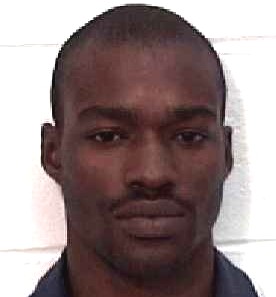
Norris Speed
Murderer Brian Kevin Rosenfeld
Murderer · USA · 1985
Brian Kevin Rosenfeld Brian Kevin Rosenfeld was sentenced to three concurrent l…
23 victims
Brian Kevin Rosenfeld
Murderer · USA · 1985
Brian Kevin Rosenfeld Brian Kevin Rosenfeld was sentenced to three concurrent l…
23 victims
 Russell Ellwood
Murderer · USA · 1991
Russell Ellwood was a former taxi driver. Authorities suspected him of killing…
20 victims
Russell Ellwood
Murderer · USA · 1991
Russell Ellwood was a former taxi driver. Authorities suspected him of killing…
20 victims
 Robert Martines Perez
Murderer · USA · 1994
Name: Robert Martines Perez · Other name used in proceedings: Robert Martinez P…
15 victims
Robert Martines Perez
Murderer · USA · 1994
Name: Robert Martines Perez · Other name used in proceedings: Robert Martinez P…
15 victims
 Billy Frank Vickers
Murderer · USA · 1993
Billy Frank Vickers Vickers was executed by lethal injection in Texas on Januar…
14 victims
Billy Frank Vickers
Murderer · USA · 1993
Billy Frank Vickers Vickers was executed by lethal injection in Texas on Januar…
14 victims
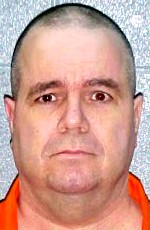 Michael Joe Murdaugh
Murderer · USA · 1995
Michael Joe Murdaugh was sentenced to death on November 16, 2001. He was convic…
2 victims
Michael Joe Murdaugh
Murderer · USA · 1995
Michael Joe Murdaugh was sentenced to death on November 16, 2001. He was convic…
2 victims
 Barbara Ann Peterson
Murderer · USA · 1991
Barbara Ann Peterson was an American woman who was convicted of the murder of h…
1 victim
Barbara Ann Peterson
Murderer · USA · 1991
Barbara Ann Peterson was an American woman who was convicted of the murder of h…
1 victim
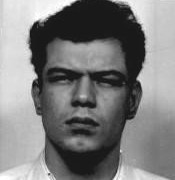 Joe Mario Trevino
Murderer · USA · 1983
Joe Mario Trevino Jr. was convicted of the rape and murder of Blanche Miller, a…
1 victim
Joe Mario Trevino
Murderer · USA · 1983
Joe Mario Trevino Jr. was convicted of the rape and murder of Blanche Miller, a…
1 victim
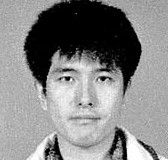 Yuji Nishizawa
Murderer · In the air. Japan · 1999
Yuji Nishizawa (西沢裕司 Nishizawa Yūji) hijacked All Nippon Airways Flight 61 on J…
1 victim
Yuji Nishizawa
Murderer · In the air. Japan · 1999
Yuji Nishizawa (西沢裕司 Nishizawa Yūji) hijacked All Nippon Airways Flight 61 on J…
1 victim
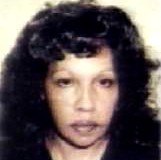 Josephine Gray
Murderer · USA · 1974
Josephine Virginia Gray, also known as Josephine Stribbling and Josephine Mills…
3 victims
Josephine Gray
Murderer · USA · 1974
Josephine Virginia Gray, also known as Josephine Stribbling and Josephine Mills…
3 victims
- Gender
- male
- Country
- USA
- Location
- Fulton County, Georgia, USA
- Date of birth
- 1971
- Age at first offence
- 20
- Characteristics
- revenge, drugs
- Victim profile
- Niles Johantgen, 32 (police officer)
- Method of murder
- Shooting
- Date(s) of murder
- December 21, 1991
- Years active
- 1991
- Date of arrest
- 2 days after
- Status
-
Sentenced to death
Sentenced to death on October 7, 1993
Case details
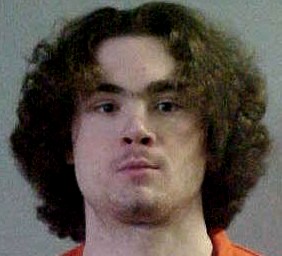
Norris Speed, 26, was sentenced to death in October 1993 in Fulton County for killing a police officer, 32-year-old Niles Johantgen. Officer Johantgen was known on his beat as "Russian".
Speed was convicted of malice murder in the shooting death of Atlanta Police Officer Niles Johantgen and was sentenced to death.
The offence
Prosecutors contended that Speed was angry with Officer Johantgen, who had arrested a man selling drugs from Speed's home, and for stopping and patting down three friends on Dec. 12, 1991. Witnesses said Speed walked up behind Officer Johantgen and shot him in the head. Speed had prior felony convictions.
The evidence showed that Speed was a drug dealer who sold drugs in the Thomasville Heights area of Atlanta. Officer Johantgen was a uniformed patrol officer whose regular beat included the Thomasville Heights apartments.
On December 13, 1991, an Atlanta police undercover officer arrested Jose Griffin, who worked for Speed, after he had fled into Speed's grandmother's apartment. The police confiscated $2,880 and 100 grams of cocaine during this arrest. The police also noticed some marijuana on a table in the apartment, and they returned with an arrest warrant for Speed's grandmother. Although Officer Johantgen was not involved in the undercover operation, he accompanied the other officers when they served the warrant.
Speed told his drug ring boss that he believed the raid resulting in the loss of the drugs and money was "influenced by" Officer Johantgen. He told another witness that he planned to kill "the Russian" (Officer Johantgen's nickname).
On December 21, 1991, Officer Johantgen pulled into the parking lot of the Thomasville Heights apartments, got out of his car, and approached several men. He detained one of the men and began to frisk him. Speed walked up behind Officer Johantgen and shot him point-blank in the back of the head with a nine-millimeter pistol, killing him instantly. Speed fired four more times at the officer while he was on the ground, but all of these shots missed and shattered on the pavement.
Speed then fled the scene in a car.
At trial, one witness testified that he saw Speed, who was well-known in the area, walk up behind the officer and fire the fatal shot into his head. Five more witnesses testified that they heard the first shot, looked up, and saw Speed shooting at the officer on the ground.
After Speed fled, he met with his drug-ring boss and told him that he had shot the Russian because Officer Johantgen had threatened to "catch him dirty" and because the officer was harassing people and searching them unnecessarily. Speed's girlfriend heard him tell his drug boss that he shot the Russian. Both Speed's drug boss and his girlfriend testified at trial.
Speed was arrested two days after the crime and he confessed that he shot Officer Johantgen.
Investigation
The evidence included the arrest of Jose Griffin on December 13, 1991, and subsequent actions taken when police served an arrest warrant for Speed's grandmother.
Trial
Jury selection
Speed complained that the trial court questioned a prospective juror on voir dire in camera without Speed or his Counsel present. The prospective juror claimed that he could not be impartial because he had overheard a conversation about the case at his workplace, but the juror refused to divulge what he had heard.
Speed initially objected to the trial court questioning the juror in camera without the parties but later agreed to the procedure, saying "I'm not happy . . . but I would prefer that procedure over not talking to him at all." Speed made no further objection after the in-camera questioning was completed, and the juror was excused for cause due to his inability to be impartial. The appellate court concluded that Speed waived his right to be present during the in-camera questioning of the prospective juror and made no objection when the prospective juror was excused for cause.
The trial court also excused for cause four prospective jurors due to their inability to consider a death sentence. The trial court qualified seven prospective jurors who Speed claimed would automatically vote for a death sentence.
No prospective jurors were erroneously qualified due to exposure to pretrial publicity; the seven jurors about whom Speed specifically complained did not have opinions so fixed and definite that they could not set them aside and render a decision based solely on the evidence presented in court. The trial court denied Speed's motion for a change of venue.
Prospective jurors Foley, Miller, Lindsey, and Pittman were not erroneously qualified to serve for any reason stated by Speed.
The trial court did not err by denying Speed's Batson v. Kentucky motion because the reasons given by the state for peremptory strikes were race-neutral and sufficient.
During voir dire, a prospective juror stated that she believed that the justice system was biased against African-Americans and that she has "an awareness" that the death penalty is sought more for black defendants who kill white victims (Speed was African-American and the victim was white). When the prosecutor asked her how strongly she held this belief, Speed's counsel objected to this line of questioning saying, in front of the juror, "It's a fact. [The assistant district attorney] knows that his office seeks the death penalty more often against black defendants." The trial court told Speed's counsel it was not the proper time to testify. Later, the state moved to excuse this prospective juror for cause based on defense counsel's comment, and the trial court excused her. The appellate court found no error, concluding the trial court did not abuse its discretion in excusing the prospective juror for cause due to bias resulting from defense counsel's comment, describing the purpose of voir dire as the ascertainment of jurors' impartiality and ability to treat the cause on the merits with objectivity and freedom from bias.
A bailiff informed the trial court that a juror had complained that Juror Washington claimed that he knew the victim and would vote the opposite of the other jurors. The trial court questioned Juror Washington, who denied saying that he knew the victim or would vote the opposite of the other jurors. The trial court then individually questioned the other jurors. Six jurors stated that Juror Washington had either claimed that he knew the victim or would vote the opposite of the others. One juror stated that Juror Washington had said, "we all know what we have to do," and another juror stated that Juror Washington had been singing, "I know who's guilty." However, the jurors other than Juror Washington denied discussing the outcome of the case, and all stated that they would be fair and impartial. The trial court denied Speed's motion for mistrial and excused Juror Washington, replacing him with an alternate juror.
An assistant district attorney did not violate Caldwell v. Mississippi by introducing one of her colleagues during the opening statement in the guilt-innocence phase as an "appellate lawyer in our office." Speed was not harmed by the prosecutor's introduction of the district attorney, who was seated at the prosecution table, during closing argument in the guilt-innocence phase. The appellate court found that the state's closing argument in the guilt-innocence phase was not improper.
Guilt-innocence phase
The state introduced evidence of Speed's drug dealing and referred to Speed as a drug dealer. The appellate court concluded the drug dealing was relevant to motive and that it did not become inadmissible simply because it placed the defendant's character into evidence incidentally.
The appellate court concluded Speed's arrest was lawful and Speed's confession was voluntary.
The jury had a written transcript of tape-recorded evidence because a proper foundation was made. Speed complained that he was not provided before trial with the transcript of the audiotape of the police radio traffic at the time of Officer Johantgen's death, but he did not object to the use of the transcript at trial or argue that any portion differed from the audiotape. The jury was instructed that the transcript was not evidence, and the contention was rejected.
The appellate court found no error in denying Speed's motion for mistrial because there was insufficient evidence that the state violated the trial court's gag order.
Speed did not object when the victim's widow identified the victim in a photograph taken when he was alive, but Speed objected that the photograph was irrelevant and inflammatory when it was later admitted. The appellate court found no error. The appellate court also found no abuse of discretion in admitting preautopsy photographs of the deceased victim and found crime-scene photographs were properly admitted.
During questioning of the medical examiner, the state was allowed to use a mannequin dressed in the victim's jacket as a demonstrative tool. The medical examiner used the mannequin to illustrate how bullet-fragment damage to the victim's body and jacket was consistent with the crime scene evidence.
The appellate court found Speed was not harmed by the admission of Officer Johantgen's death certificate.
The trial court was held not to have abused its discretion in qualifying the medical examiner as an expert in injury causation and interpretation. The trial court did not err in qualifying the state firearms expert as an expert in crime scene reconstruction.
The appellate court found no abuse of discretion in allowing certain questions on redirect examination of witness Johnny Roberts, and no improper restriction of the cross-examination of witness James Sims. The court also found no error in ruling that the state could impeach state witness Patrick Norman with a prior inconsistent statement and admit the prior statement into evidence. The court found the state did not improperly question state witness Christine Bibbs about a prior inconsistent statement she made to police.
For witness Dwayne Gatlin, the appellate court recorded that on direct examination the state elicited that he had previously been convicted of forgery and mail theft. On cross-examination, Speed began questioning him about the facts and circumstances behind these convictions, but the trial court sustained a state objection that the proper method of impeachment was through certified copies of the convictions. The appellate court held the trial court erred but found the error harmless because the witness admitted his convictions, offered no favorable explanation, and there was overwhelming evidence of the defendant's guilt.
The appellate court found no abuse of discretion in allowing certain questions to be asked on redirect examination of witness Steve Burton.
The appellate court found Speed was not harmed by the introduction of an incriminating statement Speed made to his girlfriend while in jail because it was cumulative.
The appellate court found no abuse of discretion in limiting Speed's cross-examination of state witness Jeff Goodwin.
The appellate court also addressed a claim that the trial court upheld the wrong standard when handling a bailiff report about Juror Washington, and it found the trial court did not abuse its discretion in denying a mistrial and did not err by excusing Juror Washington.
The appellate court concluded the sufficiency of the evidence supported malice murder beyond a reasonable doubt and supported the jury's findings of statutory aggravating circumstances beyond a reasonable doubt.
Sentencing phase
At sentencing, the trial court allowed Speed's psychologist to testify about the basis for his opinion and prevented Speed's expert from repeating verbatim conversations with Speed's family members and friends. The defense psychologist was permitted to list the people interviewed about Speed's background and to recite Speed's family history, including anecdotal incidents from Speed's childhood. The appellate court found no error, including that the state psychologist in rebuttal commended the thoroughness of the defense psychologist's background investigation and stated he had not heard or read any testimony supporting a diagnosis of dependent personality disorder.
The appellate court found Speed not harmed by the state psychologist's failure to reduce findings to writing and serve them on the defense before trial because the state psychologist was not contacted until trial had begun and defense counsel had interviewed the state psychologist before any psychological testimony.
The appellate court addressed OCGA 17-10-1.2 on victim-impact evidence, concluding it was not unconstitutional and was not an ex post facto violation to apply it to a crime committed before the statute was enacted. The only victim-impact witness was Officer Johantgen's widow, and her brief testimony was not improper. The appellate court noted that Speed's trial occurred two months after OCGA 17-10-1.2 was enacted, and that pretrial procedure and jury charge had not been formulated by this Court. The appellate court found no harm from lack of a pretrial hearing or jury charge on victim-impact evidence, and that Speed did not request a jury charge on victim-impact evidence.
The appellate court found that when the state asked an improper question to witness Major Taylor, the trial court sustained Speed's objection and Speed did not request further corrective action, so there was no reversible error absent a request.
In mitigation, Speed asked mitigation witness Reverend Butts if he observed police treatment of other young black males in the Thomasville Heights area. The state objected on relevancy and the trial court sustained the objection. The appellate court found no error, concluding that mitigation evidence must relate to Speed's character or background or circumstances of the offense on trial and that how others may have been treated was irrelevant because the witness testified he had never observed any police interaction with Speed.
The appellate court found no impropriety in the state's cross-examination of Reverend Butts and no abuse of discretion in limiting Speed's cross-examination of the victim's police supervisor.
A jailer who had observed Speed every day for at least eight months testified as a mitigation witness and stated that Speed was a quiet, compassionate inmate. On cross-examination, the prosecutor asked whether Speed had a dependent or independent personality. Speed objected that the jailer was not qualified to answer, but the trial court overruled. The jailer said Speed had a strong, independent personality and did not seem to depend on any jailer or inmate. The jailer also testified over objection that he was surprised that the defense psychologist had diagnosed Speed with a dependent personality disorder because Speed "hasn't exuded any of those qualities." The appellate court held no error, noting that after narrating the facts and circumstances, a nonexpert witness may express an opinion as to another person's mental condition.
Speed presented his teacher at the jail, who also testified that Speed was a quiet, nonviolent inmate who did not cause problems. The state presented four rebuttal witnesses, all jailers, who testified about disruptive incidents, including a fight, in which Speed had been involved awaiting trial. Speed complained the state did not provide notice under OCGA 17-10-2(a), but the appellate court found Speed's cross-examination showed Speed's lawyer was aware of the witnesses and incidents. The appellate court found no error because the witnesses were presented as rebuttal and Speed had some notice of their testimony.
The appellate court found the state's sentencing phase closing argument was not improper.
The trial court sent a written copy of the alleged statutory aggravating circumstances out with the jury during deliberations as required by OCGA 17-10-30(c), and the sentencing phase verdict form was not error. The trial court declined to use Speed's requested verdict form because it included the option of deadlock.
The appellate court also found Speed's death sentence was not imposed as a result of impermissible passion, prejudice, or other arbitrary factor, and that it was not excessive or disproportionate compared to similar cases. The similar cases listed in the appendix were described as involving deliberate killing of a police officer in the performance of official duties, reflecting juries' willingness to impose the death penalty in such circumstances.
Appeals
Speed challenged the trial court's in-camera conversation with a prospective juror, its evidentiary ruling limiting the defense psychologist's testimony, and its failure to give charge number 21. The appellate court concluded Speed waived the right to be present during in-camera questioning of the prospective juror and did not object when the juror was excused for cause; that the defense psychologist testified about the basis for his opinion including the persons interviewed and Speed's family history; and that the trial court was not required to give charge number 21 on when police may make a warrantless arrest. The appellate court found that none of the issues raised constituted reversible error and affirmed the conviction.
Speed also raised numerous other enumerations, including claims regarding lawful arrest and confession, evidentiary rulings, jury selection issues, motions for change of venue and mistrial, discovery and constitutional challenges, and recusal matters. The appellate court addressed each enumeration and concluded there was no reversible error.
Jury charge dispute (charge number 21)
During the charge conference, the trial court agreed to give Speed's penalty phase request to charge number 21, listing circumstances under which police can make a warrantless arrest. Speed contended that the (b) (10) aggravating circumstance did not apply because Officer Johantgen was not making a lawful arrest, and argued the officer was acting outside the scope of his official duties when he detained and frisked one of the men in the parking lot.
After closing arguments in the penalty phase, the trial judge left town due to a family member's serious illness. The following day, a substitute judge gave the court's charge to the jury and presided over deliberations. After the charge was completed, the substitute judge pointed out to the parties that he had not given Speed's request to charge number 21 because the original trial judge had left word that he had not meant to give that charge. Speed announced that he reserved all objections to the charge for the motion for new trial.
On appeal, Speed argued failure to give the agreed charge was reversible error because he made his argument anticipating the charge would be given and that the failure impaired his closing argument. The appellate court disagreed, concluding the trial court was not required to give Speed's request to charge number 21 and that if Speed had been misled, it was incumbent upon him to request to reargue. The appellate court concluded Speed waived the issue and could show no harm resulting from the substitution of trial judges.
Other details
Pre-trial and constitutional issues
The appellate court concluded that the indictment was valid.
The appellate court concluded that OCGA 16-5-1, the murder statute, and 17-10-30, which authorizes a death sentence for murder, were not unconstitutional.
Speed's claims of purposeful racial discrimination in the state's intent to seek the death penalty were rejected, and the trial court did not err by denying the motion to preclude the state from seeking the death penalty.
Speed's equal protection claim regarding the race and gender of the Fulton County grand jury foreperson was rejected because the record showed the Fulton County grand jury elects its foreperson without input or assistance from the state.
The appellate court concluded the trial court did not err on Speed's discovery motions.
The appellate court concluded the trial court did not err by granting the state's motion in limine that prevented Speed from referring to "unrelated homicides" without first showing relevance.
The appellate court rejected a claim that Brady v. Maryland was violated in discovery withholding. The appellate court stated that more than a year after Officer Johantgen's murder, several Atlanta area police officers, including two officers who worked in the same zone as Officer Johantgen, were arrested for committing crimes such as burglary and armed robbery. Speed sought personnel and investigative files of those officers, speculating that Officer Johantgen may have been involved in the crime ring and therefore may not have been acting in the performance of his official duties when he was murdered. The appellate court concluded Speed failed to show any link between the information sought and the circumstances of Officer Johantgen's murder or that the state withheld any exculpatory or favorable evidence.
Recusal and disqualification issues
The appellate court concluded the trial court did not err by denying Speed's motion for recusal of the trial judge due mainly to the judge's previous employment as an Atlanta police officer, investigator for the district attorney's office, and assistant district attorney. The appellate court noted the trial court's determination under Uniform Superior Court Rule 25 that a reasonable person would not conclude, assuming the truth of all alleged facts, that the judge harbored bias stemming from an extrajudicial source of such nature and intensity as to impede impartial judgment.
The appellate court described a post-trial issue involving the trial judge's law clerk applying to a vacancy in the criminal division of the Attorney General's office. The trial judge had not been aware that his law clerk applied, and the assistant attorney general responsible for hiring realized that writing samples involved an on-going capital case in which the Attorney General would represent the state on appeal. She informed the parties and the trial judge, returned the writing samples, and insulated the rest of the criminal division from exposure. The law clerk withdrew his application and the trial judge ended the law clerk's assistance with Speed's case. Speed filed a motion to recuse the trial judge from further participation in post-trial proceedings and moved for a mistrial on this ground. An independent judge presided over a hearing, and after reading the writing samples and hearing testimony, the independent judge determined the memoranda contained "little or no original comment from the law clerk" and consisted mostly of down-loaded verbatim material from the Michie Company's "Georgia Law on Disk," available to any legal researcher. The independent judge concluded the state gained no advantage from the disclosure and that no reasonable person would find an appearance of impropriety warranting recusal. The appellate court agreed upon review of the record.
Timeline
- December 13, 1991 — An Atlanta police undercover officer arrested Jose Griffin, who worked for Speed, after he fled into Speed's grandmother's apartment; police confiscated $2,880 and 100 grams of cocaine, and they later returned with an arrest warrant for Speed's grandmother.
- December 21, 1991 — Officer Johantgen was killed when Speed shot him point-blank in the back of the head with a nine-millimeter pistol; Speed fled the scene in a car.
- January 28, 1992 — A grand jury indicted Speed for malice murder.
- February 10, 1992 — The state filed a notice of intent to seek the death penalty.
- September 7, 1993 — Trial began.
- October 1, 1993 — The jury convicted Speed of malice murder and recommended a death sentence.
- October 7, 1993 — Speed was sentenced to death.
- October 11, 1993 — Speed filed a motion for new trial.
- October 25, 1993 — Speed's motion for new trial was amended.
- March 20, 1995 — The motion for new trial was further amended.
- May 25, 1995 — The motion for new trial was amended again.
- March 24, 1998 — The trial court denied the motion for new trial.
- April 20, 1998 — Speed filed his notice of appeal.
- May 20, 1998 — The case was docketed.
- September 14, 1998 — The case was orally argued.
- March 1, 1999 — The appellate decision was decided.
- March 19, 1999 — Reconsideration was denied.
Outcome
The appellate court affirmed Speed's conviction and death sentence, finding no reversible error across the enumerated issues and concluding the death sentence was not the result of impermissible passion, prejudice, or other arbitrary factor and was not excessive or disproportionate.
Parties and counsel
For appellee: Paul L. Howard, District Attorney; Bettieanne C. Hart, Peggy A. Katz, David E. Langford, Assistant District Attorneys; Thurbert E. Baker, Attorney General; Susan V. Boleyn, Senior Assistant Attorney General; Paige Reese Whitaker, Assistant Attorney General.
For appellant: Michael Mears and James C. Bonner, Jr.
Notes
The crime occurred on December 21, 1991. The grand jury indicted Speed for malice murder on January 28, 1992, and the state filed a notice of intent to seek the death penalty on February 10, 1992. The trial took place from September 7 to October 1, 1993. The jury convicted Speed of malice murder on September 27, 1993, and recommended a death sentence on October 1, 1993. Speed filed a motion for new trial on October 11, 1993, which was amended on October 25, 1993, and further amended on March 20, 1995, and May 25, 1995. The trial court denied the motion for new trial on March 24, 1998. Speed filed his notice of appeal on April 20, 1998, and this case was docketed on May 20, 1998. The case was orally argued on September 14, 1998. Decided March 1, 1999; reconsideration denied March 19, 1999.
Spotted an error, or have more information about this case?