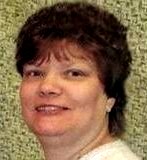
Teresa Lewis
Murderess Wanda Jean Aallen
Murderess · USA · 1981
Wanda Jean Allen was born on August 17, 1959 and was executed on January 11, 20…
2 victims
Wanda Jean Aallen
Murderess · USA · 1981
Wanda Jean Allen was born on August 17, 1959 and was executed on January 11, 20…
2 victims
 Vickie Dawn Jackson
Serial killer · USA · 2000
Vickie Dawn Jackson was a former nurse who received a life sentence after plead…
10 victims
Vickie Dawn Jackson
Serial killer · USA · 2000
Vickie Dawn Jackson was a former nurse who received a life sentence after plead…
10 victims
 Jennifer San Marco
Mass murderer · USA · 2006
Jennifer San Marco (December 6, 1961 – January 30, 2006) was a former US Postal…
7 victims
Jennifer San Marco
Mass murderer · USA · 2006
Jennifer San Marco (December 6, 1961 – January 30, 2006) was a former US Postal…
7 victims
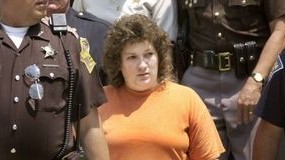 Judy Kirby
Mass murderer · USA · 2000
Judy Kirby was found guilty of murder for intentionally causing a head-on crash…
7 victims
Judy Kirby
Mass murderer · USA · 2000
Judy Kirby was found guilty of murder for intentionally causing a head-on crash…
7 victims
 Khoua Her
Mass murderer · USA · 1998
Khoua Her pleaded guilty and received a sentence of 50 years in prison with no…
6 victims
Khoua Her
Mass murderer · USA · 1998
Khoua Her pleaded guilty and received a sentence of 50 years in prison with no…
6 victims
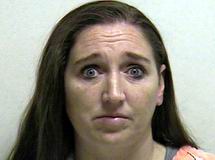 Megan Huntsman
Murderer · USA · 1996
Megan Huntsman was 40 at sentencing. She was a mother of three children who wer…
6 victims
Megan Huntsman
Murderer · USA · 1996
Megan Huntsman was 40 at sentencing. She was a mother of three children who wer…
6 victims
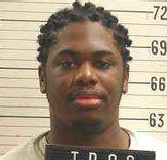 Devin Earl Banks
Murderer · USA · 2002
Devin Earl Banks killed Kadhem Al-Maily and permanently disabled Hussain Altile…
1 victim
Devin Earl Banks
Murderer · USA · 2002
Devin Earl Banks killed Kadhem Al-Maily and permanently disabled Hussain Altile…
1 victim
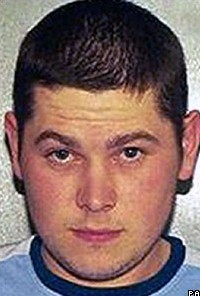 Trevor William Hamilton
Murderer · United Kingdom · 2003
Trevor William Hamilton was convicted of the murder of Bridgit Attracta Harron…
1 victim
Trevor William Hamilton
Murderer · United Kingdom · 2003
Trevor William Hamilton was convicted of the murder of Bridgit Attracta Harron…
1 victim
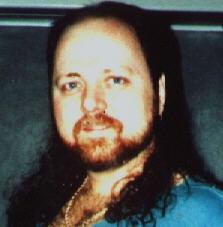 Don Wilson Hawkins
Murderer · USA · 1985
Don Wilson Hawkins Jr. was convicted in Oklahoma County District Court of first…
2 victims
Don Wilson Hawkins
Murderer · USA · 1985
Don Wilson Hawkins Jr. was convicted in Oklahoma County District Court of first…
2 victims
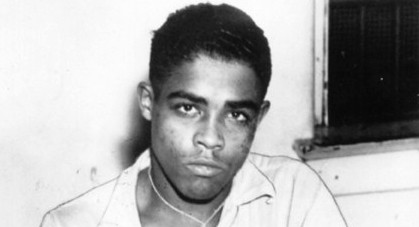 Rainey Bethea
Murderer · 1936
Name: Rainey Bethea · Birth: October 16, 1909 · Execution date: 14 August 1936…
1 victim
Rainey Bethea
Murderer · 1936
Name: Rainey Bethea · Birth: October 16, 1909 · Execution date: 14 August 1936…
1 victim
- Gender
- female
- Country
- USA
- Location
- Pittsylvania County, Virginia, USA
- Date of birth
- April 26, 1969
- Age at first offence
- 33
- Characteristics
- parricide, murder for hire, to collect insurance money
- Victim profile
- Julian Lewis, 51 (her husband), and C.J. Lewis, 25 (her stepson)
- Method of murder
- Shooting (shotgun)
- Date(s) of murder
- October 30, 2002
- Years active
- 2002
- Date of arrest
- 7 days after
- Status
-
Executed
Executed by lethal injection in Virginia on September 23, 2010
Case overview
Teresa Wilson Bean Lewis was convicted of capital murder for hire for arranging the murders of her husband and stepson in their home in Pittsylvania County. She pleaded guilty to the capital offenses and was sentenced to death by the trial judge.
The killings occurred in the early morning hours of October 30, 2002. Shallenberger and Fuller carried out the shootings in the mobile home after entering through a rear door left unlocked by Lewis. Lewis then took money from her husband’s wallet and made telephone calls instead of calling authorities immediately.
Lewis was executed by lethal injection in Virginia on September 23, 2010.
People
- Teresa Lewis — defendant; wife and stepmother of the victims; later executed
- Julian Lewis — victim; husband; age 51 in one account; died in the mobile home after being shot multiple times
- Charles “C.J.” Lewis — victim; stepson; age 25 in one account; died after being shot multiple times
- Kathy Clifton — Julian’s daughter and C.J.’s sister; only surviving member of her family after the murders; was in an adjacent witness room during Lewis’s execution
- Matthew Shallenberger — co-conspirator; lover; shooter; sentenced to life
- Rodney Fuller — co-conspirator; shooter; sentenced to life
- Christie Bean — Lewis’s 16-year-old daughter; involved in the planning process
- Mike Campbell — Julian’s supervisor at Dan River; testified about Lewis’s calls and statements
- Lieutenant Michael Booker — C.J.’s commanding officer; Lewis spoke with him and asked about life insurance proceeds and effects
- Investigator J.T. Barrett — Pittsylvania County Sheriff’s Office; interviewed Lewis during the investigation
- Investigator Keith N. Isom — Pittsylvania County Sheriff’s Office; interviewed Lewis; Lewis confessed to arranging a murder-for-hire plot
- Barbara G. Haskins, M.D. — board-certified forensic psychiatrist who performed competency assessment and discussed intellectual functioning
- Dr. Bernice Marcopulos — associated with the IQ test referenced in the record
- David Grimes — prosecutor who saw the scene shortly after the crimes occurred
- Susan E. Venuti — assistant chief medical examiner who performed autopsies
Timeline
- March or April 2000 — Lewis met Julian at Dan River, Inc., where they were both employed.
- January 2000 — Julian’s first wife and the mother of his three adult children died after an extended illness.
- June 2000 — Lewis moved in with Julian.
- December 2001 — Jason Clifton Lewis, Julian’s older son, died in a car accident.
- February 2002 — Julian purchased five acres of land and a mobile home where he and Lewis resided.
- August 2002 — Charles J. Lewis, an Army reservist, was required to report for active duty with the National Guard in Maryland; Charles made estate arrangements including executing a will and obtaining a $250,000 life insurance policy designating Julian as primary beneficiary and Lewis as secondary beneficiary.
- Fall 2002 — Lewis met Matthew J. Shallenberger and Rodney L. Fuller at a retail store; they began communicating frequently and discussed a plan to kill Julian for money.
- October 23, 2002 — Lewis withdrew $1,200 from a bank and gave it to the men to purchase guns and ammunition; a first plan to stop and kill Julian on the roadway was attempted but unsuccessful due to another vehicle being close to Julian during his trip home.
- October 29–30, 2002 — Lewis learned C.J. would be visiting at the mobile home during the period of his father’s funeral; the decision was made to murder Julian and C.J. at the same time.
- October 30, 2002 (early morning) — Shallenberger and Fuller entered the mobile home through a rear door left unlocked by Lewis and shot Julian and C.J. in their beds; Lewis waited about 45 minutes before making telephone calls and then called emergency response personnel at approximately 3:55 a.m.
- October 30, 2002 (approximately 4:18 a.m.) — Sheriff’s deputies arrived at the scene.
- November 4, 2002 — Lewis contacted Lieutenant Michael Booker requesting C.J.’s personal effects and a photograph; Lewis also asked about life insurance money.
- November 7, 2002 — Lewis confessed to Investigator Isom that she had offered Shallenberger money to kill Julian.
- November 8, 2002 — Lewis asked to speak with Investigator Isom and said Rodney Fuller was involved; she also said her minor daughter assisted.
- November 20, 2002 — Lewis was indicted by a grand jury for multiple offenses, including two counts of capital murder for hire.
- 2003 — Lewis pleaded guilty to capital murder and was sentenced to death by a judge.
- 2004 — The Virginia Supreme Court affirmed on direct appeal (Lewis v. Commonwealth, 267 Va. 302, 593 S.E.2d 220 (Va. 2004)).
- September 23, 2010 — Lewis was executed by lethal injection in Virginia.
Background
Relationship and finances
Julian Lewis worked for Dan River, Inc., where he met Teresa Lewis in March or April 2000. After Julian’s older son Jason Clifton Lewis died in December 2001, Julian received life insurance proceeds in excess of $200,000 and placed them in an account with Prudential Securities that was accessible only by use of drafts bearing Julian’s signature.
In February 2002, Julian purchased five acres of land and a mobile home, and Lewis and Julian lived there together. In August 2002, Charles J. Lewis, an Army reservist, was required to report for active duty with the National Guard in Maryland and made estate arrangements. Charles executed a will and obtained a life insurance policy in the amount of $250,000 naming Julian as primary beneficiary and Lewis as secondary beneficiary.
Meeting co-conspirators and sexual relationship
In the autumn of 2002, Lewis met Rodney L. Fuller and Matthew J. Shallenberger at a retail store, and before that meeting Lewis did not know these men. After communication began, Lewis began a sexual relationship with Shallenberger, who was 11 years her junior. On at least one occasion, Lewis performed a “lingerie show” for both men, and had sexual intercourse with Fuller as well as Shallenberger. On another occasion, Lewis took her 16-year-old daughter with her to meet the men at a parking lot; her daughter had sexual intercourse with Fuller in one car while Lewis and Shallenberger had sexual intercourse in the other vehicle. Later, Lewis and the men discussed a plan to kill Julian and share any insurance proceeds that Lewis would receive.
The offence
Initial plan and failure
On October 23, 2002, Lewis withdrew $1,200 and gave the money to Shallenberger and Fuller to purchase guns and ammunition. Shallenberger gave the money to an acquaintance who purchased two shotguns for the conspirators. Lewis told Shallenberger and Fuller the route Julian would travel from work to home that evening. The plan was for the men to stop and kill Julian on the roadway and make the murder look like a robbery. Execution of that first plan was unsuccessful due to the presence of another vehicle close to Julian during his trip home.
Second plan and decision to kill both victims
After the first plan failed, Lewis, Shallenberger, and Fuller decided to kill Julian and also to kill Charles J. Lewis when he returned to the mobile home for his father’s funeral, so the proceeds could be shared. When Lewis learned that Charles would be visiting at the mobile home during the evening of October 29–30, 2002, the decision was made to murder Julian and Charles at the same time.
Entry, shootings, and money taken
In the early morning hours of October 30, 2002, Shallenberger and Fuller entered the mobile home through a rear door that Lewis had left unlocked. Shallenberger woke Lewis, who had fallen asleep next to Julian while waiting, and told her “Teresa, get up.”
Lewis walked into the kitchen and waited while Shallenberger shot Julian several times with the shotgun. She then reentered the bedroom where Julian lay mortally wounded but still alive, retrieved Julian’s pants and wallet, and returned to the kitchen with Shallenberger. Fuller went to Charles’s bedroom and shot him several times with the second shotgun.
When Fuller returned to the kitchen, he saw Lewis and Shallenberger removing money from Julian’s wallet. Fuller returned to Charles’s bedroom, after which the men retrieved most of the shotgun shells, divided $300 in cash taken from Julian’s wallet, and left the mobile home. Shallenberger told Lewis he was sorry she “had to go through something like this,” hugged and kissed her, and the men left.
Calls after the killings and delay in contacting authorities
For approximately 45 minutes after the last shots were fired, Lewis remained in the mobile home with the victims. The sequence of calls included making telephone calls to other persons, and she did not call authorities during that time.
At approximately 3:55 a.m., Lewis placed a call to emergency response personnel and reported that an intruder had entered her home and shot her husband and stepson. She reported that the intruder entered the bedroom where she was sleeping with Julian and told her to get up. She stated that Julian told her to go into the bathroom, where she hid while the intruder fired four or five times. Sheriff’s deputies arrived at approximately 4:18 a.m.
Investigation and arrest/interviews
Statements to emergency responders
When deputies arrived, Lewis told deputies that Julian’s body was on the floor in one bedroom and that her stepson’s body was in another bedroom. When Deputy Webb entered the master bedroom, he found Julian badly wounded but still alive and talking. Julian “made slow moans” and uttered, “Baby, baby, baby, baby.” Deputy Webb asked Julian his name and whether he knew who had shot him; Julian responded, “My wife knows who done this to me.”
Deputy Webb observed Lewis conversing on the telephone and heard her state, “I told C.J. about leaving that back door unlocked.”
When informed that Julian and C.J. were dead, Lewis did not appear upset to the officers.
Interviews and confessions
Investigator Barrett and Investigator Isom interviewed Lewis during the investigation. In one interview, Lewis claimed that Julian had physically assaulted her a few days before the murders, but denied killing him, having him killed, or knowing who killed him. Lewis said she and Julian had talked and prayed together before he went to bed and that she told him she was going to pack his lunch for the next day.
A lunch bag was found in the refrigerator with an attached note stating “I love you. I hope you have a good day.” A picture of a “smiley face” was drawn on the bag and “I miss you when you're gone” was inscribed in the smiley face.
Later, on November 7, 2002, Lewis presented with rapidly accumulating evidence against her confessed to Investigator Isom that she had offered Shallenberger money to kill Julian. Lewis told Isom that she met Shallenberger at Wal-Mart and let him into their home on the night of the murders. She falsely claimed that Shallenberger shot both Julian and C.J. before taking the money and leaving the mobile home and said Shallenberger expected to receive half of the insurance proceeds but that she changed her mind and decided to keep all of the money.
Lewis then accompanied Isom to Shallenberger’s residence and identified Shallenberger as her co-conspirator. The following day, Lewis asked to speak with Isom and admitted that she had not been totally truthful and confessed Fuller’s involvement. She also advised that her minor daughter had assisted during the planning process.
In a later interview described in the record, Lewis told Investigator Isom she had met her husband’s killer at a retail store, that she had “let him in” her mobile home, and that he shot both Julian Lewis and Charles Lewis, took some money, and left. She also stated that she agreed to give Shallenberger half of the insurance proceeds, but changed her mind and decided to keep all the money.
Forensic findings
Guns and ammunition
During the search of the mobile home where Shallenberger and Fuller resided, officers recovered two pairs of rubber household gloves containing primer residue caused by the firing of a firearm shell. Two shotguns were recovered, and one of them was determined to have fired the shotgun shells found in Julian’s bedroom.
Autopsies
Assistant Chief Medical Examiner Susan E. Venuti performed autopsies on Julian Lewis and Charles Lewis. The autopsies determined that each man died as a direct result of multiple shotgun wounds.
Julian Lewis suffered shotgun wounds to the upper left arm, shoulder, abdomen, pelvis, penis, thighs, legs, arms, and chest. The bullets destroyed or removed large areas of tissue in his upper arm, shoulder, and upper chest, and fractured several ribs. Plastic wadding from a shotgun shell was lodged in his left lung tissue. Julian eventually died from extensive blood loss approximately 45 minutes to an hour after the shootings.
Charles Lewis received a total of eight wounds from an undetermined number of discharges of a shotgun. He suffered wounds to his back, abdomen, chest, neck, left upper arm and shoulder, elbow, left thigh, face, and forearm and died almost immediately from his wounds.
Charges and plea
Indictment and offences
On November 20, 2002, Lewis was indicted by a grand jury for the following offenses:
- capital murder for hire of Charles J. Lewis in violation of Code § 18.2-31(2);
- capital murder for hire of Julian Clifton Lewis, Jr., in violation of Code §§ 18.2-31(2);
- conspiracy to commit capital murder in violation of Code §§ 18.2-22 and -31;
- robbery of Julian Clifton Lewis, Jr., in violation of Code § 18.2-58;
- use of a firearm to commit the murder of Julian Clifton Lewis, Jr., in violation of Code § 18.2-53.1;
- use of a firearm to commit the murder of Charles J. Lewis in violation of Code § 18.2-53.1; and
- use of a firearm to commit the robbery of Julian Clifton Lewis, Jr., in violation of Code § 18.2-53.1.
Lewis pleaded guilty to these offenses.
Competency and intellectual functioning
Competency assessment
Before accepting the guilty pleas, the circuit court questioned Lewis and determined that her guilty pleas were made voluntarily, intelligently, and knowingly. The circuit court also considered a competency assessment of Lewis performed by Barbara G. Haskins, M.D., and an IQ test performed by Dr. Bernice Marcopulos.
Haskins opined that Lewis had the capacity to enter pleas of guilty to charges of capital murder and had the ability to understand and appreciate possible penalties. Haskins stated:
“Ms. Lewis is aware of her charges and the possible penalties she is facing (life without parole or death). She knows who her attorneys are and feels comfortable working with them. She is able to provide them with information, and to ask questions.
“Cognitive testing showed a Full Scale IQ of 72. Verbal IQ was 70, and Performance IQ was 79. This places the defendant in the borderline range of mental retardation (Borderline Intellectual Function).”
Haskins also stated that Lewis, who had graduated from high school and completed one year of college, was competent to stand trial, make a plea agreement, and enter pleas.
Plea hearing
At the guilty plea proceeding, the trial judge questioned Lewis and ensured that she understood that she was waiving her right to a jury and that she would be sentenced to either life imprisonment or death by the trial judge. The trial judge accepted the plea and scheduled the sentencing proceeding.
Sentencing
Commonwealth’s request and mitigation
At the sentencing proceeding, the Commonwealth relied upon a written summary of evidence that would have been presented had the case proceeded to a jury trial. The Commonwealth sought the death penalty based on Virginia’s statutory aggravating factors of vileness and future dangerousness.
In mitigation, the defense presented evidence that Lewis had no previous history of violence and had only a single, non-violent conviction for prescription forgery for which she was on probation. Lewis’s probation officer testified that Lewis had been compliant with the terms of probation and had never demonstrated violence. The probation officer who prepared the presentence report testified that Lewis seemed remorseful. A long-time family friend and schoolmate of Lewis testified that he had never observed her behaving in a violent manner. An official at Roanoke City Jail provided a statement that there had been no incidents of violence involving Lewis, nor even minor infractions while she was incarcerated there awaiting trial. Lewis’s father, brother, and sister were in the courtroom during sentencing and were expected to testify that they loved and cared for Lewis and did not want her to receive the death penalty.
Aggravators and death sentences
At the conclusion of the sentencing proceeding, the trial judge rejected the future dangerousness aggravator based upon lack of significant criminal history or violent behavior. However, the trial judge imposed sentences of death for the capital offenses based on the vileness aggravator, finding that Lewis’s conduct involved both depravity of mind and aggravated battery to the victims. The judge called Lewis “the head of this serpent.”
The trial judge fixed the remaining punishments as follows:
- 20 years imprisonment for each conspiracy charge;
- life imprisonment for the robbery charge; and
- 13 years imprisonment for the firearms charges.
Trial judge remarks and prosecutor statement
Judge’s characterization
The trial judge found Lewis’s conduct to be “outrageously or wantonly vile, horrible, or inhuman” and sentenced her to death for both capital murder offenses. The record described the judge’s reasoning as including that Lewis had been the “mastermind” and that there was “no other motivation for these killings except greed” with “no thought on her part of what she was doing other than these two murders and what she would receive once they were deceased.” The judge also found that Lewis had “lured [the] men and her juvenile daughter into [her] web of deceit and sex and greed and murder,” and that she had written a love note to him, split money, and waited for Julian to die.
The judge also concluded that Lewis “fits the definition of the outrageous or wantonly vile, horrible, act.”
Later, in connection with Shallenberger’s sentencing phase, the trial judge stated that Lewis was “the most culpable” and referred to her as “the head of th [e] serpent.”
Prosecutor quote
David Grimes, the prosecutor who saw the scene shortly after the crimes occurred, said:
“I can frankly say that Teresa Lewis is as evil a person as I've ever met. I would wager with some assurance that you wouldn't find anyone who knew her before this event occurred who thought she was mentally retarded or had a limited mentality -- that it would ever cross their minds.”
Appeals
Virginia Supreme Court direct appeal
On automatic review of the sentences of death, the Supreme Court of Virginia affirmed the death sentences. The court held that the imposition of the death sentence was not excessive and disproportionate and that evidence supported a finding that the murders involved depravity of mind as required to find “vileness.” The holding affirmed the judgment.
The Virginia Supreme Court decision included Code § 17.1-313 review language and repeatedly addressed proportionality and the definition of depravity of mind for the vileness aggravator.
Federal habeas appeal
Lewis later sought federal habeas relief. The Court of Appeals for the Fourth Circuit affirmed the denial of relief, holding that Lewis was not entitled to federal habeas relief on her claim of ineffective assistance of counsel and that her claim that Virginia’s capital sentencing scheme violated her constitutional rights was procedurally barred.
Outcome
Execution
She was executed at the Greensville Correctional Center in Jarratt.
At 9:13 p.m., Lewis was pronounced dead.
Lewis’s last statement before her execution was:
“I just want Kathy to know I love you and I'm very sorry.”
Lewis asked whether “Kathy” was present, presumably referring to Kathy Clifton, and corrections officials did not respond to her question.
Last meal
Her final meal was described as fried chicken, sweet peas, a Dr Pepper, and apple pie for dessert.
Statements about religion and farewell messages
Lewis made statements during the days leading up to her execution in the record including praying and singing hymns. A message excerpt attributed to Lewis stated:
“. . . Man wants me to die, but I’m not worrying over this, I’m trusting Jesus . . . Please my precious friends in Christ if you don’t know our awesome Savior, and father, please let Him in your heart; He will forgive you of all your sins and He will bring you into His loving arms and He will bless you and guide you and show you so much, He loves you more than you’ll ever know! Trust Him! Believe in Him!”
Other details
Additional statements during investigation and sentencing context
Lewis made at least two telephone calls to other persons after the last shots were fired and did not call authorities immediately.
In connection with attempts to obtain proceeds, the record described Lewis:
- requesting Julian’s paycheck from Mike Campbell;
- contacting Lieutenant Booker about C.J.’s personal effects and insurance proceeds;
- offering to allow Kathy to have C.J.’s effects “as long as I get the money” (a statement recorded in the habeas summary); and
- attempting to withdraw $50,000 by presenting a forged check made payable to her.
Final witnesses and execution environment details
Lewis entered the execution chamber wearing a light blue shirt, dark blue pants, and flip flops. A dark blue curtain was drawn during preparation and then opened before her final statement. She asked if “Kathy” was present and appeared serious and fearful as she was escorted to the gurney, where she lay down while execution team members strapped her down.
Outside the prison, protestors stood in protest and media witnesses were present, including reporters from Great Britain and Italy.
Related execution communications
Rocap said:
“Tonight the machinery of death in Virginia extinguished the childlike and loving spirit of Teresa Lewis.”
He said she met with both of her children the day before and wrote letters to both of them.

Spotted an error, or have more information about this case?