Jeffrey Paul Sloan
Mass murderer Timothy McVeigh
Mass murderer · USA · 1995
Timothy James McVeigh (April 23, 1968 – June 11, 2001) was a United States Army…
168 victims
Timothy McVeigh
Mass murderer · USA · 1995
Timothy James McVeigh (April 23, 1968 – June 11, 2001) was a United States Army…
168 victims
 Julio Gonzalez
Mass murderer · USA · 1990
Julio Gonzalez was sentenced to 174 twenty-five-year sentences (a total of 4,35…
87 victims
Julio Gonzalez
Mass murderer · USA · 1990
Julio Gonzalez was sentenced to 174 twenty-five-year sentences (a total of 4,35…
87 victims
 David Burke
Mass murderer · USA · 1987
David Augustus Burke (May 18, 1952–December 7, 1987) was an employee of USAir,…
43 victims
David Burke
Mass murderer · USA · 1987
David Augustus Burke (May 18, 1952–December 7, 1987) was an employee of USAir,…
43 victims
 George Jo Hennard
Mass murderer · USA · 1991
George Jo Hennard carried out a mass killing at a Luby’s Cafeteria in Killeen,…
23 victims
George Jo Hennard
Mass murderer · USA · 1991
George Jo Hennard carried out a mass killing at a Luby’s Cafeteria in Killeen,…
23 victims
 James Huberty
Mass murderer · USA · 1984
James Oliver Huberty was a 41-year-old unemployed security guard. He was born i…
21 victims
James Huberty
Mass murderer · USA · 1984
James Oliver Huberty was a 41-year-old unemployed security guard. He was born i…
21 victims
 Donnie Allen Hulett
Murderer · USA · 2002
Donnie Allen “D.J.” Hulett was convicted murderer who was sentenced to death on…
2 victims
Donnie Allen Hulett
Murderer · USA · 2002
Donnie Allen “D.J.” Hulett was convicted murderer who was sentenced to death on…
2 victims
 Lindsay Haugen
Murderer · USA · 2015
Lindsay April Haugen was an Army veteran. At the time of the killing, she was a…
1 victim
Lindsay Haugen
Murderer · USA · 2015
Lindsay April Haugen was an Army veteran. At the time of the killing, she was a…
1 victim
 Earnest Morrison
Murderer · USA · 1987
Earnest Ulysses Morrison (also referred to as Earnest Morrison) was convicted i…
1 victim
Earnest Morrison
Murderer · USA · 1987
Earnest Ulysses Morrison (also referred to as Earnest Morrison) was convicted i…
1 victim
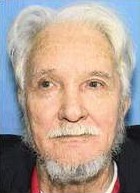 John Nixon
Murderer · USA · 1985
John B. Nixon Sr. was executed by lethal injection in Mississippi on December 1…
1 victim
John Nixon
Murderer · USA · 1985
John B. Nixon Sr. was executed by lethal injection in Mississippi on December 1…
1 victim
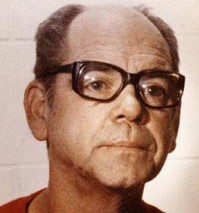 Gilbert Paul Jordan
Serial killer · Canada · 1965
Gilbert Paul Jordan (born December 12, 1931; died July 7, 2006) was known as th…
10 victims
Gilbert Paul Jordan
Serial killer · Canada · 1965
Gilbert Paul Jordan (born December 12, 1931; died July 7, 2006) was known as th…
10 victims
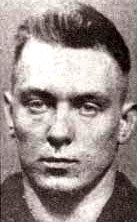 Anthony Chebatoris
Murderer · USA · 1937
Anthony Chebatoris Anthony Chebatoris (1898–1938) was executed by hanging at Mi…
1 victim
Anthony Chebatoris
Murderer · USA · 1937
Anthony Chebatoris Anthony Chebatoris (1898–1938) was executed by hanging at Mi…
1 victim
- Gender
- male
- Country
- USA
- Location
- Clay County, Missouri, USA
- Date of birth
- April 26, 1966
- Age at first offence
- 19
- Characteristics
- parricide
- Victim profile
- Paul Sloan, 41; Judith Sloan, 38; Timothy Sloan, 18, and Jason Sloan, 9 ( his parents and two brothers )
- Method of murder
- Shooting
- Date(s) of murder
- December 11, 1985
- Years active
- 1985
- Date of arrest
- Same day
- Status
-
Executed
Executed by lethal injection in Missouri on February 21, 1996
Parties
Jeffrey Paul Sloan was the defendant in the case State of Missouri v. Jeffery Paul Sloan (as styled in the material).
Background
Jeffrey Paul Sloan was tried in Missouri for the murders of members of his family.
Authorities later described the case as involving the killing of his parents and two brothers. Authorities considered Sloan a suspect because there was no sign of burglary and all other family members were deceased.
At the time of the January 1987 trial, Sloan was nineteen at the time of the killings described as occurring on December 11, 1985.
The offence
On December 11, 1985, Sloan went into his parents’ bedroom and shot them both while they slept.
He then went to the living room and shot both of his brothers, first eighteen-year-old Timothy Sloan and then nine-year-old Jason Sloan. Timothy was shot as he attempted to rise from his bed, and Jason was shot as he huddled beneath a blanket with which he had covered himself.
The material states that Sloan reloaded and returned to the parents’ room and shot each of them again. Timothy, wounded but still alive, tried to escape out the front door, but Sloan shot him again and left his body lying in the front yard.
Investigation
On 12-11-85 at 11:30 a.m., officers of the Missouri State Highway patrol and deputies from the Clinton County Sheriff’s Department responded to a residence in Clinton County for a possible homicide.
Upon arrival at the Paul Sloan residence, the bodies of Jason Sloan, age nine, Timothy Sloan, age 18, Judith Sloan, age 38, and Paul Sloan, age 41 were all found, apparently dead from gunshot wounds.
Approximately 45 minutes after police arrived at the scene, Jeffery Sloan returned to his family’s residence.
Sloan was transported to the Clinton County Sheriff’s office where he was questioned concerning the murders.
The material states that Sloan made a statement blaming a neighbor for the murders because the neighbor was having an affair with his mother.
Further investigation revealed that Sloan had told his girlfriend, who lived next door, that his family had been receiving threatening phone calls and notes.
After Sloan went to work, he arranged for his girlfriend to go to his home where she discovered the bodies.
At approximately 7:30 p.m., after speaking with his grandfather, Sloan confessed to the murders of his father, mother and two brothers.
Sloan told authorities that his father was abusive to the family and that he committed the murders at the request of his mother who could no longer stand to see the abuse continue.
Sloan gave two videotaped statements and led the authorities to the discarded weapon.
Arrest
The material describes that on 12-11-85 at 11:30 a.m. officers responded to the residence for a possible homicide and that Sloan was considered a suspect because all other family members were deceased and there was no sign of burglary.
The material also states that Sloan returned approximately 45 minutes after police arrived and was then transported to the Clinton County Sheriff’s office for questioning.
It further states that on 12/11/85 Sloan was arrested for the murder of his mother, father, and two brothers in Clinton County.
Trial
The state charged Sloan with four counts of Murder First Degree.
The legal chronology states that Sloan was charged with four counts of first degree murder and that venue was changed with four counts of first degree murder on 10/15 (year not separately stated in the provided chronology block).
The material states that the state requested the death penalty, and Sloan pleaded not guilty by reason of mental disease or defect.
During the January 1987 trial, the state presented evidence that Sloan had killed the family after his father had discovered that he was writing checks on his father’s account without permission.
The material states that Sloan did not testify, and his two videotaped statements were played at trial.
In his videotaped statements, Sloan stated that his father had physically abused his mother and the two older boys. Sloan also claimed that his mother had urged him repeatedly to kill the entire family: the father to stop his abuse; the mother because she thought she was dying of cancer; Timothy because she believed he was destined to become abusive; and Jason to spare him the pain of coming from an abusive household.
A psychological expert testified that Sloan was suffering from double insanity and that he was under the control of his mother at the time of the killings.
The material states that the state did not call a psychological expert, but reports by two doctors were admitted without objection by the defense. The material further states that both concluded that Sloan was not suffering from a mental disease or defect.
After more than three days of testimony during the guilt phase, the jury found Sloan guilty of first degree murder.
The material states that at the penalty phase, the state presented no new evidence, and Sloan’s attorney called only two witnesses: Sloan’s paternal aunts, one his father’s sister and the other his father’s sister-in-law.
Neither corroborated Sloan’s claims that his father was abusive or that his mother had urged him to kill the family.
After six hours of deliberation, the jury found two aggravating circumstances:
- depravity of mind
- commission of a killing while engaged in another unlawful homicide
The jury found none of the five mitigating circumstances on which it had been instructed.
The material states that the jury returned a verdict of death on January 30, 1987.
The material further states that the state charged Sloan with four counts of murder but later elected to try him only for the murder of Jason Sloan.
Sentencing
After a jury verdict of death on January 30, 1987, Sloan filed a motion for judgment notwithstanding the verdict or, in the alternative, a new trial.
The material states that a hearing was held on April 3, 1987. The motion was denied and Sloan was sentenced to death.
The legal chronology also states “4/3 – Evidentiary hearing held on a motion for judgment not withstanding the verdict or in the alternative a new trial. The motion is denied and petitioner is sentenced to death.”
Appeals
Sloan filed a notice of appeal on 4/10 (year not separately stated in the provided chronology block).
The material states that Sloan’s conviction and sentence were affirmed by the Missouri Supreme Court en banc on July 26, 1988.
The legal chronology states:
- 7/26 – Sloan’s conviction and sentence are affirmed by the Missouri Supreme Court en banc on direct appeal.
Post-conviction proceedings
Sloan sought state post conviction relief under Missouri Supreme Court Rule 29.15.
The legal chronology states:
- 6/24 – Sloan files a pro se Rule 29.15 motion with Circuit Court of Clay County (Petitioner subsequently files three amended Rule 29.15 motions through counsel.).
- 12/19 – The Circuit Court of Clay County issues findings of fact and conclusions of law denying Sloan’s Rule 29.15 motion.
- 12/29 – Sloan files a notice of appeal.
- 11/14 – The Missouri Supreme Court en banc affirms the denial of Sloan’s post-conviction motion.
The material states that after an evidentiary hearing, the circuit court of Clay County overruled all of Sloan’s claims, including those in the final two motions, on December 19, 1988.
The material states that appointed counsel prepared three amended motions, but the last two were submitted after an August 26, 1988 deadline. The court had already granted the one thirty day extension permissible under the rule.
The material further states that the Missouri Supreme Court affirmed on November 14, 1989. It affirmed on the merits as to the original and first amended motions and also affirmed as to the second and third amended motions, finding all claims procedurally barred as untimely. It also stated that the second amended petition was barred because it was unverified.
The material describes:
- Sloan v. State, 779 S.W.2d 580 (Mo.1989) (en banc).
Federal habeas corpus and subsequent federal proceedings
The legal chronology states:
- 1990 4/3 – Sloan files a petition for the writ of habeas corpus in the Untied States District Court for the Western District of Missouri.
- 1993 7/21 The United States District denies the habeas corpus petition.
- 1994 3/14 – The United States District court denies a motion to alter or amend its judgment.
- 1995 5/15 – The Eighth Circuit Court of Appeals affirms the denial of the habeas corpus petition.
- 8/2 – The Eighth Circuit Court of Appeals denies rehearing en banc.
- 8/11 The Eighth Circuit Court of Appeals issues its mandate.
- 1996 1/8 – The United States Supreme Court denies certiorari.
- 1/9 – The State of Missouri files a motion to set execution date with the Missouri Supreme Court.
The material also states the underlying procedural details:
- Sloan filed a petition for a writ of habeas corpus on April 3, 1990 and received a stay of execution the same day.
- The petition was amended on July 13, 1990 and then again eighteen months later, ultimately alleging seventeen claims for relief.
- The district court denied Sloan’s second amended petition in July 1993.
- Sloan moved to alter or amend the judgment under Rule 59(e), and the motion was denied on March 14, 1994.
Eighth Circuit decision contents
The material includes the heading for a case from the United States Court of Appeals, Eighth Circuit, with the citation “54 F.3d 1371.”
The decision describes:
- Sloan appeals from orders denying his petition for a writ of habeas corpus under 28 U.S.C. Sec. 2254 and his motion to alter or amend the judgment.
- The court affirmed.
- It describes that the facts of the murders and Sloan’s role were not in dispute and had been set out by the Missouri Supreme Court.
- It describes Sloan’s trial conviction and death sentence and that the state charged him with four counts but tried him only for the murder of his younger brother, Jason.
The material also states that:
- Sloan gave two videotaped statements and led authorities to the discarded weapon.
- He confessed within hours.
- His claims in the federal appeal were discussed, including ineffective assistance of counsel claims, challenges to jury instructions, due process claims regarding jurors, and challenges to prosecutor comments during penalty phase closing argument.
Ineffective assistance of counsel claims
The material describes multiple ineffective assistance allegations and how the federal court handled them, including procedural bar and merits determinations.
It states:
- Some ineffective assistance claims were procedurally barred because they were untimely under Missouri Supreme Court Rule 29.15.
- Two ineffective assistance claims related to competence to waive Miranda and diminished capacity were described as unexhausted and treated as procedurally defaulted where further state litigation would be futile.
- It states that other ineffective assistance claims were addressed on the merits and were rejected, including alleged failures to locate and call a witness named Rachel Sanders and failures relating to psychological expert witnesses and penalty phase closing argument.
It includes the discussion of whether counsel obtained and read psychological reports and whether interviewing experts was necessary.
The material also describes a claim about preserving on direct appeal the issue of the vagueness of the depravity of mind jury instruction, and the court found that Sloan was not deprived of full consideration.
Jury instruction on depravity of mind
The material states:
- The trial court instructed the jury on two aggravating circumstances, including whether the murder involved “depravity of mind and that as a result thereof it was outrageously or wantonly vile, horrible, or inhuman.”
- Sloan challenged the constitutionality of the depravity of mind instruction.
- The material states that the depravity of mind instruction as given was unconstitutionally vague because it had no qualification to temper the jury’s discretion.
- It states that the Missouri Supreme Court did not apply a valid limiting construction in Sloan’s case and expressly refused to rely on depravity of mind by citing: “We express no opinion as to the sufficiency of the evidence to support the depravity of mind aggravating circumstance.”
- The material states the federal court held that the use of the vague depravity of mind instruction was harmless because the jury found another valid aggravating circumstance involving multiple murders and Missouri was described as a nonweighing state.
Due process claim regarding peremptory challenges and jurors
The material describes Sloan’s claim that he was forced to use three peremptory challenges after motions to strike those jurors for cause were denied.
The material includes description of voir dire exchanges and states that the jurors said they could consider both the death penalty and life without parole.
The material includes discussion that Missouri law provides criminal defendants a full panel of qualified jurors before being required to make peremptory challenges and that failure to sustain a meritorious challenge for cause is prejudicial error.
The material states:
- The Missouri Supreme Court concluded the evidence supported the trial court’s finding of impartiality.
- The federal court agreed that the record supported that conclusion.
The material includes verbatim exchanges between defense counsel and prospective jurors and between the prosecutor and challenged jurors.
Mitigating circumstances instruction and prosecutor closing argument
The material describes:
- A jury instruction regarding mitigating circumstances and Sloan’s claim that it violated the eighth and fourteenth amendments by requiring unanimous agreement on each mitigating circumstance.
- The material states that the claim was procedurally barred.
- The material describes Sloan’s claim that prosecutor comments during penalty phase closing argument were improper or inflammatory and lists examples of those comments, including comparisons involving “Sloan’s blood” and veterans, and references to a “crazy Arab ... said he was going to kill Americans in the streets of America,” and that other prisoners would believe Sloan was a “hero” if sentenced to life instead of being executed.
- The material states that those constitutional claims were procedurally barred because Sloan did not raise them using federal legal theory in state court.
Other details
Victims and ages
The material states the bodies were found for:
- Jason Sloan, age nine
- Timothy Sloan, age 18
- Judith Sloan, age 38
- Paul Sloan, age 41
Family relationships
The material identifies Paul Sloan and Judith Sloan as Sloan’s father and mother, respectively, and Timothy Sloan and Jason Sloan as Sloan’s brothers.
Prior to the killings (motive allegation in federal appellate record)
The material states that during the January 1987 trial, the state presented evidence that Sloan had killed the family after his father had discovered Sloan was writing checks on his father’s account without permission.
Sloan also told authorities that his father was abusive and that he committed the murders at the request of his mother because she could no longer stand to see the abuse continue.
Notable procedural rulings and findings described in the material
- The state dismissed charges of murder for the killing of Sloan’s mother and father and his brother Timothy on 1/23/1987 (as stated in the legal chronology block).
- Sloan was convicted after a jury trial of the first degree murder of his brother Jason Sloan on 1/30/1987 (as stated in the legal chronology block).
- The jury recommended a sentence of death (as stated in the legal chronology block).
Execution status
The provided status field states the execution method and date:
- Executed by lethal injection in Missouri on February 21, 1996.

Spotted an error, or have more information about this case?