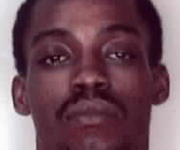
Dexter Alonzo Levingston
Mass murderer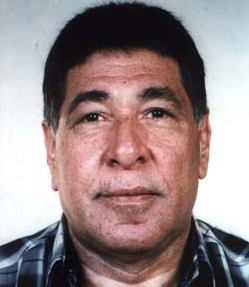 Gameel Al-Batouti
Mass murderer · USA · 1999
Gameel Al-Batouti (also rendered “Gamil ElBatouty” or “El Batouty” in U.S. offi…
216 victims
Gameel Al-Batouti
Mass murderer · USA · 1999
Gameel Al-Batouti (also rendered “Gamil ElBatouty” or “El Batouty” in U.S. offi…
216 victims
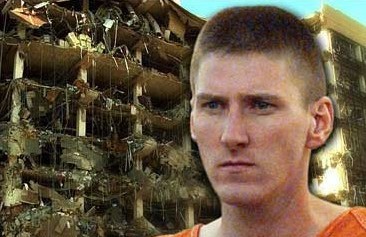 Timothy McVeigh
Mass murderer · USA · 1995
Timothy James McVeigh (April 23, 1968 – June 11, 2001) was a United States Army…
168 victims
Timothy McVeigh
Mass murderer · USA · 1995
Timothy James McVeigh (April 23, 1968 – June 11, 2001) was a United States Army…
168 victims
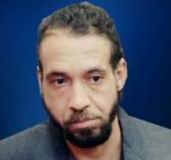 Julio Gonzalez
Mass murderer · USA · 1990
Julio Gonzalez was sentenced to 174 twenty-five-year sentences (a total of 4,35…
87 victims
Julio Gonzalez
Mass murderer · USA · 1990
Julio Gonzalez was sentenced to 174 twenty-five-year sentences (a total of 4,35…
87 victims
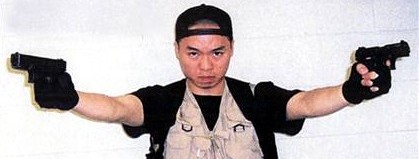 Seung-Hui Cho
Mass murderer · USA · 2007
Seung-Hui Cho was a mass murderer who shot and killed 32 people and wounded man…
32 victims
Seung-Hui Cho
Mass murderer · USA · 2007
Seung-Hui Cho was a mass murderer who shot and killed 32 people and wounded man…
32 victims
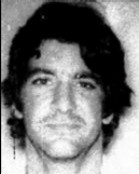 George Jo Hennard
Mass murderer · USA · 1991
George Jo Hennard carried out a mass killing at a Luby’s Cafeteria in Killeen,…
23 victims
George Jo Hennard
Mass murderer · USA · 1991
George Jo Hennard carried out a mass killing at a Luby’s Cafeteria in Killeen,…
23 victims
 Eric Harris
Mass murderer · USA · 1999
Eric Harris committed suicide by gunshot to the roof of the mouth on April 20,…
13 victims
Eric Harris
Mass murderer · USA · 1999
Eric Harris committed suicide by gunshot to the roof of the mouth on April 20,…
13 victims
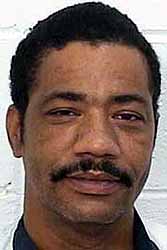 Jose Martinez High
Homicide · USA
Jose Martinez High · July 26, 1976 — Jose High, Nathan Brown and Judson Ruffin…
1 victim
Jose Martinez High
Homicide · USA
Jose Martinez High · July 26, 1976 — Jose High, Nathan Brown and Judson Ruffin…
1 victim
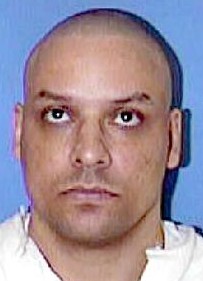 James Lee Clark
Murderer · USA · 1993
James Lee Clark (also referred to as James Lee Clark Jr.) was convicted in Dent…
2 victims
James Lee Clark
Murderer · USA · 1993
James Lee Clark (also referred to as James Lee Clark Jr.) was convicted in Dent…
2 victims
 Graham Coutts
Murderer · United Kingdom · 2003
Graham Coutts was the man convicted of murdering school teacher Jane Longhurst…
1 victim
Graham Coutts
Murderer · United Kingdom · 2003
Graham Coutts was the man convicted of murdering school teacher Jane Longhurst…
1 victim
 Timothy Pruitt
— · USA · 1992
Timothy Pruitt was sentenced to death in Lumpkin County in October 1996 for the…
1 victim
Timothy Pruitt
— · USA · 1992
Timothy Pruitt was sentenced to death in Lumpkin County in October 1996 for the…
1 victim
 Gregory John Brazel
Serial killer · Australia · 1982
Gregory John “Bluey” Brazel was an Australian arsonist and armed robber who was…
3 victims
Gregory John Brazel
Serial killer · Australia · 1982
Gregory John “Bluey” Brazel was an Australian arsonist and armed robber who was…
3 victims
- Gender
- male
- Country
- USA
- Location
- Tampa, Florida, USA
- Date of birth
- 1975
- Age at first offence
- 25
- Characteristics
- parricide, mentally ill, rape
- Victim profile
- His grandmother, Nancy Marlins; Michele Murtha, a 12-year-old under the care of her grandmother; Lillie Cacciamani, Marlins' sister; her husband Barry Cacciamani and her daughter Connie Carter
- Method of murder
- Shooting - St abbing with knife
- Date(s) of murder
- October 21, 2000
- Years active
- 2000
- Date of arrest
- Same day
- Status
-
Life imprisonment
Sentenced to five consecutive life sentences on October 10, 2006
Case record: Dexter Alonzo Levingston
Background
Dexter Levingston was accused of five bloody murders in October 2000 and pleaded guilty to five counts of first degree murder. He received five consecutive life sentences and could never be paroled. Levingston had been declared incompetent to stand trial and was in a state mental institution from March 2001 to the summer of 2004. Levingston was completely deaf in one ear and mostly deaf in another and entered his plea with the help of a court stenographer who typed all the proceedings into a computer so he could read from the screen. Levingston lived at 4217 Lakewood Drive in Seffner, in a house he shared with his grandmother and several others.
Levingston was described by family and neighbors as profoundly deaf and as having spinal meningitis as a baby that damaged his brain stem and caused his deafness and left him mildly retarded. Denise Levingston, Marlins’ sister, said she adopted Dexter when he was 4 and raised him with her family in Maryland, and she said Dexter’s hearing impairment made his relationship with his grandmother especially close.
Neighbors described Levingston’s behavior before the murders. Blanche Copeland, who lived across the street from Marlins, described Levingston as “mental” and said: “Every time I saw that young man, I just knew something was wrong with him.” Copeland said: “I passed him the other other night and I got chills” from the look in his eye. Copeland said: “He was wearing the same outfit they arrested him in,” and described the outfit as “dark parachute-style baggy pants slung low on his hips, with no shirt.” Cindy Pennington said Nancy Marlins played cards every week with her friends and talked about problems she was having at home, and Pennington said: “Nancy was always taking (troubled relatives) in.” Pennington said: “She could never turn them down. I think they were always giving her a hard time.” Blanche Copeland’s husband, Comer, said Marlins would sell barbecued meats and potato pies from a neighborhood stand on weekends and was “a fixture on the street for watching out for everyone’s kids.”
Tracie Silmser said Marlins, in addition to her job as a school bus aide, also cared for a developmentally challenged child in the area and said: “She was a beautiful person. She had a heart of gold,” adding: “There wasn’t anything she wouldn’t do for anybody.” Silmser said residents could not believe what unfolded in the cream-colored house with blue trim and said: “This is the neighborhood where you raise your kids,” and said: “Their haven of help turned sour.”
Levingston’s stepfather William Dennis visited him in the county jail. Dennis said Levingston’s face was marked with bruises and knots and said that Levingston would not speak. Dennis said: “We shouldn’t put angels’ wings on anybody or blame anybody just yet,” and added: “We don’t know what happened in that house.”
The offence
In October 2000, Levingston bought a gun and lay in wait at the house he shared with his grandmother and several others. As each came home from work or school, he used the gun, a machete, a screwdriver and a pair of scissors to kill each one. The dead included Nancy Marlins, a bus driver’s aide; Michele Murtha, a 12-year-old under the care of her grandmother; Lillie Cacciamani, Marlins’ sister; her husband Barry Cacciamani; and her daughter Connie Carter.
The dead were identified as: Marlins, a 57-year-old school bus aide; her sister and brother-in-law, Lillie and Barry Cacciamani, 56 and 47; Lillie’s daughter Connie Carter, 40; and 12-year-old Michele Murtha, a mentally disabled girl in Marlins’ care.
The events were described as a standoff with deputies. After a sheriff’s emergency response team was called and negotiators attempted to coax Levingston from the home, deputies fired tear gas into the one-story concrete-block home and Levingston emerged unarmed, offering no resistance.
A man barricaded inside the house was arrested after the standoff. Levingston was being held on three counts of threatening deputies during the standoff.
The investigation remained shrouded in mystery and detectives did not say how the victims died.
Investigation
The killings were discovered after deputies fired tear gas into the home at 4217 Lakewood Drive in Seffner and took Dexter Alonzo Levingston into custody. Officials would not identify any of the victims or give details about how they were killed or why.
A sheriff’s spokesman Rod Reder said Levingston lived at the home and was being questioned on the night of the standoff but had not been charged with the killings. Reder said: “I can’t remember five bodies at one location.”
Residents said deputies had been called to Marlins’ home multiple times before the killings. Sheriff's deputies had already been to Marlins’ house four times that year, including a report of a trespasser in July, an assault and battery complaint in March, and twice to serve warrants. Details of those calls were not available.
Details about why Levingston attacked were not provided. The investigation remained without answers. The investigation also did not provide information about how the victims died.
Arrest
Deputies discovered five bodies inside the home after arresting an armed man who had barricaded himself inside. A security officer walked toward the home, and Deputy Luke Caggiana peered in a garage window and saw Levingston crouched pointing a handgun toward the door the security officer was approaching. Reder said Levingston yelled: “Gun!” and “everybody backed off.”
Levingston was arrested after the standoff and was held without bail.
Trial
Levingston pleaded guilty to five counts of first degree murder. The plea occurred with the help of a court stenographer who typed all the proceedings into a computer so he could read from the screen.
Levingston was declared incompetent to stand trial and had been in a state mental institution from March 2001 to the summer of 2004.
Sentencing
On October 10, 2006, Levingston was sentenced to five consecutive life sentences. The case outcome included that he could never be paroled.
Appeals
No appeal information was included.
Outcome
Levingston entered a guilty plea to five counts of first degree murder and received five consecutive life sentences.
Aftermath
A neighbor described the shock and emotional impact on others after the bodies were discovered. Sandra Armentrout, a bus driver whose routes overlapped with Lillie Cacciamani, wore two black ribbons pinned to her white uniform shirt.
The hardest moment came when a little boy from Colson Elementary School clambered onto the bus and asked Armentrout: “Is Ms. C dead?” Armentrout said: “She had to tell him. ‘Yes,’ she said, and started to cry.”
Marlins’ daughter Kim Shaw lingered outside her mother’s house. Shaw said Cacciamani and Levingston hadn’t been getting along lately and that: “They had some words,” said Shaw of Plant City. Shaw retrieved a hanging plant from a tree after deputies allowed her into the taped-off yard.
William Dennis, a relative of the people who lived in the house where the bodies were found, was comforted by neighbors as he talked with a Hillsborough County Sheriff's deputy.
Other details
Levingston was accused of five murders involving multiple household members and it was said at the time that the investigation remained shrouded in mystery.
Levingston had a history of arrests in Hillsborough. In February 1995, he was arrested for misdemeanor marijuana possession and pleaded no contest and got four months’ probation. In November 1995, he was charged with petty theft and obstructing an officer without violence. He pleaded guilty to the first charge, but the second charge was dismissed.
In March 1997, he was charged with failing to appear in court on a battery charge. In November 1999, he was charged with resisting an officer without violence and disorderly conduct. He had drunken driving charges listed as having occurred in June 1999 and again in February and March of this year. Levingston’s arrest records listed him as unemployed, a laborer or a dishwasher.
Levingston’s stepfather William Dennis described Levingston as refusing to speak after being visited in jail and said: “We shouldn’t put angels’ wings on anybody or blame anybody just yet,” and: “We don’t know what happened in that house.”
Family tensions before the murders were described. In October 1999, Barry Cacciamani moved his family into Marlins’ house in Seffner. The move occurred because the owner of the three-bedroom house Cacciamani rented in Brandon wanted to sell and needed him out quickly. The move meant that the Cacciamanis, each with some 20 years of military service, brought Carter and Carter’s two children, ages 3 and 17, into the Seffner home.
The home became crowded with their “personalities and their troubles.” It was said at least once there had been a violent fight. Sheriff’s deputies arrived before the murders to find a horrifying scene inside and it was said that Marlins and four others were slain.
Cacciamani had concerns about Levingston. A fight was described where Levingston “had planted his fist on Cacciamani's face without warning.” Mike Mondsini said: “That night, Barry tried to tell Miss Marlins that this boy is on something,” and added: “She didn’t want to hear all that. She loved him too much.” Cacciamani’s younger brother Anton Cacciamani said: “He never wanted to fight unless he was pushed to the point where he could not back up.”
Michele Murtha’s parents planned to place her in a residential facility. Michele’s parents were Thomas and Patricia Murtha of Placida. They selected a Brandon home that had no room, and at the recommendation of the state their attorney Richard Hirsch said they placed Michele in Marlins’ home while they waited for a bed to open up. It was described that tension inside the home worsened and that Cacciamani took a day off last spring and returned to work with his left cheek deeply bruised.
Residents and acquaintances described Marlins’ character. Dee Frasier said a body salon called Slender You that Lillie Cacciamani and her daughter opened in a strip mall on Martin Luther King Boulevard was set to close. It was also said that Cacciamani’s Volvo needed a $700 repair job and that he had to pitch in $1,000 to help bury his mother in New Jersey.
Spotted an error, or have more information about this case?