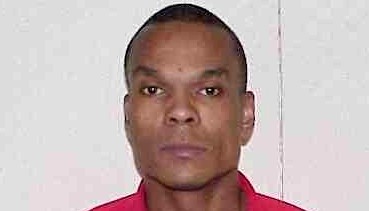
Victor Dewayne Taylor
Murderer Brian Kevin Rosenfeld
Murderer · USA · 1985
Brian Kevin Rosenfeld Brian Kevin Rosenfeld was sentenced to three concurrent l…
23 victims
Brian Kevin Rosenfeld
Murderer · USA · 1985
Brian Kevin Rosenfeld Brian Kevin Rosenfeld was sentenced to three concurrent l…
23 victims
 Marvin Gray
Murderer · USA · 1975
Marvin Gray was convicted killer who claimed responsibility for 23 slayings and…
23 victims
Marvin Gray
Murderer · USA · 1975
Marvin Gray was convicted killer who claimed responsibility for 23 slayings and…
23 victims
 Yahweh ben Yahweh
Murderer · USA · 1980
Yahweh ben Yahweh was born and legally named Hulon Mitchell Jr. (October 27, 19…
23 victims
Yahweh ben Yahweh
Murderer · USA · 1980
Yahweh ben Yahweh was born and legally named Hulon Mitchell Jr. (October 27, 19…
23 victims
 Russell Ellwood
Murderer · USA · 1991
Russell Ellwood was a former taxi driver. Authorities suspected him of killing…
20 victims
Russell Ellwood
Murderer · USA · 1991
Russell Ellwood was a former taxi driver. Authorities suspected him of killing…
20 victims
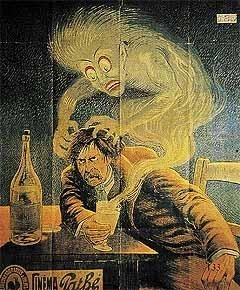 Jean Lanfray
Homicide · Switzerland · 1905
Jean Lanfray (1873/74 – February 26, 1906) was a Swiss laborer. He was convicte…
3 victims
Jean Lanfray
Homicide · Switzerland · 1905
Jean Lanfray (1873/74 – February 26, 1906) was a Swiss laborer. He was convicte…
3 victims
 Timothy Charles Palmes
Murderer · USA · 1976
Defendant: Timothy Charles Palmes (also styled Timothy Charles PALMES) Age at e…
1 victim
Timothy Charles Palmes
Murderer · USA · 1976
Defendant: Timothy Charles Palmes (also styled Timothy Charles PALMES) Age at e…
1 victim
 Delma Banks
Murderer · USA · 1980
Delma Banks was convicted in a Texas capital murder scheme and was sentenced to…
1 victim
Delma Banks
Murderer · USA · 1980
Delma Banks was convicted in a Texas capital murder scheme and was sentenced to…
1 victim
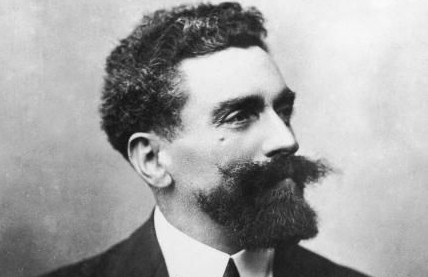 Jean-Pierre Vaquier
Murderer · United Kingdom · 1924
Jean-Pierre Vaquier was 45 years old when he was sentenced to death. Alfred Jon…
1 victim
Jean-Pierre Vaquier
Murderer · United Kingdom · 1924
Jean-Pierre Vaquier was 45 years old when he was sentenced to death. Alfred Jon…
1 victim
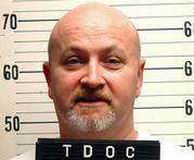 Terry Lynn King
Murderer · USA · 1983
Terry Lynn King was convicted of murder in the first degree while in the perpet…
1 victim
Terry Lynn King
Murderer · USA · 1983
Terry Lynn King was convicted of murder in the first degree while in the perpet…
1 victim
- Gender
- male
- Country
- USA
- Location
- Louisville, Kentucky, USA
- Date of birth
- April 6, 1960
- Age at first offence
- 24
- Characteristics
- homosexual rapist, robbery
- Victim profile
- Scott Christopher Nelson, 17, and Richard David Stephenson , 17 (Trinity High students)
- Method of murder
- Shooting
- Date(s) of murder
- September 29, 1984
- Years active
- 1984
- Date of arrest
- October 4, 1984
- Status
-
Sentenced to death
Sentenced to death on May 23, 1986
Background
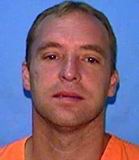
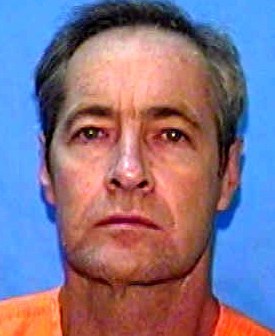
Victor Dewayne Taylor was sentenced to death on May 23, 1986. He was convicted in Jefferson County of kidnapping, robbery, sodomy and murder.
The case became known as the “Trinity Murders,” named after Trinity High School.
The offence
On September 29, 1984, Victor Taylor and another man kidnapped at gunpoint two high school students, Scott Nelson and Richard Stephenson, in Louisville, Kentucky. The men took the boys to a vacant lot and robbed them and shot them to death.
Two 17-year-old Trinity High students—Scott Christopher Nelson and Richard David Stephenson—became lost on their way to a high school football game where Trinity High School was playing DuPont Manual High School at Manual’s football stadium on East Burnett Avenue. Nelson and Stephenson stopped at a Moby Dick restaurant at Logan & Oak Streets to get directions. Victor Taylor and his cousin George Wade said they would lead them to the stadium if they were given a ride.
Nelson and Stephenson were instead taken to a vacant lot behind the football stadium of Louisville Male High School on Ardella Ct. There they were forced to take off their clothes, hand over their personal property and were bound and gagged. Victor Taylor sexually assaulted one of them. Nelson and Stephenson were then shot in the back of the head to avoid identification of Taylor and Wade.
Taylor bound, gagged and executed two high school students who became lost on their way to a football game in Jefferson County in 1984. Taylor told four people he had killed the victims. The personal property of the victims was found in his possession.
Investigation
A widely publicized publicity of the murders led to the suspects after a relative who had been given a Trinity High school jacket reported George Wade to the police. Wade implicated Victor Taylor in the crime. The personal belongings of the two murdered students were found in the home of Taylor’s mother.
DNA test results in the 1984 Trinity High student slayings were inconclusive after lab technicians were unable to find enough testable evidence. These were the first results returned since Kentucky started allowing DNA tests for some death row inmates, closing a significant avenue of appeal for Victor Dewayne Taylor.
Bode Technology of Lorton, Va., conducted the tests on a slide of bodily fluids taken from one of the victims. Two slides were tested at the time of Taylor’s trial in 1986 for blood type, with the testing consuming one of the slides. Taylor’s attorneys sought the tests to determine if Taylor or Wade raped the student before the killings. A test result showing Wade and not Taylor as the source of the DNA evidence would cast doubt on Wade’s claim that Taylor was the rapist.
Jeanne Anderson, an assistant commonwealth’s attorney in Jefferson County, said the lack of results could have been caused by several things, including the condition of the evidence after more than two decades.
"The Commonwealth is confident we got the right person," Anderson told The Associated Press.
"We've got a valid conviction."
Taylor’s attorney, assistant public advocate Thomas Ransdell, declined to comment.
Arrest
Victor Taylor was arrested on October 4, 1984.
Trial
Because of pretrial publicity, the trials of Taylor and Wade were moved to Lexington, Kentucky.
Taylor was convicted in 1986 of kidnapping, robbery, sodomy, and murder.
George Wade had previously testified against Taylor but recanted his testimony, which led to Taylor unsuccessfully appealing his conviction. Wade was convicted of kidnapping, robbery, and murder.
The widely publicized murders led to the suspects when a relative who had been given a Trinity High school jacket reported George Wade to the police.
Wade told police that it was Taylor who pulled the trigger, though he did not testify at trial. Taylor’s lawyers, in court filings, said Wade would testify that Taylor wasn’t present at the killings.
Sentencing
Victor Taylor was sentenced to death on May 23, 1986.
Taylor was on death row at the Kentucky State Penitentiary in Eddyville, Kentucky.
George Wade was serving a life sentence at the Kentucky State Reformatory in LaGrange, Kentucky.
Appeals
Taylor unsuccessfully appealed his conviction after Wade recanted his testimony.
In 2000, the clothier Benetton ran a controversial advertising campaign titled “We, On Death Row” which featured Victor Taylor and 24 other death row inmates from around the United States.
Outcome
DNA tests requested by a man on death row for the rape and murder of two Louisville high school students in 1984 were inconclusive after lab technicians were unable to find enough testable evidence. These DNA test results were the first returned since Kentucky started allowing DNA tests for some death row inmates.
The inconclusive results closed a significant avenue of appeal for condemned inmate Victor Dewayne Taylor.
Aftermath
The trials were moved to Lexington, Kentucky after a change of venue motion due to publicity.
Victims:
- Scott Nelson
- Richard Stephenson
Trinity High students:
- Scott Christopher Nelson (17)
- Richard David Stephenson (17)
In the DNA testing update, Taylor was described as 47 and Wade was described as 46.
Attempts to reach Nelson’s father, Emery Nelson, were unsuccessful Thursday morning.
Wade was described as serving a life sentence at East Kentucky Correctional Institute in West Liberty after being found guilty of murder, but acquitted of sodomy.
Four other Kentucky inmates—Thomas Clyde Bowling, Roger Dale Epperson, Benny Lee Hodge and Brian Keith Moore—had requested DNA testing in their respective cases. Testing had started in the case of Moore, condemned to death for the 1979 slaying of Virgil Harris of Louisville. Tests were also under way in Bowling’s case—the 1990 murders of a couple in Lexington. Testing in the case of Epperson and Hodge, who were awaiting execution for the 1986 killing of Tammy Acker in Letcher County, was on hold pending a Kentucky Supreme Court ruling.
Spotted an error, or have more information about this case?