
Michael Tenneson
Murderer Brian Kevin Rosenfeld
Murderer · USA · 1985
Brian Kevin Rosenfeld Brian Kevin Rosenfeld was sentenced to three concurrent l…
23 victims
Brian Kevin Rosenfeld
Murderer · USA · 1985
Brian Kevin Rosenfeld Brian Kevin Rosenfeld was sentenced to three concurrent l…
23 victims
 Yahweh ben Yahweh
Murderer · USA · 1980
Yahweh ben Yahweh was born and legally named Hulon Mitchell Jr. (October 27, 19…
23 victims
Yahweh ben Yahweh
Murderer · USA · 1980
Yahweh ben Yahweh was born and legally named Hulon Mitchell Jr. (October 27, 19…
23 victims
 Russell Ellwood
Murderer · USA · 1991
Russell Ellwood was a former taxi driver. Authorities suspected him of killing…
20 victims
Russell Ellwood
Murderer · USA · 1991
Russell Ellwood was a former taxi driver. Authorities suspected him of killing…
20 victims
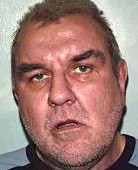 Anthony Hardy
Serial killer · United Kingdom · 2002
Anthony John Hardy (born May 31, 1951) was an English serial killer who was con…
3 victims
Anthony Hardy
Serial killer · United Kingdom · 2002
Anthony John Hardy (born May 31, 1951) was an English serial killer who was con…
3 victims
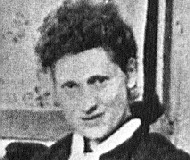 Ada Chard Williams
Murderer · United Kingdom · 1899
Ada Chard Williams (also referred to as Ada Chard-Williams and Mrs. Hewetson in…
1 victim
Ada Chard Williams
Murderer · United Kingdom · 1899
Ada Chard Williams (also referred to as Ada Chard-Williams and Mrs. Hewetson in…
1 victim
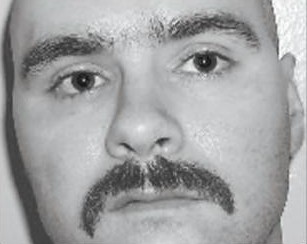 Thomas Wayne Akers
Murderer · USA · 1998
December 18, 1998 — Thomas Wayne Akers and his cousin, Timothy Martin, robbed a…
1 victim
Thomas Wayne Akers
Murderer · USA · 1998
December 18, 1998 — Thomas Wayne Akers and his cousin, Timothy Martin, robbed a…
1 victim
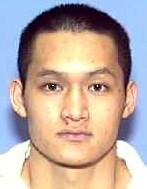 Chuong Duong Tong
Murderer · USA · 1997
Name: Chuong Duong Tong · TDCJ Number: 999260 · Date of Birth: 10/21/76 · Date…
1 victim
Chuong Duong Tong
Murderer · USA · 1997
Name: Chuong Duong Tong · TDCJ Number: 999260 · Date of Birth: 10/21/76 · Date…
1 victim
 Alfred Burns
Murderer · United Kingdom · 1951
Beatrice Alice Rimmer was bludgeoned to death in her home in the Wavertree area…
1 victim
Alfred Burns
Murderer · United Kingdom · 1951
Beatrice Alice Rimmer was bludgeoned to death in her home in the Wavertree area…
1 victim
- Gender
- male
- Country
- USA
- Location
- Wisconsin/Colorado, USA
- Date of birth
- November 21, 1959
- Age at first offence
- 28
- Characteristics
- —
- Victim profile
- Lila Bush, 73, her son Kenneth, 33, and Kenneth's girlfriend, Debra Reget, 35 / Jeffrey Sheffield, 23, and Mitchell Gonzales, 22
- Method of murder
- Shooting
- Date(s) of murder
- March 20/May 20, 1987
- Years active
- 1987
- Date of arrest
- May 21, 1987
- Status
-
Life imprisonment
Sentenced to two life terms + 48 years in Colorado, 1988; sentenced to three life terms in Wisconsin, 1988
Background
Michael Tenneson was born in 1960 and was a native of Holmen, Wisconsin. He was serving felony time in the La Crosse County jail when he failed to return from a work-release outing on March 10, 1987.
The offence
On March 10, 1987, Michael Tenneson failed to return from a work-release outing while he was serving felony time in the La Crosse County jail.
Ten days later, while still in La Crosse, Tenneson invaded the home of 73-year-old Lila Bush. During the invasion, he shot Lila Bush to death. He also shot to death Lila Bush’s 33-year-old son Kenneth Bush and Kenneth Bush’s 35-year-old girlfriend, Debra Reget.
On March 21, after traveling as “Michael Leith,” Tenneson stepped off a bus in Denver and remained there for two months.
On May 20, after a beer and cocaine party, Tenneson turned on two new friends—23-year-old Jeffrey Sheffield and 22-year-old Mitchell Gonzalez—and shot both men in the head at point-blank range while they were sleeping off the effects of drugs and alcohol.
The next evening, after showing off Sheffield’s car, Tenneson quickly fell under suspicion and was jailed on murder charges.
While in custody, he voluntarily confessed to the Wisconsin slayings.
Investigation
After showing off Sheffield’s car the next evening, Michael Tenneson quickly fell under suspicion and was jailed on murder charges.
Arrest
Michael Tenneson was jailed on murder charges after he showed off Sheffield’s car the next evening.
Trial
On March 18, 1988, a Denver jury convicted Tenneson on two counts of murder, plus one count each of aggravated robbery and aggravated auto theft.
At sentencing related to the Denver prosecution, jurors were described as being deadlocked eleven-to-one in favor of execution, and they were forced to recommend life imprisonment in the absence of a unanimous verdict.
Tenneson was returned to Wisconsin for trial on triple murder charges and assorted other felonies on June 14, 1988.
Sentencing
Tenneson was sentenced in the Denver case to matching life terms for the murders, plus 32 years on the robbery count and 16 years for auto theft. This was described as compelling him to serve a minimum of 104 years before he would be eligible for parole.
On June 14, 1988, Tenneson struck a bargain with authorities against the best advice of his attorneys. He told the court: “It's ridiculous to go through all this.” In return for his guilty plea on three counts of murder, he was sentenced to three more life terms. Lesser charges were dismissed, including armed burglary, possession of a firearm after conviction of a felony, and violation of the state's repeat offender statute.
Appeals
The record described no appeal outcome.
Outcome
Michael Tenneson received two life terms plus 48 years in Colorado in 1988. He also received three life terms in Wisconsin in 1988.
Other details
During the death-penalty hearing in Colorado, Tenneson’s Wisconsin confession was described as coming into play, along with a previous conviction for raping an elderly woman.
The defense brought in a psychologist who testified that Tenneson suffered from fetal alcohol syndrome. The result was described as a “serious personality defect” that impaired the defendant’s ability to tell right from wrong. The defense argued that the syndrome was not enough to save him from prosecution but was enough that he should be sentenced to life in prison rather than death.
The prosecution brought in its own psychologist, who testified that even if Tenneson were a victim of fetal alcohol syndrome, which was described as being doubted, it wouldn’t have caused him to murder people.
During closing, the prosecutor described Tenneson’s personality defect with the quote: “He kills people.”
At the jury deliberations, eleven jurors quickly agreed with the statement that Tenneson deserved to die. The last juror refused to even participate in the deliberations and had a “gut feeling” that it wouldn’t be right to vote for the death penalty. After the next day, the jury remained unable to reach unanimity. It was described that because a jury had to be unanimous if voting for the “ultimate punishment,” otherwise the sentence was life in prison. The eleven jurors were forced to surrender, and Tenneson went to jail for life.
Tenneson was described as being 28 at the time of a 1988 trial in Denver District Court. He was charged with two counts of first-degree murder after deliberation for the 1987 deaths of Jeffrey Sheffield, 23, and Mitchell Gonzales, 22.
Before the Denver trial began, Tenneson confessed to three more murders in Wisconsin, described as involving breaking into a home, shooting and killing its owner, killing the owner’s mother, and then killing the owner’s girlfriend.
Tenneson was described as attempting through his attorneys to claim that Sheffield had attempted to rob him after a night of drinking and snorting cocaine. The prosecution proved that Gonzales and Sheffield had been murdered in their sleep.

Spotted an error, or have more information about this case?