
Lucia de Berk
Miscarriage of Justice Maria Swanenburg
Serial killer · Netherlands · 1880
Maria Catherina Swanenburg (Leiden 9 September 1839 - Gorinchem 11 April 1915)…
27 victims
Maria Swanenburg
Serial killer · Netherlands · 1880
Maria Catherina Swanenburg (Leiden 9 September 1839 - Gorinchem 11 April 1915)…
27 victims
 Mohammed Bouyeri
Murderer · Netherlands · 2004
Mohammed Bouyeri (Arabic: محمد بويري ) was born on March 8, 1978 in Amsterdam.…
1 victim
Mohammed Bouyeri
Murderer · Netherlands · 2004
Mohammed Bouyeri (Arabic: محمد بويري ) was born on March 8, 1978 in Amsterdam.…
1 victim
 Volkert Van der Graaf
Murderer · Netherlands · 2002
Volkert van der Graaf (born July 9, 1969) was a confessed murderer of Dutch pol…
1 victim
Volkert Van der Graaf
Murderer · Netherlands · 2002
Volkert van der Graaf (born July 9, 1969) was a confessed murderer of Dutch pol…
1 victim
 Christine Malèvre
Serial killer · France · 1997
Christine Malèvre Christine Malèvre (born 1970) was a French serial killer. She…
30 victims
Christine Malèvre
Serial killer · France · 1997
Christine Malèvre Christine Malèvre (born 1970) was a French serial killer. She…
30 victims
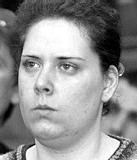 Timea Faludi
Homicide · Hungary · 2000
Timea Faludi was a Hungarian nurse dubbed the “Black Angel”. She was sentenced…
30 victims
Timea Faludi
Homicide · Hungary · 2000
Timea Faludi was a Hungarian nurse dubbed the “Black Angel”. She was sentenced…
30 victims
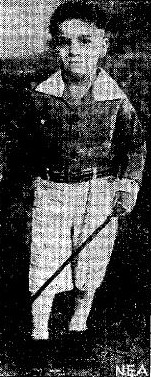 Peter Kudzinowski
Serial killer · USA · 1924
Peter Kudzinowski (1903 – December 21, 1929) was a serial killer who committed…
3 victims
Peter Kudzinowski
Serial killer · USA · 1924
Peter Kudzinowski (1903 – December 21, 1929) was a serial killer who committed…
3 victims
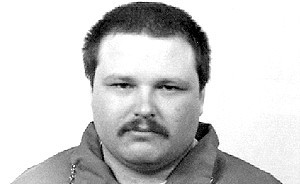 William Benirschke
Murderer · USA · 1988
William Benirschke had depression and antisocial personality, and he had drug a…
2 victims
William Benirschke
Murderer · USA · 1988
William Benirschke had depression and antisocial personality, and he had drug a…
2 victims
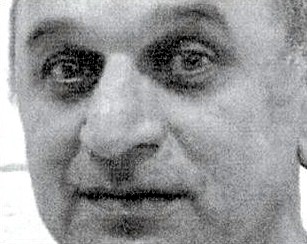 David Lee Fisher
Murderer · USA · 1983
David Lee Fisher was executed by lethal injection in Virginia on March 25, 1999…
1 victim
David Lee Fisher
Murderer · USA · 1983
David Lee Fisher was executed by lethal injection in Virginia on March 25, 1999…
1 victim
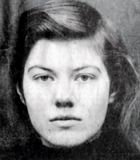 Juliet Hulme
Homicide · New Zealand · 1954
Juliet Hulme was known as Juliet Marion Hulme and later as Anne Perry. Juliet H…
1 victim
Juliet Hulme
Homicide · New Zealand · 1954
Juliet Hulme was known as Juliet Marion Hulme and later as Anne Perry. Juliet H…
1 victim
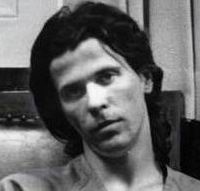 Michael Francis Beuke
Murderer · USA · 1983
Michael Francis Beuke was known as the “mad hitchhiker” in publicity surroundin…
1 victim
Michael Francis Beuke
Murderer · USA · 1983
Michael Francis Beuke was known as the “mad hitchhiker” in publicity surroundin…
1 victim
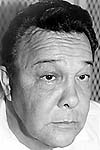 Rudy Esquivel
Murderer · USA · 1978
June 9, 1986 — Rudy Ramos Esquivel was executed by lethal injection in Texas. ·…
1 victim
Rudy Esquivel
Murderer · USA · 1978
June 9, 1986 — Rudy Ramos Esquivel was executed by lethal injection in Texas. ·…
1 victim
- Gender
- female
- Country
- Netherlands
- Location
- The Hague, Netherlands
- Date of birth
- September 22, 1961
- Age at first offence
- 36
- Characteristics
- abuse, history of mental illness
- Victim profile
- Men, women and babies (patients on her care)
- Method of murder
- Poisoning (by giving them a lethal dose of drugs)
- Date(s) of murder
- February 1997 - September 2001
- Years active
- 1997–2001
- Date of arrest
- December 13, 2001
- Status
-
Life imprisonment
Exonerated in April 2010 after a retrial following the Dutch supreme court’s reopening of the case on 7 October 2008; previously sentenced to life imprisonment (24 March 2003) and later convicted on appeal (18 June 2004), with a later life sentence in Amsterdam on 13 June 2006
Overview
Lucia de Berk, often called Lucia de B or Lucy de B, was a Dutch licenced paediatric nurse accused of murdering patients in her care using drug overdoses.
Timeline
- 4 September 2001 — An unexpected death of a baby (Amber) occurred at the Juliana Kinderziekenhuis (Juliana Children’s Hospital, JKZ) in The Hague.
- September 2000 to September 2001 — Nine incidents involving earlier deaths and cardiopulmonary resuscitations were scrutinised after Amber’s death; Lucia de Berk had been on duty at the time of those incidents and was responsible for patient care and delivery of medication.
- 24 March 2003 — The court in The Hague sentenced De Berk to life imprisonment for the murder of four patients and the attempted murder of three others.
- 18 June 2004 — On appeal, De Berk’s conviction was upheld: she was convicted on seven counts of murder and three counts of attempted murder and was sentenced to life imprisonment. She also received detention with coerced psychiatric treatment (TBS).
- 14 March 2006 — A Supreme Court decision referred the case back to the Court in Amsterdam to clarify a point of law regarding compatibility between TBS and a life sentence.
- 13 June 2006 — The Court of Appeal in Amsterdam ruled that TBS was incompatible with life imprisonment and amended the sentence to life imprisonment without subsequent detention in psychiatric care.
- 7 October 2008 — The Dutch supreme court reopened the case, acknowledging new facts that substantially undermined earlier evidence, and referred it for retrial by the Court in Arnhem.
- April 2010 — De Berk was exonerated.
- 14 April 2010 — The Court in Arnhem delivered a not guilty verdict for the charges relating to murdering seven patients and attempting to murder three more.
Background
Lucia de Berk was born on September 22, 1961 in The Hague, Netherlands. She worked as a licenced paediatric nurse.
In the period after the death of baby Amber, earlier deaths and cardiopulmonary resuscitations were scrutinised. The hospital decided to press charges against De Berk because she had been on duty at the time of those incidents, and she was responsible for patient care and delivery of medication.
A misunderstanding or disagreement about digoxin intoxication and related medical interpretation became central to the conviction and later to the reopening of the case. Concerns were also raised about statistical calculations used in court.
A series of articles raised doubts about the conviction.
A committee of support for De Berk was formed and continued to express doubts about her conviction. Philosopher of science Ton Derksen, aided by his sister, geriatrician Metta de Noo-Derksen, wrote the Dutch language book Lucia de B: Reconstruction of a Miscarriage of Justice. They doubted the reasoning used by the court and the medical and statistical evidence presented.
The offence
The prosecutions alleged a killing spree affecting patients in De Berk’s care using lethal doses of drugs, described as drug overdoses. The alleged events were linked to three hospitals in The Hague where De Berk had worked earlier: the Juliana Child Hospital (JKZ), the Red Cross Hospital (RKZ), and the Leyenburg Hospital.
The hospital decided to press charges following Amber’s death and after scrutiny of earlier incidents.
During the 2003 sentencing, De Berk was sentenced for the murder of four patients and the attempted murder of three others. On appeal in 2004, she was convicted of seven murders and three attempted murders. In the retrial, the Court delivered a not guilty verdict.
Investigation
Police began investigating after Amber’s death, including interviewing nursing staff and doctors.
A forensic laboratory report from Strasbourg on evidence for digoxin poisoning became part of the chronology. The report was received via the Netherlands Forensic Institute (NFI) and, according to the Public Prosecution, contained no new facts, while De Berk’s defence argued that it proved that there was not a lethal concentration of digoxin in the first case. The report was not admitted for final considerations of the sentence given to De Berk.
Arrest and custody
Lucia de Berk was arrested and remanded in custody on 13 December 2001.
After the Supreme Court’s 14 March 2006 ruling, De Berk suffered a stroke and was admitted to the hospital of Scheveningen prison.
Trial
Proceedings leading to the 2003 life sentence
On 24 March 2003, the court in The Hague sentenced De Berk to life imprisonment for the murder of four patients and the attempted murder of three others.
The verdict depended in part on statistical calculations described as a probability that a nurse’s shifts would coincide with many deaths and resuscitations purely by chance.
Appeal and 2004 conviction
In the appeal on 18 June 2004, De Berk’s conviction for seven murders and three attempted murders was upheld. The crimes were supposed to have taken place in three hospitals in The Hague: Juliana Child Hospital (JKZ), Red Cross Hospital (RKZ), and Leyenburg Hospital.
In two cases, the court concluded that there was proof that De Berk had poisoned the patients. For other cases, the judges considered they could not be explained medically and must have been caused by De Berk, who was present on all those occasions.
The concept described as chain-link proof was applied in the reasoning. It was described as applying weaker evidence for subsequent murders or attempted murders after earlier ones had been proven beyond reasonable doubt.
De Berk was also sentenced to TBS (detention with coerced psychiatric treatment) in addition to the life sentence. The state criminal psychological observation unit did not find any evidence of mental illness.
Detainee statement and withdrawal
Important evidence at the appeal was the statement of a detainee in the Pieter Baan Center (PBC) at the same time as De Berk, that she had said during outdoor exercise:
"I released these 13 people from their suffering"
During the appeal, the man withdrew his statement, saying that he had made it up.
Media coverage considered the withdrawal of this evidence to be a huge setback for the Public Prosecution Service (OM).
2006 Amsterdam sentence clarification
After 14 March 2006, the matter was returned to the Court in Amsterdam. On 13 June 2006, the Court of Amsterdam ruled that TBS was incompatible with life imprisonment and amended the sentence to life imprisonment only, without subsequent detention in psychiatric care.
Appeals
Supreme Court decision and reopening
On 7 October 2008, the Dutch supreme court reopened De Berk’s case after an Advocate-General request on 17 June 2008. The supreme court acknowledged new facts uncovered that substantially undermined earlier evidence.
An independent team of medical researchers reported to Advocate-General Knigge that the death which sparked the case appeared to have been a natural death. The key toxicologist of the earlier trials agreed with the new medical findings, pointing out that at the time of the trial, the court had only given him partial information about the medical state of the child.
De Berk’s statements about her doings on the night of that child’s death were also shown to be correct. During the period when courts had earlier concluded that she must have administered poison, the baby was actually being treated by a medical specialist and his assistant.
The public prosecution sought extensive new forensic investigations, but the request was turned down by the court. Instead, further independent medical investigations were commissioned into the cases of two more children, with access for a multidisciplinary medical team to all possible medical data.
At a session on 9 December 2009, the court stated that new integral medical investigations confirmed that the cases of Amber, Achmed and Achraf were natural deaths/incidents.
The appeal hearing ended on 17 March 2010.
On 7 October 2008, the supreme court acceded to the request and referred the case to the Court in Arnhem for retrial.
Sentencing
24 March 2003 (The Hague)
The court in The Hague sentenced De Berk to life imprisonment for the murder of four patients and the attempted murder of three others.
18 June 2004 (High Court of the Hague)
On appeal, De Berk was convicted on seven counts of murder and three counts of attempted murder and received life imprisonment. She also received TBS (enforced psychiatric treatment).
13 June 2006 (Court of Appeal in Amsterdam)
The Court of Appeal sentenced De Berk to life imprisonment with no subsequent detention in psychiatric care.
Outcome
On 14 April 2010, the Court in Arnhem delivered a not guilty verdict. De Berk was found not guilty of murdering seven patients and attempting to murder three more.
After the exoneration, the conviction and life sentences were set aside following the reopening and retrial.
Other details
Charges as described in the narrative
The prosecution initially charged De Berk of causing thirteen deaths or medical emergencies. In court, the defence argued De Berk could not have been involved in several cases, citing that she had been away for several days and that some suspicions were due to administrative errors. It was also said that all deaths had been registered as natural with the exception of the last event, which was initially thought to be a death by natural causes but became classified as an unnatural death after other hospital authorities connected it with De Berk and her repeated presence at recent incidents.
Diary entries and interpretation
A diary role was described in the conviction narrative. De Berk wrote on the day of death of one patient (an elderly lady in a terminal stage of cancer) that she had:
'given in to her compulsion'
She also wrote that she had:
'a very great secret'
and that she was concerned about:
'her tendency to give in to her compulsion'
De Berk stated that these referred to her passion for reading tarot cards and that she did secretly because she did not believe it appropriate for the clinical setting of a hospital. The court decided they were evidence she had euthanised the patients and interpreted the diary differently from her explanation.
De Berk’s daughter, Fabiënne, said in an interview on the television program Pauw & Witteman that some of her mother’s notes in the diaries were:
'pure fiction'
and that she intended to use them in writing a thriller.
Posthumus II Commission
Ton Derksen submitted research to the Posthumus II Commission, an ad hoc non-permanent commission examining selected closed cases for errors in the police investigation indicating “tunnel vision” and misunderstanding of scientific evidence.
The commission announced on 19 October 2006 that it would consider the case in detail. In October 2007, the commission released its report and recommended that the case be re-opened, concluding that the case had been seriously marred from the start by tunnel vision.
The commission stated that the same persons chosen from close circles of hospital authorities had first helped the hospital in its internal investigations, then advised the police, and finally appeared before the courts as independent scientific experts. It noted strong disagreement concerning whether or not baby Amber had died of digoxin poisoning.
On 2 April 2008, De Berk was released for three months because after re-examination of the death of the last “victim”, a natural death could no longer be ruled out.
Board of Procurators General and further investigations
A petition for reopening was started at the initiative of Richard D. Gill. On 2 November 2007, signatures were presented to the Minister of Justice Ernst Hirsch Ballin and the State Secretary of Justice Nebahat Albayrak, and over 1300 people signed the petition.
On 18 October 2006, the Board of Procurators General accepted the Buruma Committee recommendation for further investigation and set up a brief consisting of M.S. Groenhuijsen, P. Vogelzang LL.M, and J.W.M. Grimbergen LL.M.
A Grimbergen Report recommended that Public Prosecutors initiate a request for judicial review and request further investigation on 29 October 2007.
De Berk’s earlier accounts and responses
In 2002 trial coverage, De Berk denied the charges and insisted she was innocent. She stated:
"It is true that I often questioned my own life,"
"But I never questioned that of another."
She also said:
"My mother always said I was a difficult and she was right, but to say I killed people just isn't true."
In court, she told the panel of three judges:
"I love life and would never take that away from anyone"
She also said she did not know about the death circumstances of patient Ahmad Noory, stating:
"I have a clear conscience. I didn't do a thing,"
"Of course it [his death] is strange but I don't know how it happened. "
"I warned the doctor that the child was very ill and nothing was done. Nobody did anything when I told them Ahmad had stopped responding and couldn't be woken up."
Representation in media and discussions of evidence
The statistical arguments and their alleged calculation errors were discussed in several places in the narrative. Theo de Roos stated:
"In the Lucia de B. case statistical evidence has been of enormous importance. I do not see how one could have come to a conviction without it"
Henk Elffers stated that the chance of a nurse working at the three hospitals being present at the scene of so many unexplained deaths and resuscitations was one in 342 million.
Philip Dawid stated:
Elffers “made very big mistakes. He was not sufficiently professional to ask where the data came from and how accurate the data were. Even granted the data were accurate, he did some statistical calculations of a very simplistic nature, based on very simple and unrealistic assumptions. Even granted these assumptions, he had no idea how to interpret the numbers he got”.
Mark Buchanan wrote:
"The court needs to weigh up two different explanations: murder or coincidence. The argument that the deaths were unlikely to have occurred by chance (whether 1 in 48 or 1 in 342 million) is not that meaningful on its own - for instance, the probability that ten murders would occur in the same hospital might be even more unlikely. What matters is the relative likelihood of the two explanations. However, the court was given an estimate for only the first scenario."
Additional timeline entries listed in the narrative
The narrative included further events:
- 5 September 2001 — Police began interviewing nursing staff and doctors.
- 17 September 2001 — Director Smits of Juliana Children’s Hospital and Red Cross Hospital filed an official complaint with the police for 5 murders and 5 attempted murders.
- 13 December 2001 — Lucia was arrested and remanded in custody.
- 14 March 2006 — Court of Appeal referred case back to the Court of Amsterdam for clarification.
- 27 July 2006 — Case submitted to the Buruma Committee.
- 18 October 2006 — Board of Procurators General accepted Buruma Committee recommendation of further investigation; the Grimbergen triumvirate was set up.
- 29 October 2007 — Grimbergen Report recommended request for judicial review and further investigation; Public Prosecutor forwarded the request to the Supreme Court Procurator General.
- 2 November 2007 — Petition to reopen handed to the Dutch Minister of Justice and his Undersecretary.
- 13 December 2007 — Undersecretary Albayrak denied request to suspend Lucia’s detention temporarily on grounds of health.
- 14 December 2007 — Petition appeared as advertisement in NRC.
- 5 January 2008 — Light for Lucia torch procession at Nieuwersluis prison.
- 14 January 2008 — Undersecretary of Justice informed Parliament of refusal to suspend detention temporarily.
- 15 January 2008 — Lucia and her lawyer Ton Visser appealed the Undersecretary of Justice’s decision.
- 7 February 2008 — Theatre play “Lucy, a monster trial” premiered in Amsterdam.
- 2 April 2008 — Attorney General Knigge presented official demand for revision to the Supreme Court; Minister of Justice granted temporary suspension of sentence for three months; Lucia left Nieuwersluis prison after more than six years.
- 17 June 2008 — Attorney General Knigge presented official demand for revision to the Supreme Court.
- 26 January 2009 — Police searched the house of a niece of Lucia for diary fragments based on an anonymous tip; nothing was found.
- 5 February 2009 — In Arnhem, Public Prosecutor requested a full investigation.
- 19 February 2009 — Court in Arnhem ordered a limited investigation.
- 17 March 2010 — Court in Arnhem heard the case; Lucia was expected to be present.
- 14 April 2010 — Final verdict: acquittal was delivered.
Compensation
On 12 November 2010, it was revealed that De Berk had received an undisclosed amount of compensation from the Ministry of Justice. The news was first broadcast by a local TV station in the West of the Netherlands and later confirmed by the ministry to the Dutch news agency ANP.
Justice minister Ernst Hirsch Ballin told reporters he sent De Berk a letter apologising for her incarceration and said compensation was available for a “generous” financial compensation and that she spent over six years in jail.
The public prosecution department’s chief Harm Brouwer apologised to De Berk in a private meeting, and the public prosecution department apologised to families of the people deemed to be De Berk’s victims.
Additional publication comparisons
The narrative compared the case to Susan Nelles, a Canadian nurse charged in 1981 for murder of children by digoxin poisoning at the Toronto Hospital for Sick Children. It said she was not convicted and that high digoxin autopsy causes were explained in 1993 in the Canadian Nurse Journal, and that causes of high autopsy blood digoxin were discussed in a 2011 book, “The Nurses are Innocent – The Digoxin Poisoning Fallacy”.

Spotted an error, or have more information about this case?