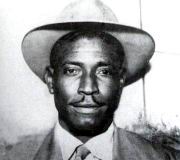
Joe Vance Tilley
Homicide Jack Kevorkian
Homicide · USA · 1990
Jack Kevorkian (born May 26, 1928) was a controversial American pathologist. He…
130 victims
Jack Kevorkian
Homicide · USA · 1990
Jack Kevorkian (born May 26, 1928) was a controversial American pathologist. He…
130 victims
 David Koresh
Homicide · USA · 1993
David Koresh (born Vernon Wayne Howell; August 17, 1959 – April 19, 1993) led t…
79 victims
David Koresh
Homicide · USA · 1993
David Koresh (born Vernon Wayne Howell; August 17, 1959 – April 19, 1993) led t…
79 victims
 Todd Hall
Homicide · USA · 1996
Todd Hall was described by neighbors as "mentally slow" and was said to have su…
9 victims
Todd Hall
Homicide · USA · 1996
Todd Hall was described by neighbors as "mentally slow" and was said to have su…
9 victims
 Clinton Bankston
Homicide · USA · 1987
15 August 1987 — Ann Morris (63), her sister Sally Nicholson (59), and Sally’s…
5 victims
Clinton Bankston
Homicide · USA · 1987
15 August 1987 — Ann Morris (63), her sister Sally Nicholson (59), and Sally’s…
5 victims
 Joshua Jenkins
Homicide · USA · 1996
Joshua Jenkins was a 15-year-old American killer who killed five members of his…
5 victims
Joshua Jenkins
Homicide · USA · 1996
Joshua Jenkins was a 15-year-old American killer who killed five members of his…
5 victims
 Daniel Joe Hittle
Mass murderer · USA · 1973
Daniel Joe Hittle was executed by lethal injection in Texas on December 6, 2000…
7 victims
Daniel Joe Hittle
Mass murderer · USA · 1973
Daniel Joe Hittle was executed by lethal injection in Texas on December 6, 2000…
7 victims
 Amy Hebert
Murderer · USA · 2007
August 9, 1991 — Amy Hebert and Chad Hebert married. · July of 2005 — Amy Heber…
2 victims
Amy Hebert
Murderer · USA · 2007
August 9, 1991 — Amy Hebert and Chad Hebert married. · July of 2005 — Amy Heber…
2 victims
 Josephine Gray
Murderer · USA · 1974
Josephine Virginia Gray, also known as Josephine Stribbling and Josephine Mills…
3 victims
Josephine Gray
Murderer · USA · 1974
Josephine Virginia Gray, also known as Josephine Stribbling and Josephine Mills…
3 victims
 James Delano Winkles
Murderer · USA · 1980
James Delano Winkles also known as Jimmy Delano Hawk was convicted for the murd…
2 victims
James Delano Winkles
Murderer · USA · 1980
James Delano Winkles also known as Jimmy Delano Hawk was convicted for the murd…
2 victims
 Pierre Voirbo
Murderer · France · 1868
Pierre Voirbo was a prime suspect after he had recently quarreled with the vict…
1 victim
Pierre Voirbo
Murderer · France · 1868
Pierre Voirbo was a prime suspect after he had recently quarreled with the vict…
1 victim
 Angelina Napolitano
Murderer · Canada · 1911
Angelina Napolitano (also spelled Angelina Neapolitano) was an immigrant to Can…
1 victim
Angelina Napolitano
Murderer · Canada · 1911
Angelina Napolitano (also spelled Angelina Neapolitano) was an immigrant to Can…
1 victim
- Gender
- male
- Country
- USA
- Location
- Johnson/Marshall C ounties , Oklahoma, USA
- Date of birth
- 1974
- Age at first offence
- 16
- Characteristics
- juvenile (16), rape
- Victim profile
- Herman Deagon, 75 / Kimberly Ann James, 15
- Method of murder
- Shooting / Strangulation
- Date(s) of murder
- September 10/14, 1990
- Years active
- 1990
- Date of arrest
- —
- Status
-
Life imprisonment
Sentenced to death, 1996; commuted to life in prison, 1999
Case record: Joe Vance Tilley
Personal details
Joe Vance Tilley was 16 years old at the time of the murders. He was tried in the District Court of Johnston County, Case No. CRF-90-71, before the Honorable Thomas S. Walker.
Status and post-conviction history
Tilley’s 1996 death sentence was set aside by the Oklahoma Court of Criminal Appeals, and the case was returned to district court for resentencing. The appeals court confirmed Tilley’s conviction for the 1990 murder of 15-year-old Kimberly James, but ordered the sentencing phase of the trial to be conducted a second time.
After later proceedings, Tilley received a sentence of life imprisonment without the possibility of parole (LWOP) for shooting 15-year-old Kimberly Ann James dead in 1990. The death sentence for the James murder had been vacated and a resentencing hearing was granted; it was cancelled when the Johnston County prosecutor reached an arrangement in which Tilley agreed to LWOP and to waive his right to appeal that sentence. The arrangement was agreed to by the parents of the victim.
Timeline
- September 14, 1990 — Kimberly Ann James sneaked out of her house to meet Joe Vance Tilley; the two teenagers attended high school together in Madill; Tilley took James riding around in his car, pulled off the roadway, stopped the car, directed James to get out, asked whether she believed he was crazy or would kill her, and proceeded to strangle her until he could no longer feel a pulse; Tilley placed James’ body in his car and drove her to a bridge over the Washita River, where he threw her body into the water.
- September 17, 1990 — Two fisherman discovered James’ body floating face down in the Washita River on the afternoon of Monday, September 17, 1990.
- August 28, 1991 — Defense counsel filed a motion to quash the Information in this case based on the State’s failure to prove the corpus delicti of the crime.
- December 22, 1992 — A hearing was held on the motion to quash based on the State’s failure to prove the corpus delicti of the crime.
- January 13, 1993 — The district court sustained Tilley’s motion to quash, found the State failed to sufficiently prove the corpus delicti of the crime, ordered the charge dismissed and bond exonerated, and stayed the order of dismissal and exoneration of the bond pending the State’s appeal.
- December 5, 1994 — In an unpublished opinion (State v. Tilley, Case No. F-93-660), the Oklahoma Court of Criminal Appeals reversed the district court’s order finding that the corpus delicti rule set forth in Thornburgh had been overruled by Fontenot.
- October 11, 1995 — The Oklahoma Court of Criminal Appeals denied Tilley’s petition for rehearing.
- April 11, 1996 — During closing argument, defense counsel asked the jury to "end it now. I'm not asking for Joe's sake, but for his family and Miss James' family. The James family grieves, and rightly so. Joe's family grieves, and rightly so. I ask for mercy, if not for Joe, then for the families."
- 1996 — A 1996 Johnston County jury set punishment at death for the murder of 15-year-old Kimberly James; the Oklahoma Court of Criminal Appeals later set aside the death penalty verdict.
- July 8, 1998 — The Oklahoma Court of Criminal Appeals set aside Tilley’s 1996 death penalty verdict and returned the case to district court for resentencing.
- November 1999 — Tilley was sentenced to life imprisonment without the possibility of parole (LWOP) for shooting 15-year-old Kimberly Ann James dead in 1990.
- 1999 — The death penalty was commuted to life in prison.
The offence
Murder of Kimberly Ann James
Fifteen-year-old Kimberly Ann James sneaked out of her house to meet sixteen-year-old Joe Vance Tilley during the early morning hours of September 14, 1990. The two teenagers attended high school together in Madill. Tilley took James riding around in his car. Tilley eventually pulled off the roadway and stopped the car. After directing James to get out of the car, Tilley asked James whether she believed he was crazy or would kill her. Tilley then proceeded to strangle James until he could no longer feel a pulse.
Thereafter, Tilley placed James’ body in his car and drove her to a bridge over the Washita River, where he threw her body into the water. Two fisherman discovered James’ body floating face down in the river on the afternoon of Monday, September 17, 1990. The location of the victim’s body was found four or five miles north of Dickson, approximately 75 to 100 yards east of the river bridge.
Aggravating circumstance found
The jury found the existence of one aggravating circumstance: Tilley posed a continuing threat to society.
Investigation and admissions
Prior to his arrest, Tilley made statements to Wilma Rushing Bentley and Gregg Maddox about the murder. During these conversations, Tilley stated he had killed James and gave specific details about the murder. After his arrest, Tilley also confessed to law enforcement.
During the guilt/innocence issues discussed on appeal, the court found that Tilley’s confession was corroborated by substantial independent evidence. The court identified that, in addition to confessing to law enforcement, Tilley made several post-crime statements admitting killing the victim, described the events in detail during two separate conversations with Wilma Rushing Bentley, and spoke with Gregg Maddox in detail about the murder. The court also described autopsy testimony from Dr. Chai Choi that the left part of the victim’s head had a purplish to green coloring indicating some traumatic bruises consistent with Tilley’s statements that he dropped the victim on her head when he was attempting to throw her over the bridge. The body’s location in the Washita River was described as consistent with Tilley’s post-crime statements to Gregg Maddox.
The court also found that Tilley’s voluntary confession to the Herman Deagon murder in Carter County, which occurred just four days prior to the James murder, corroborated the trustworthiness of Tilley’s confession to the James murder. When asked whether Tilley wished to discuss the murder, Tilley responded, "Which one?" Thereafter, Tilley confessed to both the James and Deagon murders. The court also stated that Tilley assisted Sheriff Bill Noland in recovering the .22 pistol used to kill Deagon.
Arrest and pretrial issues
Statements to Gregg Maddox and suppression issue
In the evening of September 17, 1990, Gregg Maddox had two separate telephone conversations with Tilley in which Tilley informed Maddox that he had killed the victim and described the events leading up to the murder and the actual murder. The next morning, Maddox agreed to wear a wire transmitter to school in an attempt to obtain additional information about the murder. The plan was for Maddox to meet with Tilley at school and instigate a conversation regarding Kimberly James. Officer Sikes and Deputy Sheriff Bilbrey drove Maddox to school and dropped him off, with several other officers stationed around the high school.
Maddox initiated a conversation with Tilley outside the gymnasium. Maddox asked, as instructed by police, whether Tilley had taken James’ shoes off before he threw her body off the bridge. Tilley replied, "No, they must have fallen off." Maddox next asked how James got a knot on her head; Tilley responded that he had dropped James as he was getting her body out of the car. Maddox next asked about James’ eyes; Tilley stated something like "if he’d had a knife, he’d cut out her eyes and saved ‘em." Finally, as instructed, Maddox asked whether Tilley wiped off his car; Tilley responded that he had and removed some hair from the back seat. After the conversation, Maddox walked away, and he later saw the police move in and arrest and handcuff Tilley.
Defense counsel filed a motion to suppress Tilley’s statements to Maddox. At a pretrial suppression hearing held on December 22, 1992, defense counsel argued the confession obtained by Maddox was taken in violation of Tilley’s right against self-incrimination and rights under Title 10, Section 1109. Defense counsel also objected to this evidence at trial asserting it was taken in violation of § 1109. On appeal, the appellate court found merit to the claim and stated that Title 10 O.S. Supp. 1989, § 1109(A) provided:
"No information gained by questioning a child nor any evidence subsequently obtained as a result of such information shall be admissible into evidence against the child unless the questioning about any alleged offense by any law enforcement officer . . . is done in the presence of the parents, guardian, attorney, or legal custodian of the child."
The appellate court concluded that, because at the time Maddox questioned Tilley at school Tilley was still a "child" under the statutory meaning, § 1109 was applicable. The court therefore found the trial court erred when it admitted the statements Tilley made to Maddox at school just prior to his arrest. However, the appellate court held that, in light of Tilley’s other post-crime statements to Wilma Rushing Bentley and Gregg Maddox, the error was harmless beyond a reasonable doubt with regard to the jury’s finding of guilt.
Motion to quash Information and corpus delicti
Tilley filed a motion to quash the Information based on the State’s failure to prove corpus delicti. After a hearing on December 22, 1992 and briefs submitted as ordered, the district court sustained the motion on January 13, 1993, found the State had failed to sufficiently prove corpus delicti, dismissed the charge, exonerated bond, and stayed the order pending the State’s appeal. On December 5, 1994, the Oklahoma Court of Criminal Appeals reversed that decision in an unpublished opinion (State v. Tilley, Case No. F-93-660). Tilley filed a Petition for Rehearing arguing, in part, improper ex post facto application; on October 11, 1995, the Court denied Tilley’s rehearing motion.
Information sufficiency and subject matter jurisdiction arguments
Tilley argued that the Information was insufficient because it failed to allege all the elements of malice murder, contending the trial court never acquired subject matter jurisdiction because the indispensable "malice aforethought" element was not alleged in the Information. The appellate court held that the Information set forth sufficient facts to give Tilley notice of the charge and that the use of the phrase "with premeditated design" was sufficient to advise Tilley he was charged with malice aforethought murder. The court also found Tilley understood he was charged with malice aforethought murder and found no due process violation.
Tilley also argued that retroactive application of Parker violated due process and equal protection; the appellate court stated that this issue was addressed and rejected previously in Conover and declined to revisit it.
Reverse certification statutes argument
Tilley challenged the adequacy of Oklahoma’s reverse certification statutes, contending they were inadequate to insure that a sixteen-year-old offender was sufficiently mature and morally responsible to be subjected to the death penalty. The appellate court stated that all challenges to the reverse certification procedure should have been presented and decided in Tilley v. State, J-92-114, decided October 1, 1992, and held the allegation was not properly before the court.
Miranda waiver argument
Tilley argued that his waiver of Miranda rights was "vitiated" when police failed to inform him that an attorney was attempting to contact him. The appellate court discussed Lewis v. State and then described the United States Supreme Court’s decision in Moran v. Burbine. The appellate court adopted Moran’s rationale and held Tilley’s waiver of Fifth Amendment rights was valid, stating that failure to inform Tilley that an attorney was attempting to contact him did not undermine the validity of the waiver.
Trial
Conviction and punishment
Tilley was tried by a jury in the District Court of Johnston County, Case No. Walker. Tilley was convicted of First Degree Malice Aforethought Murder. After finding one aggravating circumstance—that Tilley posed a continuing threat to society—the jury set punishment at death. The trial court sentenced him accordingly.
Evidence and exhibits issue
The appellate court addressed Tilley’s challenge to the admission of State’s Exhibits 8 and 9. Exhibit 8 was a photograph of the victim taken while she was living, in which the victim appeared to be standing in a gymnasium and holding a basketball. Exhibit 9 was a copy of a poster dealing with the victim’s disappearance and included a photograph of the victim.
The appellate court found no error with respect to State’s Exhibit 9, stating that it was used to demonstrate that information about the victim’s discovery and death was not known until the day after Tilley made inculpatory statements to Rushing and Maddox. The appellate court found that State’s Exhibit 8 was not relevant to a material issue and stated the trial court abused its discretion when it admitted it, but held that the error did not contribute to the jury’s guilty verdict.
Prosecutorial misconduct claims during guilt/innocence
Tilley alleged prosecutorial misconduct in both stages of trial, but the appellate court addressed only allegations concerning the guilt/innocence stage due to errors found in sentencing stage.
The appellate court found that a prosecutor’s first stage closing argument statement—that after confessing, Tilley took Sheriff Noland to the exact place where Kimberly’s shoe was found—was a reasonable inference arising from evidence in the record. The appellate court also addressed arguments that the prosecutor evoked sympathy by repeatedly referring to the victim as an "it" by Tilley’s actions. The appellate court found that no such error occurred in connection with guilt and held the argument did not affect the jury’s verdict.
Sentencing
Penalty phase evidence
During the penalty phase of trial, the State called three witnesses. Gregg Maddox returned to testify about the shooting death of Herman Deagon, a murder committed in Carter County just four days prior to the Kimberly James murder. The appellate record stated that, on March 2, 1993, Tilley was convicted of the Deagon murder and sentenced to life imprisonment without parole. Former Carter County Sheriff Bill Noland testified during the penalty stage regarding Tilley’s voluntary confession to the Deagon murder. The State also presented evidence regarding a rape allegation against Tilley that involved a thirteen-year-old victim and occurred approximately a month before the Deagon and James murders. Charges were never filed against anyone in connection with this allegation.
The State moved to incorporate all first-stage evidence into the penalty phase and rested its case in aggravation.
Defense’s mitigation efforts refused
Defense counsel announced on the record that he had two other witnesses available to testify in mitigation: the defendant’s mother, who would testify about his childhood and normal upbringing, and Mr. Donny Railey (sic), the juvenile officer at Marshall County, who would testify that the defendant had no prior contacts with the juvenile system. Defense counsel stated that, at his client’s instructions, he would not call either witness, leaving Sheriff Bill Noland as the sole witness in the penalty phase. Noland testified that Tilley readily admitted committing both the James and Deagon murders, but denied any involvement in the alleged rape.
Waiver of mitigating evidence and resentencing order
Tilley argued that his death sentence must be vacated because the record did not demonstrate that he expressly, knowingly, intelligently, and voluntarily waived his right to present mitigating evidence. The appellate court agreed and stated that the Eighth Amendment did not require mitigating evidence be presented on a defendant’s behalf, only that the defendant be given the opportunity to present such evidence. The court relied on Wallace v. State and the guidelines established there for trial courts when a defendant refused to allow the presentation of mitigating evidence during sentencing. The appellate court set out the Wallace guidelines, including that the court must inform the defendant of the right to present mitigating evidence, inquire whether the defendant understood these rights, inquire of the attorney if he attempted to determine mitigating evidence, have the attorney relate what mitigating evidence existed if the defendant refused, make findings on the record about the defendant’s understanding and waiver, and inquire of the defendant whether he desired to waive the right to present mitigating evidence.
The appellate court held the guidelines were applicable and noted that, despite a sparse record of waiver, it could not determine whether the trial court substantially complied with the Wallace guidelines. As a result, the appellate court vacated the death sentence and remanded the matter for resentencing.
Appeals and appellate rulings
Court of Criminal Appeals opinion
The Oklahoma Court of Criminal Appeals (Johnson, Judge) decided the appeal in Tilley v. State, 1998 OK CR 43, with citation 963 P.2d 607. The appellate court stated that it affirmed Tilley’s conviction for First Degree Malice Aforethought Murder, but vacated the sentence of death and remanded for resentencing.
Issues resolved in the opinion
The appellate court addressed and denied Tilley’s propositions of error including:
- the sufficiency of the Information for notice of malice aforethought murder and due process,
- objections related to retroactive application of Parker,
- sufficiency of evidence to sustain conviction for first degree murder (including corroboration of confession),
- admission of statements to Maddox (finding error under § 1109 but holding it harmless beyond a reasonable doubt as to guilt),
- Miranda waiver validity under Moran,
- admission of State’s Exhibits 8 and 9 (Exhibit 8 found erroneous but not contributing to guilty verdict),
- prosecutorial misconduct during the guilt/innocence stage (including inference about the shoe location; and the sympathy-evoking argument).
The appellate court also found:
- Tilley’s death sentence could not stand due to the absence of a record demonstrating an express, knowing, intelligent, and voluntary waiver of mitigating evidence, and therefore the matter was remanded for resentencing.
- allegations about transcript completeness in capital case appeal fairness failed, as specific asserted errors during bench conferences and during read-back of Dr. Choi’s testimony were not shown.
Ineffective assistance of counsel
Tilley claimed ineffective assistance of counsel in violation of constitutional provisions. The appellate court addressed only first-stage claims and held that, for the reasons discussed in the guilt/innocence propositions, Tilley failed to show counsel’s performance was deficient and prejudiced the defense during the first stage. The appellate court denied a request for an evidentiary hearing on ineffective assistance tied to second-stage mitigation because the case was being remanded for resentencing.
Cumulative error review
Tilley argued cumulative errors deprived him of a fair trial. The appellate court held no error occurred in the guilt/innocence stage requiring reversal of conviction, and did not address cumulative error concerning the penalty stage because relief was granted.
Outcome and aftermath
Appellate outcome
The appellate court affirmed Tilley’s conviction for First Degree Malice Aforethought Murder, vacated his sentence of death, and remanded to the district court for resentencing.
Resentencing and LWOP arrangement
A resentencing could result in the same verdict. Tilley remained behind prison walls for the slaying of one of his Madill High School classmates. Separately, he was described as already serving a life without parole sentence for the murder of a 75-year-old Ardmore man.
In November 1999, Tilley was sentenced to life imprisonment without possibility of parole (LWOP) for shooting 15-year-old Kimberly Ann James dead in 1990. He was described as already serving a LWOP sentence for another murder committed around the time of the James shooting. The death sentence had been originally imposed for the James murder but was vacated; a resentencing hearing had been granted and then cancelled when the Johnston County prosecutor reached an arrangement under which Tilley agreed to LWOP and to waive his right to appeal that sentence.
Related case mention: Sean Sellers
The narrative included a mention of a separate capital case involving Sean Sellers, sentenced to death for the murder of three people committed when he was 16; family members called for his execution and Oklahoma County authorities never wavered from that objective. Sean Sellers was executed in February 1999.
Other details
Additional murder: Herman Deagon
Tilley was convicted in Carter County District Court in 1993 of gunning down Herman Deagon in an Ardmore alley. The slayings occurred within days of each other. The appellate record described that Gregg Maddox testified during penalty phase about the shooting death of Herman Deagon and that, on March 2, 1993, Tilley was convicted of this murder and sentenced to life without parole.
Other witness and court participants mentioned
Defense counsel was Jody Minter. Prosecutor in the appellate narrative was Gary Henry, and the sentencing judge was District Judge Tom Walker. Sheriff Bill Noland testified during penalty phase.
Quotes from closing argument and related statements
"end it now. I'm not asking for Joe's sake, but for his family and Miss James' family. The James family grieves, and rightly so. Joe's family grieves, and rightly so. I ask for mercy, if not for Joe, then for the families."
Minter also said: "I have spent over five years on this case, and the last four days trying to save a boy who didn't want to be saved. It's been the strangest four days of my life."
Minter also said: "I think that's proper. I don't understand the court's opinion, but then I haven't had time to read it and I often don't understand why they do things"
Minter also said: "I will be speaking with Joe and his family," and: "Hopefully Joe will have changed his mind and will allow us to put on mitigating evidence," and: "Hopefully Joe will have changed his mind and will allow us to put on mitigating evidence," in the course of discussing whether he would represent Tilley again.
Gary Henry said: "The Court of Criminal Appeals seems bent on ignoring what juries want"
Gary Henry also said: "playing legislators."
Gary Henry also said: "The law was complied with. They've (judges) changed the law. They are forcing outcomes they want and are wanting to make the rules -- be legislators."
Gary Henry also said: "We (prosecutors) did nothing wrong. Judge Walker did nothing wrong and Jody Minter did nothing wrong. It burns me up."
On sentencing timing, Walker said: while aware of the appeals court's order, he had not had an opportunity to read the decision, nor had he selected a date to have Tilley returned to Johnston County District Court for resentencing.
Court reporter and transcript issue noted
The appellate record stated that the court reporter failed to record and transcribe numerous bench conferences held outside the hearing of the jury. It also stated that during first stage deliberations, the jury requested that specific portions of Dr. Choi’s testimony be read back, and the transcript included a notation stating: "Whereupon this court reporter read back portions of the testimony of Dr. Choi as requested by the jury."

Spotted an error, or have more information about this case?