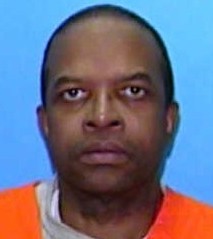
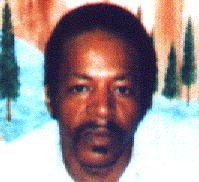
William T. Turner
Murderer Brian Kevin Rosenfeld
Murderer · USA · 1985
Brian Kevin Rosenfeld Brian Kevin Rosenfeld was sentenced to three concurrent l…
23 victims
Brian Kevin Rosenfeld
Murderer · USA · 1985
Brian Kevin Rosenfeld Brian Kevin Rosenfeld was sentenced to three concurrent l…
23 victims
 Marvin Gray
Murderer · USA · 1975
Marvin Gray was convicted killer who claimed responsibility for 23 slayings and…
23 victims
Marvin Gray
Murderer · USA · 1975
Marvin Gray was convicted killer who claimed responsibility for 23 slayings and…
23 victims
 Yahweh ben Yahweh
Murderer · USA · 1980
Yahweh ben Yahweh was born and legally named Hulon Mitchell Jr. (October 27, 19…
23 victims
Yahweh ben Yahweh
Murderer · USA · 1980
Yahweh ben Yahweh was born and legally named Hulon Mitchell Jr. (October 27, 19…
23 victims
 Russell Ellwood
Murderer · USA · 1991
Russell Ellwood was a former taxi driver. Authorities suspected him of killing…
20 victims
Russell Ellwood
Murderer · USA · 1991
Russell Ellwood was a former taxi driver. Authorities suspected him of killing…
20 victims
 Edward Spreitzer
Serial killer · USA · 1981
Edward Spreitzer was sentenced to death on March 20, 1986. His death sentence w…
18 victims
Edward Spreitzer
Serial killer · USA · 1981
Edward Spreitzer was sentenced to death on March 20, 1986. His death sentence w…
18 victims
 Zane Brown Hill
Murderer · USA · 1990
Zane Brown Hill was 62 years old, and he was from Buncombe County. He was execu…
1 victim
Zane Brown Hill
Murderer · USA · 1990
Zane Brown Hill was 62 years old, and he was from Buncombe County. He was execu…
1 victim
 Campo Elías Delgado Morales
Spree killer · Colombia · 1986
Campo Elías Delgado Morales was a Colombian Vietnam War veteran. He lived with…
30 victims
Campo Elías Delgado Morales
Spree killer · Colombia · 1986
Campo Elías Delgado Morales was a Colombian Vietnam War veteran. He lived with…
30 victims
- Gender
- male
- Country
- USA
- Location
- Duval County, Florida, USA
- Date of birth
- J uly 2, 1945
- Age at first offence
- 39
- Characteristics
- parricide
- Victim profile
- H is wife, Shirley Turner, and her roommate, Joyce Brown
- Method of murder
- St abbing with knife
- Date(s) of murder
- July 3, 1984
- Years active
- 1984
- Date of arrest
- Same day
- Status
-
Sentenced to death
Sentenced to death on November 1, 1985
Case record: William T. Turner
Background
William Turner was convicted and sentenced to death for the murder of his wife, Shirley Turner, and her roommate, Joyce Brown. The early morning hours of 07/03/84 involved an intrusion into the home of William Turner’s estranged wife, Shirley Turner, during which their daughter Anetra was present.
Henry Coxe, III, Esq. served as Southwood Attorney for William Turner. Clyde M. Collins, Jr., Esq. served as Attorney for Direct Appeal. James Lohman, Esq. served as Attorney for Collateral Appeals.
The offence
In the early morning hours of 07/03/84, William Turner broke into the home of his estranged wife, Shirley Turner, and stabbed her twenty-two times in front of their daughter Anetra. Joyce Brown, Shirley’s roommate, fled the scene in search of help.
William Turner tracked Joyce Brown down and cornered her in a telephone booth where she was attempting to call 911. Despite Joyce Brown’s pleas, Turner stabbed her fifty-one times, repeatedly shouting, “You’re the one!”
William Turner reportedly believed that his wife and Joyce Brown were involved in a lesbian relationship, and he blamed Joyce for stealing his wife and family. Turner also reportedly believed that his wife was a prostitute.
Investigation
Arrest
On 07/03/84, William Turner was arrested.
Trial
On 07/18/84, William Turner was indicted on:
- Count I: First-Degree-Murder (Shirley Turner)
- Count II: First-Degree-Murder (Joyce Brown)
On 08/17/84, the defendant entered a plea of “not guilty”.
On 08/16/85, the trial jury found the defendant guilty of Counts I & II, as charged in the indictment.
On 08/23/85, upon advisory sentencing, the jury, by a 7 to 5 majority, voted for the death penalty for the murder of Joyce Brown. The jury recommended life imprisonment for the murder of Shirley Turner.
On 11/01/85, the defendant was sentenced as followed:
- Count I: First-Degree Murder (Shirley Turner) – Life
- Count II: First-Degree Murder (Joyce Brown) - Death
Sentencing
Appeals
Direct appeal
On 12/05/85, William Turner filed a Direct Appeal in the Florida Supreme Court appealing his convictions and sentence of death.
Turner argued that he was involuntarily absent during crucial portions of his trial proceedings, specifically that he was entitled to a new trial because he was absent from the voir dire conference and the jury charge conference.
The Florida Supreme Court relinquished jurisdiction over the case and remanded the case to the trial court to determine whether there was validity to Turner’s claims. During an evidentiary hearing on the matter, Turner’s counsel asserted the attorney-client privilege, “[preventing any] disclosure of conversations necessary for a determination of whether Turner waived his absence through counsel or acquiesced in counsel’s waiver.”
Turner further contended that he was entitled to a new trial since the record never showed an affirmative waiver or acquiescence. The Florida Supreme Court pointed out that the only reason that the record did not contain such information was because Turner’s counsel “thwarted the requested evidentiary inquiry.”
The Florida Supreme Court noted that the attorney-client privilege is not absolute and that there are circumstances where the privilege is outweighed in the interest of “the administration of justice.” The case was again remanded to the trial court to determine whether Turner’s presence during voir dire and the jury charge was properly waived.
The trial court found that Turner enjoyed “meaningful participation” in the jury challenge process and that he was not deprived of due process. The Florida Supreme Court found, however, that Turner did not voluntarily waive his right to be present in the jury room during the challenge because he did not have intelligent knowledge of such a right. Nonetheless, the high court determined the error to be harmless because defense counsel had explained the challenge process to Turner, asked him which jurors he would want challenged, and then executed Turner’s will in the jury room.
Regarding Turner’s claim that he was also involuntarily absent during the jury charge, the Florida Supreme Court found that the record showed that Turner knowingly acquiesced to his counsel’s waiver of his right to be present.
In his Direct Appeal, Turner also argued that the trial court erred in allowing an audiotape of Joyce Brown’s 911-telephone call to be admitted as evidence. Turner also claimed that the trial court erred in its application of aggravating circumstances.
The Florida Supreme Court affirmed Turner’s convictions and sentence on 07/07/88.
United States Supreme Court
Turner then filed a Petition for Writ of Certiorari in the United States Supreme Court, which was denied on 02/21/89.
Execution-related proceedings and habeas corpus
On 03/29/90, Governor Bob Martinez signed a death warrant for Turner. Turner filed a Stay of Execution and a limited Petition for Writ of Habeas Corpus. The Florida Supreme Court granted the stay, after which Turner filed an amended Petition for Writ of Habeas Corpus.
In the amended petition, Turner argued the consideration of the contemporaneous murder of his wife as a “prior violent felony” aggravating circumstance. He also claimed ineffective assistance of counsel. The Habeas Petition was denied on 12/24/92.
State post-conviction motion
Turner then filed a 3.850 Motion in the State Circuit Court, which was subsequently denied without an evidentiary hearing. Turner then filed an appeal of that decision in the Florida Supreme Court. The high court affirmed the denial of Turner’s 3.850 Motion on 12/24/92.
Federal habeas corpus
On 07/19/93, Turner filed a Federal Petition for Writ of Habeas Corpus in the United States District Court, Middle District, which was denied on 06/26/02.
Subsequent state post-conviction motion (pending)
On 12/20/02, Turner filed another 3.850 Motion in the State Circuit Court that is currently pending.
Florida Supreme Court habeas petition
Turner filed a Petition for Writ of Habeas Corpus in the Florida Supreme Court on 10/24/03. The petition was denied on 05/04/04.
Outcome
William Turner’s convictions and sentence were affirmed by the Florida Supreme Court on 07/07/88. The United States Supreme Court denied his Petition for Writ of Certiorari on 02/21/89. The federal habeas petition was denied on 06/26/02. The habeas petition in the Florida Supreme Court was denied on 05/04/04. A subsequent 3.850 Motion filed on 12/20/02 in the State Circuit Court remains pending.
Other details
Turner’s sentencing judge was The Honorable John D. William Turner’s case information included DC #099865 and DOB: 07/02/45. The case included Fourth Judicial Circuit, Duval County, Case #84-6504.
Spotted an error, or have more information about this case?