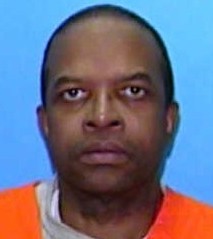
Ralph Turpin
Murderer William Hale
Murderer · USA · 1921
Name: William Hale · Known as: the so-called "King of the Osage Hills" · Occupa…
24 victims
William Hale
Murderer · USA · 1921
Name: William Hale · Known as: the so-called "King of the Osage Hills" · Occupa…
24 victims
 Paul Jaworski
Murderer · USA · 1926
Paul Jaworski was born in Poland as Paul Poluszynski in 1900. He later immigrat…
20 victims
Paul Jaworski
Murderer · USA · 1926
Paul Jaworski was born in Poland as Paul Poluszynski in 1900. He later immigrat…
20 victims
 John S. Williams
Murderer · USA · 1910
John S. Williams was convicted of murder and sentenced to life imprisonment on…
18 victims
John S. Williams
Murderer · USA · 1910
John S. Williams was convicted of murder and sentenced to life imprisonment on…
18 victims
 Edward Adams
Murderer · USA · 1920
Edward J. "Eddie" Adams was born in 1887 on a farm in Hutchinson, Kansas as W.J…
7 victims
Edward Adams
Murderer · USA · 1920
Edward J. "Eddie" Adams was born in 1887 on a farm in Hutchinson, Kansas as W.J…
7 victims
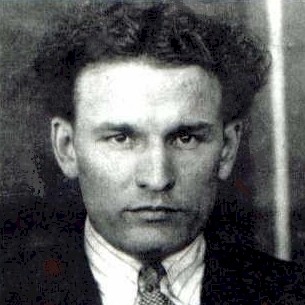 William Kenneth Wagner
Murderer · USA · 1924
William Kenneth (Kinnie) Wagner (born February 18, 1903 in Scott County, VA) wa…
6 victims
William Kenneth Wagner
Murderer · USA · 1924
William Kenneth (Kinnie) Wagner (born February 18, 1903 in Scott County, VA) wa…
6 victims
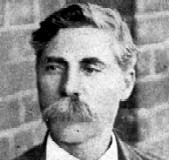 Floyd Allen
Murderer · USA · 1912
Floyd Allen (July 5, 1856 – March 28, 1913) was an American landowner and patri…
5 victims
Floyd Allen
Murderer · USA · 1912
Floyd Allen (July 5, 1856 – March 28, 1913) was an American landowner and patri…
5 victims
 Byron Looper
Murderer · USA · 1998
Byron Looper (also “Byron (Low Tax) Looper”), a former Republican politician in…
1 victim
Byron Looper
Murderer · USA · 1998
Byron Looper (also “Byron (Low Tax) Looper”), a former Republican politician in…
1 victim
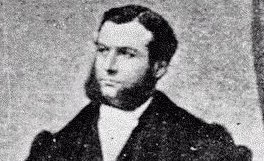 Edmond de la Pommerais
Murderer · France · 1862
Edmond de la Pommerais presented himself as a count and married a woman from a…
2 victims
Edmond de la Pommerais
Murderer · France · 1862
Edmond de la Pommerais presented himself as a count and married a woman from a…
2 victims
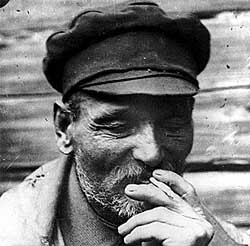 Vasili Komaroff
Serial killer · Russia · 1921
Vasili Komaroff was a horse-trader who maintained a stable at his home in Mosco…
33 victims
Vasili Komaroff
Serial killer · Russia · 1921
Vasili Komaroff was a horse-trader who maintained a stable at his home in Mosco…
33 victims
 Wilbur Lee Jennings
Serial killer · USA · 1981
Wilbur Lee Jennings was a serial killer who was convicted of killing four women…
4 victims
Wilbur Lee Jennings
Serial killer · USA · 1981
Wilbur Lee Jennings was a serial killer who was convicted of killing four women…
4 victims
- Gender
- male
- Country
- USA
- Location
- Oregon/California, USA
- Date of birth
- ???
- Characteristics
- revenge
- Victim profile
- Bill McAllister / A 30-year-old man
- Method of murder
- Shooting
- Date(s) of murder
- August 10, 1917 / February 1942
- Years active
- 1917–1942
- Date of arrest
- —
- Status
-
Imprisoned
Sentenced to life in prison; escaped from the prison farm on October 16, 1920; arrested in February 1942
Background
Ralph Turpin was a mill-hand and a hard-working employee at the Spaulding Lumber Mill near Selma. Bill McAllister was a popular, hard-working mill-hand and a man who would assist a friend or even a stranger in peril.
The offence
Sheriff George W. Lewis arrived at the lumber mill site and found Bill McAllister stretched out on a cot in a tool shed on Aug. 10, 1917. Bill McAllister was shot twice—once in the abdomen and once in the right arm—and had lost a lot of blood. A mill physician told Lewis that McAllister had been shot twice, once in the abdomen and once in the right arm, and that the victim had lost a lot of blood.
McAllister was rushed to the hospital in Grants Pass. Efforts to save him failed, and he died that same day. An autopsy confirmed that McAllister was shot twice with a .22-caliber revolver.
During the subsequent interview after Ralph Turpin’s arrest, Turpin told Lewis and Miller that he had worked for a time at the lumber mill with McAllister, that for the most part they had gotten along well, and that McAllister began criticizing his work. Turpin said he was laid off and felt McAllister had something to do with it. Turpin said he confronted McAllister and accused him of telling the mill foreman about his sub-par work. McAllister denied it, and the two argued bitterly.
Turpin said McAllister knocked him down after Turpin threw a wild, roundhouse punch at him. Turpin said he then sought revenge by watching and waiting in the woods, chain-smoking his hand-rolled cigarettes, until he saw McAllister enter the tool shed. Turpin said he sneaked up on McAllister, opened the shed door, and shot the victim twice.
Investigation
Josephine County Sheriff George W. Lewis knew and respected McAllister. After finding McAllister on the cot in the tool shed, Lewis rounded up his men and immediately began searching the area around the tool shed for clues.
Lewis found the butts of four hand-rolled cigarettes lying on the ground in the woods just behind the tool shed. Lewis was convinced the killer had smoked the cigarettes there while waiting for McAllister to show up for the tool shed. Lewis believed he would need more than this to catch the murderer and to establish a motive.
Lewis and his men interviewed dozens of friends and fellow workers of McAllister in the days and weeks that followed. Some told authorities of previous run-ins McAllister had with local toughs, but further investigation cleared all of these possible suspects.
Frustrated by their lack of progress, Lewis and his Deputies began a countywide search for all persons owning .22-caliber revolvers who also smoked hand-rolled cigarettes, on the chance that someone might come up with a name or two.
Arrest
The owner of a small farm a few miles south of Grants Pass informed deputies that a young man named Ralph Turpin had worked on his farm since early spring. The owner said Turpin left the farm on Friday—the day McAllister’s body was found—to return to California. The farmer said Turpin’s parents wanted him to come home.
The farmer recalled that Turpin had a .22-caliber revolver, a keepsake from his father. That information led Lewis to search Grants Pass-area gun shops and hardware stores for additional tips.
A storekeeper recalled selling ammunition to a young man who also remembered seeing a long, jagged scar on the back of his customer’s neck as he turned to leave the store. The farmer who had hired Turpin, when questioned, told deputies that Turpin did indeed have such a scar on his neck.
Lewis passed the information along to area newspapers, which printed information and a description of the young man with the deep, jagged scar. The sheriff’s office was flooded with phone calls from area residents who recalled seeing such a youth. Callers generally agreed the young man was bound for California based on what he told them.
Lewis suspected the suspect would travel east, towards Klamath Falls, to throw authorities off the track. Lewis notified Klamath County Sheriff George Humphrey to have his men be on the lookout for the suspect. On Aug. 12, just two days after Bill McAllister’s body was found in the old tool shed, Klamath County Deputies arrested Turpin after a traveling salesman dropped him off on a Klamath Falls street corner.
Turpin immediately denied any involvement in McAllister’s death. Turpin claimed to have left the farm where he had been working at 8 a.m. on Aug. 10, and that he had been on the road, hitching rides all day. When questioned about his revolver, Turpin said it had been stolen that night, along with his money, while he was sleeping in a hobo jungle.
Trial
Lewis consulted W. T. Miller, the Josephine County District Attorney. Both agreed that the cigarette butts might be the best evidence they had. Miller came up with an idea: taking one of the cigarette butts found in the woods, Miller pressed his right thumb on a purple ink pad and rolled it lightly around the cigarette butt. Then they had Turpin fingerprinted.
A few minutes later, Miller and Lewis confronted Turpin. They claimed that by using a special, purple-tinted chemical they were able to match Turpin’s fingerprint sample with prints found on the cigarette butt. Miller’s trick worked, and Turpin confessed to the murder of McAllister.
The Josephine County Grand Jury indicted Turpin on Sept. 5, 1917 for second-degree murder. The narrative notes that Oregon had recently abolished capital punishment, the only penalty for first-degree murder. Turpin was convicted and sentenced to life in prison.
Sentencing
Turpin became a model prisoner and was later named a trustee at the prison farm.
Appeals
No appeal information was included.
Outcome
Turpin escaped from the prison farm on Oct. 16, 1920. He remained at large for the next 22 years, using various names and changing his appearance frequently to avoid recognition.
In February 1942, a man answering to the name Robert Jordan was arrested in Salinas, Calif., on a charge of murder after killing a 30-year-old man in a heated argument. Fingerprints uncovered Jordan’s real identity—Ralph Turpin. Turpin was returned to the Oregon State Penitentiary to complete his life term.
Other details
Turpin’s escape was described as an escape from the prison farm on Oct. 16, 1920. Turpin remained at large under various names and with frequent appearance changes to avoid recognition for the next 22 years. Ralph Turpin was arrested on Aug. 12 after being dropped off on a Klamath Falls street corner by a traveling salesman. The cigarette evidence involved butts of four hand-rolled cigarettes found behind the tool shed. The firearm described in the investigation and confession was a .22-caliber revolver. Lewis searched the area around the tool shed immediately after finding McAllister. Miller used a purple ink pad and rolled his thumb around a cigarette butt, then had Turpin fingerprinted. Miller and Lewis claimed a purple-tinted chemical allowed them to match Turpin’s fingerprint sample to prints found on the cigarette butt.

Spotted an error, or have more information about this case?