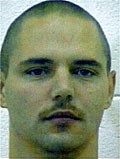
Douglas Christopher Thomas
Homicide Jack Kevorkian
Homicide · USA · 1990
Jack Kevorkian (born May 26, 1928) was a controversial American pathologist. He…
130 victims
Jack Kevorkian
Homicide · USA · 1990
Jack Kevorkian (born May 26, 1928) was a controversial American pathologist. He…
130 victims
 David Koresh
Homicide · USA · 1993
David Koresh (born Vernon Wayne Howell; August 17, 1959 – April 19, 1993) led t…
79 victims
David Koresh
Homicide · USA · 1993
David Koresh (born Vernon Wayne Howell; August 17, 1959 – April 19, 1993) led t…
79 victims
 Todd Hall
Homicide · USA · 1996
Todd Hall was described by neighbors as "mentally slow" and was said to have su…
9 victims
Todd Hall
Homicide · USA · 1996
Todd Hall was described by neighbors as "mentally slow" and was said to have su…
9 victims
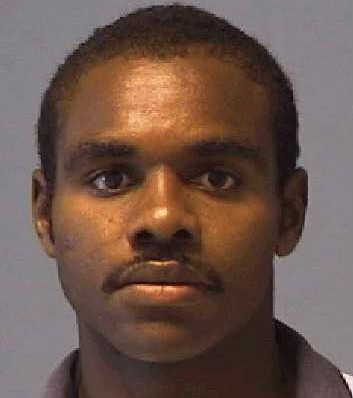 Clinton Bankston
Homicide · USA · 1987
15 August 1987 — Ann Morris (63), her sister Sally Nicholson (59), and Sally’s…
5 victims
Clinton Bankston
Homicide · USA · 1987
15 August 1987 — Ann Morris (63), her sister Sally Nicholson (59), and Sally’s…
5 victims
 Joshua Jenkins
Homicide · USA · 1996
Joshua Jenkins was a 15-year-old American killer who killed five members of his…
5 victims
Joshua Jenkins
Homicide · USA · 1996
Joshua Jenkins was a 15-year-old American killer who killed five members of his…
5 victims
 Deanna Laney
Homicide · USA · 2003
Deanna Laney A jury acquitted Deanna Laney of all charges by reason of insanity…
1 victim
Deanna Laney
Homicide · USA · 2003
Deanna Laney A jury acquitted Deanna Laney of all charges by reason of insanity…
1 victim
 Nikolay Lazukin
Mass murderer · USA · 2012
Nikolay “Nick” Lazukin was a 27-year-old man suspected of killing his wife and…
5 victims
Nikolay Lazukin
Mass murderer · USA · 2012
Nikolay “Nick” Lazukin was a 27-year-old man suspected of killing his wife and…
5 victims
 Brett Hartman
Murderer · USA · 1997
Brett Hartman Brett Hartman’s trial counsel consulted Dr. Siddall for the mitig…
1 victim
Brett Hartman
Murderer · USA · 1997
Brett Hartman Brett Hartman’s trial counsel consulted Dr. Siddall for the mitig…
1 victim
 Pedro Arias
Murderer · USA · 1987
Pedro Arias was convicted of the stabbing death of Herbert J. John Waltrip Jr.,…
1 victim
Pedro Arias
Murderer · USA · 1987
Pedro Arias was convicted of the stabbing death of Herbert J. John Waltrip Jr.,…
1 victim
 Michele Kalina
Murderer · USA · 1996
Michele Kalina pleaded guilty to murder for one of five infants she initially w…
5 victims
Michele Kalina
Murderer · USA · 1996
Michele Kalina pleaded guilty to murder for one of five infants she initially w…
5 victims
 Bennie Eddie Demps
Murderer · USA · 1971
Bennie Eddie Demps was convicted of the September 7, 1976 stabbing death of Alf…
3 victims
Bennie Eddie Demps
Murderer · USA · 1971
Bennie Eddie Demps was convicted of the September 7, 1976 stabbing death of Alf…
3 victims
- Gender
- male
- Country
- USA
- Location
- Middlesex County, Virginia, USA
- Date of birth
- May 29, 1973
- Age at first offence
- 17
- Characteristics
- juvenile (17)
- Victim profile
- Kathy and James B. Wiseman ( the parents of his 14-year-old girlfriend )
- Method of murder
- Shooting
- Date(s) of murder
- November 10, 1990
- Years active
- 1990
- Date of arrest
- Same day
- Status
-
Executed
Executed by lethal injection in Virginia on January 10, 2000
Case information
Defendant: Douglas Christopher Thomas Age at time of offence: 17 Status: Executed by lethal injection in Virginia on January 10, 2000 Residence/where he lived (as described in the case facts): Piankatank Shores in Middlesex County, with his aunt and uncle, Brenda and Herbert Marshall Other people named in relation to the case: Jessica Wiseman (girlfriend; co-defendant in the crime; convicted as a juvenile), Kathy Wiseman (victim), James Baxter (“J.B.”) Wiseman II (victim), Brenda Marshall (aunt of Thomas), Herbert Marshall (uncle of Thomas), Lanie Creech (Mrs. Marshall’s niece), Don F. Rhea (deputy sheriff), Larry A. Johnson (Special Agent, Virginia State Police), Dr. Earl H. Williams, II (clinical psychologist), Dr. Donald Smith (provided survey evidence), Dr. Henry Gwaltney (Commonwealth’s psychological expert), Pierre Sané (Secretary General, Amnesty International), James S. Gilmore (Governor of Virginia)
Timeline
- November 10, 1990 — Kathy and J.B. Wiseman were murdered in their home.
- May 29, 1991 — Trial was set to begin and then continued to August 21, 1991.
- June 26, 1991 — Jessica Wiseman was tried in Juvenile and Domestic Relations Court for Middlesex County, Virginia.
- August 21, 1991 — Upon arraignment, Thomas entered pleas: guilty to first degree murder and use of a firearm for killing Mr. Wiseman; not guilty to capital murder and use of a firearm for killing Mrs. Wiseman.
- November 21, 1991 — A judge upheld the jury’s recommendation for a death sentence.
- November 22, 1991 — Thomas had been on death row since this date.
- June 11, 1998 — A federal district court judge’s memo opined on the record and Jessica Wiseman’s role in instigating Thomas.
- November 1999 — Thomas was scheduled for execution on January 10, 2000 (Virginia Governor James S. Gilmore refused to sign a stay).
- January 7, 2000 — Thomas spoke with Dennis Bernstein by telephone from his death row cell.
- January 10, 2000 — Thomas was executed by lethal injection in Virginia; he made no final statement.
- January 11, 2000 — Dennis Bernstein interview and other contemporaneous reporting appeared.
- January 13, 2000 — Pierre Sané wrote to the Governor of Virginia urging clemency for Steve Roach as well.
Background
Douglas Christopher Thomas was sentenced to death for the November 1990 capital murders of Kathy and J.B. Wiseman. Thomas was 17 years old at the time of the crime.
Thomas had been dating 14-year-old Jessica Wiseman, the daughter of Kathy and “J.B.” Wiseman, for a while before the murders. Their relationship was serious and Jessica’s parents did not approve. The parents pressured Jessica to break up with Thomas, but Jessica was unwilling. Jessica became angry with her parents and stated that she wished they were removed from her life.
In a confession, Thomas stated that he smoked marijuana on his way over to the Wiseman house on the night of the murders and carried with him a shotgun. He said Jessica helped him in the window and that they then arranged some drugs on the floor to make it appear to be an attempted robbery.
Thomas later attempted to suppress the confession, arguing it was involuntary because he was only 17, was a high-school dropout, had slept only two hours in the forty-hour period preceding his interrogation, and was beset by people he thought held great ill will toward him. Thomas argued that the police initiated all conversations and that he felt surrounded by authorities who wanted him to confess.
Thomas also argued that his confession was affected by testimony from Dr. Earl H. Williams, II, a clinical psychologist, about developmentally immature decision-making, inability “to make decisions at an adult level,” functioning “at the ‘lower end of the`average range of intellectual function,’” and sleep deprivation. Thomas concluded:
“It is unreasonable to believe,” Thomas concludes, “that under these circumstances [his] confession ... was obtained by anything other than coercion and duress.”
The trial court denied his motion to suppress the confession and it was admitted as evidence.
Thomas argued he should have been granted a change of venue due to the vast amount of pre-trial publicity. Dr. Donald Smith testified that he administered a random survey and found that between 96.3% and 99.3% of the “small population of Middlesex County readily recognized” the Thomas case. Dr. Smith testified further that, of those surveyed, 38.7% expressed the opinion that Thomas was guilty, 1.4% thought he was innocent, and 59.8% expressed no opinion. Dr. Smith opined that between 35% and 57% of those expressing no opinion were “contaminated,” meaning they were “more likely to convict than those who [were not subjected to the pretrial publicity].” However, the Commonwealth produced contrary evidence and the trial court agreed with the Commonwealth, permitting the trial to remain in Middlesex County.
The appellate court denied Thomas’ appeal and upheld his death sentence.
The offence
On November 10, 1990, James Baxter Wiseman (“J.B.”) and Kathy Wiseman were murdered in their home in Middlesex County, Virginia. The murders occurred in the early morning hours of that day.
Thomas lived at Piankatank Shores in Middlesex County with his aunt and uncle, Brenda and Herbert Marshall. Lanie Creech, Mrs. Marshall’s twelve-year-old niece, also lived in the home.
Thomas had a “very intimate” relationship with 14-year-old Jessica Wiseman, who lived with her parents, “J.B.” and Kathy Wiseman, several blocks from the Marshall residence. Jessica’s parents threatened to break up the relationship. Mrs. Wiseman made Jessica “give [Thomas’s] class ring” back. Some three months before the murders, Jessica was heard to say that she “wished to get rid of [her parents].”
Lanie Creech overheard conversations between Thomas and Jessica in which they discussed “getting rid of her parents.” Lanie testified that Jessica asked Thomas “if he had enough bullets,” and Thomas replied in the affirmative. Lanie testified that Jessica asked “what time he should come over,” and she replied “midnight.” Lanie also stated that Jessica said that “if the window is down to go away ... it’s off” but “if the window is up to come on in.”
On Thursday evening, Lanie asked Thomas why he was “so nervous.” Thomas replied that he “to kill two people, and that he was real nervous.”
On Friday evening, just before midnight, Lanie observed Thomas putting on camouflage clothing and seeing that he had a shotgun. Thomas told Lanie that the plan was that “after the shootings were over,” he was to return home, “go in through his window and act like he was sleeping.” Jessica would then come and “bang on the door.”
Thomas and Lanie walked to a nearby recreation area. Thomas smoked some “pot” and told Lanie he was “going over to Jessica’s ... [t]o kill two people.” Lanie carried the shotgun. They walked to a point a few hundred feet away from Jessica’s house. Lanie then returned home.
Later, Mrs. Marshall was awakened by someone “banging on the door.” Lanie opened the door and Jessica ran straight to Mrs. Marshall’s bedroom, screaming that “someone had shot her father and that her mother was dead.”
Thomas was in his bedroom. Mrs. Marshall asked him to “get dressed” and comfort Jessica while she called “the authorities.”
Investigation
Don F. Rhea, deputy sheriff of Middlesex County, was dispatched to the Wiseman home and arrived on the scene at 4:27 a.m. He entered through the unlocked front door and discovered the bodies of Mr. and Mrs. Wiseman.
Later in the day, Special Agent Larry A. Johnson of the Virginia State Police conducted two interviews with Thomas at the Marshall house. In the second interview, Thomas confessed to killing Mr. and Mrs. Wiseman.
Arrest / interrogation
Special Agent Larry A. Johnson conducted interviews with Thomas at the Marshall house, and in the second interview Thomas confessed to killing Mr. and Mrs. Wiseman.
Thomas later sought to suppress that confession, arguing it was involuntary and that his confession was obtained by coercion and duress due to his age, sleep deprivation, the interrogation circumstances, and Dr. Earl H. Williams, II’s testimony about developmentally immature decision-making affecting waiver of Miranda rights.
Trial
Juvenile proceedings involving the co-defendant
Jessica Wiseman was tried separately as a juvenile. She was born on July 26, 1976, and was fourteen years old at the time of her crimes.
Her murder charge was not transferred to Circuit Court. She was tried in the Juvenile and Domestic Relations Court for Middlesex County, Virginia on June 26, 1991. She was convicted of both murders and committed to the Virginia Department of Youth Corrections until her 21st birthday, which was July 26, 1997. She was released from state custody and was living in Virginia.
On August 23, 1991, Jessica was called as a witness in the Petitioner’s case and refused to testify, citing her right against self-incrimination. The Court allowed Jessica to invoke her privilege against self-incrimination, and counsel for the Petitioner did not object.
Transfer and indictment
Thomas waived both a preliminary hearing and a transfer hearing. As a result, the matter was transferred to Circuit Court.
On January 28, 1991, Thomas was indicted for four offenses: first degree murder in the killing of James Baxter Wiseman II, capital murder in the killing of Kathy J. Wiseman as part of the same act or transaction of killing James Baxter Wiseman II, and two offenses of using a firearm in the killing of the victims.
A trial on all four charges was set for May 29, 1991, and then continued to August 21 of the same year.
Pleas and first phase findings
Upon arraignment on August 21, 1991, Thomas entered pleas of guilty to the charges of first degree murder and use of a firearm in the killing of Mr. Wiseman and pleas of not guilty to the charges of capital murder and use of a firearm in the killing of Mrs. Wiseman.
In the first phase, the jury convicted Thomas of capital murder and use of a firearm in the commission of the killing of Kathy Wiseman and fixed punishment on the weapons charge at four years in the penitentiary.
Second phase: capital punishment
In the second phase, the jury fixed Thomas’s punishment for capital murder at death, based upon a finding of “vileness.”
After receipt of the report of a probation officer, the trial court held a sentencing hearing and imposed the sentences fixed by the jury in the death of Mrs. Wiseman. At the same hearing, the court sentenced Thomas to sixty-five years’ imprisonment for the first degree murder of Mr. Wiseman and two years’ imprisonment for the use of a firearm in that killing.
At November 21, 1991, a judge upheld the jury’s recommendation for a death sentence.
Thomas later argued for suppression of his confession and for change of venue. The trial court denied the motion to suppress the confession and agreed with the Commonwealth regarding venue, allowing the trial to remain in Middlesex County.
Sentencing
Thomas was sentenced to death for the November 1990 capital murders of Kathy and J.B. Wiseman. He was also sentenced to sixty-five years’ imprisonment for the first degree murder of Mr. Wiseman and two years’ imprisonment for use of a firearm in that killing, in the same sentencing hearing where the death sentence was imposed for the capital murder of Mrs. Wiseman.
Thomas argued that his confession was involuntary. The trial court denied suppression and admitted the confession. Thomas also argued for a change of venue due to pre-trial publicity; the trial court denied it based on evidence from the Commonwealth contradicting Dr. Donald Smith’s survey.
Appeals
The trial court denied Thomas’ motion to suppress the confession and the confession was admitted as evidence.
Thomas appealed, including arguments about the confession and the denial of a change of venue.
Thomas’ death sentence was reviewed automatically, and his appeal of his capital murder conviction was consolidated with that review.
The U.S. Supreme Court later turned down an appeal contending that an international treaty prohibits executing juveniles.
Outcome
Douglas Christopher Thomas was executed by lethal injection in Virginia on January 10, 2000.
Thomas made no final statement.
At the time of the execution, Thomas was 26. He had spent his entire adult life on death row and had been on death row since November 22, 1991.
In an interview with Dennis Bernstein of Pacific News Service, Thomas said he was prepared to die and stated:
“The whole process that you go through while being on death row prepares you to die,” he said, “because you’re faced with death every day. If it is God’s will that I die at 26, then I’m prepared to do.”
Thomas also stated:
“What I did when I was 17 was wrong, and yes I should be punished. But to pay the ultimate price while my co-defendant, who is just as guilty as I am, has been released to go on with a normal life ... is a little extreme.”
Thomas expressed that he was troubled that his girlfriend was given seven years and released, while he was four days away from execution.
Aftermath / post-execution materials included in the record
Amnesty International letter to the Governor of Virginia
Pierre Sané, Secretary General, Amnesty International, wrote to Governor James Gilmore urging clemency and referring to the execution of Douglas Christopher Thomas. The letter began:
“Amnesty International very deeply regrets that you allowed the execution of Douglas Christopher Thomas to proceed on 10 January 2000 in violation of international law banning the use of the death penalty against child offenders -- those who commit crimes when under 18 years old.”
The letter urged clemency for Steve Roach as well and included a quotation attributed to Governor Gilmore:
“....it has been asserted that the International Covenant on Civil and Political Rights prohibits the Commonwealth from executing Thomas because he was 17 years old at the time he murdered Mr. and Mrs. Wiseman. Although the United States Senate ratified this treaty on April 2, 1992, it expressly conditioned its ratification on the continued right of states to impose the death penalty on murderers under the age of 18 years. Both the Virginia Supreme Court and the United States Supreme Court have rejected Thomas' claim that the treaty bars his execution.”
The letter also stated that the UN Human Rights Committee and others had stated the reservation should be withdrawn and described objections by 11 countries. It further stated:
“As you may recall, prior to the previous scheduled execution of Chris Thomas on 16 June 1999, the UN High Commissioner for Human Rights appealed to you to stop the execution and "reaffirm the customary international law ban on the use of the death penalty on juvenile offenders".”
The letter included the claim that only five countries outside the USA had executed child offenders in the past decade and included a list: Iran, Nigeria, Pakistan, Saudi Arabia and Yemen. It also included a quotation:
“I’m pleased to report to you that the state of the commonwealth is excellent, in fact, has never been better.”
It included another quotation:
“The tourism initiatives that I have proposed will open the doors to our vast wealth of history, beauty and culture. And in doing so, we will reap tremendous economic benefits, and we will also tell our fellow citizens across America and people around the world the inspiring story of who we are and how we came to be Virginians.”
The letter concluded with:
“Yours sincerely Pierre Sané, Secretary General, Amnesty International”
Statements and material included in the record about clemency and legal issues
A clemency petition narrative included claims that Jessica Wiseman was the “mastermind and motivating force” behind the crime, that the record supported that conclusion, and that the Governor’s intervention was requested to commute Thomas’ death sentence. The narrative also included quotes attributed to a federal district court judge:
“The record strongly supports the conclusion that it was Jessica Wiseman who wanted her parents killed and who instigated Thomas to carry out her wishes.”
It also included a quoted observation attributed to the Supreme Court of Virginia:
“Some three months before the murders occurred, Jessica was heard to say that she ‘wished to get rid of [her parents].’”
It included a quote attributed to the United States Court of Appeals for the Fourth Circuit:
“murdered the Wisemans at the behest of their daughter, Jessica[.]”
The clemency narrative included a request that Thomas’ sentence be commuted and included the statement:
“Chris requests that he be granted clemency and his sentence commuted.”
Claims about confession and responsibility
One portion of the record included that Thomas “initially took the blame” for the double murder, that he confessed without advice of counsel and while he was high on drugs and alcohol, and that he later reiterated his claim that Jessica Wiseman “masterminded the 1990 murder” and “fired the shot that killed her mother.”
Statements attributed to Thomas in communications and interviews
The record included Thomas’ statement in a discussion of his state of mind and preparation to die: he stated he had searched for “finality,” was happy for his family when a stay was issued, and that he knew he would have to go through the process again.
The record included that Thomas listed things he would do if set free, including:
“The very first thing I would do would be to go to church, get down on my hands and knees and thank God because it would truly be a miracle.”
It also included: “The second thing would be to try to put all this behind me and try to get some normalcy back in my life. Try to get a job. Try to do something positive -- maybe join the military for the discipline, the adventure, the traveling and the camaraderie.”
It included that Thomas earned his GED and reestablished family ties, including with his estranged dad, and that his father visited him in prison during a visit in June when Thomas came down to Greenville for the execution.
Additional material about other execution dates in the record
The record included mention that Thomas was the first of three death row inmates scheduled to die that month for crimes committed when they were minors: Steve Edward Roach in Virginia on Jan. 13 and Glen Charles McGinnis in Texas on Jan. 25.
The record also included a description of a date “June 16th” in connection with clemency efforts and an “Imminent Execution Scheduled June 16, 1999” narrative, as well as related claims about a stay of execution in June (in that narrative).
Other details
Co-defendant’s additional testimony and later claims in the record
The record included statements that, in later years, women who had been held in juvenile facilities said that Jessica Wiseman admitted killing her mother; Wiseman “strongly denied any involvement.” It also included a claim from a third woman that while the women were held at Keller Hall (Bon Air Learning Center), Jessica admitted killing her mother and that Chris took the rap.
A statement attributed to that third woman (name only “Carli”) was included in the record:
“Jessica was complaining because she was being called a 'killer,' so a group session was held at Keller Hall to address her concerns,” claimed the 3rd woman in an affidavit forwarded to Gov. Jim Gilmore's office yesterday.
The record stated that Carli was a 22-year-old inmate at Fluvanna Correctional Center for Women and that she was serving a 6-year sentence for attempted maiming and use of a firearm.
Additional legal and sentencing descriptors included in the record
The record included that the jury’s second phase death recommendation was based upon a finding of “vileness.”
The record included that Thomas waived both a preliminary hearing and a transfer hearing, leading to transfer to Circuit Court.
The record included that Thomas’ appeal was based on an international agreement prohibiting executing juveniles, and that the justices turned down the appeal.
Victims’ details as stated
Kathy Wiseman was murdered and was the victim of the capital murder conviction. James Baxter (“J.B.”) Wiseman II was murdered and was the victim of the first degree murder conviction. Both victims were described as 33 years old in the record.
Spotted an error, or have more information about this case?