
Gregory Ruseau
Murderer Russell Ellwood
Murderer · USA · 1991
Russell Ellwood was a former taxi driver. Authorities suspected him of killing…
20 victims
Russell Ellwood
Murderer · USA · 1991
Russell Ellwood was a former taxi driver. Authorities suspected him of killing…
20 victims
 Robert Martines Perez
Murderer · USA · 1994
Name: Robert Martines Perez · Other name used in proceedings: Robert Martinez P…
15 victims
Robert Martines Perez
Murderer · USA · 1994
Name: Robert Martines Perez · Other name used in proceedings: Robert Martinez P…
15 victims
 Billy Frank Vickers
Murderer · USA · 1993
Billy Frank Vickers Vickers was executed by lethal injection in Texas on Januar…
14 victims
Billy Frank Vickers
Murderer · USA · 1993
Billy Frank Vickers Vickers was executed by lethal injection in Texas on Januar…
14 victims
 Warren Eugene Bridge
Murderer · USA · 1980
February 10, 1980 — Warren Eugene Bridge was convicted for the robbery and shoo…
1 victim
Warren Eugene Bridge
Murderer · USA · 1980
February 10, 1980 — Warren Eugene Bridge was convicted for the robbery and shoo…
1 victim
 Alexandra Tobias
Murderer · USA · 2010
Alexandra Tobias was 22 when she pleaded guilty and was sentenced to 50 years i…
1 victim
Alexandra Tobias
Murderer · USA · 2010
Alexandra Tobias was 22 when she pleaded guilty and was sentenced to 50 years i…
1 victim
 Henry Curtis Jackson
Mass murderer · USA · 1990
Henry Curtis Jackson, Jr. was convicted in the Leflore County Circuit Court in…
4 victims
Henry Curtis Jackson
Mass murderer · USA · 1990
Henry Curtis Jackson, Jr. was convicted in the Leflore County Circuit Court in…
4 victims
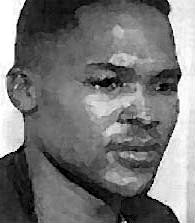 Velaphi Ndlangamandla
Serial killer · South Africa · 1998
Velaphi Ndlangamandla, known as the “saloon killer”, was convicted in connectio…
19 victims
Velaphi Ndlangamandla
Serial killer · South Africa · 1998
Velaphi Ndlangamandla, known as the “saloon killer”, was convicted in connectio…
19 victims
- Gender
- male
- Country
- USA
- Location
- Harris County, Texas, USA
- Date of birth
- October 11, 1969
- Age at first offence
- 32
- Characteristics
- robbery
- Victim profile
- James Syvertson, 75 (auto mechanic)
- Method of murder
- Beating
- Date(s) of murder
- May 30, 2001
- Years active
- 2001
- Date of arrest
- —
- Status
-
Sentenced to death
Sentenced to death on October 15, 2002
Case details
Gregory Russeau (Gregory Lynn Russeau, “Gregory Russeau, Appellant”) was received on 10/15/2002 at age 33. His date of birth was 10/11/1969. His education level was 10. He was a black male with black hair, 5 ft 11 in height, 299 lb weight, and brown eyes. His prior occupation included “Smith Texas barber, kitchen, laborer.”
Timeline
- 05/30/2001 — In Tyler, Russeau struck a 75-year-old white male numerous times in the head causing his death; Russeau also took the victim’s wallet and a vehicle from the victim’s place of business.
- 10/15/2002 — A Smith County jury found Gregory Russeau guilty of capital murder of James Syvertson and, after answering three statutory special issues, required the trial court to assess his punishment at death.
- June 2005 — The Court of Criminal Appeals affirmed the trial court’s judgment as it related to appellant’s conviction, reversed it as it related to appellant’s punishment, and remanded the case to the trial court for a new punishment hearing.
- April 2007 — The trial court held a new punishment hearing before a new Smith County jury, and again assessed appellant’s punishment at death.
- July 1, 2009 — The Court of Criminal Appeals delivered the opinion in the appeal from the second punishment hearing and affirmed the trial court’s judgment.
- October 15, 2002 — Sentenced to death.
The offence
On 05/30/2001, Russeau committed capital murder by burglarizing a 75-year-old white male’s auto repair shop in Tyler and then killing him by crushing his skull with a blunt instrument. The incident involved striking the victim “numerous times in the head causing his death,” and also taking the victim’s wallet and a vehicle from the victim’s place of business.
The Court of Criminal Appeals described the jury’s guilty finding as capital murder under Tex. Pen. Code § 19.03(a)(2).
Investigation
The legal opinion described that, at the second punishment hearing, the State presented 62 witnesses and numerous exhibits. The State’s witnesses included:
- two Tyler police officers,
- a Longview police officer,
- an FBI special agent,
- a forensic DNA specialist,
- two forensic fingerprint specialists,
- ten present and former guards at the Smith County Jail,
- twenty present and former guards in the Texas prison system,
- two psychiatrists,
- a psychologist,
- and a former Dallas County medical examiner.
The State’s exhibits consisted mostly of official records from various Smith County courts.
Appellant’s lone witness was a Tyler police officer, whose testimony was presented in an effort to cast doubt upon appellant’s guilt of Syvertson’s murder.
Prior record and background
Russeau had a prior prison record:
- #491665, 10/06/1988 — a ten-year sentence for Burglary of a Habitation, Engaging in Organized Criminal Activity, Theft, Attempted Burglary of a Building.
- 08/07/1991 — released on parole.
At the second punishment hearing, the State presented evidence of multiple prior felony and misdemeanor offenses, including:
- April 4, 1987 — attempted burglary of a building (when appellant was seventeen years old);
- February 11, 1988 — burglary of a habitation;
- May 13, 1988 — felony theft;
- May 16, 1988 — burglary of a habitation;
- May 17, 1988 — burglary of a habitation;
- May 23, 1988 — burglary of a habitation;
- June 27, 1988 — engaging in organized criminal activity;
- May 6, 1997 — misdemeanor theft;
- December 12, 1997 — possession of a controlled substance (felony);
- September 14, 2000 — misdemeanor burglary of a vehicle;
- May 30, 2001 — capital murder by burglarizing 75-year-old James Syvertson’s auto repair shop in Tyler and then killing him by crushing his skull with a blunt instrument.
At the time he killed Syvertson, appellant was described as a chronic abuser of “crack” cocaine.
The State also presented testimony that, while incarcerated in the Smith County Jail and in the Texas prison system at various times in the 1990’s and 2000’s, appellant committed numerous serious infractions of the rules of conduct, and the opinion noted the State’s psychiatric evidence.
The State presented the testimony of two psychiatrists and one psychologist: Drs. Tynus McNeel and Edward Gripon, and Dr. Sue Stone. All three testified that evaluation of future dangerousness was within their professional training and expertise, and that, in light of appellant’s criminal and prison records and the extreme nature of the instant offense, their professional opinion was that he would probably be a future danger. The burden of proving beyond a reasonable doubt that the answer to the first special issue was “yes” was described as on the State.
Trial
Parties and court
The appeal was in the Court of Criminal Appeals of Texas, No. 74,466:
- Gregory Russeau, Appellant
- V. The State of Texas
It was an appeal “ON DIRECT APPEAL IN CAUSE NO. 114-0750-02 FROM THE 114TH JUDICIAL DISTRICT COURT SMITH COUNTY.”
The opinion stated: Holcomb, J., delivered the opinion; Keller, P.J., Meyers, Price, Womack, Hervey, and Cochran, JJ., joined. Johnson, J., joined except as to issue number seventeen, in which she concurred. Keasler, J., concurred.
Guilt phase and capital sentencing special issues
The opinion stated that in October 2002, a Smith County jury found appellant guilty of the capital murder of James Syvertson under Tex. Pen. Code § 19.03(a)(2). The jury answered three statutory special issues, and the trial court was required to assess appellant’s punishment at death. The three special issues were:
- “Is there a probability that the defendant, Gregory Russeau, would commit criminal acts of violence that would constitute a continuing threat to society?”
- “Did the defendant, Gregory Russeau, actually cause the death of the deceased or did not actually cause the death of the deceased but intended to kill the deceased or another or anticipated that a human life would be taken?”
- “Taking into consideration all of the evidence, including the circumstances of the offense, the defendant's character and background, and the personal moral culpability of the defendant, is there sufficient mitigating circumstance or circumstances to warrant that a sentence of life imprisonment rather than a death sentence be imposed?”
In June 2005, the Court of Criminal Appeals affirmed as to conviction, reversed as to punishment, and remanded for a new punishment hearing.
In April 2007, the trial court held a new punishment hearing before a new Smith County jury. At the conclusion of that hearing, the trial court again assessed appellant’s punishment at death in accordance with the jury’s answers to the three special issues.
Appeals
On direct appeal from the second punishment hearing, appellant brought seventeen issues, rearranged for discussion. The opinion addressed them as follows in substance:
- Issues numbers one and two challenged sufficiency to support the conviction; the opinion held they presented nothing for review due to limits on appeal after remand for punishment issues, and the issues were overruled.
- Issue number seventeen argued the evidence at the second punishment hearing was legally insufficient to support the jury’s affirmative answer to the first special issue concerning future dangerousness; the opinion overruled it.
- Issue number three argued the trial court erred by failing to define “probability” in the first special issue; the opinion overruled it.
- Issue number four argued the trial court erred by failing to define “criminal acts of violence”; the opinion overruled it.
- Issue number five argued the trial court erred by failing to define “militates”; the opinion overruled it and quoted the trial court’s instruction:
- Issue number six argued the trial court erred by failing to define “continuing threat to society”; the opinion overruled it.
- Issue number seven argued the jury instruction violated constitutional provisions because it did not limit the scope of militating evidence as claimed; the opinion overruled it.
- Issue number eight argued the trial court failed to instruct that guilt-finding in phase one did not foreclose consideration of mitigating evidence; the opinion overruled it.
- Issue number nine argued the trial court failed to instruct about no presumption in favor of death and independent consideration of special issue number three; the opinion overruled it.
- Issue number ten argued the trial court failed to provide a vehicle for a life verdict if aggravating factors existed but were not severe enough for death; the opinion overruled it.
- Issue number eleven argued the trial court erred by refusing to preclude the death penalty or quash the indictment because a grand jury allegedly had not considered and alleged facts essential to conviction and death sentence; the opinion overruled it.
- Issue number twelve argued the Texas death penalty statute was unconstitutional for failure to provide meaningful appellate review of sufficiency for the jury’s negative answer to the third special issue; the opinion overruled it.
- Issues numbers sixteen and sixteen-a argued the trial court erred in admitting psychiatric evidence of future dangerousness without a Daubert hearing; the opinion overruled them and described that at the first punishment hearing the trial court had held a “ Daubert hearing ”, and at the second punishment hearing the defense counsel sought to re-urge it while the trial court stated it had taken judicial notice of prior proceedings and would “maintain the same rulings.” The opinion quoted the exchange:
Defense Counsel: Judge, in our last trial, we had a Daubert hearing. We want to re-urge that Daubert hearing, and there's nothing to add to it. I guess the Court can take judicial notice of it.
The Court: I've taken judicial notice of all the prior proceedings and will as to the rulings with respect to that. Okay. Maintain the same rulings.
Defense Counsel: Yes, Your Honor. Thank you.
“In deliberating on Special Issue No. 1 and Special Issue No. 2 submitted in this charge, the jury shall consider all evidence admitted at the guilt or innocence stage and the punishment stage of this trial, including evidence of the defendant's background or character or the circumstances of the offense that militates for or mitigates against the imposition of the death penalty.”
- Issue number eighteen argued an instructional constitutional attack on the “10-12 rule”; the opinion overruled it.
- Issue number nineteen argued the statute’s failure to inform the jury that a single holdout would result in automatic life sentence violated constitutional provisions; the opinion overruled it.
The opinion concluded: “Having found no reversible error, we affirm the judgment of the trial court.”
The opinion stated: “DELIVERED: JULY 1, 2009. PUBLISH.”
Outcome
The Court of Criminal Appeals affirmed the trial court’s judgment after finding no reversible error in the appeal from the second punishment hearing.
Sentencing
After the second punishment hearing, the trial court “again assessed appellant's punishment at death” in accordance with the jury’s answers to the three special issues. The status recorded the sentence as “Sentenced to death on October 15, 2002.”
Other details
Special issue burden standard described
The opinion stated that:
- the State had the burden of proving beyond a reasonable doubt that the answer to the first special issue was “yes,” and
- there is a probability that appellant, if allowed to live, would commit criminal acts of violence constituting a continuing threat to people and property.
Appellant’s arguments summarized for issue seventeen
For issue number seventeen, the opinion summarized appellant’s arguments, including these verbatim excerpts:
- “There [was] no evidence that [he] was on drugs [at the time of the murder], that the robbery had been planned in advance, or that the killing of Mr. Syvertson was particularly brutal.”
- “There [was] no evidence that he attempted to resist arrest or harm the [arresting] officers [or even] elude [them].”
- “All of [his] prior crimes were crimes against property, not crimes of violence.”
- “The State's psychiatric evidence was deserving of little weight because it lacked "a scientific basis."”
- “Appellant's disciplinary record in prison show[ed] a decrease [over time] in the number and severity of disciplinary actions taken against him.”
Appellant’s planned issues on appeal (procedural detail)
The opinion stated that “Appellant’s issues are numbered 1 through12, 16, 16A, and 17 through 19,” and noted: “From our reading of appellant's brief, it appears that he originally planned to have issues that were numbered 13, 14, and 15 but that he ultimately decided not to assert those issues.”
Separate post-conviction matter included in the text
The scraped content also included a separate habeas corpus application, in the Court of Criminal Appeals no. “AP-76,102 Ex parte Gregory Lynn Smith” (not Gregory Russeau), delivered by Womack, J., with judges joined as stated. That matter concerned an applicant seeking relief from “a conviction for unlawful possession of firearm” and included details about an indictment alleging possession of a firearm “on or about September 6, 2006,” deferred-adjudication community supervision for a second-degree felony, guilty plea, and sentencing to maximum punishment of ten years in prison concurrently with a 20-year sentence in the controlled-substance case after adjudicating the defendant guilty. It described that relief was denied and was delivered September 30, 2009, and included discussion of claims of insufficient evidence, ineffective assistance of counsel, and unknowing and involuntary plea, along with analysis of whether deferred adjudication qualified as “convicted” under Section 46.04. The text quoted legal standards and included statutory excerpts; it also included citations listed as notes.


Spotted an error, or have more information about this case?