Laron Ronald Williams
Murderer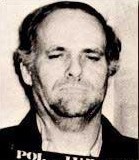 Ervil LeBaron
Murderer · USA · 1972
Ervil Morrell LeBaron (1925 to August 16, 1981) was the leader of a polygamous…
35 victims
Ervil LeBaron
Murderer · USA · 1972
Ervil Morrell LeBaron (1925 to August 16, 1981) was the leader of a polygamous…
35 victims
 Brian Kevin Rosenfeld
Murderer · USA · 1985
Brian Kevin Rosenfeld Brian Kevin Rosenfeld was sentenced to three concurrent l…
23 victims
Brian Kevin Rosenfeld
Murderer · USA · 1985
Brian Kevin Rosenfeld Brian Kevin Rosenfeld was sentenced to three concurrent l…
23 victims
 Marvin Gray
Murderer · USA · 1975
Marvin Gray was convicted killer who claimed responsibility for 23 slayings and…
23 victims
Marvin Gray
Murderer · USA · 1975
Marvin Gray was convicted killer who claimed responsibility for 23 slayings and…
23 victims
 Yahweh ben Yahweh
Murderer · USA · 1980
Yahweh ben Yahweh was born and legally named Hulon Mitchell Jr. (October 27, 19…
23 victims
Yahweh ben Yahweh
Murderer · USA · 1980
Yahweh ben Yahweh was born and legally named Hulon Mitchell Jr. (October 27, 19…
23 victims
 James Holmes
Mass murderer · USA · 2012
James Eagan Holmes (born December 13, 1987) was the admitted perpetrator of a m…
12 victims
James Holmes
Mass murderer · USA · 2012
James Eagan Holmes (born December 13, 1987) was the admitted perpetrator of a m…
12 victims
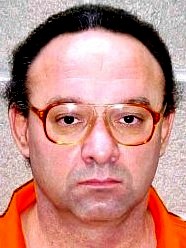 Joseph Wood
Murderer · USA · 1989
Joseph Wood was an Arizona state prisoner who was sentenced to death on July 2,…
2 victims
Joseph Wood
Murderer · USA · 1989
Joseph Wood was an Arizona state prisoner who was sentenced to death on July 2,…
2 victims
 Andrew Yellowbear
Murderer · USA · 2004
Andrew John Yellowbear Jr. (born September 5, 1974) was the defendant in a Wyom…
1 victim
Andrew Yellowbear
Murderer · USA · 2004
Andrew John Yellowbear Jr. (born September 5, 1974) was the defendant in a Wyom…
1 victim
 Igor Suprunyuck
Serial killer · Ukraine · 2007
Name: Igor Suprunyuck · Also known as (Ukr): Ігор Супрунюк · Also known as (Rus…
21 victims
Igor Suprunyuck
Serial killer · Ukraine · 2007
Name: Igor Suprunyuck · Also known as (Ukr): Ігор Супрунюк · Also known as (Rus…
21 victims
 Benjamin Ritchie
Murderer · USA · 2000
Benjamin Ritchie was a defendant in a case involving the death of a law enforce…
1 victim
Benjamin Ritchie
Murderer · USA · 2000
Benjamin Ritchie was a defendant in a case involving the death of a law enforce…
1 victim
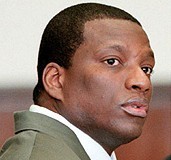 Alfred Gaynor
Serial killer · USA · 1995
Alfred Gaynor was a serial killer from western Massachusetts who was convicted…
9 victims
Alfred Gaynor
Serial killer · USA · 1995
Alfred Gaynor was a serial killer from western Massachusetts who was convicted…
9 victims
- Gender
- male
- Country
- USA
- Location
- Tennessee, USA
- Date of birth
- 1949
- Age at first offence
- 29
- Characteristics
- escape, robbery, to avoid arrest
- Victim profile
- Tera L. Wedlaw (prostitute) / Rev. John Jay Jackson, 35 (Roman Catholic priest) / Memphis police lieutenant Clarence P. Cox
- Method of murder
- Shooting
- Date(s) of murder
- 1978 / 1981
- Years active
- 1978–1981
- Date of arrest
- May 17, 1981
- Status
-
Fatally beaten by other inmates on July 7, 1985
Background
Laron Ronald Williams was convicted and sentenced to ten years in prison for the murder of a Nashville prostitute. He escaped from the Memphis Correctional Center in April 1981.
Before his arrest, Williams shot and killed Memphis police lieutenant Clarence Cox. While a fugitive from prison on that charge, Williams moved on to murder a Catholic priest, Rev. John Jackson, in Jackson, Tennessee.
Williams was unarmed when officers surrounded him in a coffee shop next to his motel. After his arrest, he was returned to prison pending trial on new charges of first-degree murder.
The offence
Father John Jay Jackson was found dead inside the rectory of St. Mary’s Catholic Church in Jackson, Tennessee.
The pockets of Father Jackson’s clothing were pulled out, and coins were scattered on the floor of the den and in the hallway. A sliding glass door which opened onto a screened-in porch had been shattered. Scattered papers and an overturned potted plant on a coffee table indicated there had been a struggle. In addition, the drawers of a desk located in the bedroom area of the rectory had been pulled out and thrown on top of the desk with their contents in disarray.
Outside, the footprints of someone wearing tennis shoes led from the rectory to a nearby dumpster, then across the Highway 45 Bypass to a building called Watkins Tower.
The pathologist and medical examiner testified that Father Jackson died between 8:00 and 8:30 p.m. on Thursday, May 14. The autopsy revealed he died as a result of a gunshot wound to the back of the right shoulder. There was a second, nonfatal gunshot wound in the left shoulder.
Scrapes on the body indicated the priest had struggled with his assailant, and lacerations on the priest’s head were consistent with blows from a blunt instrument such as a gun.
On Thursday night, May 14, Father Jackson ate dinner with the Timby family and left between 8:00 and 8:10 p.m. It took approximately three minutes to walk from the Timby residence to the rectory.
Police later found a cardboard box containing two coins just off the corner of the Watkins Tower parking lot, across the Bypass from St. Mary’s Manor.
Investigation
Ed Bendoski, a resident of St. Mary’s Manor, a home for retired persons located next to the rectory, testified that at 8:22 p.m. on the evening of May 14, he and his wife looked outside the window of an eighth floor lounge at the manor, which faces the Highway 45 Bypass. They saw a car parked in the southwest corner of the parking lot of Watkins Tower across the highway from the Manor. Because it was unusual to see a car parked in that area after business hours, Bendoski and his wife proceeded to their apartment located on the eighth floor of the manor.
At approximately 8:24 p.m., while looking from a window in the hallway of the eighth floor, Bendoski saw a tall black man approach the dumpster located on the ground. The man lifted up both of the lids to the dumpster, took a box out of the dumpster, reached under his belt or shirt and then placed something into the box. Then he walked “in a big hurry” toward the bypass.
Bendoski testified that at the time he saw the man, it was dusk. However, the area surrounding St. Mary’s Manor, from the dumpster to the highway, was well lighted and was illuminated at the time he saw the man. As Bendoski stood 50 to 55 feet from the ground and the dumpster was 50 to 60 feet from the building, he observed the man at the dumpster at an angle.
The man wore a cap with a bill, a jacket, and dark pants and shoes. His hair was long. At trial, Bendoski positively identified the Defendant as the man he had seen.
On cross-examination, Bendoski testified he watched the man for approximately four or five minutes. During that period of time, he saw the Defendant’s face from the side on two or three occasions, some seven to eight seconds each time. When the Defendant walked around the dumpster, Bendoski was able to see the Defendant’s face from the front. Bendoski told an investigator that he could identify the man he saw at the dumpster, but apparently this information did not register with the investigator because the police never made an attempt to ascertain whether he could identify the Defendant or anyone else from photographs or a lineup.
On Friday evening, May 15, the Defendant sold a .38 Smith & Wesson revolver to Evan Chapman, owner of Chat’s market and Cafe, in Jackson. Chapman testified the Defendant was wearing blue jeans, a short jacket, tennis shoes, and a little hat. The Defendant indicated he acquired the pistol as a security guard in California and that he wanted to sell it because he needed the money. He asked for sixty to seventy dollars for the gun, which was worth between two and three hundred dollars on the open market.
Chapman gave the Defendant only half the amount he asked for, pending a police check of the gun. In addition to selling Chapman the unloaded gun, the Defendant gave him four rounds of ammunition. When the check revealed that the gun was one missing from the Memphis Police Department, the police had Chapman identify the man who sold him the gun from six photographs.
On the morning of May 17, the police arrested the Defendant, who was wearing a jacket, pants and tennis shoes.
Ballistics tests revealed that the bullets taken from the fatal wound and from the wall in the rectory had been fired from the revolver sold to Chapman.
Hairs taken from the Defendant’s jacket were indistinguishable from Father Jackson’s hair. The hairs recovered from the Defendant’s jacket had been forcibly removed.
None of the fingerprints found inside the rectory matched the Defendant’s fingerprints. Investigators discovered impressions which appeared to have been made by gloved fingers on several pieces of the glass from the broken sliding door and on the door itself.
None of the shoeprints found by the police matched the Defendant’s tennis shoes. The police were unable to locate the tennis shoes which they believed made the shoeprints.
The Defendant presented alibi witnesses.
Howard Williams testified he and the Defendant were together on Thursday May 14, from 6:00 to 10:30 p.m. They played pool, drank and danced at the Carousel Club and Chat’s Place. An employee of Chat’s Place remembered the Defendant being there between 8:00 and 9:00 p.m., or perhaps a little later, because a dispute arose between the Defendant and another person over a pool game.
At trial, the state read a statement by the Defendant denying any knowledge of the crime or the gun and telling of his activities on May 14. The Defendant’s statement to the police was inconsistent with his witnesses’ alibi testimony. In the statement, the Defendant said he was with a guy called “Hambone” most of that night. The Defendant did not testify.
Roderick Elmore, an inmate of the Shelby County Jail awaiting trial on a charge of armed robbery, came into contact with the Defendant when they were both incarcerated in June of 1981. Elmore overheard portions of a conversation between the Defendant and an unnamed individual. Elmore testified the Defendant stated he had been driven to Jackson by his girlfriend. The Defendant also stated he was on the grounds of the rectory and that he had sold a pistol to someone in Jackson.
Elmore could not hear the entire conversation and did not hear the Defendant say what time he was at the rectory, whether anything happened to him at the rectory, whether he came into contact with anyone at the rectory or whether he obtained anything of value while he was at the rectory. Elmore testified he made no deals with the prosecution in Memphis or in Jackson in exchange for his testimony at the instant trial. Though Elmore could not see the Defendant as he spoke, Elmore was positive the voice was the Defendant’s.
Arrest
Upon the Defendant’s arrest on Sunday May 17, 1981, he was taken immediately to the City Police Station in Jackson, Tennessee.
He was read his rights guaranteed by the federal constitution and acknowledged in Miranda v. Arizona, 384 U.S. 436 (1966). He waived his rights and was interviewed by officer Holt of the department. This interview was taped and later transcribed. The Defendant’s handwritten signature did not appear on the transcription.
Trial
Convictions and evidence
The Defendant appealed his conviction of first degree murder, for which he was sentenced to death, and his conviction of first degree burglary, for which he was sentenced to no less than ten nor more than fifteen years in the state penitentiary.
The Defendant challenged the sufficiency of the evidence for his convictions. The jury verdict approved by the trial judge accredited the testimony of the witnesses for the State and resolved all conflicts in favor of the State’s theory.
The opinion summarized the evidence presented at trial. It described the discovery of Father Jackson’s death, the damaged rectory, the footprints leading to Watkins Tower, the time framework for when Father Jackson died, the autopsy findings, the witness identification of the Defendant at the dumpster, the sale of the revolver to Evan Chapman, the ballistics match to the bullets in the rectory and on the body, and the hair comparison.
The opinion also addressed the Defendant’s contentions regarding “loose ends,” including that the footprints did not match the soles of the Defendant’s shoes, the pistol used in the homicide did not have the Defendant’s fingerprints on it, the ballistics report was not perfect in every point, hair analysis was not a positive personal identification method, Ed Bendoski’s testimony was challenged as “unbelievable,” and witnesses placed the Defendant away from the rectory at the time of the murder.
The opinion found these matters did not prevent a rational jury from finding guilt beyond a reasonable doubt and concluded that the Defendant’s convictions of first degree murder and first degree burglary were affirmed.
Motions and evidentiary issues
The Defendant argued the trial court should have stricken Bendoski’s testimony because the State failed to comply with his discovery motion to “state specifically... any eyewitnesses of which the State has knowledge and who allegedly witnessed the crime.”
The trial court addressed that Bendoski’s name and address appeared on the indictment, and the State had made the Defendant aware of Bendoski’s role and substance of testimony prior to trial. The State did not know Bendoski could identify the Defendant until Bendoski saw the Defendant through the glass of the court room door during the trial.
The opinion concluded the Defendant was not unfairly surprised because Bendoski was not an eyewitness to the crime itself and only saw the Defendant at the dumpster after the crime had been committed.
The Defendant argued his Sixth Amendment right to effective assistance of counsel was abridged by the trial court denying his motion for funds to secure expert assistance in hair analysis. The opinion discussed United States ex rel. Smith v. Baldi and stated there was no federal constitutional obligation to provide expert pre-trial assistance and that the state constitution preserved no such right.
The Defendant argued the trial court erred in declaring Sgt. Gary Randy Winbush an expert in fingerprint analysis. The opinion stated there was no error and described Winbush’s education and experience, including working as a fingerprint examiner for more than six years and attending multiple fingerprint analysis courses and seminars. The opinion noted it was unclear what more experience the Defendant would require and that Winbush testified the Defendant’s fingerprints were found in no relevant places.
Miranda statement and expert hair testimony
The opinion described the Defendant’s arrest and Miranda acknowledgment. It stated a signed waiver and a redacted transcript of the interview were admitted into evidence despite the Defendant’s objection that the statement did not bear the Defendant’s signature, was irrelevant, and lacked proof the tape and transcript were what they purported to be.
The opinion stated the Defendant presented alibi witnesses to account for his whereabouts after arriving in Jackson and that the portion of his statement about his movements after coming to Jackson was read in open court as evidence for the State to show inconsistency. The opinion found no error in admitting the statement.
The opinion discussed that the Defendant’s Fifth Amendment privilege was not violated because the statement was freely given with full knowledge of his right to an attorney and his right to remain silent.
The Defendant challenged the admission of FBI agent Malone’s expert testimony about hair analysis. Defense counsel objected on due process grounds and asserted the testimony was speculation. The opinion described the Brady and Brown test and found the hair testimony highly probative for establishing identity and that, in light of State v. Melson, it was satisfied.
Sentencing
During closing arguments, State counsel discussed prior convictions as aggravating circumstances. Mr. Hymers, counsel for the State, argued:
“The Court has instructed that we are considering paragraphs two and seven [of T.C.A. 39-2-203(i)].... As to paragraph Two, the Defendant was previously convicted of one or more felonies other than the present charge which involved the use of threat or violence to the person. Now, Exhibit No. [1], has to do with the Davidson County case, and that reflects that a plea of guilty was entered on January 4, 1979, to Second Degree Murder charged in which it was charged that Tera L. Wedlaw had been murdered. The Defendant pled guilty and a sentence of ten years was given. Exhibit No. 2, has to do with a murder conviction in the first degree in which the death penalty was inflicted, and that has to do with the judgment that was rendered on 11-6-81, in Shelby County, at Memphis, Tennessee, and it charged Laron Ronald Williams with murdering a police officer in the line of duty in that county.”
Mr. Woodall, co-counsel for the State, argued:
“[The Defendant] spent five minutes deliberately, and with malice aforethought striking down Father John J. Jackson in the rectory house; and on November 6th, 1981, was found guilty for the deliberate, premeditated murder of Lt. Edward Cox of the Memphis Police Department when he took a gun and blew his brains out, and prior to that he was found guilty in Davidson County, Tennessee, of the murder of a young lady.”
The opinion stated there was no objection to the State’s arguments at any point during closing arguments, and there was no objection at the close of the arguments. It also discussed that Mr. Woodall’s comment about details of the killing of officer Cox was improper because the record did not contain evidence about the details. The opinion stated that the improper comment did not require reversal because the Defendant showed no resulting prejudice, and it discussed isolated nature of the comment and that other arguments were temperate.
The opinion also addressed Mr. Hymers’ comment about the Defendant’s prior death sentence, stating counsel argued from the evidence admitted and the Defendant stipulated to past murder convictions and sentences.
The opinion stated that the prior death sentence should not be admitted as evidence except by agreement, and that the fact of the prior murder convictions coupled with the present first degree murder conviction was statutorily sufficient to support a sentence of death.
The opinion found the death penalty statute constitutional and stated the convictions and sentences were affirmed.
Appeals
The case reached the Supreme Court of Tennessee at Nashville. It referenced: “STATE OF TENNESSEE, APPELLEE, v. LARON RONALD WILLIAMS, DEFENDANT-APPELLANT.” It listed “MAURY CRIMINAL; Hon. James L. Weatherford, Judge.”
The opinion noted “Rehearing Denied October 3, 1983,” and stated: “Drowota, J. wrote the opinion.”
It included concurrence and dissent details: Concur: Fones, C.J.; Harbison, J.; Russell, Special Justice. Brock, J., concurring in part and dissenting in part.
The Defendant challenged his convictions of first degree murder and first degree burglary through the appeal, arguing multiple issues for review including sufficiency of evidence, discovery compliance, effective assistance of counsel related to expert assistance for hair analysis, expert qualification of Sgt. Gary Randy Winbush, admission of his Miranda statement and transcript, admission of hair analysis expert testimony, and errors during sentencing arguments and death penalty statute constitutionality. The Supreme Court of Tennessee affirmed the convictions and sentences.
Outcome
The Supreme Court of Tennessee affirmed the Defendant’s convictions of first degree murder and first degree burglary.
The opinion affirmed the sentence of not less than ten nor more than fifteen years in the state penitentiary for burglary and the sentence of death for murder in the first degree.
The opinion fixed the date of execution for November 29, 1980 unless stayed or otherwise ordered.
Separately, Williams was sentenced to ten years in prison on January 4, 1979 and escaped in April 1981. He was sentenced to death in 1981 and was fatally beaten by other inmates on July 7, 1985 in the exercise yard of the Tennessee state prison at Nashville.
Aftermath
On July 7, 1985, Williams was beaten to death in the exercise yard of the Tennessee state prison at Nashville after being mobbed by a gang of eight fellow inmates.
Other details
Prior convictions and prior related statements mentioned in sentencing arguments
The opinion described a plea of guilty entered on January 4, 1979 to Second Degree Murder charged in which Tera L. Wedlaw had been murdered, with a sentence of ten years.
The opinion also described a judgment rendered on 11-6-81 in Shelby County, at Memphis, Tennessee, charging Laron Ronald Williams with murdering a police officer in the line of duty in that county.
Footnotes included in the case opinion
*fn1 When Father Jackson had not appeared by 8:20 to celebrate a 8:10 a.m. Mass, the parish bookkeeper unlocked the back door to the rectory and went inside. He found the priest lying on the floor of the den four feet inside the door. *fn2 Sgt. Gooch of the Memphis Police Department testified that the .38 caliber revolver belonged to the Memphis Police Department and had been missing since May 12, 1981. It was properly kept from the jury in this case that the revolver belonged to Lt. Cox, who was fatally shot with his own gun by the Defendant on May 12. State v. Williams, Shelby Criminal. *fn3 Louise Hawkins, an acquaintance of the Defendant, testified that she drove the Defendant to Jackson the evening of May 12, and rented a room for him at the Regency Inn for one week. She returned to Memphis that evening. *fn3 Father Jackson’s body was exhumed on November 16, 1981, and hair was taken from the top and sides of the head. *fn4 At page 44 of Defendant’s brief, he acknowledges he had sufficient time to investigate the witnesses listed in the indictment. *fn5 There was some factual question in Baldi about whether the Defendant properly moved the court for the expert assistance. *fn6 Redaction removed references to William’s recent escape from a correctional institution and to the murder of Lt. Cox in Memphis, which resulted in his conviction of first degree murder in Shelby County.

Spotted an error, or have more information about this case?