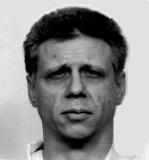
David Leonard Wood
Serial killer Rodney Alcala
Serial killer · USA · 1977
Rodney James Alcala (born August 23, 1943) was also known as Rodrigo Jacques Al…
100 victims
Rodney Alcala
Serial killer · USA · 1977
Rodney James Alcala (born August 23, 1943) was also known as Rodrigo Jacques Al…
100 victims
 Glen Edward Rogers
Serial killer · USA · 1993
Glen Edward Rogers was a spree killer whose cross-country rampage in 1994-95 le…
70 victims
Glen Edward Rogers
Serial killer · USA · 1993
Glen Edward Rogers was a spree killer whose cross-country rampage in 1994-95 le…
70 victims
 Michael Swango
Serial killer · USA · 1981
Michael Swango (Joseph Michael Swango) was a physician and American serial kill…
60 victims
Michael Swango
Serial killer · USA · 1981
Michael Swango (Joseph Michael Swango) was a physician and American serial kill…
60 victims
 Efren Saldivar
Serial killer · USA · 1989
Efren Saldivar (born 30 September 1969) was an American serial killer who murde…
50 victims
Efren Saldivar
Serial killer · USA · 1989
Efren Saldivar (born 30 September 1969) was an American serial killer who murde…
50 victims
 Gary Ridgway
Serial killer · USA · 1982
Gary Leon Ridgway Ridgway was born 18-February-1949 in Salt Lake City, UT. He w…
49 victims
Gary Ridgway
Serial killer · USA · 1982
Gary Leon Ridgway Ridgway was born 18-February-1949 in Salt Lake City, UT. He w…
49 victims
 Charles Cullen
Serial killer · USA · 1984
Charles Cullen (born February 22, 1960) was a former nurse and the most prolifi…
45 victims
Charles Cullen
Serial killer · USA · 1984
Charles Cullen (born February 22, 1960) was a former nurse and the most prolifi…
45 victims
 Jacques Plumain
Murderer · Germany / France · 1999
Jacques Plumain (né le 14 août 1973, également surnommé le Fantôme de Kehl) was…
2 victims
Jacques Plumain
Murderer · Germany / France · 1999
Jacques Plumain (né le 14 août 1973, également surnommé le Fantôme de Kehl) was…
2 victims
 Maria Barbella
Murderer · USA · 1895
Maria Barbella was a seamstress in Manhattan's Little Italy. She lived with her…
1 victim
Maria Barbella
Murderer · USA · 1895
Maria Barbella was a seamstress in Manhattan's Little Italy. She lived with her…
1 victim
 Andrew Yellowbear
Murderer · USA · 2004
Andrew John Yellowbear Jr. (born September 5, 1974) was the defendant in a Wyom…
1 victim
Andrew Yellowbear
Murderer · USA · 2004
Andrew John Yellowbear Jr. (born September 5, 1974) was the defendant in a Wyom…
1 victim
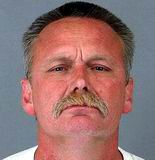 Shelby Shamblin
Homicide · USA · 1980
Shelby Glenn Shamblin was a Homeland man. He was convicted in June of first-deg…
1 victim
Shelby Shamblin
Homicide · USA · 1980
Shelby Glenn Shamblin was a Homeland man. He was convicted in June of first-deg…
1 victim
- Gender
- male
- Country
- USA
- Location
- El Paso County, Texas, USA
- Date of birth
- J une 20, 1957
- Age at first offence
- 30
- Characteristics
- kidnapping, rape
- Victim profile
- Ivy Susanna Williams, 23 (May 30) / Desiree Wheatley, 15 (June 2) / Karen Baker, 20 (June 5) / Angelica Frausto, 17 (Aug. 8) / Rosa Maria Casio, 24 (Aug. 12) / Dawn Marie Smith, 14 (Aug. 28)
- Method of murder
- St abbing with knife
- Date(s) of murder
- May-August 1987
- Years active
- 1987
- Date of arrest
- October 22, 1987
- Status
-
Sentenced to death
Sentenced to death on January 14, 1993
Case record: David Leonard Wood
Status and sentence
David Leonard Wood was sentenced to death on January 14, 1993. He was convicted and sentenced to death in a Texas state court for the serial murders of Ivy Williams, Desiree Wheatley, Karen Baker, Angelica Frausto, Rosa Maria Casio, and Dawn Smith.
Timeline
- May 13, 1987 — Six young women began disappearing from the El Paso area.
- August 27, 1987 — The disappearances of the six young women ended.
- September 4, 1987 — Maria Casio’s remains were unearthed in the desert northwest of El Paso; Karen Baker was found buried about 100 yards away.
- October 20, 1987 — Hikers found the remains of Desiree Wheatly and Dawn Smith within a mile of the other grave sites.
- October 22, 1987 — A search of police tattoo files led to the arrest of David Leonard Wood.
- November 30, 1992 — After a separate sentencing hearing, the trial court sentenced Wood to death.
- December 13, 1995 — The Texas Court of Criminal Appeals affirmed Wood’s conviction.
- December 19, 1997 — Wood filed a state application for writ of habeas corpus in the trial court.
- September 19, 2001 — The Texas Court of Criminal Appeals denied Wood habeas relief.
- May 6, 2002 — Wood filed a federal habeas petition in a Dallas U.S. district.
- June 2, 2006 — The U.S. district court adopted the magistrate’s recommendation and denied Wood habeas relief.
- October 5, 2007 — The United States Court of Appeals for the Fifth Circuit denied permission to appeal.
- January 3, 2008 — Wood filed a petition for writ of certiorari in the U.S. Supreme Court.
- April 14, 2008 — The U.S. Supreme Court denied the petition.
- January 14, 1993 — Wood was sentenced to death.
The offence
Victims and disappearance period
Between May 13, 1987, and August 27, 1987, six young women disappeared from the El Paso area:
- Ivy Williams
- Desiree Wheatley
- Karen Baker
- Angelica Frausto
- Rosa Maria Casio
- Dawn Smith
Recovery of bodies and grave locations
Between September 4, 1987, and March 14, 1988, the bodies were found buried in shallow graves in a desert area northeast of El Paso:
- Five of the bodies were located in the same one by one-half mile area.
- The sixth was three-quarters of a mile away.
- All of the bodies were approximately thirty to forty yards from one of the dirt roadways in the desert.
- Four of the bodies were in various states of undress, indicating that the killer had sexually abused them.
Witness identifications on the days of disappearance
Five of the victims were seen by witnesses on the day of their disappearance accepting a ride from a man with either:
- a red Harley-Davidson motorcycle, or
- a beige pickup truck, matching the two vehicles owned by Wood.
Forensic link described at trial
A forensic chemist later testified at trial that orange fibers found on the clothing of one of the victims matched orange fibers taken from a vacuum cleaner bag that Wood and his girlfriend had left in their old apartment.
Other offence evidence: the Judith Kelly extraneous offence
Judith Kelly testimony (extraneous offence)
During the punishment phase and at the guilt phase, testimony described an extraneous criminal offense involving Judith Kelly (“Kelly”), a prostitute and heroin addict. Kelly testified that in July 1987 she was walking outside of a convenience store in the northeast part of El Paso when a man identified as Wood, and matching his description, asked if she needed a ride.
Kelly accepted the offer, but Wood did not take her home as directed. Instead, Wood stopped at an apartment complex and went inside. When he returned, a piece of rope was hanging from one of his pockets.
Kelly saw him get a “brownish red” blanket and shovel from the back of his truck. After tying her to the front of his truck with the rope, Wood proceeded to dig a hole behind some bushes. Ten or fifteen minutes later, he returned with the blanket and began ripping her clothes and forcing her to the ground.
Upon hearing voices, Wood ordered Kelly to get back in the truck. Wood drove to a different location in the desert, stopped, ordered Kelly out, spread the blanket on the ground, and forced her to remove her clothes. He gagged her, tied her to a bush, and raped her.
Immediately afterwards, Wood stated that he heard voices and hastily threw his belongings back into the truck and drove away, leaving Kelly naked in the desert. Kelly’s final words to her included: “Always remember, I'm free.”
The offender’s methods and statements testified at trial
Wood’s girlfriend testimony
Wood’s girlfriend testified that he owned a burnt orange blanket and some shovels, all of which he kept in the back of his pickup truck.
Cell mate testimony (Randy Wells)
A cell mate, Randy Wells, testified that Wood told him about the murders and described the victims as topless dancers or prostitutes. Wood told Wells that he would:
- lure each girl into his pickup truck with an offer of drugs,
- drive out to the desert,
- tie her to his truck and dig a grave,
- tie the victim to a tree and rape her.
The testimony also stated Wood described being worried about his tattoos because one girl had escaped.
Cell mate testimony (James Carl Sweeney, Jr.)
Another cell mate, James Carl Sweeney, Jr., testified that Wood had shown him numerous clippings about the El Paso, Texas murders and had confessed to him that he was the one who had committed the murders.
Appeal court characterisation of a “signature”
The Texas Court of Criminal Appeals found Wood’s method so distinctive “that it may be considered as the defendant's ‘signature.’” The court pointed to “the obvious similarities between the details of the sexual assault upon the woman and the evidence surrounding the murders,” including that they occurred within the same geographical area and the same four month period.
Investigation and linking evidence
Physical and observational links
The evidence presented at trial included:
- witnesses who described a man and the specific vehicles matching Wood’s vehicles,
- Wood’s access to a burnt orange blanket and shovels stored in his pickup truck,
- orange fibers matching those in a vacuum cleaner bag left by Wood and his girlfriend,
- testimony from cell mates about confessions and descriptions of how victims were lured, transported, restrained, and assaulted.
Arrest
A search of police tattoo files led to the October 22 arrest of David Leonard Wood.
Wood’s denial and claims (as presented in interview material)
Wood denied involvement in the murders and claimed he had never been charged in the case at one point. He also claimed he was under “constance surveillance,” that his truck was broken into and clothes were taken, and that he cooperated with police.
He claimed that no more bodies were found after a “massive search” and that police made that clear on the news. He further claimed that he was arrested on October 23, 1987, on unrelated charges and that he was unaware of the charges for about sixteen hours.
Procedural history
Indictment and venue change
- On July 13, 1990, an El Paso County grand jury indicted Wood for the murders of Ivy Williams, Desiree Wheatley, Karen Baker, Angelica Frausto, Rosa Maria Casio, and Dawn Smith.
- Wood was set to be tried in El Paso, but the trial was moved to Dallas on a defense motion for a change of venue.
Trial conviction
- On November 10, 1992, a jury found Wood guilty of the capital murders.
Sentencing
- On November 30, 1992, following a separate sentencing hearing, the trial court sentenced Wood to death.
Appeals and habeas corpus
State appeal
Wood appealed his conviction and sentence to the Texas Court of Criminal Appeals, which affirmed his conviction on December 13, 1995.
Wood filed a state application for writ of habeas corpus in the trial court on December 19, 1997. The trial court recommended that Wood be denied relief. The Texas Court of Criminal Appeals adopted the trial court’s findings and conclusions and denied Wood habeas relief on September 19, 2001.
Federal habeas
Wood filed a federal habeas petition in a Dallas U.S. district on May 6, 2002. A federal magistrate recommended denial on June 4, 2004. The U.S. district court adopted the recommendation and denied Wood habeas relief on June 2, 2006.
Fifth Circuit and U.S. Supreme Court
Wood sought permission to appeal to the United States Court of Appeals for the Fifth Circuit; permission was denied on October 5, 2007.
Wood filed a petition for writ of certiorari in the U.S. Supreme Court on January 3, 2008; the Supreme Court denied the petition on April 14, 2008.
Fifth Circuit case: COA denial
Wood v. Quarterman, No. 06-70027:
- The Fifth Circuit considered an application for a certificate of appealability (“COA”).
- The COA application sought review of denial of habeas corpus relief under 28 U.S.C. § 2254.
- Wood sought a COA to appeal claims that included:
- the indictment was defective because it did not state a capital offense;
- trial and appellate counsel provided ineffective assistance of counsel;
- the trial court erred in admitting evidence of an extraneous offense during the guilt phase.
The Fifth Circuit denied the application for a COA, concluding Wood failed to make a substantial showing of the denial of a constitutional right.
Indictment claim discussion
The Fifth Circuit stated that sufficiency of a state indictment is not generally a matter for federal habeas relief unless it is so defective that it deprives the state court of jurisdiction. It concluded the claim was foreclosed to federal habeas review because the issue was squarely presented to the Texas Court of Criminal Appeals and that court held the trial court had jurisdiction.
The Fifth Circuit also concluded that even if the merits were considered, it found it beyond debate that the indictment claim lacked substantial showing of denial of a constitutional right.
Ineffective assistance claim discussion
The Fifth Circuit stated that failure to raise meritless objections is not ineffective lawyering. It concluded that because the indictment sufficiency claim lacked merit, trial and appellate counsel could not be considered constitutionally deficient for failing to raise the same claim.
Due process and extraneous evidence discussion
The Fifth Circuit stated that evidentiary errors under Texas law are not cognizable in habeas corpus, and that the relevant question was whether admission of Judith Kelly’s testimony violated Wood’s federal constitutional rights.
The Fifth Circuit described the reasoning attributed to the Texas Court of Criminal Appeals: Kelly’s testimony tended to demonstrate a unique system of committing criminal acts, and it identified striking similarities including proximity, use of a beige truck, sexual abuse, use of a blanket and rope, and that Wood dug a hole prior to raping Kelly.
Sentencing-related evidence of future dangerousness
During the punishment phase, the State presented evidence of Wood’s future dangerousness, including his previously convicted offenses and descriptions of other alleged assaults:
- The State showed prior convictions including:
- indecency with a child,
- rape of a child,
- sexual assault.
- For those crimes, the State presented that Wood received five, twenty, and fifty-year sentences, respectively.
Additional witness descriptions during punishment phase
A prostitute testified that on September 19, 1987, Wood offered her money for sex while she was standing on a street corner. She got into Wood’s truck and told him to go to a motel. Instead, Wood pulled a knife and told her he was going to sexually assault and kill her. The prostitute jumped out while the truck was still moving and injured herself.
A woman testified that when she was thirteen, Wood grabbed her as she was headed home on foot and raped her underneath a bridge.
Another woman testified that when she was twelve, Wood approached her and asked for help finding his dog; Wood eventually grabbed her and raped her.
A woman testified that when she was 23, she got a ride home from work with Wood and another man. She said they drove to some apartments where both men got out. Wood came back alone, drove off to the side of a road, and raped her.
A psychiatrist testified that given the facts of the crime and the evidence presented by the State, he believed Wood constituted a future danger to society.
Outcome
Wood’s conviction and death sentence were affirmed by the Texas Court of Criminal Appeals on December 13, 1995. Wood’s state habeas relief was denied on September 19, 2001. Wood’s federal habeas relief was denied by the U.S. district court on June 2, 2006. The Fifth Circuit denied his permission to appeal on October 5, 2007, and the U.S. Supreme Court denied certiorari on April 14, 2008. The Fifth Circuit later denied his application for a COA.
Other details
Scheduling information in media advisory text
A Texas Attorney General media advisory stated that David Leonard Wood was scheduled to be executed after 6 p.m. on Thursday, August 20, 2009, and that he was scheduled for execution August 13, 2009.
Interview and letter material attributed to David Wood
David Wood sent letters and documents and made statements including:
- He alleged that “the six” murders in El Paso, Texas led to the death penalty and he denied killing the victims.
- He said he had prior prison sentences both for sexual offenses, and also stated it was “three” but one was tied with the Kelling case.
- He stated “There is NO proof in a ‘circumstantial case. Either against the defendant or the defendant trying to clear himself.”
- He asserted that he was sentenced to 50 years for “ non-aggraved ” and that charges with the Gallegos case were dropped after his conviction.
- He wrote that while he was serving the 50-year term, Steve Simmons tried to get him indicted on the Northeast Murders but was twice denied by the grand jury.
- He claimed to have given “6 vials of blood, head and pubic hair, fingernail clippings, skin scrapings, and saliva” before being charged with these murders.
- He claimed he had reports and “Could not find one single match of evidence from me and the evidence found with any of the six victims.”
- He claimed disputed issues about orange fibers and described claims about excavation and evidence handling.
- He wrote that a total reward money was $26,000.
- He alleged that cell mates Randy Lee Wells and James Carl Sweeny and others were involved as jailhouse informers.
- He wrote that Sweeney allegedly read about the $26,000 reward and said, “Well, your screwed now because there's going to be a witness against you.”
- He quoted that “They were practically handed a script to read from.”
Reported victim ages and missing status in narrative material
Additional narrative material described missing individuals with ages:
- Marjorie Knox, fourteen, reported missing from Chaparral, New Mexico, on February 14, 1987.
- Melissa Alaniz, thirteen, vanished on March 7, 1987.
- Desiree Wheatly, 15, disappeared on June 7, 1987.
- Karen Baker, 20, disappeared after June 7, 1987.
- Cheryl Vasquez-Dismukes, 19, vanished on June 28, 1987.
- Angela Frausto, 17, vanished on July 3, 1987.
- Maria Casio, 24, failed to come home on the night of August 19 and was reported missing next day; her car was found on August 21, 1987.
- Dawn Smith, 14, left her home on August 28, 1987, promising to “keep in touch” and disappeared. Narrative material also stated that Marjorie Knox, Melissa Alaniz, and Cheryl Vasquez-Dismukes were still missing and that authorities presumed them dead. It also described utility workers unearthed Maria Casio’s remains on September 4, 1987 and listed causes of death as “apparent strangulation” with no obvious wounds.
Birth year
Narrative material stated that Wood was born in 1957.

Spotted an error, or have more information about this case?