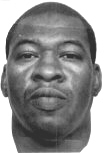
Edward Lagrone
Murderer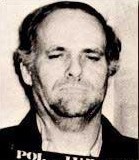 Ervil LeBaron
Murderer · USA · 1972
Ervil Morrell LeBaron (1925 to August 16, 1981) was the leader of a polygamous…
35 victims
Ervil LeBaron
Murderer · USA · 1972
Ervil Morrell LeBaron (1925 to August 16, 1981) was the leader of a polygamous…
35 victims
 Brian Kevin Rosenfeld
Murderer · USA · 1985
Brian Kevin Rosenfeld Brian Kevin Rosenfeld was sentenced to three concurrent l…
23 victims
Brian Kevin Rosenfeld
Murderer · USA · 1985
Brian Kevin Rosenfeld Brian Kevin Rosenfeld was sentenced to three concurrent l…
23 victims
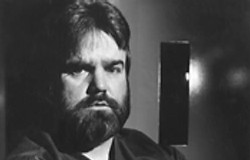 Marvin Gray
Murderer · USA · 1975
Marvin Gray was convicted killer who claimed responsibility for 23 slayings and…
23 victims
Marvin Gray
Murderer · USA · 1975
Marvin Gray was convicted killer who claimed responsibility for 23 slayings and…
23 victims
 Yahweh ben Yahweh
Murderer · USA · 1980
Yahweh ben Yahweh was born and legally named Hulon Mitchell Jr. (October 27, 19…
23 victims
Yahweh ben Yahweh
Murderer · USA · 1980
Yahweh ben Yahweh was born and legally named Hulon Mitchell Jr. (October 27, 19…
23 victims
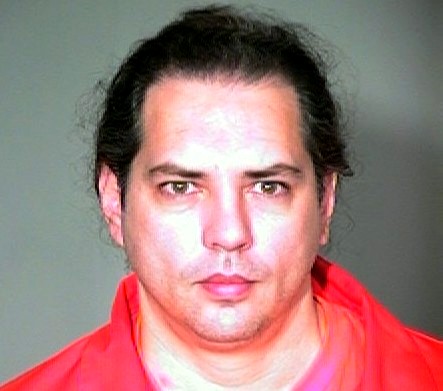 Michael Correll
Murderer · USA · 1984
Michael Correll was convicted of three counts of first-degree murder, one count…
3 victims
Michael Correll
Murderer · USA · 1984
Michael Correll was convicted of three counts of first-degree murder, one count…
3 victims
 Andrea Matteucci
Serial killer · Italy · 1980
Andrea Matteucci (also known as “Mostro di Aosta”) was an Italian serial killer…
4 victims
Andrea Matteucci
Serial killer · Italy · 1980
Andrea Matteucci (also known as “Mostro di Aosta”) was an Italian serial killer…
4 victims
 Dustin Lynch
Homicide · USA · 2002
Dustin Lynch was a juvenile who was bound over to the General Division of the C…
1 victim
Dustin Lynch
Homicide · USA · 2002
Dustin Lynch was a juvenile who was bound over to the General Division of the C…
1 victim
 Jose Roberto Villafuerte
Murderer · USA · 1983
Jose Roberto Villafuerte was convicted of the 1983 murder of his girlfriend, Am…
1 victim
Jose Roberto Villafuerte
Murderer · USA · 1983
Jose Roberto Villafuerte was convicted of the 1983 murder of his girlfriend, Am…
1 victim
 Charles Adrian Foster
Murderer · USA · 1983
Charles Adrian Foster was assessed as brain damaged and learning disabled. He c…
1 victim
Charles Adrian Foster
Murderer · USA · 1983
Charles Adrian Foster was assessed as brain damaged and learning disabled. He c…
1 victim
- Gender
- male
- Country
- USA
- Location
- Tarrant County, Texas, USA
- Date of birth
- March 3, 1957
- Age at first offence
- 20
- Characteristics
- child abuse, child killer, convicted rapist, drug dealer, rape
- Victim profile
- ??? / Shakeisha Lloyd, 10; Zenobia Anderson, 83, and Caolo Lloyd, 74
- Method of murder
- Shooting
- Date(s) of murder
- 1977 / 1991
- Years active
- 1977–1991
- Date of arrest
- —
- Status
-
Executed
Executed by lethal injection in Texas on February 11, 2004
Case record: Edward Lagrone
Background
Edward Lewis Lagrone was involved in a relationship with Pamela Lloyd in 1985, and they were together for approximately six months. After their breakup, the Lloyd family maintained contact with Lagrone because he intermittently visited the children at home.
In 1977, Lagrone was convicted of murder and sentenced to 20 years. He was paroled in 1984.
The State presented evidence at trial that Lagrone impregnated ten-year-old Shakeisha Lloyd.
The offence
In May 1991, the Lloyd family was living at 2004 Amanda Street in Fort Worth. The Lloyd family included eight people: three homicide victims—Shakeisha Lloyd, Zenobia Anderson, and Caola Lloyd—as well as five survivors of the homicidal incident: Pamela Lloyd (Shakeisha’s mother), Shakeisha’s three siblings, and Dempsey Lloyd (Shakeisha’s uncle).
The evidence at trial established that in May 1991 Lagrone went to the Lloyds’ residence and shot and killed Shakeisha and two elderly great-aunts, seventy-six-year-old Carolina “Caola” Lloyd and eighty-three-year-old Zenobia Anderson. Dempsey Lloyd was shot and survived.
The State presented testimony and evidence that Lagrone had impregnated Shakeisha and that, in an attempt to prevent Pamela Lloyd and Shakeisha from pursuing sexual assault charges, Lagrone entered the home and carried out the killings during the same criminal transaction.
Medical examiner findings and forensic details
After the incident, the Tarrant County Medical Examiner’s Office performed autopsies on Caola Lloyd, Zenobia Anderson, and Shakeisha Lloyd. The medical examiner determined the cause of death for all three deceased victims to be a single homicidal incident.
Caola Lloyd suffered an entry wound caused by a shotgun in the anterior portion of her neck going through the left side of her throat. She also had a defensive injury to her right hand resulting in the dismemberment of her index finger, consistent with her right hand being in front of her face when the gun shot was fired.
Zenobia Anderson had an entry wound caused by a shotgun to the back of her neck.
Shakeisha Lloyd had an entry wound caused by a shotgun to her left cheek and a corresponding exit wound just below the rim of the right mandible jaw bone. She also had an injury to her right hand, causing the total dismemberment of her ring finger.
The medical examiner determined there were most likely two gun shots. The medical examiner recovered a four-to-five month-old female fetus, preserved for blood and DNA testing.
DNA and paternity testimony
Dr. Arthur Eisenberg, a forensic pathologist, compared Lagrone’s blood samples with those recovered from Shakeisha Lloyd and conducted DNA testing to establish paternity. Dr. Eisenberg concluded that Lagrone’s paternity of Shakeisha Lloyd’s unborn child was 99.999% certain, and testified that, with the exception of having an identical twin brother, Lagrone was the father of that child.
Events leading up to the shooting
Pamela Lloyd first met Lagrone in 1985 and they were involved for approximately six months. After their breakup, Lagrone intermittently visited the children at home.
On May 26, 1991, Pamela Lloyd noticed that Shakeisha’s body was changing and that her breasts were getting bigger. Because it seemed unnatural, Pamela Lloyd took Shakeisha to the local hospital for an examination, where she learned Shakeisha was pregnant and was 17 weeks pregnant.
Pamela Lloyd contacted the police about Lagrone’s rape of her daughter. In response to the rape charges, the police took Pamela Lloyd to Lagrone’s Arlington apartment. Pamela asked Lagrone’s sister to have Lagrone contact her. When Lagrone called, Pamela asked him how he could have “messed” with Shakeisha. Lagrone denied having sexual relations with Shakeisha, and Pamela hung up. Later that day, Lagrone called back and told Pamela he was sorry for what he had done to Shakeisha and that he would take care of the baby.
Pamela responded with outrage, and it was established at trial that Lagrone had molested Shakeisha nine times and threatened to press charges.
Later that day, Shakeisha contacted Lagrone via his beeper. Pamela used that opportunity to inform him that Shakeisha wanted an abortion costing approximately $895. Lagrone assured Pamela he would provide abortion money.
May 30, 1991 incident (homicidal episode)
On May 30, 1991, around 4:00 a.m., Pamela Lloyd got up to get some water from the kitchen because she was having trouble sleeping. After she had left the kitchen and entered the bathroom, somebody knocked at the front door and demanded that one of the Lloyds “open the door.” Shakeisha’s brother, Charles, identified the voice as Lagrone’s, but Dempsey Lloyd answered the door.
After Dempsey Lloyd allowed Lagrone to open the door and ask him what he wanted, Lagrone shot Dempsey Lloyd with the shotgun he had purchased the day earlier. Dempsey Lloyd grappled with Lagrone over the gun.
Following that struggle, Lagrone went into the front bedroom where Caola Lloyd was sleeping and fired a shot. Lagrone then went into the kitchen where Zenobia Anderson was washing clothes and fired another shot.
As Pamela Lloyd and Shakeisha attempted to collect and hide the other children, several more shots were fired. Pamela Lloyd discovered Shakeisha lying on the floor with “half of her face blown off.”
Although Dempsey Lloyd pleaded for mercy, Lagrone shot him a second time before leaving. Dempsey Lloyd was still able to go next door and call for emergency “911” assistance despite his severe wounds.
Evidence admitted during punishment
During the punishment phase of the trial, the State introduced evidence that Lagrone had been convicted of murder in 1977 and had received a twenty-year sentence. The State also produced numerous reputation witnesses who testified that Lagrone had a bad reputation for being peaceable and law-abiding.
The State introduced evidence of several extraneous offenses committed by Lagrone:
- On March 3, 1991, Officer Keith McGuire of the Fort Worth Police Department witnessed Lagrone flagging down cars in a manner consistent with drug dealing. Officer McGuire observed Lagrone toss a black pouch to the ground, which was later determined to contain a quantity of crack cocaine.
- On October 14, 1990, Officer Greg Abernathy of the Fort Worth Police Department received a tip about a local drug trafficker from one of the suspects. Officer Abernathy found a man matching the description—Lagrone. After being confronted by police, Lagrone ran up some stairs and attempted to jettison a brown bag; the police laboratory later confirmed the bag contained a quantity of cocaine.
- On February 23, 1986, fifteen-year-old sisters were returning home from a nearby Dairy Queen. While crossing the grounds of a local elementary school, Lagrone approached them and threatened them with a gun. He took their money, forced them to remove their clothing, tied them up, and proceeded to force one girl to perform oral sex and molest her sister. After threatening to burn down the girls’ home if they went to the police, the girls did not contact authorities at that time.
Trial
In May 1993, a Tarrant County jury convicted Lagrone of three counts of capital murder pursuant to Section 19.03(a)(6)(A) of the Texas Penal Code for the murder of more than one person in the same criminal transaction. The jury answered the statutorily required special issues submitted under Article 37.071 in a manner consistent with imposing the death penalty. Accordingly, the trial court followed its statutory mandate and sentenced Lagrone to death.
The defendant did not challenge the sufficiency of the evidence at either the guilt-innocence or punishment stage of the trial. The court affirmed the trial court’s judgment after rejecting twenty-six points of error.
Investigation and autopsy / forensics timeline details
Gun purchase and preparation
At trial, evidence established that on May 29, 1991, Lagrone went to the Winchester Gun Store with his friend, Anetta Daniel. After supplying Daniel with the purchase money, Lagrone asked her to purchase a double-barrel, pistol-grip shotgun. Daniel purchased a Winchester slide-action shotgun, and Lagrone put it in the trunk of his car. Robert Wilshire, an employee of the gun store, testified that the shotgun qualified as a deadly weapon.
Appeals
Direct appeal
On direct appeal, the Texas Court of Criminal Appeals affirmed Lagrone’s conviction and sentence.
- 02/05/97 — On direct appeal, the Texas Court of Criminal Appeals affirmed Lagrone’s conviction and sentence.
- 04/09/97 — The Court of Criminal Appeals denied rehearing.
- 10/14/97 — The United States Supreme Court denied certiorari review.
Federal habeas proceedings and certificates
- 10/15/98 — Lagrone filed an application for state writ of habeas corpus raising thirty-eight grounds for relief.
- 03/12/99 — The state habeas court issued findings and conclusions recommending that relief be denied.
- 06/23/99 — The Court of Criminal Appeals independently reviewed the record and denied relief.
- 12/07/99 — Lagrone filed a writ of habeas corpus petition in the U.S. District Court for the Northern District of Texas.
- 08/29/02 — United States District Judge A. Joe Fish denied habeas relief.
- 10/18/02 — The district court denied Lagrone’s subsequent application for a certificate of appealability (“COA”).
- 01/23/03 — Lagrone applied for a COA from the Fifth Circuit Court of Appeals raising nineteen claims.
- 09/02/03 — The Fifth Circuit denied the request in an unpublished opinion.
Execution setting and Supreme Court filings
- 10/21/03 — The District Court of Tarrant County set Lagrone’s execution for February 11, 2004.
- 12/01/03 — Lagrone petitioned the United States Supreme Court for certiorari review.
- 02/04/04 — Lagrone applied to the United States Supreme Court for a stay of execution.
Outcome
Lagrone was executed by lethal injection in Texas on February 11, 2004.
Aftermath
Lagrone’s final statement was:
"I just want to say I am not sad or bitter with anybody. Like I said from day one, I didn't go in there and kill them, but I'm no better than the people that did. Jesus is Lord. That's all I have to say."
Spotted an error, or have more information about this case?